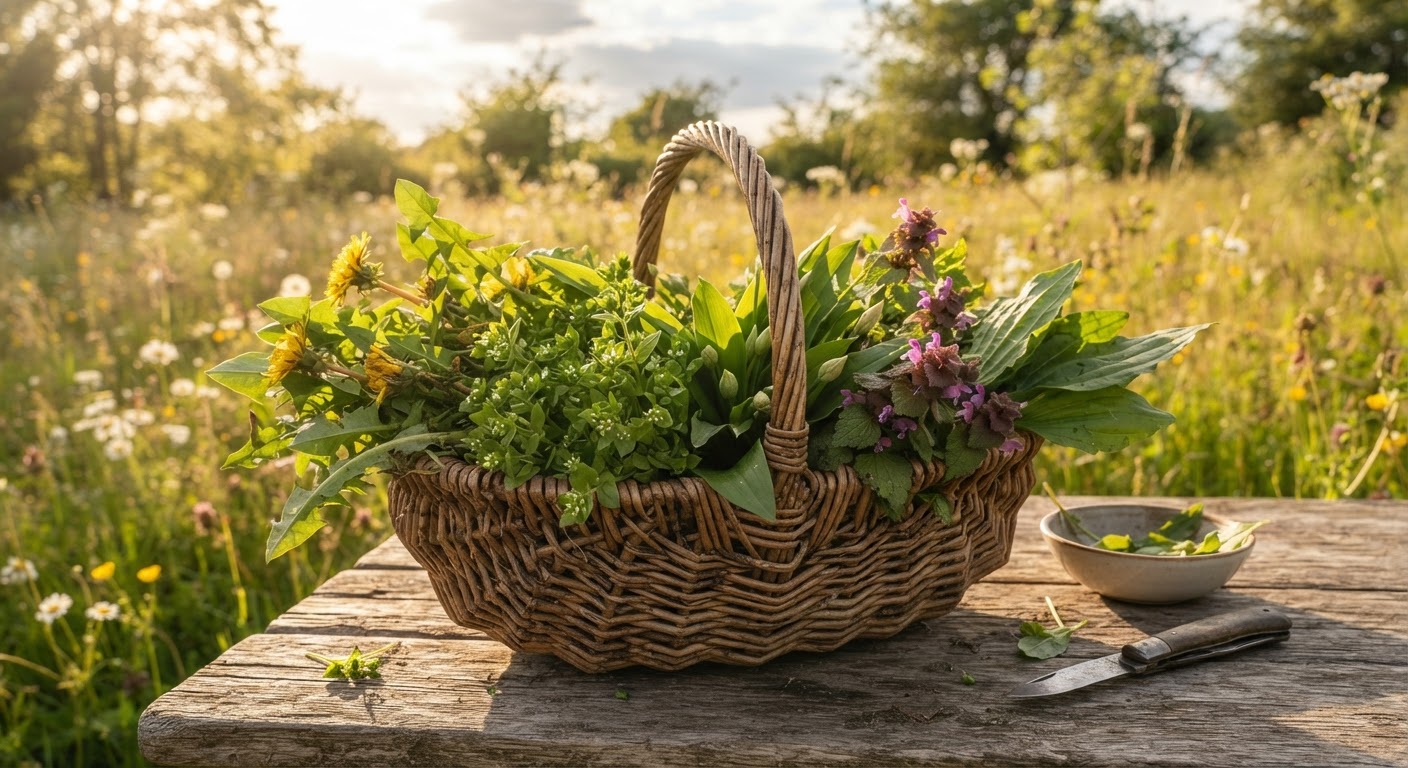
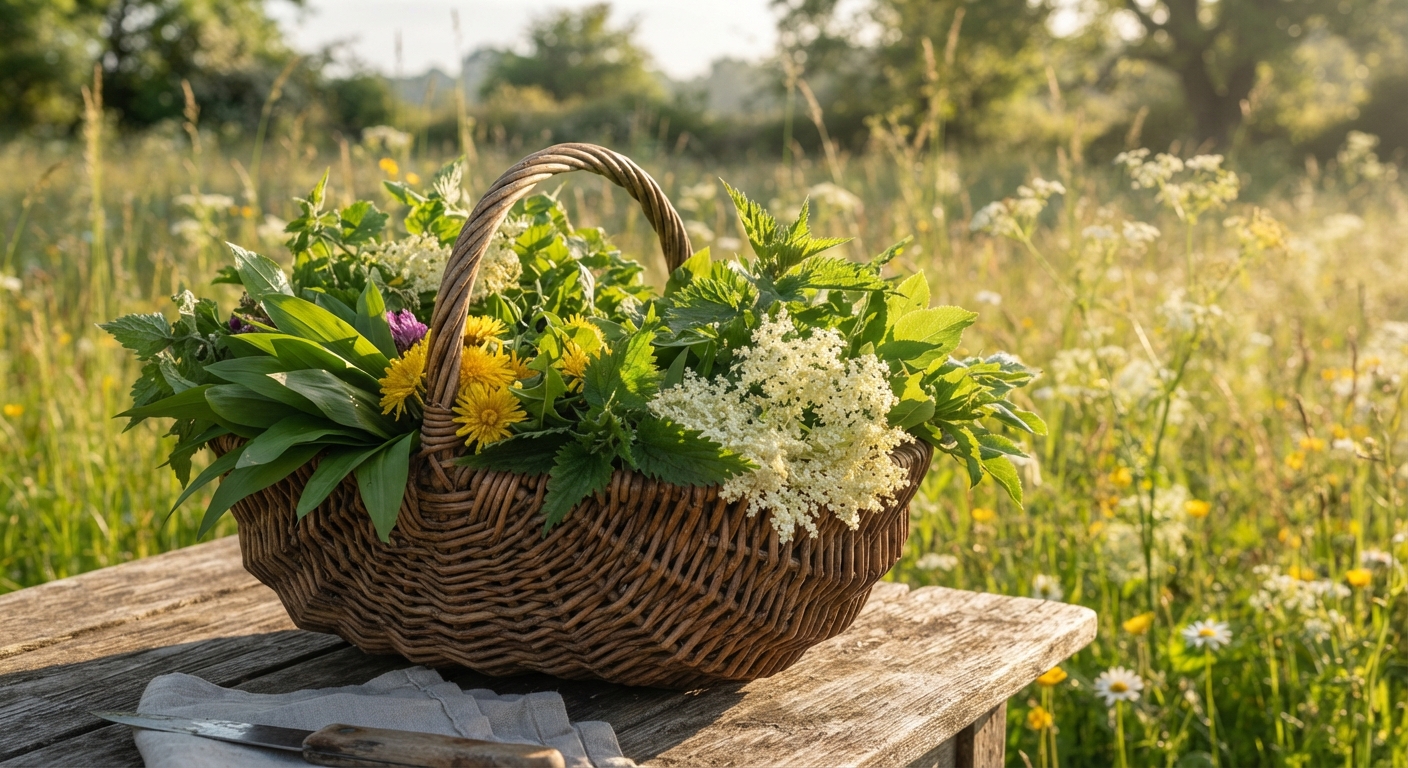
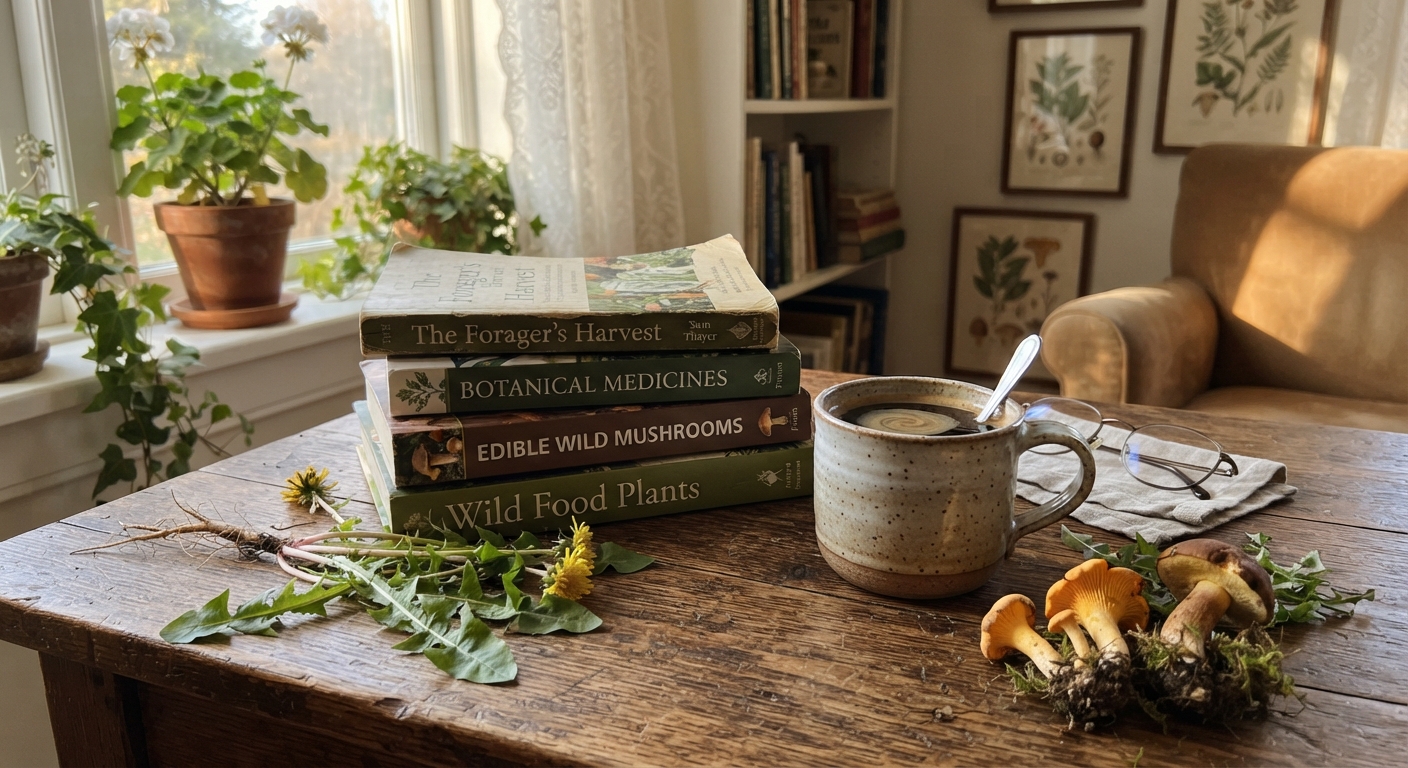
The first time I ate a weed from my own backyard, I hesitated. I had walked past the same patch of dandelions for two years — mowing them, pulling them, cursing them. Then a friend who runs a small farm-to-table operation in Vermont pointed at my lawn and said, “You know you’re sitting on a free salad bar, right?”
He was right. That afternoon I harvested a bowl of dandelion greens, tossed them with olive oil and lemon, and ate the most nutrient-dense salad of my life. It cost nothing. It traveled zero food miles. And it tasted better — slightly bitter, earthy, alive — than anything from the grocery store.
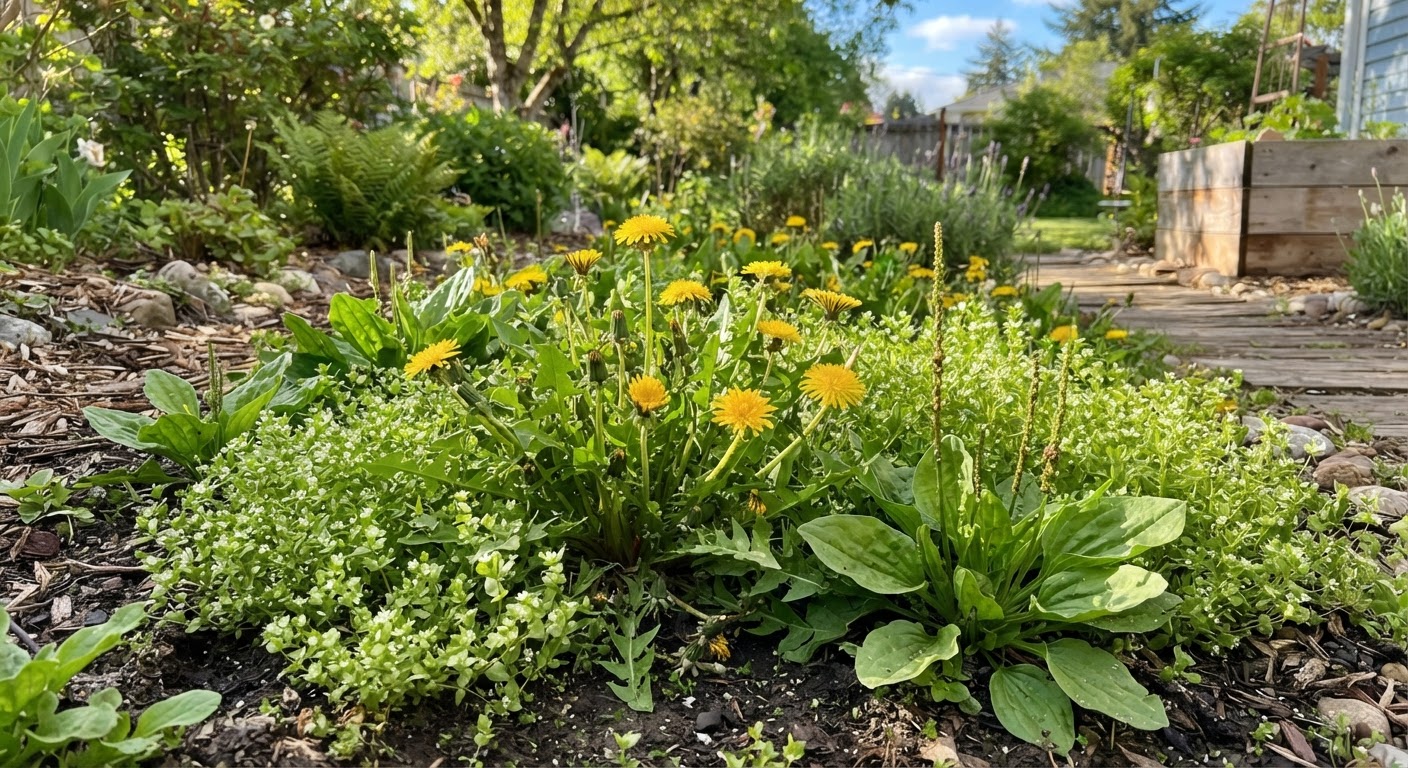
Most American backyards contain three to seven species of edible wild plants. You probably have some right now. Not the carefully tended vegetable garden — I mean the “weeds.” The stuff you pull out and throw away. In this guide, I’ll walk you through what’s actually edible, how to identify it safely, and how to turn your backyard into a productive foraging spot without planting a single seed.
What Makes a Backyard Plant Edible vs. Dangerous
Before you start grazing your lawn, let’s get one thing clear: not every green thing is food. Some backyard plants can make you sick. A few can kill you. The gap between a dandelion and poison hemlock is wider than most people realize — but it’s also something you can learn to navigate with a few simple rules.
The Universal Edibility Checklist
Use this checklist every single time you try a new plant. No exceptions:
| Step | What to Check | Why It Matters |
|---|---|---|
| 1. Positive ID | Confirm the plant with at least two field guides or apps | Lookalikes can be toxic |
| 2. Location check | Avoid plants near roads, treated lawns, or pet areas | Contaminants concentrate in plant tissue |
| 3. Plant part | Verify which parts are edible (leaves, roots, flowers) | Some plants have edible and toxic parts |
| 4. Season check | Confirm the plant is in the right growth stage | Many plants turn bitter or toxic after flowering |
| 5. Small test | Try a tiny amount first, wait 24 hours | Allergic reactions happen even with edible plants |
I keep a small spiral notebook in my foraging kit. Every new plant gets an entry: date, location, what it looked like, how I prepared it, and any reactions. Two years later, that notebook is more useful than any field guide because it reflects what actually grows in my region, in my soil, at my elevation.
The Golden Rule of Backyard Foraging
If you cannot identify a plant with 100% confidence, do not eat it. This isn’t like cooking, where you can salvage a mediocre dish. One wrong identification can land you in the emergency room — or worse.
The Big Four: Most Common Edible Weeds in American Backyards
These four plants appear in nearly every North American backyard. If you have a lawn, a garden bed, or even a crack in your driveway, you probably have at least three of them.
1. Dandelion (Taraxacum officinale)
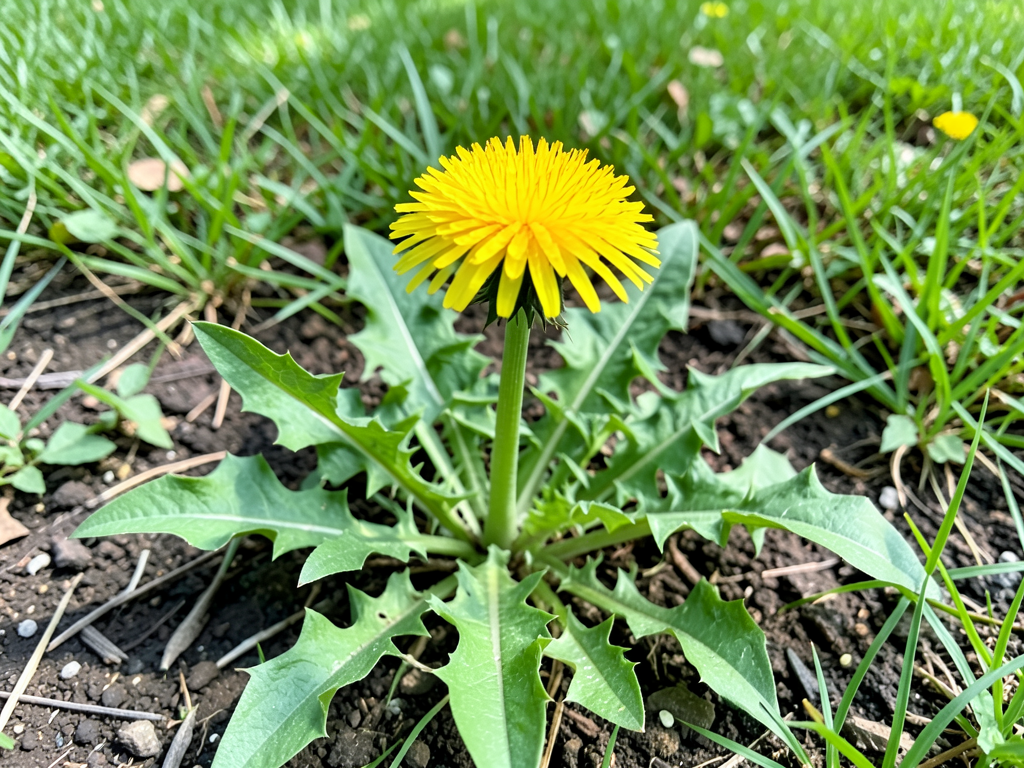
The dandelion is the undisputed king of backyard foraging. Every part of this plant is edible, and it’s so nutritious that a cup of dandelion greens contains more vitamin A than a carrot and more calcium than a glass of milk.
How to Identify It:
- Deeply toothed leaves growing in a rosette at ground level — the teeth point backward toward the base
- Hollow flower stems that ooze a white, milky sap when broken
- Single bright yellow flower head per stem (not branched clusters)
- No hairs on the leaves — smooth and hairless
What to Harvest:
- Leaves (spring): Young leaves from plants that haven’t flowered yet are least bitter. Pick them small and tender.
- Flowers (spring-summer): The yellow petals make excellent fritters and wine. Pluck them in the morning when they’re fully open.
- Roots (fall): Roast and grind them for a caffeine-free coffee substitute. Fall roots are larger and sweeter.
Common Mistake: People confuse dandelion with sow thistle or cat’s ear — both are also edible, but cat’s ear has hairy leaves, unlike the smooth dandelion.
How to Eat It: Blanch the greens in boiling water for 60 seconds to reduce bitterness, then sauté with garlic and olive oil. The flowers can be battered and fried, and the roots make a convincing coffee when roasted dark.
2. Chickweed (Stellaria media)
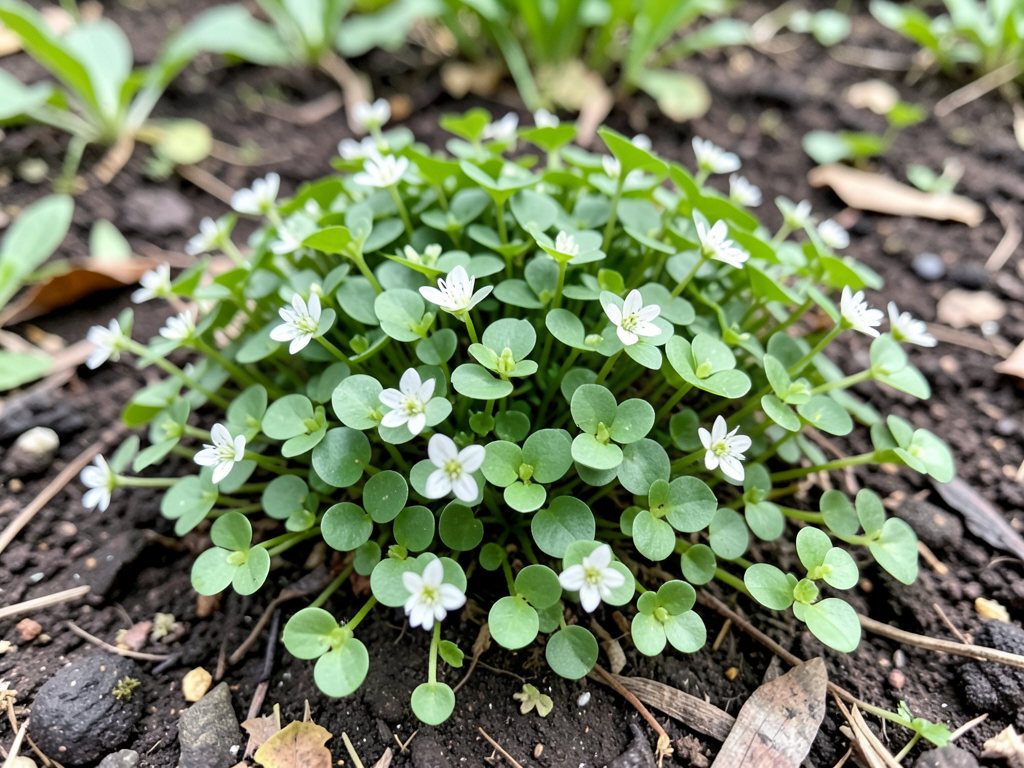
Chickweed is the quiet overachiever of backyard greens. It grows in dense, low mats and tastes remarkably like corn silk or mild lettuce — no bitterness at all, which makes it the easiest gateway plant for nervous beginners.
How to Identify It:
- Small, pointed-oval leaves growing in opposite pairs along thin, creeping stems
- Tiny white flowers with five petals so deeply split they look like ten
- A single line of fine hairs running along one side of the stem (this is the giveaway — run your finger along it)
- Grows in dense, tangled mats close to the ground
What to Harvest:
- The tender top 3-4 inches of stems, leaves, and flowers
- Best in cool weather — spring and fall, before summer heat makes it tough
Common Mistake: Spotted spurge looks similar but has a milky sap and different flowers. Chickweed has clear sap and the distinctive single-line-of-hairs on its stem.
How to Eat It: Raw in salads, mixed into pesto, or wilted into scrambled eggs. Chickweed is delicate — add it at the last minute when cooking.
3. Broadleaf Plantain (Plantago major)
This is probably the weed you step on most often. Broadleaf plantain grows in compacted soil, along paths, and anywhere grass struggles. It’s tough and unglamorous, but it’s one of the most useful wild plants you’ll find.
How to Identify It:
- Broad, oval leaves with prominent parallel veins running the length of the leaf
- Leaves grow in a flat rosette pressed against the ground
- Tall, thin flower spikes that look like tiny green bottle brushes
- When you pull a leaf apart, stringy fibers stretch between the halves
What to Harvest:
- Young spring leaves are tender enough to eat raw
- Older leaves need cooking — they’re fibrous but make excellent soup greens
- Seeds from the flower stalks can be harvested as a fiber supplement
Common Mistake: Broadleaf plantain looks nothing like the banana-like fruit called plantain. Different plant entirely.
How to Eat It: Blanch older leaves for 2-3 minutes, then sauté. The young spring leaves work raw in salads. Seeds can be used like psyllium husk.
4. Common Violet (Viola sororia)
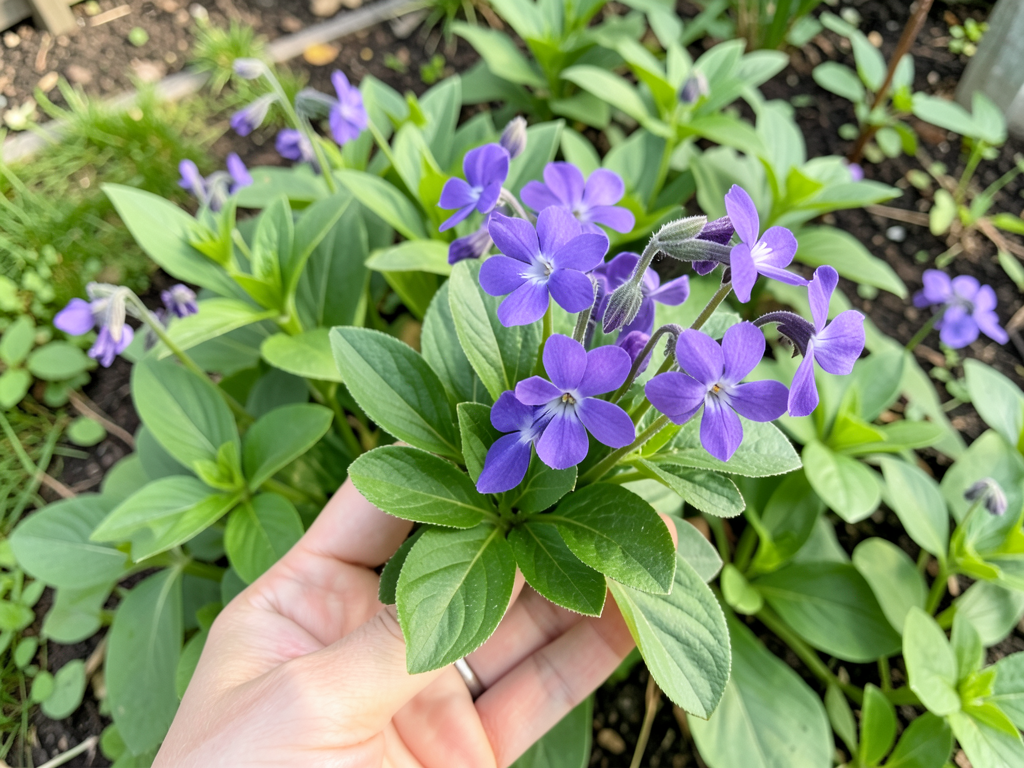
Wild violets are some of the most beautiful edible plants in your yard. Their heart-shaped leaves and purple flowers show up in early spring and stick around through fall. Both leaves and flowers are edible, and the flowers contain more vitamin C by weight than oranges.
How to Identify It:
- Heart-shaped leaves with scalloped edges, growing from the base
- Five-petaled purple, blue, or white flowers on individual stems
- No visible above-ground stem — everything rises from the crown
- Slight mucilaginous texture when leaves are chewed
What to Harvest:
- Flowers and young leaves throughout the growing season
- Pick flowers in the morning when they’re fresh and fully open
Common Mistake: Lesser celandine has similar heart-shaped leaves but yellow flowers — and it’s toxic. African violet houseplants are completely unrelated and not edible.
How to Eat It: Press the flowers into cookies or cakes, toss them into salads for color, or candy them with egg white and sugar. The leaves thicken soups naturally thanks to their mucilage.
More Backyard Treasures Worth Knowing
Once you’ve mastered the Big Four, your backyard might reveal these bonus plants:
Lamb’s Quarters (Chenopodium album)
This plant grows tall — sometimes five feet or more — with diamond-shaped leaves covered in a white, powdery coating that repels water. It tastes like spinach but is more drought-resistant and easier to grow (it grows itself). The leaves, stems, and seeds are all edible. Harvest the young leaves in late spring.
Purslane (Portulaca oleracea)
You’ll find purslane sprawling along garden edges, sidewalk cracks, and bare soil patches. Its succulent, reddish stems and paddle-shaped leaves are unmistakable. Purslane has more omega-3 fatty acids than any other leafy green plant. Eat it raw or sautéed — it has a slightly sour, lemony taste.
Wood Sorrel (Oxalis stricta)
This tiny plant looks like a miniature clover with three heart-shaped leaflets per stem. It tastes sharply lemony — so much so that kids love it. The yellow flowers and leaves both make excellent garnishes. Just don’t overdo it; the oxalic acid can upset kidneys in very large quantities.
Garlic Mustard (Alliaria petiolata)
An invasive species that’s also delicious. Garlic mustard has rounded, scalloped leaves in its first year and tall stalks with small white flowers in its second. Crush a leaf — if it smells like garlic, you’ve got the right plant. The roots taste like horseradish. Harvest aggressively — you’re doing the ecosystem a favor.
Safety First: Plants That Must Stay on Your Plate — Not in It
Knowing what not to eat is as important as knowing what to eat. These common backyard plants look innocent but can cause serious harm:
| Dangerous Plant | What It Looks Like | Why It’s Dangerous |
|---|---|---|
| Poison Hemlock | Tall plant with white umbrella flower clusters, purple-spotted stems, fern-like leaves | Contains coniine — causes paralysis and respiratory failure |
| Pokeweed | Large bushy plant with purple berries on pink stems, smooth oval leaves | All parts toxic raw; berries and roots especially dangerous |
| Foxglove | Tall spikes of tubular purple/pink flowers, fuzzy oval leaves | Contains digitalis — affects heart rhythm, potentially fatal |
| Lily of the Valley | Small white bell-shaped flowers, broad parallel-veined leaves | Contains cardiac glycosides — toxic even in small amounts |
| Buttercup | Bright yellow glossy flowers, deeply divided leaves | Contains protoanemonin — causes severe mouth and GI irritation |
If you have kids or pets, learn these five plants first. Knowing the dangerous ones gives you the confidence to explore the safe ones.
When and How to Harvest Your Backyard Bounty
Timing transforms a mediocre meal into something memorable. Here’s how to get the best from each season:
Spring (March – May)
This is the super bowl of backyard foraging. Tender new growth everywhere. Prioritize dandelion leaves before they flower, violet leaves and flowers, chickweed, garlic mustard rosettes, and the first lamb’s quarters. Everything is mild, tender, and bursting with nutrients the plant stored for new growth.
Summer (June – August)
Focus on purslane, lamb’s quarters (before they get too tall), dandelion flowers, and wood sorrel. Many greens turn bitter in summer heat — if it tastes sharp, wait for fall regrowth.
Fall (September – November)
Second spring for greens. Chickweed returns, dandelion leaves sweeten in cold weather, and roots (dandelion, burdock) are at peak size. Garlic mustard taproots have their best flavor now.
Winter (December – February)
Slim pickings unless you’re in a mild climate. Chickweed can survive under snow. Dandelion roots remain harvestable if the ground isn’t frozen solid.
Harvesting Gear You Actually Need
Forget the expensive foraging baskets. Here’s what I actually use:
- A sharp pair of kitchen scissors — cleaner cut than pinching, less damage to the plant crown
- Brown paper bags or a cloth bag — plastic makes greens wilt in minutes
- A small trowel for root digging
- Garden gloves — some plants have irritating sap or spines
- Your phone with a plant ID app (for double-checking, not as your primary ID)
From Backyard to Kitchen: Simple Ways to Eat Your Weeds
Dandelion Green Pesto
Blend 2 cups blanched dandelion greens with 1/3 cup walnuts, 2 cloves garlic, 1/2 cup olive oil, and a squeeze of lemon. This freezes beautifully and turns pasta night into something worth bragging about.
Chickweed and Egg Scramble
Sauté a handful of chopped chickweed tips in butter for 30 seconds, pour in two beaten eggs, and scramble gently. Salt, pepper, done. It takes three minutes and tastes like spring.
Violet Flower Shortbread Cookies
Press fresh violet flowers into your favorite shortbread dough before baking. The cookies come out of the oven looking like they belong in a bakery window.
Crispy Dandelion Flower Fritters
Dip whole dandelion flower heads in a thin tempura-style batter, fry in hot oil until golden, and sprinkle with salt. Kids who won’t touch “weeds” will eat these by the handful.
Common Questions About Backyard Foraging
Is it safe to eat weeds from my lawn if I used to spray it?
No. Not for at least one full growing season, and even then only if you used herbicides that fully degrade. Most lawn chemicals persist in soil. If your lawn has been sprayed within the last two years, grow your edibles in dedicated pots or beds instead — or build raised beds with clean soil.
Can I forage in public parks?
Check your local regulations first. Many city and state parks prohibit plant removal. National parks almost always ban it. If it’s allowed, follow the same rules: avoid sprayed areas, trailsides (dog urine), and over-harvesting. Take no more than 10% of any patch.
What if I can’t positively identify a plant?
Don’t eat it. Take photos, post them to a foraging group (wildfooduk on Reddit, local Facebook foraging groups), and wait for confirmation from experienced foragers. Cross-reference with at least two field guides. The plant will still be there tomorrow.
How do I know if my neighbor’s yard runoff is contaminating my plants?
If your neighbor sprays their lawn, plants within 10-15 feet of the property line may absorb runoff. Stick to plants growing in the center of your yard, or build a buffer with mulch or raised beds. This is one of those cases where more land is genuinely safer.
Are there any legal issues with eating weeds from my own property?
In the United States, you can forage on your own property without restriction. If you rent, check your lease — some prohibit “altering the landscape,” though eating weeds rarely qualifies. HOAs are a separate headache, but edible plants usually pass for intentional gardening if they’re kept tidy.
Do I need to cook wild greens or can I eat them raw?
Most backyard wild greens are safe raw in reasonable quantities, but cooking reduces oxalates, bitterness, and bacterial risk. I always blanch dandelion greens and older plantain leaves. Chickweed, violet leaves, and young lamb’s quarters are excellent raw.
Building a Backyard That Keeps Giving
Once you start eating your weeds, the mindset shifts from “what can I pull out?” to “what can I encourage?” Here’s how to maintain a productive foraging yard without turning it into an overgrown mess:
- Mow around patches you’re harvesting. Leave a 3x3 area unmowed for dandelions and plantain — it looks intentional if you edge it cleanly.
- Don’t pull everything in one spot. Harvest conservatively — about a third of any patch at a time — so plants regenerate.
- Let some plants go to seed. A few dandelion flowers left to puff, a chickweed patch left to flower — this ensures next year’s harvest.
- Stop using chemicals entirely. No herbicides, no pesticides, no synthetic fertilizers. Your soil microbiome and your liver will both thank you.
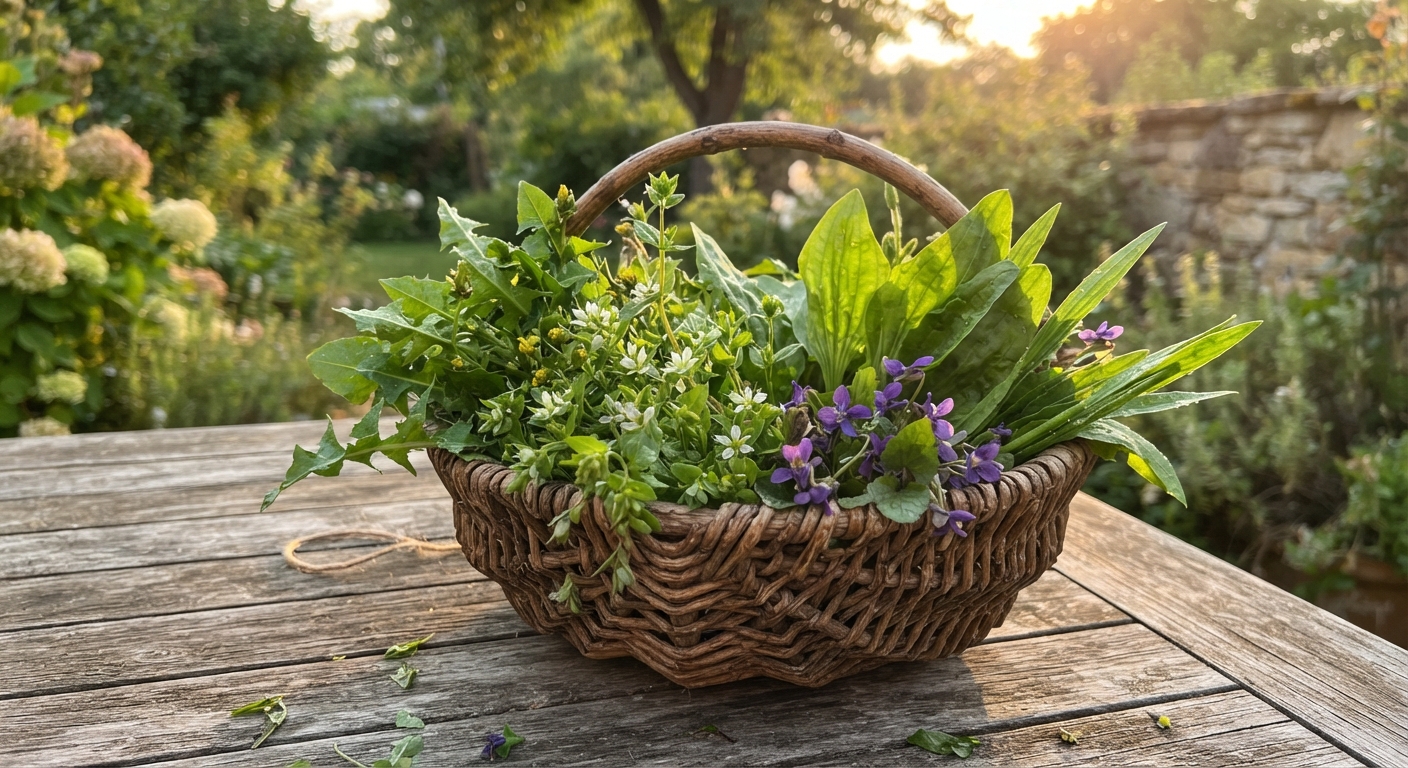
The Real Value of Backyard Foraging
The first month I actively foraged my backyard, I tracked every harvest. In April alone, from a quarter-acre lot in suburban Ohio, I collected over four pounds of edible greens. At organic grocery store prices, that’s roughly forty dollars of food — from plants I used to throw in the yard waste bin.
But the money isn’t really the point. There’s something quietly radical about knowing the plants you live with. About walking outside and seeing food instead of weeds. About the moment a kid realizes the yellow flower in the grass is something you can eat — and suddenly the entire backyard becomes a treasure hunt.
Start with dandelions. They’re everywhere, they’re unmistakable, and they’re genuinely good for you. Pick three leaves tomorrow morning. Rinse them. Put them in your sandwich. That’s it — you’re a forager now.
Did you find this guide helpful? Share it with someone who mows their lawn and curses the dandelions. They’re sitting on a free meal and don’t know it yet.