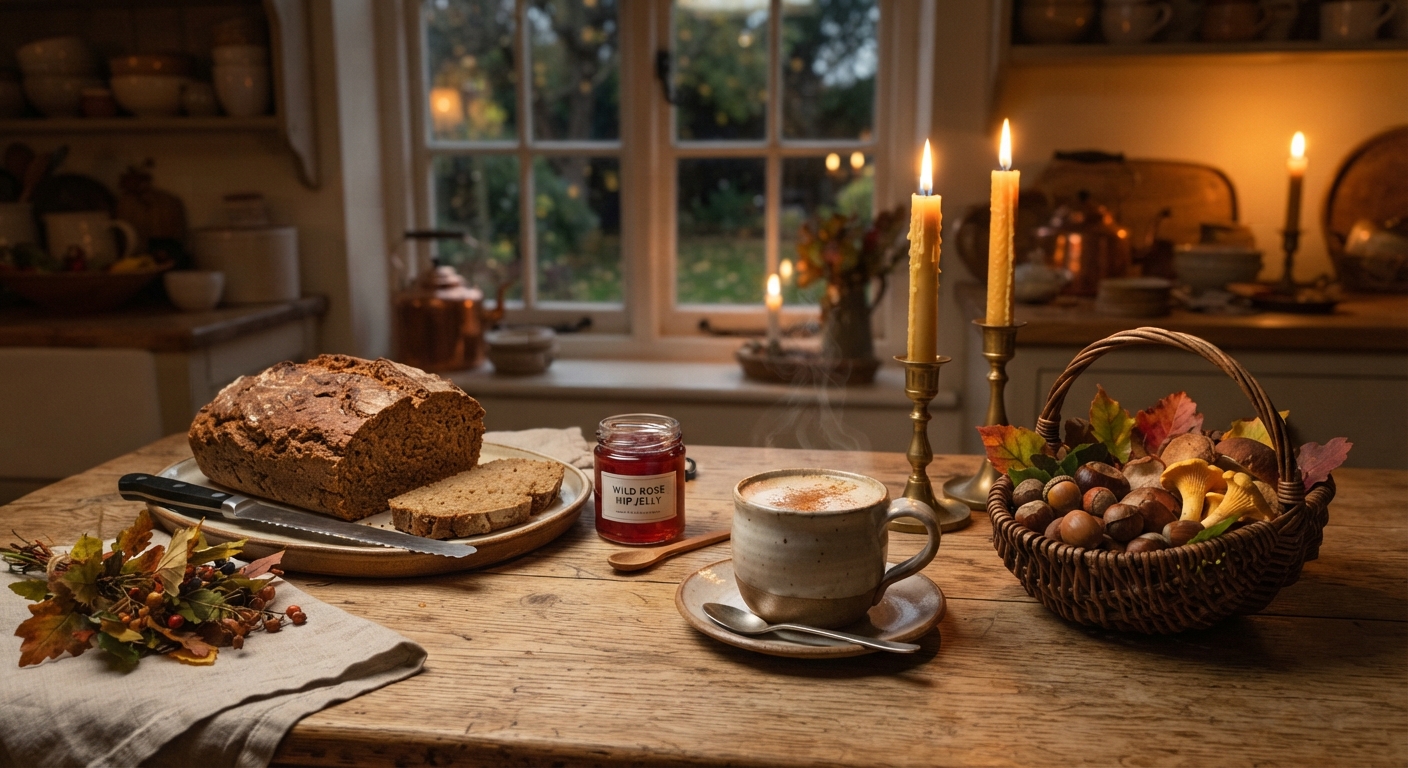
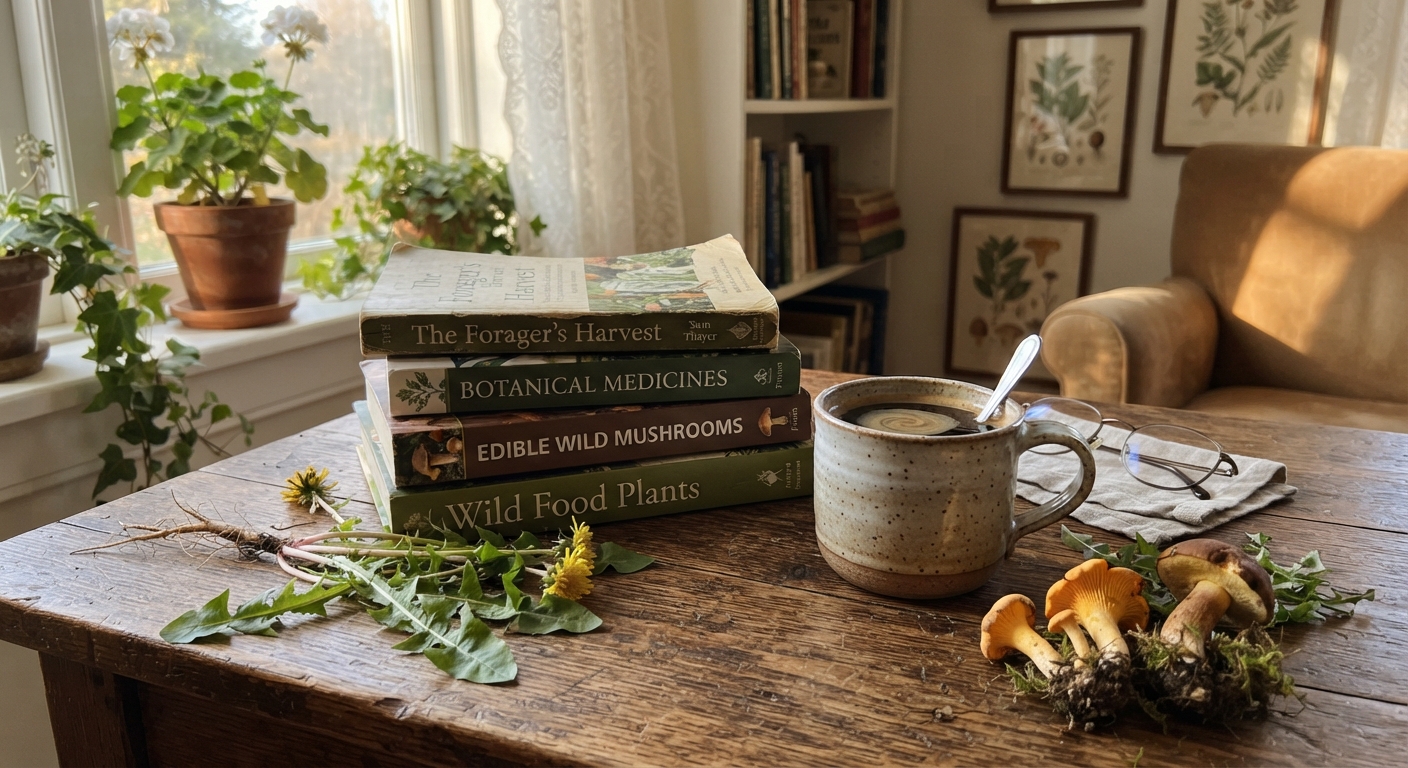
Most people stop foraging when the summer berries fade. They pack away their baskets, convinced that autumn is just a prelude to winter’s scarcity. This is a mistake I made for years — and one that cost me some of the best wild food I’ve ever eaten.
The truth is that fall is a forager’s goldmine. While summer flaunts its abundance with bright colors and sweet fruits, autumn’s offerings are quieter, richer, and infinitely more satisfying. Roots swell with stored starches. Nuts ripen and drop. Late-season fungi erupt from rain-dampened soil. Berries that spent all summer developing their sugars finally reach peak sweetness.
After seven autumns of foraging across North American woodlands, hedgerows, and even urban parks, I’ve learned one thing: fall is not the end of foraging season. It’s the grand finale.
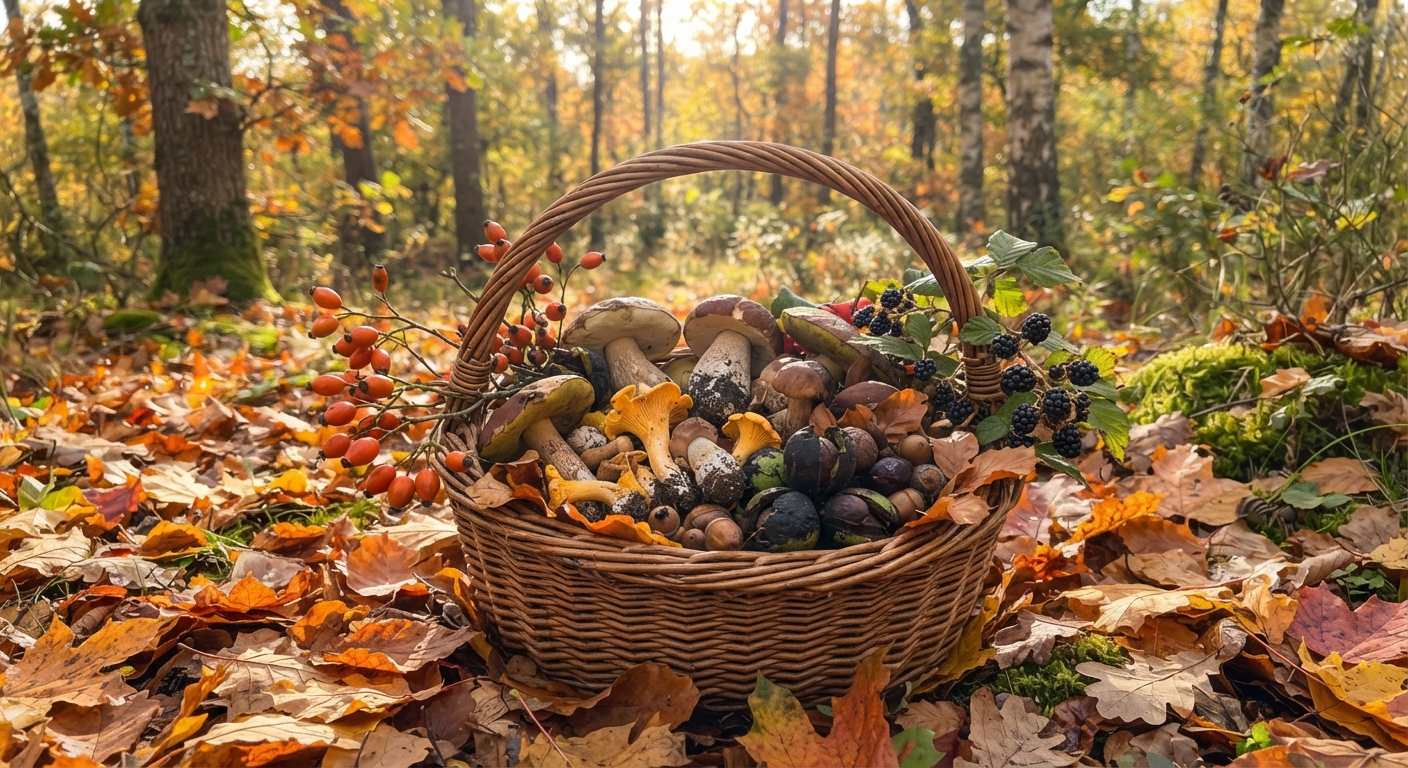
Why Fall Is the Best-Kept Secret of Foraging
Summer gets all the glory. Strawberries in June, blueberries in July, blackberries in August — the calendar is predictable and the harvests are obvious. Fall requires a different kind of attention.
In autumn, the edible parts move underground. The energy that plants spent all summer capturing through photosynthesis gets pulled down into their roots and tubers, stored as complex carbohydrates for winter survival. This means roots harvested in October can contain up to three times the caloric density of those dug up in June.
Fall also brings the nut harvest. Acorns, black walnuts, hickory nuts, and chestnuts represent one of the densest wild calorie sources available anywhere — and they store for months without refrigeration. Indigenous peoples across North America built entire winter food systems around fall nut harvests.
Then there are the mushrooms. While spring has morels and summer has chanterelles, fall brings a staggering diversity of edible fungi. Hen of the woods (maitake), chicken of the woods, hedgehog mushrooms, and porcini all peak in autumn. A single mature hen of the woods can weigh 20 pounds or more.
The Fall Foraging Calendar at a Glance
| Early Fall (Sep) | Mid Fall (Oct) | Late Fall (Nov) |
|---|---|---|
| Rose hips, elderberries | Black walnuts, hickory nuts | Burdock root, dandelion root |
| Chicken of the woods | Hen of the woods (maitake) | Late oyster mushrooms |
| Wild grapes, crabapples | Persimmons (after frost) | Jerusalem artichokes |
| Hazelnuts | Chestnuts | Cattail rhizomes |
| Late blackberries | Puffball mushrooms | Chicory root |
Understanding this rhythm is key. Early fall still overlaps with late summer abundance. Mid fall is peak nut and mushroom season. Late fall transitions into root harvesting — the forager’s equivalent of putting food in the cellar for winter.
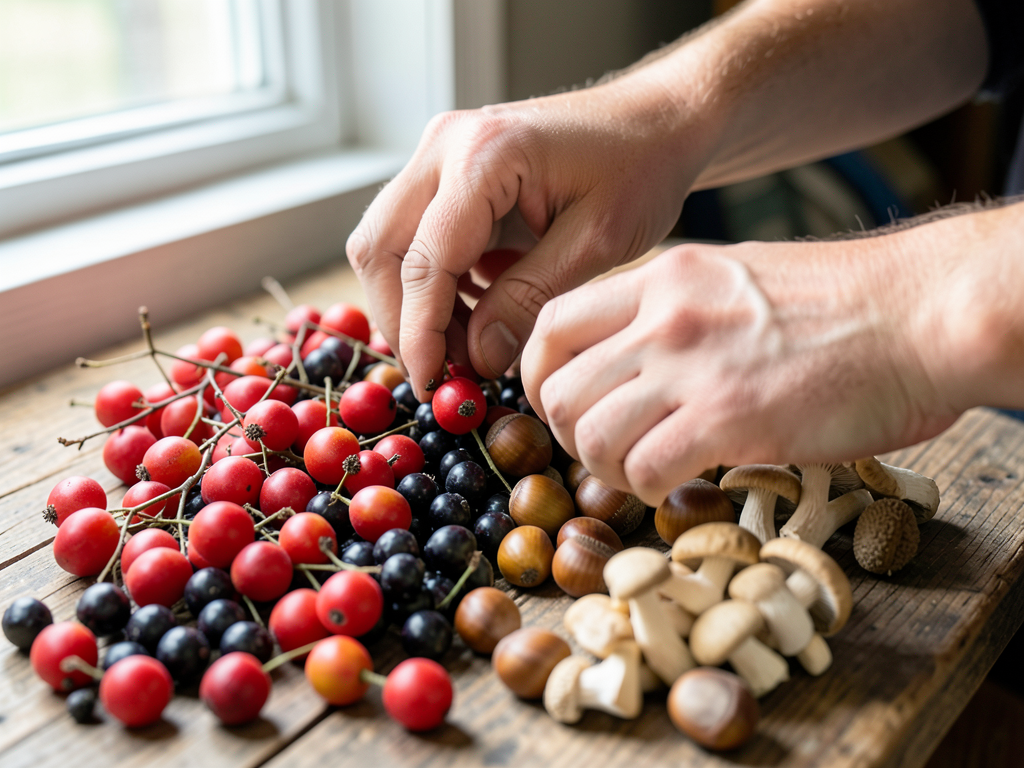
Nut Harvesting: Acorns, Walnuts, and Hickory
Acorns (Quercus species)
Acorns are the most abundant wild nut in North America, and possibly the most misunderstood. Every oak tree produces them, yet most foragers walk right past.
The complaint is always the same: “Aren’t acorns bitter?” Yes — raw acorns contain tannins that make them astringent and potentially harmful in large quantities. But leaching removes the tannins and transforms acorns into a mild, nutty flour that works beautifully in bread, pancakes, and porridge.
Harvesting: Collect acorns that have recently fallen. The cap should separate easily and the nut should feel heavy for its size. Avoid any with small holes — that’s weevil damage. A simple float test (drop them in water) helps: sinkers are good, floaters are hollow or insect-damaged.
Processing: Shell the acorns, then grind or chop them coarsely. Cold-water leaching is easiest: place the ground acorn meal in a jar, cover with cold water, and refrigerate. Change the water twice daily for 3-7 days until the bitterness is gone. Hot water leaching is faster but cooks the starch, limiting what you can do with the flour later.
White oak vs. red oak: White oak acorns (rounded leaf lobes) contain fewer tannins and mature in one season. Red oak acorns (pointed leaf lobes) take two seasons to mature and are noticeably more bitter. If you’re new to acorn processing, start with white oaks.
Black Walnuts (Juglans nigra)
Black walnuts are the wild cousin of the English walnuts in grocery stores. The flavor is stronger, earthier, more complex — and the shells are far harder to crack.
Harvesting: The green husks turn brown and soften when ripe, usually in October. Wear gloves. Seriously. The husk juice stains everything it touches a dark brown that takes weeks to fade. I learned this the hard way my first season and spent a month looking like I’d dipped my hands in iodine.
Processing: Remove the husks (a hammer on a hard surface works, or stomp on them with old boots), wash the nuts, and dry them for 2-3 weeks in a well-ventilated area. Cracking requires either a heavy-duty nutcracker or a hammer and a solid surface. The reward is worth the effort — black walnuts have a flavor nothing store-bought can match.
Hickory Nuts (Carya species)
Hickory nuts taste like a cross between pecan and maple syrup. Shagbark hickory (Carya ovata) produces the best nuts — sweet, oily, and relatively easy to crack. Other hickories range from edible-but-small to barely worth the effort.
The unmistakable feature of shagbark hickory is its bark: long, peeling strips that curl away from the trunk. Once you learn it, you’ll spot shagbark hickories from a hundred yards away.
Late-Season Berries and Fruits
Not all berries are a summer thing. Some fruits actually improve after the first frost.
Persimmons (Diospyros virginiana)
American persimmons are a fall exclusive — and a lesson in patience. Bite into an unripe persimmon and your mouth will pucker so violently you’ll wonder if you’ve been poisoned. You haven’t — but the astringency is severe enough that I’ve seen grown adults spit and gag.
Wait until after the first frost. Then wait a little longer. Ripe American persimmons are soft, almost mushy, with skin that wrinkles like an old balloon. The flavor is like a date crossed with apricot and brown sugar. They fall from the tree when truly ripe, which is nature’s way of saying “now.”
Lookalike concern: American persimmons with their blocky bark are hard to confuse with anything else, but the fruits can superficially resemble unripe crabapples. Always confirm the tree first.
Rose Hips (Rosa species)
Rose hips are the fruit left behind after rose flowers fade — and they’re one of the highest natural sources of vitamin C in the plant kingdom. A single rose hip can contain more vitamin C than an orange, gram for gram.
Harvest after the first frost for the sweetest flavor, though they’re edible anytime they’ve turned bright red. The inside is full of tiny, hairy seeds that are irritating if eaten (they were once used to make itching powder as a prank). Cook rose hips and strain through cheesecloth for syrup, jelly, or tea.
Wild Grapes (Vitis species)
Wild grapes — fox grapes, riverbank grapes, frost grapes — ripen in late summer and hang on through early fall. They’re smaller and more tart than cultivated grapes, with larger seeds, but the flavor is concentrated and complex. Perfect for jelly and wine.
Warning: Canada moonseed (Menispermum canadense) looks superficially similar to wild grapes and is toxic. The definitive test: grape seeds are round, moonseed seeds are crescent-shaped. Grapes climb with forked tendrils; moonseed has no tendrils. Check every vine.
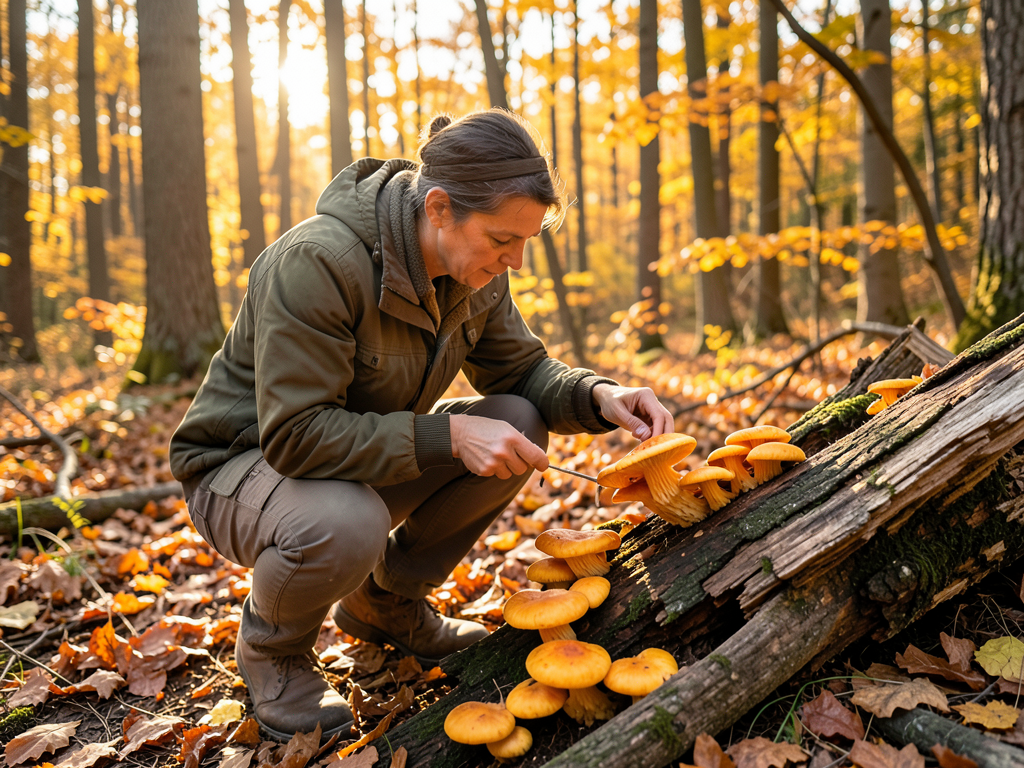
Fall Mushrooms: The Main Event
Autumn mushroom foraging is some of the most productive of the year. The combination of cooling temperatures and autumn rains triggers massive fruiting.
Hen of the Woods (Grifola frondosa)
Also known as maitake, hen of the woods is a polypore mushroom that grows in large, overlapping clusters at the base of oak trees. A single specimen can weigh 5 to 50 pounds. The flavor is rich, earthy, and slightly peppery — excellent simply sautéed in butter or added to soups and risotto.
Identification: Look for grayish-brown overlapping fronds forming a rosette at the base of old oak trees, usually in October. The underside has tiny pores, not gills. There are no dangerous lookalikes when found growing at the base of oaks with this distinctive fronded structure.
Chicken of the Woods (Laetiporus species)
This bright orange-and-yellow shelf fungus is hard to miss and harder to mistake. It grows in tiered brackets on dead or dying hardwood trees, usually oaks. The texture and flavor genuinely resemble chicken breast — hence the name.
Important note: About 10% of people experience gastrointestinal distress from chicken of the woods, especially when it grows on conifers or locust trees. Harvest only from hardwoods (preferably oak), cook thoroughly, and try a small amount first if you’ve never eaten it.
Puffballs (Calvatia and Lycoperdon species)
Puffballs are the beginner’s mushroom — round, white, and unmistakable when you know the one rule: slice them in half vertically. The interior should be pure, uniform white like a marshmallow. Any sign of a developing cap, stem, or gill structure inside means you’re holding an immature gilled mushroom, possibly a deadly Amanita.
Giant puffballs (Calvatia gigantea) can reach the size of a soccer ball. One mushroom can feed a dinner party. Slice into steaks, bread and fry like eggplant, or cube for stir-fries.
Edible Roots: The Underground Fall Harvest
Roots are fall’s hidden treasure. Most edible wild roots need to be harvested after the plant’s energy has moved underground — meaning late fall, after the aerial parts have died back.
Burdock (Arctium species)
Burdock root (gobo in Japanese cuisine) is biennial — the first-year plant produces a long, deep taproot that’s tender and flavorful. Second-year plants send up a tall flower stalk and the root becomes woody and inedible. Fall is the best time to harvest first-year burdock roots, when they’ve stored a full season’s worth of nutrients.
The flavor is earthy, mildly sweet, and somewhat artichoke-like. Peel the root, slice into coins, and sauté or add to soups. It’s a staple ingredient in Japanese cooking for good reason.
Harvesting tip: Burdock roots can grow 2-3 feet deep in loose soil. Bring a digging stick or a sturdy trowel — you’ll need it. Harvesting after rain softens the ground significantly.
Jerusalem Artichoke (Helianthus tuberosus)
Also called sunchokes, Jerusalem artichokes are the tubers of a native North American sunflower species. They look like knobby ginger root and taste like water chestnuts with a hint of artichoke. Harvest from late fall through winter — freezing temperatures actually improve the flavor by converting some of the inulin (a storage carbohydrate) to sweeter fructose.
Be warned: sunchokes have a well-earned nickname — “fartichokes.” The inulin is indigestible to humans and ferments in the gut. Start with small portions. Long, slow cooking helps break down some of the inulin.
Dandelion Root (Taraxacum officinale)
Everyone knows dandelion leaves for spring salads, but the root is a fall specialty. Harvest from late October onward when the roots are thick and packed with stored energy. Clean thoroughly, roast at 350°F until dark brown and fragrant, then grind for a caffeine-free coffee substitute that tastes remarkably like the real thing.
Dandelion root coffee was widely used during the Civil War and both World Wars when real coffee was scarce. It has a roasted, slightly bitter, nutty flavor that stands on its own.
Essential Safety Rules for Fall Foraging
Fall foraging has unique risks that deserve specific attention.
Hunting Season Awareness
In many regions, fall means hunting season. Deer, turkey, and small game seasons overlap with prime foraging time. Always check local hunting calendars before heading out. Wear blaze orange — a vest and hat cost less than $20 and could save your life. Avoid foraging at dawn and dusk when hunters are most active and visibility is lowest.
Lookalikes Are More Dangerous in Fall
Many plants look different in autumn than they did in summer. Leaves change color and drop, making identification harder. Mushrooms can be in various stages of decay that alter their appearance. If you can’t positively identify something without leaves or in its autumn form, leave it. The same plant you confidently identified in July might look foreign in October.
Roadside and Urban Contamination
Fall is when many municipalities spray herbicides along roadsides and in parks. Avoid foraging within 50 feet of roads subject to winter salting — the soil accumulates salts that plants concentrate in their tissues. Urban parks may be treated with pesticides. When in doubt, go deeper into wild spaces.
The Three-Proof Rule
Before eating any wild plant or mushroom for the first time, verify your identification using three independent characteristics. Don’t rely on a single field mark. For example, when identifying hen of the woods, confirm: (1) grows at base of old oaks, (2) has pores not gills on the underside, (3) forms overlapping grayish-brown fronds in a rosette pattern. If all three match, you’re on solid ground.
Tools You’ll Need for Fall Foraging
Summer foraging can be done with bare hands and a container. Fall requires slightly more equipment because you’re dealing with nuts, roots, and mushrooms.
| Item | Why You Need It |
|---|---|
| Sturdy basket or mesh bag | Mushrooms need airflow; plastic bags cause them to sweat and spoil |
| Hori-hori knife or trowel | For digging roots without damaging them |
| Pruning shears | Clean cuts on herbs and above-ground plants |
| Nut gatherer or gloved hands | Black walnut husks stain badly |
| Paper bags for mushrooms | Separate species to prevent cross-contamination |
| Field guide (physical book) | No cell signal needed, no battery to die |
| Blaze orange vest/hat | Hunting season safety |
| GPS or downloaded map | Fall forests look different when leaves drop |
What Beginners Get Wrong About Fall Foraging
I’ve guided dozens of new foragers through their first autumn season, and the same mistakes come up repeatedly.
Mistake 1: Only looking up. Summer foragers are used to scanning bushes and branches. In fall, the best food is often on the ground or underground. Retrain your eyes to look down — at the leaf litter, at tree bases, at the soil itself.
Mistake 2: Harvesting too early. Fall edibles reward patience. Nuts harvested before they drop aren’t fully ripe. Roots dug before the plant dies back are less nutritious. Mushrooms picked tiny haven’t developed their full flavor. Wait. The food isn’t going anywhere.
Mistake 3: Ignoring mushrooms because “mushrooms are scary.” I understand the fear — mushroom poisoning is real and serious. But fall mushrooms include some of the safest, most distinctive species available. Hen of the woods, chicken of the woods, and giant puffballs are excellent beginner species with very few credible lookalikes when your identification is thorough. Start there. Learn from an experienced forager. Don’t let fear close off an entire category of wild food.
Mistake 4: Not checking hunting seasons. This one should be obvious, but I’m amazed how many foragers head into public land in November wearing earth tones. You’re not invisible to hunters. Make yourself visible.
Frequently Asked Questions
What wild plants can you actually eat in the fall?
The most abundant fall wild edibles include acorns (after leaching), black walnuts, hickory nuts, persimmons (after frost), rose hips, wild grapes, hen of the woods mushrooms, chicken of the woods, puffballs, burdock root, Jerusalem artichokes, dandelion root, and late-season blackberries. This is just the short list — depending on your region, you may also find chestnuts, butternuts, hawthorn berries, elderberries, and chicory root.
Is it safe to forage mushrooms in autumn?
Yes, but only with proper identification. Fall actually has some of the safest beginner-friendly mushrooms because species like hen of the woods, chicken of the woods, and giant puffballs have very few dangerous lookalikes when proper ID steps are followed. Never eat any mushroom you cannot positively identify using at least three independent characteristics. When in doubt, join a local mycological society and learn from experienced foragers.
How do you prepare acorns so they’re edible?
Shell the acorns, coarsely grind them, and soak in cold water (changing water 2-3 times daily) for 3-7 days until the bitterness is gone. The tannins that make raw acorns unpalatable are water-soluble and will leach out. After leaching, the acorn meal can be dried, ground into flour, and used in baking. Hot water leaching is faster but cooks the starch, limiting uses.
When should you harvest wild roots?
Late fall, after the aerial parts of the plant have died back. This is when the plant has translocated its energy stores into the root system for winter survival. Roots harvested in late October or November are larger, more nutritious, and sweeter than those dug in summer. Some roots, like Jerusalem artichokes, actually improve after exposure to freezing temperatures.
Can you forage in the winter too?
Absolutely. Many fall edibles persist into winter: rose hips hang on the bush all winter long, Jerusalem artichokes can be dug as long as the ground isn’t frozen solid, and some mushrooms (like oyster mushrooms and velvet shanks) fruit throughout mild winter periods. Cattail rhizomes, burdock roots, and dandelion roots are all harvestable through winter in most climates.
Building Your Fall Foraging Knowledge
Fall foraging rewards knowledge. Unlike summer, where a ripe blackberry announces itself with color and softness, autumn wild foods ask you to understand plant life cycles, tree identification, mycology basics, and seasonal patterns.
Start with three easy wins: one nut (try white oak acorns), one berry (rose hips are everywhere), and one mushroom (hen of the woods if you have oak trees nearby, or giant puffballs in open fields). Master these three before expanding your repertoire. Each success builds confidence and pattern recognition that transfers to the next species.
Keep notes. I maintain a simple foraging journal with dates, locations, and what I found. Over years, patterns emerge — this particular oak drops acorns in the third week of September, these hedgehogs fruit every October after the first heavy rain. That kind of local, seasonal knowledge is something no app and no book can give you.
Fall is not the end of abundance. It’s a different abundance — one that asks you to learn the landscape more deeply. The reward is some of the richest, most satisfying wild food you’ll ever taste. And the knowledge carries you through to winter, spring, and every season after.
Now get outside. The nuts are falling.