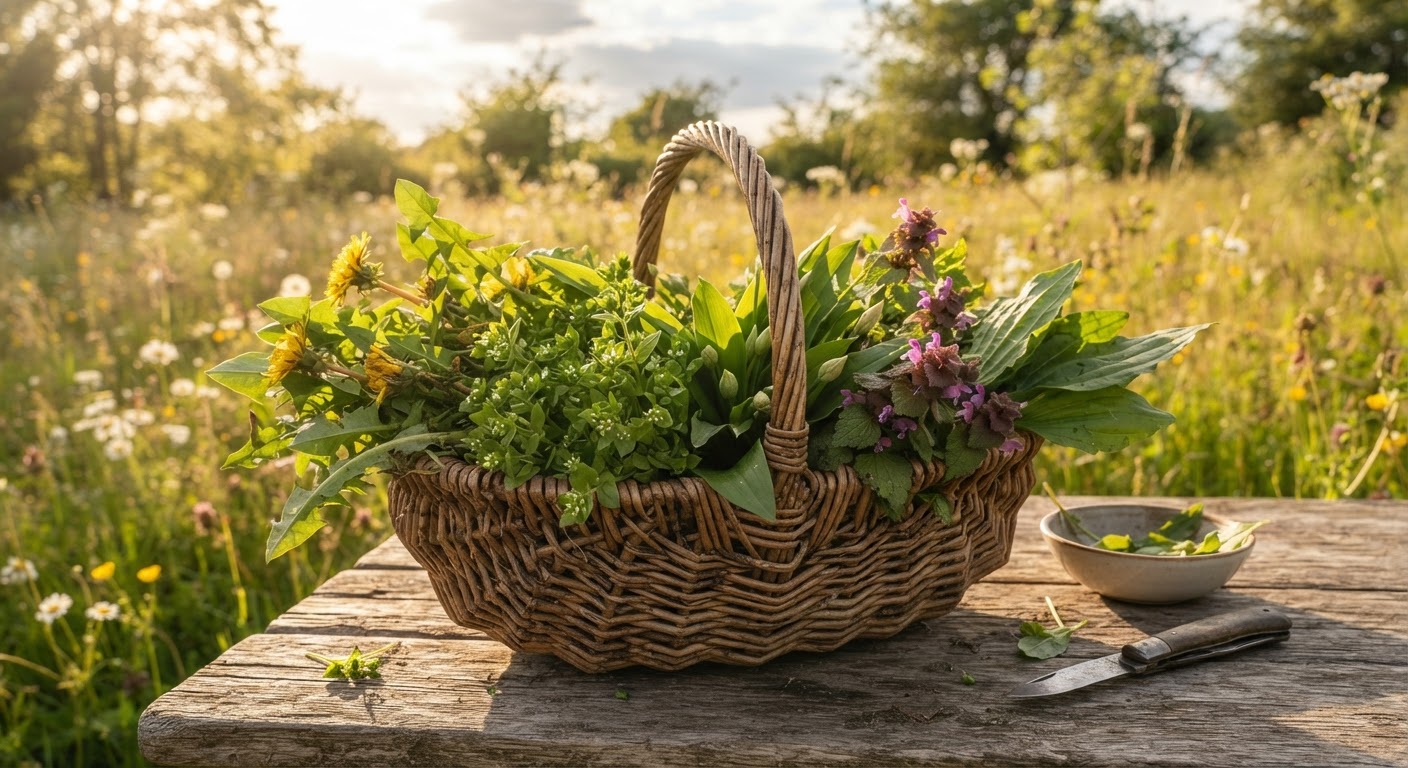
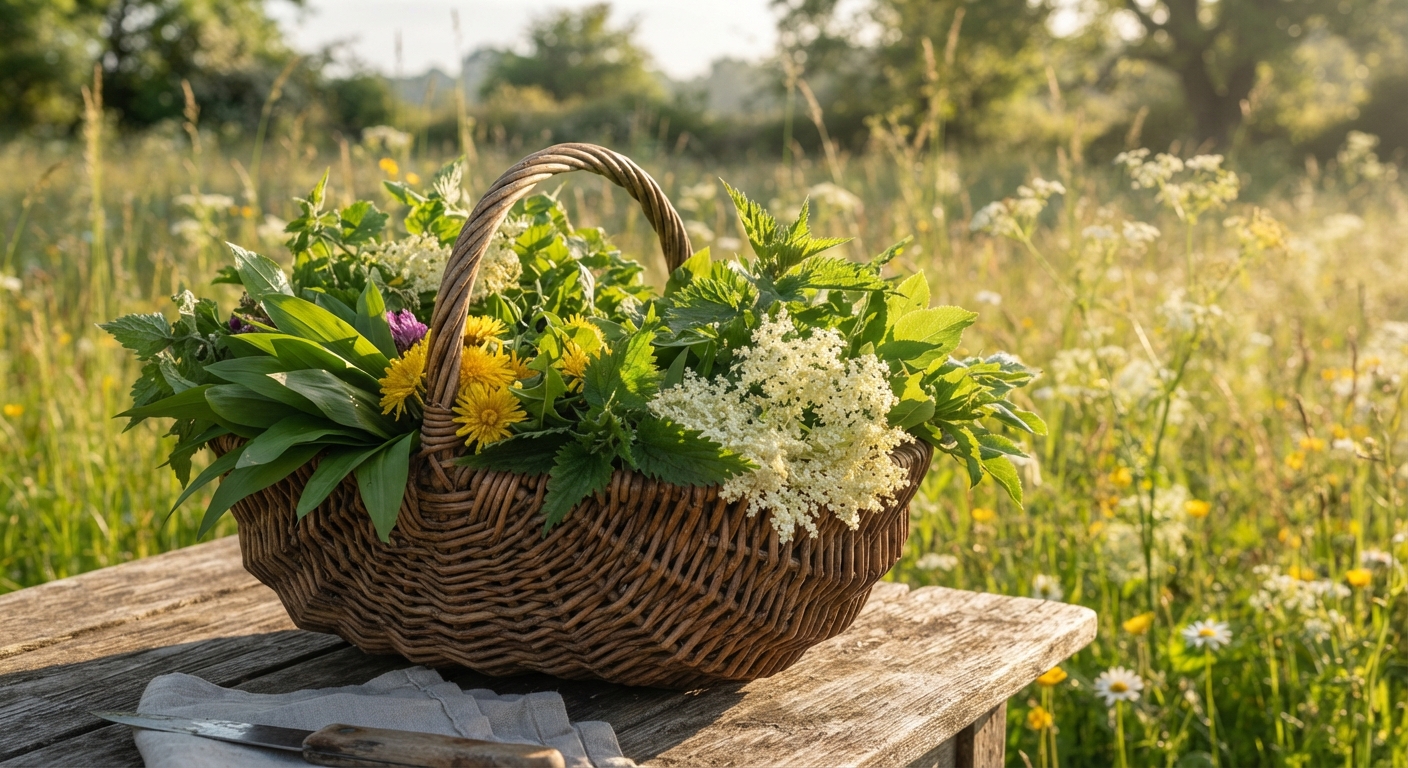
The first time I realized my backyard was basically a free grocery store, I felt like an idiot.
There I was, paying $4.99 for a sad plastic box of baby spinach at Whole Foods, while my lawn was covered in purslane — a succulent green with more omega-3 fatty acids than any leafy vegetable in the produce aisle. I’d been pulling it out by the roots for three summers, cursing it as a weed, never once tasting a leaf.
That moment changed how I see green spaces. Parks, trails, sidewalk cracks, abandoned lots — suddenly they weren’t just scenery. They were menus.
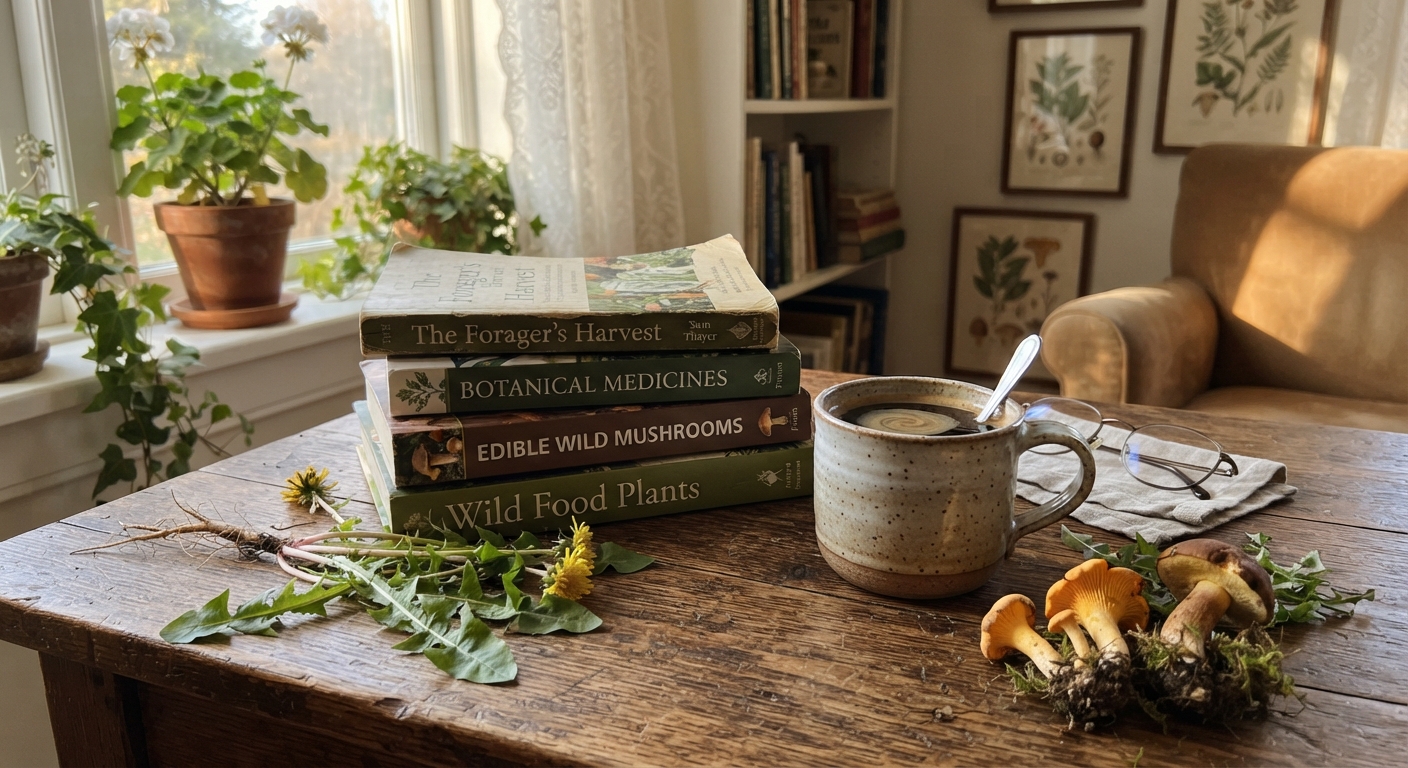
This edible wild plants list covers 15 plants you can identify, harvest, and eat safely. I’m not including obscure survival rations that taste like regret. Every plant here is something I’ve personally eaten, prepared multiple ways, and would serve to skeptical dinner guests.
One critical rule before we dive in: never eat anything you cannot identify with 100% certainty. Use a reliable field guide, cross-reference at least two sources, and when in doubt, walk away. Nobody ever regretted not eating a mystery plant.
🌿 Before You Start: The Forager’s Safety Framework
These rules aren’t suggestions. They’re the difference between a free salad and a call to poison control.
The Golden Rules:
- Positive ID only. If there’s even a 1% doubt, don’t eat it. Hemlock looks almost identical to wild carrot to beginners, and hemlock killed Socrates.
- Learn the toxic look-alikes first. Before memorizing edible plants, memorize the dangerous ones that resemble them. This alone will keep you alive.
- Avoid polluted areas. Roadsides, industrial zones, railroad tracks, and heavily treated lawns accumulate heavy metals and pesticides. Find clean, unsprayed ground.
- Start with one plant. Learn it completely — all seasons, all growth stages, all look-alikes. Only then move to the next.
- First taste test. Eat a tiny amount first, wait 24 hours. Some people react to plants most people tolerate fine.
With that out of the way, here’s the list.
1. Dandelion (Taraxacum officinale) — The Supermarket Weed
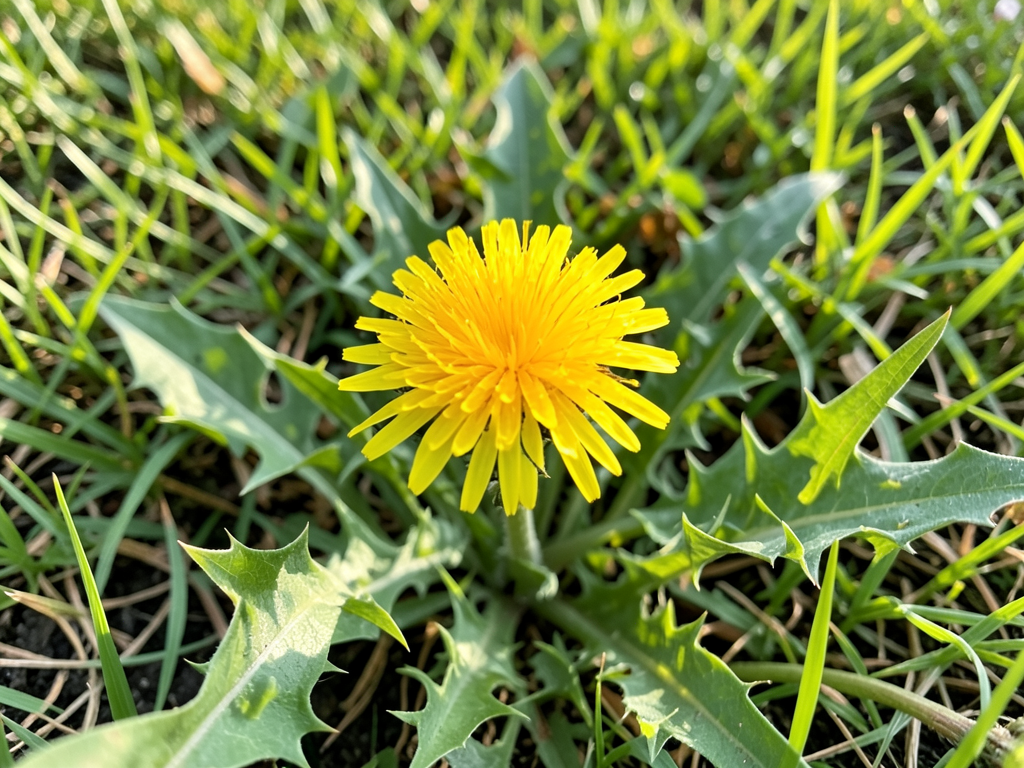
If you learn only one wild plant, make it this one. Every part of the dandelion is edible — roots, leaves, flowers, even the unopened buds. It’s also nearly impossible to misidentify, because no toxic look-alike has the same combination of hollow stem, single yellow flower head per stalk, and deeply toothed leaves in a basal rosette.
What to eat:
- Young leaves (early spring): Slightly bitter, perfect raw in salads. Older leaves need blanching.
- Flowers: Sweet, pollen-rich. Dip in batter and fry for fritters, or steep for dandelion wine.
- Roots: Roast at 200°F for 2 hours, then grind for a caffeine-free coffee substitute. Earthy, slightly nutty.
- Unopened buds: Pickled, they taste remarkably like capers.
Nutritional highlight: One cup of dandelion greens has more vitamin A than a carrot, more calcium than a glass of milk, and more iron than spinach. The bitterness comes from sesquiterpene lactones, compounds that stimulate digestion and liver function.
When to harvest: Leaves in spring, flowers in late spring to early summer, roots in fall.
2. Purslane (Portulaca oleracea) — Nature’s Omega-3 Powerhouse
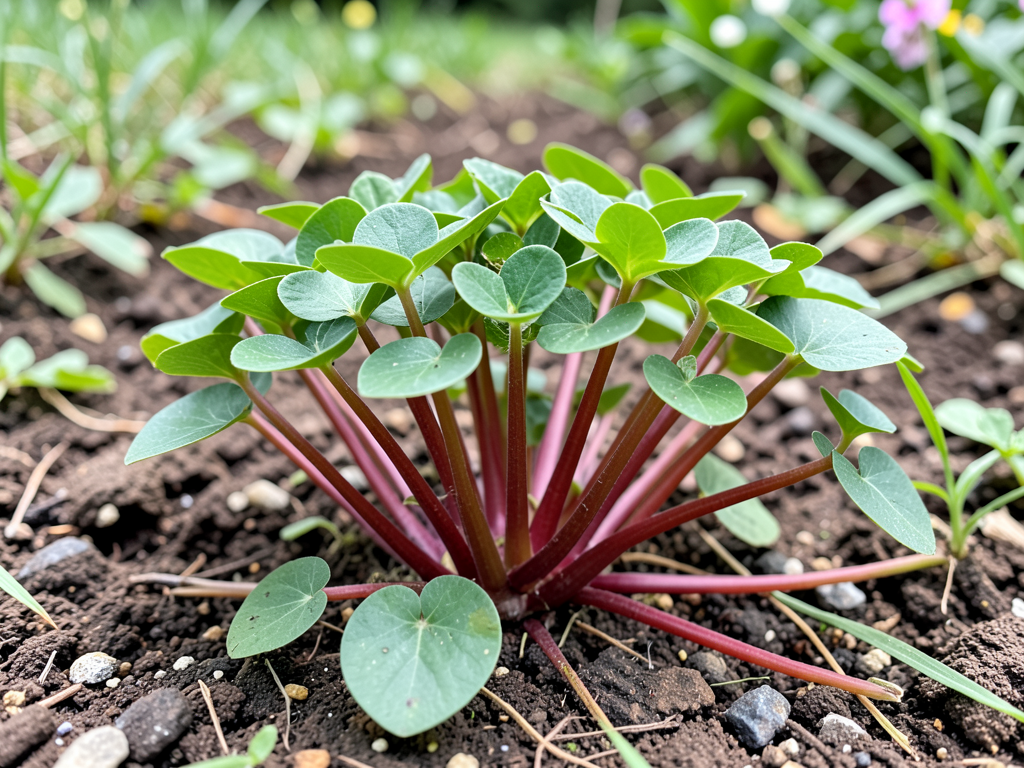
Purslane doesn’t look like a superfood. It looks like a weed that lost a fight with a steamroller. But those rubbery little leaves contain more omega-3 fatty acids (alpha-linolenic acid) than any other leafy vegetable — including kale, spinach, and arugula.
What to eat: Leaves and tender stems, raw or cooked. The mucilaginous texture (slightly slimy, like okra) thickens soups and stews beautifully. In Mexican cuisine it’s called verdolagas and cooked with pork and tomatillo salsa.
Identification: Succulent reddish stems, small paddle-shaped leaves growing in opposite pairs, tiny yellow flowers that open only in morning sun. A common toxic look-alike is spurge — but spurge has thin stems with milky white sap, while purslane sap is clear. Break a stem to check.
When to harvest: Summer through early fall. Thrives in hot, dry conditions when most other greens have bolted.
3. Lamb’s Quarters (Chenopodium album) — Wild Spinach That Grows Everywhere
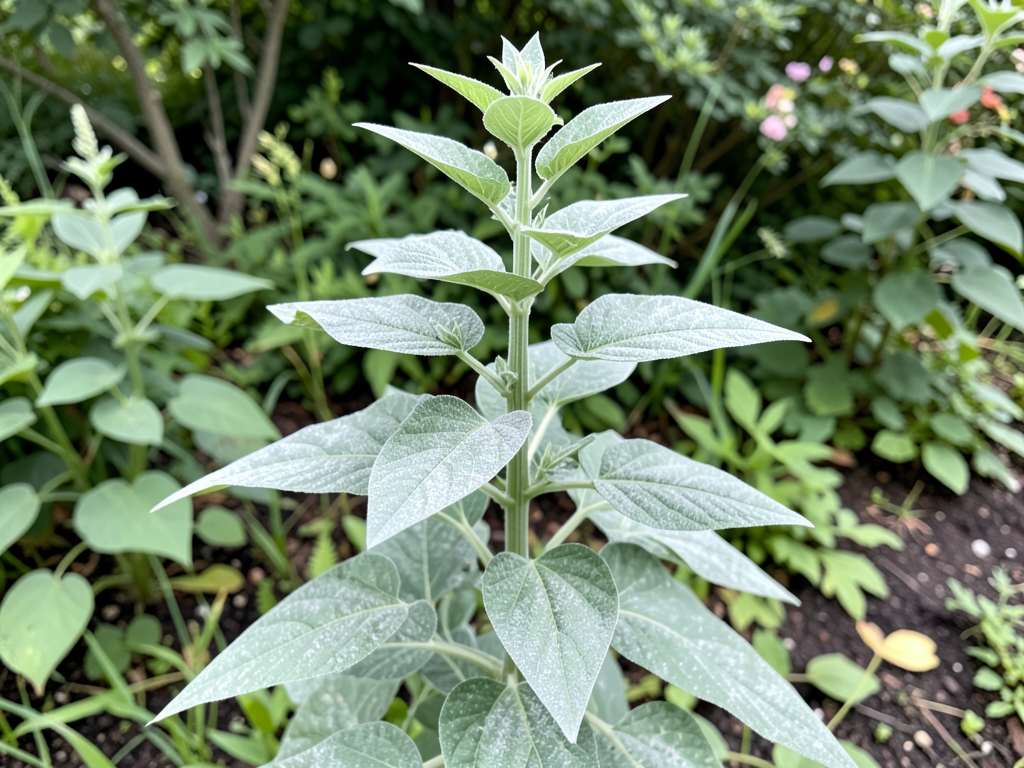
Also called goosefoot or wild spinach, lamb’s quarters grows in virtually every disturbed soil on Earth — gardens, construction sites, farm fields, even the cracks in your driveway. The leaves taste like a cross between spinach and Swiss chard, only sweeter and more mineral-rich.
What to eat: Young leaves and tender stem tips. Steam them like spinach, sauté with garlic, or throw them into any dish that calls for cooked greens. The seeds — if you have the patience to collect them — can be ground into a protein-rich flour.
Identification: Diamond-shaped leaves with irregularly toothed edges, coated with a white powdery bloom (especially on young plants and the undersides of leaves). The powder washes off easily and isn’t harmful — it’s the plant’s natural sunscreen.
When to harvest: Spring through early summer for leaves. Seeds in late summer to fall.
4. Stinging Nettle (Urtica dioica) — Pain Today, Nutrition Tomorrow
Yes, this one hurts. Those tiny silica-tipped hairs inject histamine, acetylcholine, and serotonin into your skin. But once you blanch nettles in boiling water for 30 seconds, the stingers are permanently neutralized — and what’s left is one of the most nutrient-dense wild foods on the planet.
What to eat: Young top leaves (first 4-6 inches of growth). Use them anywhere you’d use spinach — soups, pestos, pasta fillings, quiches. Nettle tea has a clean, green, almost kelp-like flavor that’s surprisingly pleasant.
Nutritional highlight: Nettles contain up to 25% protein by dry weight, abundant iron, calcium, magnesium, and vitamins A, C, and K. They’ve been used medicinally for centuries as a spring tonic precisely because they’re so nutritionally dense.
Harvesting tip: Wear thick gloves. Use scissors and drop the cuttings directly into a bag. Don’t touch your face. The sting fades after 20-30 minutes, but it’s memorable.
When to harvest: Spring, before the plants flower. After flowering, nettles develop gritty particles called cystoliths that can irritate the kidneys.
5. Chickweed (Stellaria media) — The Delicate Salad Green
Chickweed is the anti-nettle — soft, tender, and gentle in every way. It forms dense low mats in gardens and lawns during cool weather, with tiny white star-shaped flowers that give the genus its name (Stella = star).
What to eat: Entire above-ground plant — leaves, stems, flowers. The texture is like microgreens or butter lettuce. Eat it raw in salads, on sandwiches, or as a garnish. Cooking makes it mushy, so raw is best.
Identification: A single line of hairs running along one side of the stem only — this is the definitive field mark. If you look closely at the stem, the hairs follow one line and switch sides at each leaf node. No other common plant does this.
When to harvest: Late fall through early spring. Chickweed hates heat and disappears as soon as temperatures climb.
6. Wild Garlic / Field Garlic (Allium vineale) — The Unmistakable Aromatic
If it smells like garlic or onion, it’s in the allium family — and all true alliums are edible. Wild garlic is the easiest wild edible to identify with certainty because your nose does all the work.
What to eat: Leaves, bulbs, and bulbils (the tiny aerial bulbs that form on top). Use leaves like chives — minced raw over potatoes, eggs, soups, or salads. The bulbs are small but intensely flavored.
Safety note: The smell test is the only test. If a plant looks like wild garlic but has no onion/garlic odor, you might be looking at a toxic lily — including death camas. Smell every single specimen before eating it.
When to harvest: Leaves in spring through early summer, bulbs in summer and fall.
7. Wood Sorrel (Oxalis spp.) — Nature’s Sour Candy
Wood sorrel looks like clover but tastes like lemonade. The leaves, flowers, and seed pods all have a bright, tangy flavor from oxalic acid — the same compound that gives rhubarb its sour punch.
What to eat: Leaves, flowers, and green seed pods as a trail-side nibble or salad addition. In small quantities it’s a flavor bomb. In large quantities, the oxalic acid can interfere with calcium absorption and cause stomach upset, so don’t make it your main course.
Identification: Three heart-shaped leaflets like clover, but the leaves fold down at night and during rain. Flowers have five petals and come in yellow, pink, or white depending on the species.
When to harvest: Spring through fall.
8. Plantain (Plantago major / Plantago lanceolata) — The Band-Aid You Can Eat
No, not the banana. This is broadleaf plantain, the unkillable weed in every sidewalk crack. It’s both food and medicine — the young leaves are edible (steam or sauté), and crushed leaves make a natural poultice for insect stings, cuts, and rashes.
What to eat: Young tender leaves in spring. Older leaves get stringy and tough from the prominent parallel veins. Blanch briefly to soften. The seeds (psyllium) from the flower spikes are the same ingredient in Metamucil.
When to harvest: Leaves in spring, seeds in late summer.
9. Cattail (Typha spp.) — The Supermarket of the Swamp
Cattails are sometimes called the “supermarket of the swamp” because nearly every part is useful in a different season. The indigenous peoples of North America relied heavily on cattails, and for good reason.
What to eat:
- Young shoots (spring): Peel the outer leaves and eat the tender white core raw or cooked. Tastes like cucumber.
- Green flower spikes (late spring): Boil and eat like corn on the cob. Yes, really.
- Pollen (early summer): Shake into a bag and use as flour extender. Bright yellow and slightly sweet.
- Roots (fall/winter): Process the starchy rhizomes to extract cattail flour. It’s labor-intensive but produces a versatile gluten-free flour.
Identification: No toxic look-alikes when the brown cigar-shaped seed head is present. But before that stage, make sure you’re not harvesting young iris or sweet flag — both grow in similar wetland habitats. Cattail leaves are D-shaped in cross-section with a spongy interior, irises are flat and fan-shaped.
When to harvest: Different parts throughout the year — shoots in spring, pollen in early summer, roots in fall/winter.
10. Burdock (Arctium lappa / Arctium minus) — The Root Vegetable Hiding in Plain Sight
Burdock is that plant with the giant rhubarb-like leaves and velcro-like burrs that stick to your dog. But below ground, it’s hiding one of the most delicious root vegetables you’ll ever taste.
What to eat: First-year roots (burdock is biennial — harvest before the flower stalk appears). Peel the brown skin and you’ll find a crisp white interior that tastes like a cross between artichoke heart and parsnip. Known as gobo in Japanese cuisine, it’s fantastic in stir-fries, soups, and pickles.
Harvesting tip: First-year roots can go deep — bring a shovel, not a trowel. Look for first-year plants (large basal rosette, no flower stalk). Second-year plants send up a tall stem and the root becomes woody and inedible.
When to harvest: Fall of the first year, or very early spring of the second year before the flower stalk emerges.
11. Violet (Viola spp.) — Edible Flowers with a Secret
Wild violets are more than cute purple flowers. Both the flowers and leaves are edible, mild-tasting, and incredibly versatile.
What to eat: Flowers are mildly sweet and beautiful in salads, on cakes, or crystallized with sugar. Young leaves are rich in vitamins A and C and can be used like any mild green. The flowers also make a stunning purple syrup that changes color with pH — add lemon juice and watch it turn pink.
When to harvest: Flowers in spring, leaves spring through early summer.
12. Curly Dock / Yellow Dock (Rumex crispus) — The Overlooked Green
Curly dock sends up a tall rusty-brown seed stalk in late summer that’s impossible to miss. But in spring, those crinkly-edged leaves at the base are tender, lemony, and excellent cooked.
What to eat: Young leaves (blanch to reduce oxalic acid). The flavor is pleasantly sour — great mixed with milder greens or in a foraged spanakopita. The seeds can be ground into a dark, gluten-free flour that makes dense, hearty crackers.
When to harvest: Leaves in early spring only (they get tough and bitter fast). Seeds in late summer.
13. Garlic Mustard (Alliaria petiolata) — Eat the Invader
Garlic mustard is an aggressive invasive species in North America that’s destroying native forest ecosystems. But it’s also delicious. Every plant you eat is one less plant spreading seeds.
What to eat: Second-year leaves and flower buds are the best — they have a distinct garlic-mustard flavor that’s incredible in pesto. First-year leaves (kidney-shaped, growing as a ground-level rosette) are milder. The roots taste like horseradish.
When to harvest: First-year rosettes any time, second-year leaves and buds in spring.
14. Clover (Trifolium spp.) — The Lawn Underdog
Both red and white clover are abundant, easy to identify, and entirely edible. The flowers are sweetest, the leaves are mild, and both are surprisingly nutritious.
What to eat: Flower heads (fresh or dried for tea), young leaves (raw in salads or steamed). Clover flowers in tea taste faintly like vanilla. The leaves contain protein and minerals and cook down like spinach.
Caution: Clover contains coumarin compounds that can thin blood in large quantities — the same reason people on warfarin are told to avoid it. Occasional foraging quantities are fine for most people.
When to harvest: Spring through early fall for flowers, spring for tender leaves.
15. Amaranth / Pigweed (Amaranthus retroflexus) — Ancient Grain, Modern Weed
Amaranth has been cultivated for over 8,000 years — the Aztecs considered the seeds sacred — but most people today spray it with Roundup. Wild amaranth gives you access to both a leafy green and a gluten-free grain from a single plant.
What to eat: Young leaves taste like spinach (cook them, don’t eat raw — they contain some oxalates and nitrates). The tiny black seeds from the flower heads can be collected and cooked like quinoa or popped like miniature popcorn.
When to harvest: Leaves in late spring through summer, seeds in late summer to fall.
📊 Quick Reference: Edible Parts at a Glance
| Plant | Leaves | Flowers | Roots | Seeds | Season |
|---|---|---|---|---|---|
| Dandelion | ✓ (spring) | ✓ | ✓ (fall) | — | Spring–Fall |
| Purslane | ✓ | — | — | — | Summer |
| Lamb’s Quarters | ✓ | — | — | ✓ (late) | Spring–Summer |
| Stinging Nettle | ✓ (blanch) | — | — | — | Spring |
| Chickweed | ✓ (raw) | ✓ | — | — | Fall–Spring |
| Wild Garlic | ✓ | — | ✓ | — | Spring–Summer |
| Wood Sorrel | ✓ | ✓ | — | ✓ | Spring–Fall |
| Plantain | ✓ (young) | — | — | ✓ | Spring–Summer |
| Cattail | ✓ (shoots) | ✓ (spike) | ✓ (flour) | — | Year-round |
| Burdock | ✓ (young) | — | ✓ (1st yr) | — | Fall–Spring |
| Violet | ✓ | ✓ | — | — | Spring |
| Curly Dock | ✓ (young) | — | — | ✓ | Spring–Fall |
| Garlic Mustard | ✓ | ✓ | ✓ | — | Spring |
| Clover | ✓ | ✓ | — | — | Spring–Fall |
| Amaranth | ✓ | — | — | ✓ | Spring–Fall |
🧺 How to Build Your First Foraging Basket
The “One Plant Rule” (revisited in practice):
This is genuinely the single most important advice in this guide. Pick one plant from this list. Learn it for one full year — how it looks in spring, summer, fall, and winter. Learn what it looks like as a tiny seedling, as a mature plant, and everything in between. Learn every plant that looks similar — especially the toxic ones.
Only when you can confidently identify that plant at 20 yards, in any season, without hesitation, do you add a second plant to your repertoire.
Most foraging accidents happen because someone learned three plants in one weekend and got confused. Don’t be that person.
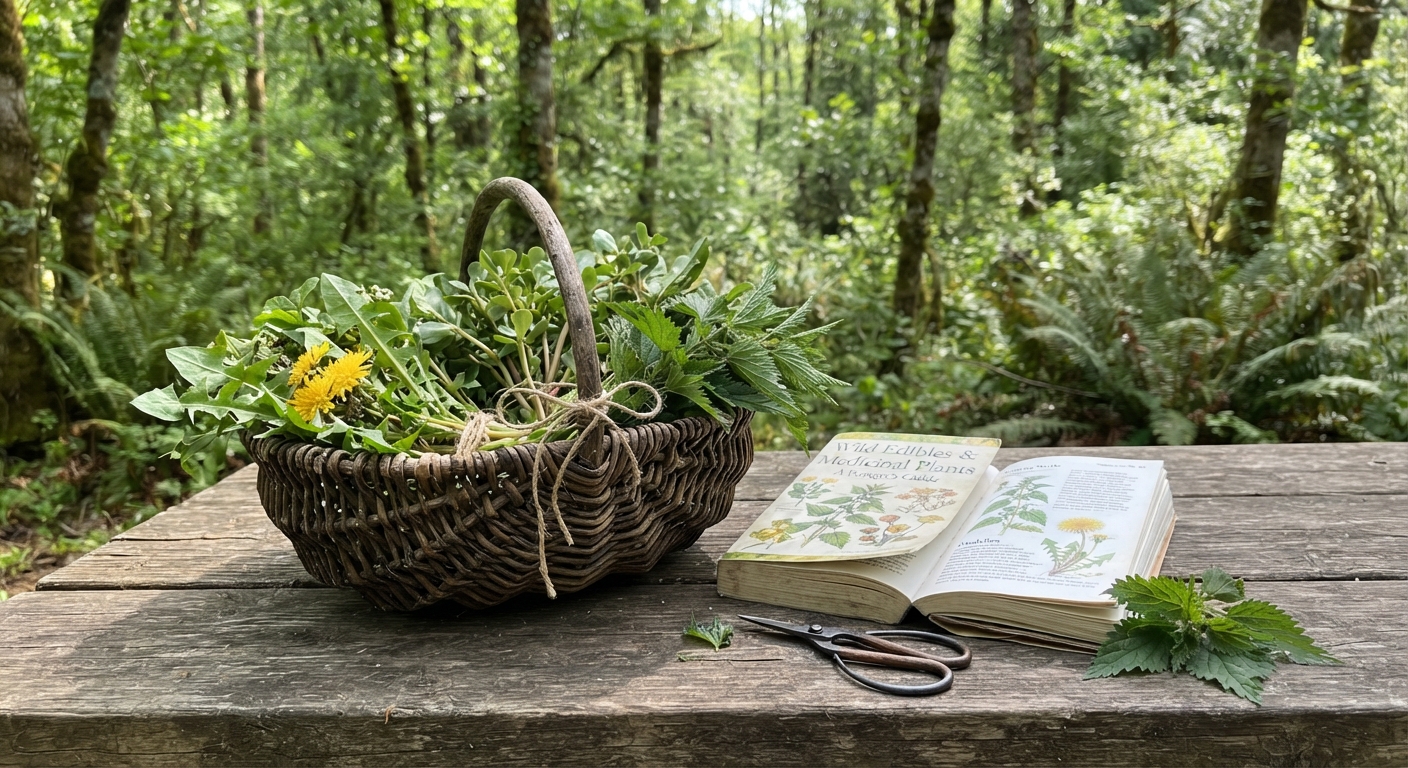
Essential gear:
- A sturdy basket or mesh bag (never plastic — it steams your greens)
- Sharp scissors or a knife
- Gardening gloves (non-negotiable for nettles and thistles)
- Field guide specific to your region
- Phone for photos and GPS marking of good patches
- Reusable produce bags for separating different plants
Harvesting ethics:
- Take no more than 10% of any patch
- Leave the roots unless you’re harvesting the root
- Spread your harvest across multiple plants
- Know the legal status of foraging in your location (national parks, nature preserves, and private land all have different rules)
❓ Frequently Asked Questions
Can I eat wild plants raw?
Some yes, some no. Chickweed, wood sorrel, violet, and purslane are excellent raw. Nettles must be cooked. Lamb’s quarters and amaranth are better cooked. When in doubt, cook it — heat neutralizes many plant defense compounds.
What’s the most common deadly foraging mistake?
Confusing poison hemlock (Conium maculatum) with wild carrot (Daucus carota, also called Queen Anne’s lace). Both have white umbrella-shaped flower clusters and fern-like leaves. The key differences: wild carrot has a hairy stem (hemlock is smooth with purple blotches), smells like carrots when crushed (hemlock smells musty), and often has a tiny purple flower in the center (hemlock never does). If you can’t confidently distinguish these two, avoid all white-umbel plants entirely.
Are there universal safety rules?
Yes: avoid umbrella-shaped white flower clusters (the carrot family has deadly members), avoid plants with milky sap (many are toxic, though dandelion is a safe exception), and always perform the allium smell test for any plant that looks onion-like.
How do I know if land has been sprayed with pesticides?
Look for uniform plant death — natural meadows have diversity. A patch where everything except one species is dead or dying likely got herbicided. Lawns that are unnaturally weed-free are almost certainly treated. Parks often post spraying schedules. If you see blue-green dye on plants, that’s a spray marker — stay away.
Can I store foraged plants?
Most wild greens wilt faster than store-bought because they haven’t been bred for shelf life. Wrap in damp paper towels inside a loose plastic bag, refrigerate immediately, and use within 2-3 days. Roots like burdock store for weeks in the fridge. Nettles can be blanched and frozen.
🌾 Final Thoughts: Why This Matters
Learning to identify edible wild plants isn’t just a survival skill or a cute hobby. It rewires how you see the world.
When you know these 15 plants, you stop seeing “weeds” and start seeing food. You notice the dandelions in the parking lot, the lamb’s quarters pushing through the gravel, the purslane carpeting a neglected garden bed. The entire landscape shifts from background scenery to something alive and generous.
But this knowledge comes with responsibility. Learn the toxic look-alikes before the edibles. Start with one plant and master it completely. Never guess. And respect the land — take only what you need, from places where it’s legal and safe to harvest.
The plants are out there, and they’ve been feeding humans for hundreds of thousands of years. They’re not going anywhere.
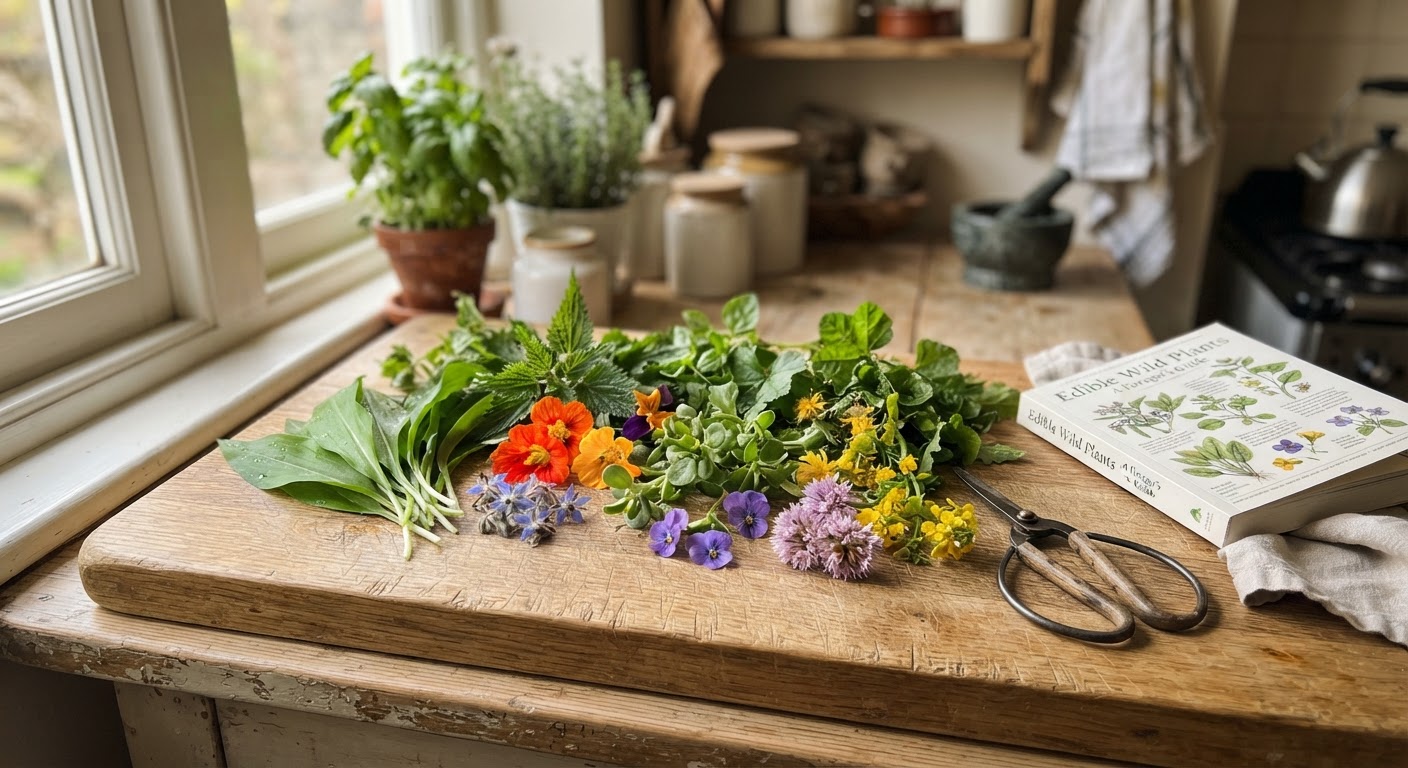
Want more in-depth guides? Check out our best foraging books for every level, our review of foraging apps that actually work, and our guide to harvesting and processing acorns for flour.
Disclaimer: This article is for educational purposes only. Always consult multiple authoritative sources and local experts before consuming any wild plant. Individual reactions vary, and misidentification can be fatal.