Most people quit foraging before they eat a single plant. Not because wild food is hard to find — there’s free food growing through the cracks of most sidewalks. They quit because they picked up a field guide and tried to memorize it cover to cover, got overwhelmed around page forty, and decided the whole hobby was for botanists.
Here’s the uncomfortable truth nobody tells beginners: memorizing plants is the wrong goal. The right goal is building a repeatable system — a way of looking at any plant, deciding whether it’s safe, and making a confident call. That system works whether you’re staring at your third plant or your three hundredth. It scales. Memorization doesn’t.
This guide is that system. It’s not a list of fifty species you’ll forget by next week. It’s the method I wish someone had handed me before I spent a summer second-guessing every leaf in the park: how to start small, how to identify safely, how to keep a field journal that actually teaches you something, and how to build confidence without ever gambling on a guess.
Why the “Memorize Everything” Approach Fails
Before we build the system, it helps to understand why the default approach — buy a guide, learn everything — collapses so reliably.
A good regional field guide contains hundreds of species. Hundreds. Each with its own leaf shape, habitat, season, and lookalike warnings. Your brain cannot hold all of that at once, and it shouldn’t have to. When you try, you end up with a vague, shaky recognition: “I think this is chickweed?” That vague feeling is worse than knowing nothing, because it tempts you to act on a guess.
The skill you actually want is positive identification — the ability to look at a plant and say, with genuine confidence, exactly what it is, because you checked the features that matter. That’s a much smaller skill than “knowing all the plants.” It’s a method, not a library.
Think of it like learning to cook. You don’t start by memorizing a thousand recipes. You learn five techniques, practice them until they’re automatic, and suddenly you can improvise anything. Foraging works the same way. Learn the method, apply it to a few plants, and the library builds itself over time.
The System at a Glance
Here’s the whole method in five steps. Everything after this section just unpacks them.
- Start small. Master a handful of “anchor” plants that are common, distinctive, and have no deadly lookalikes.
- Use a five-point identification checklist on every plant, every time — no shortcuts, no “it’s probably fine.”
- Keep a field journal with photos, location, and the features you actually observed.
- Confirm with at least two independent sources before you eat anything new.
- Scale slowly. Add one new plant at a time, only after the last one feels boring and automatic.
That’s it. No degree, no special equipment, no risk-taking. Let’s take each step apart.
Step 1: Start With Anchor Plants, Not a Shopping List
Your first job is to learn a small number of plants so well that identifying them becomes as automatic as recognizing a friend’s face. I call these anchor plants — common, widespread, easy-to-identify species that give you early wins and teach you the method.
The qualities that make a good anchor plant:
- It’s everywhere. If you have to hike three hours to find it, you can’t practice enough.
- It has one or more unmistakable features. Something you can point to — a smell, a texture, a color pattern — that no dangerous plant shares.
- It has no deadly lookalikes in your region. “No deadly lookalikes” is the whole game. An edible plant with a toxic twin is not a beginner plant, full stop.
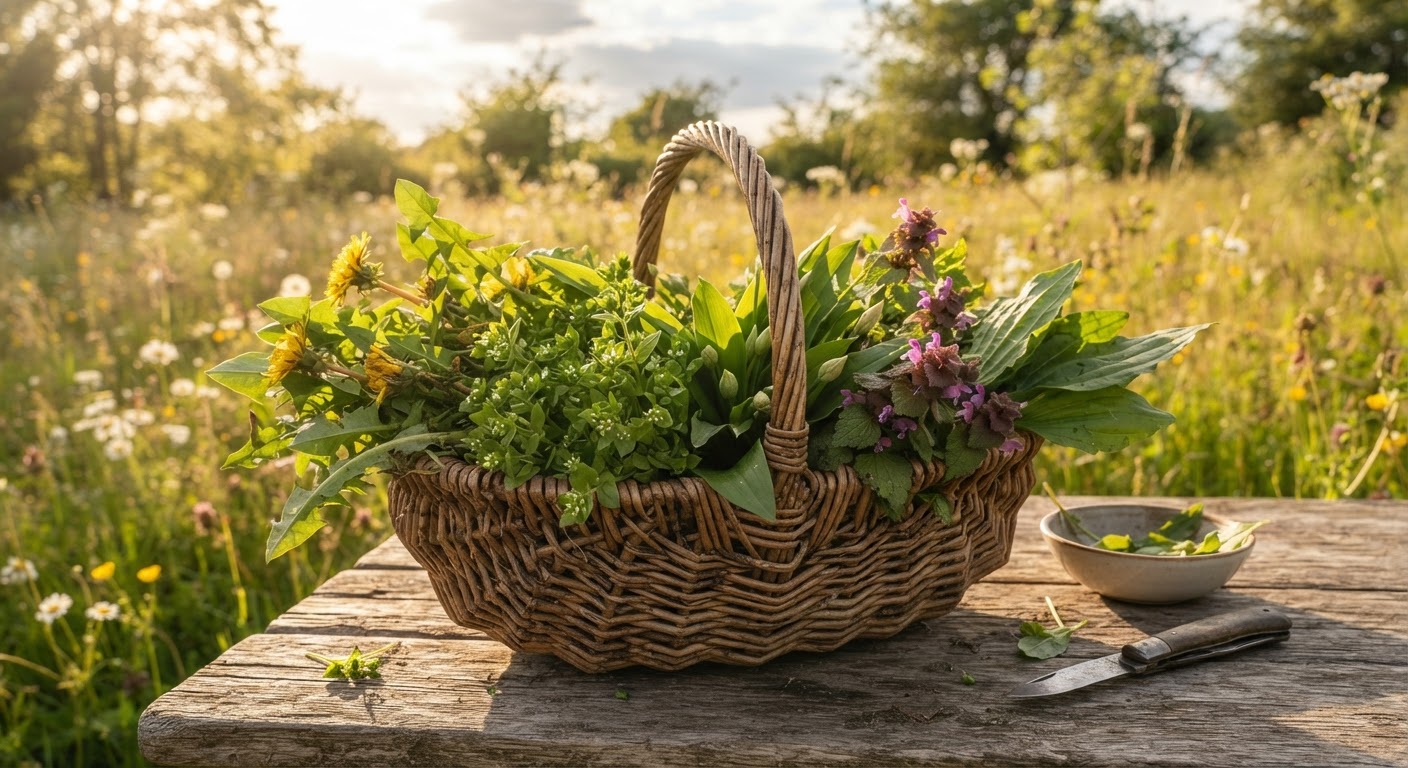
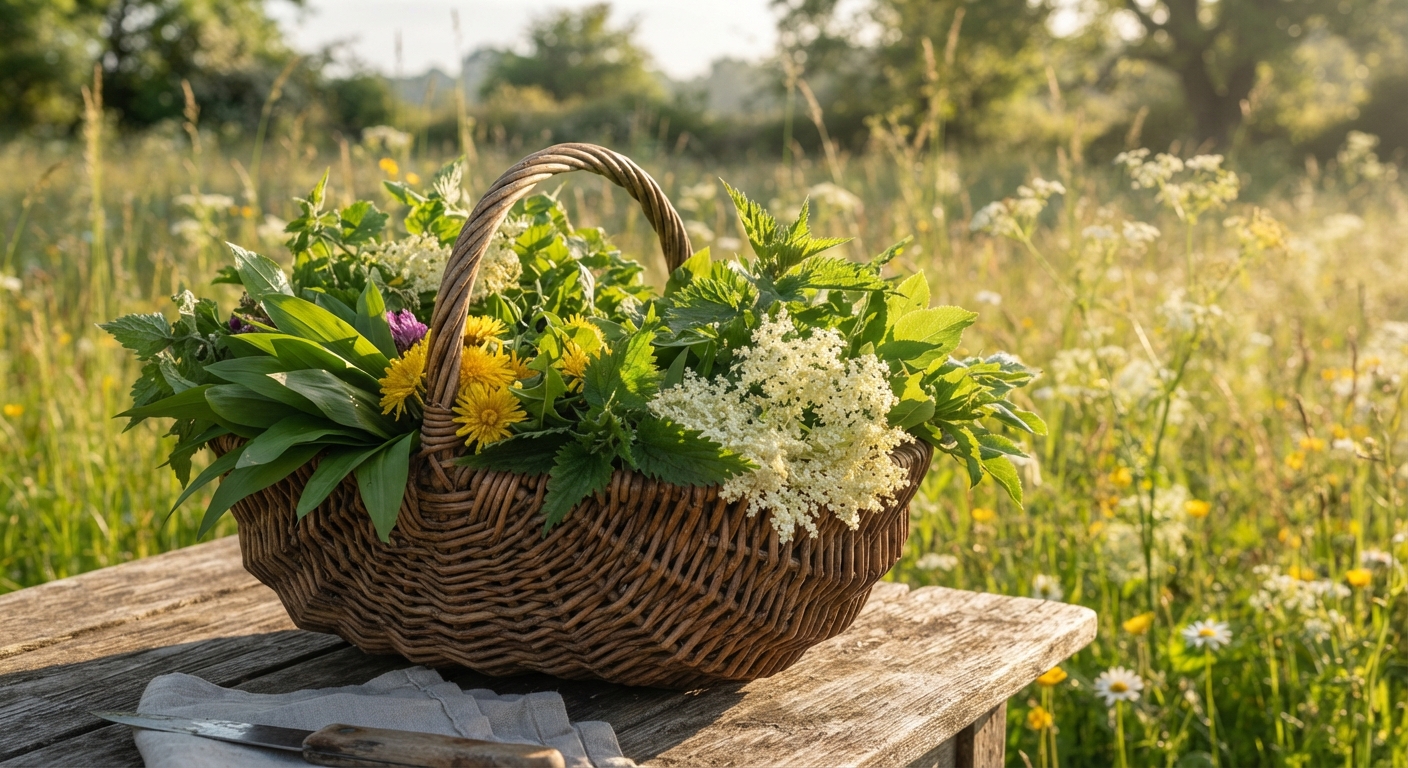
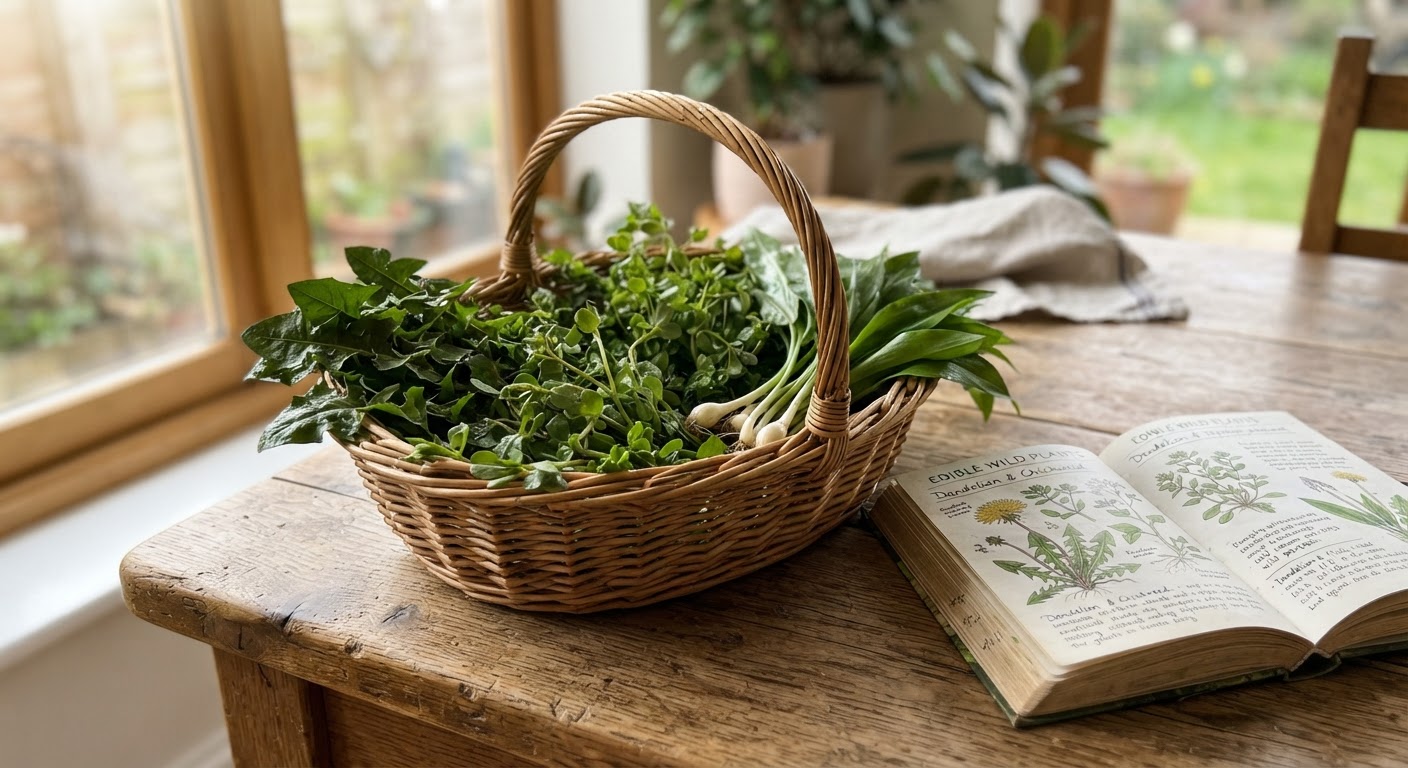
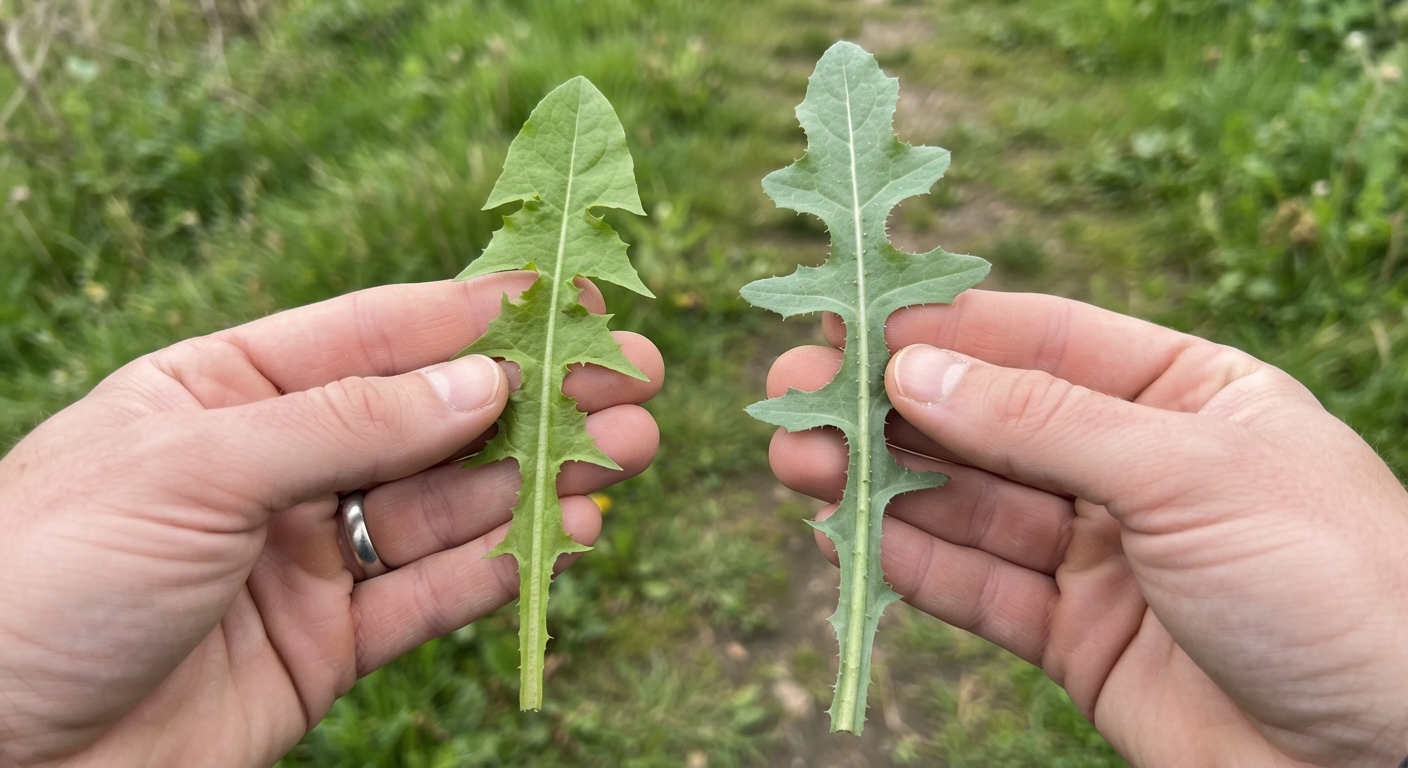
Across most of North America, the classic starter set includes dandelion, chickweed, purslane, wood sorrel, and wild garlic (or field garlic). Each has a signature feature you can learn in an afternoon, and none has a lethal double. Notice what’s not on that list: mushrooms, and anything that looks like hemlock. Those come later, if ever.
Here’s the key discipline: resist the urge to learn ten plants at once. One anchor plant, learned cold, is worth more than twenty plants you half-recognize. Spend a full week on dandelion alone if that’s what it takes. The goal isn’t speed. It’s the confidence that comes from knowing.
Step 2: The Five-Point Identification Checklist
This is the heart of the system, and it’s the thing that keeps you safe. Every time you look at a plant you intend to eat, work through all five points. Skip one, and you’re guessing.
| Feature | What to look for | Red flag |
|---|---|---|
| Habitat | Where is it growing — sun or shade, wet or dry, disturbed soil or forest? | Growing in a spot its species would never choose (e.g., a “water plant” on dry gravel) |
| Leaf | Shape, edge (smooth, toothed, lobed), arrangement on the stem, texture, color | Leaves that look close but not exact — “close” is a guess |
| Stem | Hollow or solid? Round or square? Hairy or smooth? Milky sap? | Milky sap on a plant you expected to be sap-free (common spurge sign) |
| Flower / fruit | Color, number of petals, arrangement, shape of the fruit or seed head | Flower color or petal count that doesn’t match your target |
| Smell / taste test | Crush a leaf and smell it. If it smells right and you’re still unsure, do a cautious touch-to-lip test | Any bitter, burning, or “soapy” sensation — spit and rinse immediately |
Two of those points deserve extra attention, because they save more beginners than the rest combined.
Habitat is your first filter. Plants are picky about where they live. Cattails grow in standing water. Purslane loves hot, disturbed, sunny soil. Chickweed prefers cool, moist shade. If you find a “cattail” growing on a dry hillside, it’s not a cattail — and that mismatch just saved you from a mistake. Learn each anchor plant’s preferred habitat and treat any location that feels wrong as an automatic “no.”
The smell test is underrated. Crush a leaf and smell it. Wild garlic and field garlic smell unmistakably of onion. Crushed carrot-family leaves smell different from crushed parsley — and that family is the one that contains poison hemlock, so smell alone is never enough there. But for your anchor plants, smell is often the feature that turns “I think” into “I know.” When a plant looks right but smells wrong, trust the smell and walk away.
Step 3: Keep a Field Journal That Actually Teaches You
A field journal sounds like homework, but it’s the single highest-leverage habit in foraging. Not because you’ll reread it later (you might), but because the act of writing forces you to actually look at the plant instead of glancing and guessing.
When you have to record “leaves alternate, edges smooth, stem hollow, flower has five yellow petals,” you’re forced to check each of those things. That’s the identification checklist working. The journal is just a way to make sure you don’t skip it.
What to record for every plant:
- Date and location (GPS pin or a clear description — “north edge of the park, under the oak”)
- Photos from multiple angles — leaf, stem, flower, and the whole plant in its habitat
- The five checklist features, written out in your own words
- The season and what stage the plant is in (young rosette, flowering, gone to seed)
- How confident you were — and what you’d want to confirm before eating it
That last line matters more than people realize. Writing “fairly sure, need to check the leaf arrangement” turns a vague feeling into a concrete next step. A year later, your journal is a personal, location-specific field guide — far more useful than any book, because it reflects your actual foraging spots and your actual observations.
Step 4: Confirm With Two Independent Sources
Here’s a rule that has probably saved more lives than any other foraging habit: never eat a new plant based on a single source. Not one app. Not one blog post. Not one photo match. Two independent confirmations, minimum.
What “independent” means: an AI photo-ID app and a printed regional field guide count as two. A field guide and an experienced forager standing next to you count as two. The same website quoted twice does not count as two.
The reason is simple. Every identification method has a failure mode. Apps misread blurry or partial photos. Guides can be ambiguous or regional. A single point of failure means a single wrong answer can put something dangerous in your mouth. Two sources that agree — especially two sources that use different methods — collapse the chance of error dramatically.
This step is also where you learn the most, because the disagreement cases are gold. When the app says “wild carrot” and the guide makes you realize the stem isn’t hairy like wild carrot should be, you’ve just learned the difference between Queen Anne’s lace and poison hemlock. That friction is the lesson. Don’t rush past it.
Step 5: Scale Slowly — One Plant at a Time
This is the step almost everyone skips, and it’s where the quiet discipline lives. Once you’ve got your first anchor plant down cold, the temptation is to add five more the same week. Resist it.
Add one new plant at a time, and only after the previous one feels boring. “Boring” is the target state — it means identification has become automatic, which means you’ve actually mastered it. If you can spot chickweed from a moving car, you’re ready for the next plant. If you’re still pulling out your phone to double-check the stem, you’re not.
There’s a compounding effect here that’s easy to miss. Each new plant you learn shares features with plants you already know — a leaf shape, a habitat, a family trait. By plant ten, you’re not starting from zero; you’re slotting a new species into a framework you’ve already built. That’s why the first few plants feel slow and the later ones feel fast. Push through the slow part. It’s the part that builds the framework.
A realistic pace for a casual forager is one new plant every one to two weeks. By the end of your first season, that’s fifteen to twenty-five species you can identify with real confidence — which is more than most people learn in a lifetime, and more than enough to fill a basket.
Pro Tips From Years in the Field
Here are the habits that separate people who eat wild food year after year from people who try it once and drift away.
- Learn the deadly locals first. Before you eat anything, know the two or three genuinely dangerous plants in your region — poison hemlock, water hemlock, and whatever else grows near you. You don’t forage to avoid them; you learn them so you can recognize the shape of danger. Most foraging is safe, but these are the exceptions you must know cold.
- The “boring” plants are the best food. Everyone wants to find something exotic. The real workhorses — dandelion, chickweed, purslane — are abundant, safe, and genuinely good to eat. Excitement is a poor foraging strategy.
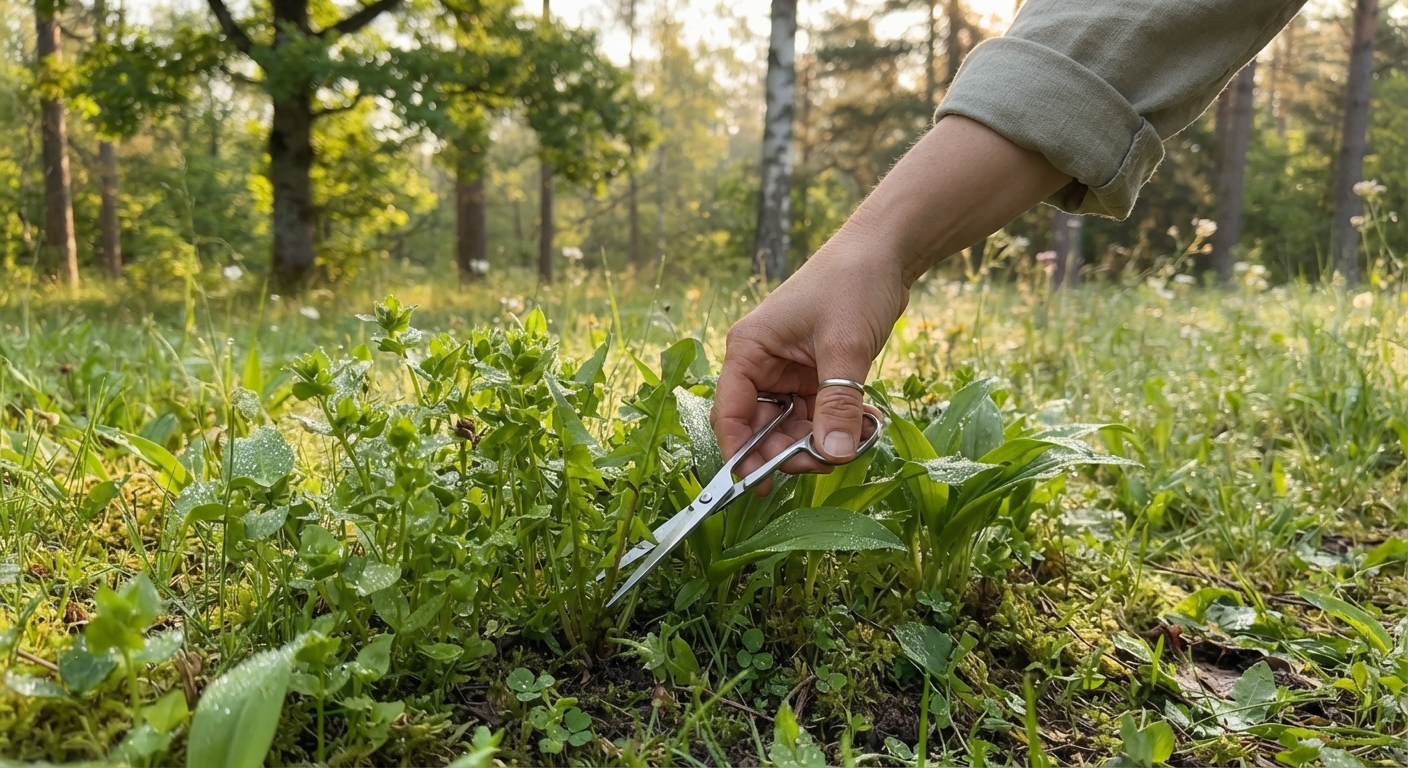
- Harvest like a gardener, not a looter. Take no more than about a third of any patch, and never the only one you can see. Leave the roots and the seed. The plant is a free grocery store; don’t burn it down.
- Forage in the right places. Avoid roadsides (exhaust and runoff), sprayed lawns, and areas where dogs walk. Parks and public land vary by local rules — check before you harvest. Your own yard, if unsprayed, is often the best beginner’s spot.
- Wash and inspect at home, in daylight. Never eat field-identified plants in the field, half-distracted. Bring everything home, lay it out, and confirm once more before it touches the pot. This final check has caught more mistakes than any field rule.
- Never eat anything based on “someone told me it’s edible.” Other people’s confidence is not your identification. Run the checklist, do the two-source check, and own the decision yourself.
Quick Answers to the Questions Beginners Actually Ask
Is foraging actually safe for a complete beginner?
Yes, if you stay within the rules: start with anchor plants that have no deadly lookalikes, use the five-point checklist, and confirm with two independent sources. The risk concentrates almost entirely in a few plant families (and in mushrooms), which you can simply avoid until you’re experienced.
What’s the single most important thing to learn first?
The two or three deadly plants in your region. Not so you can forage around them, but so you know what real danger looks like. Everything else is downstream of that.
Do I need a lot of equipment?
No. A basket or cloth bag, a good regional field guide, your phone camera, and maybe a small knife and gloves. That’s the whole kit. Apps are useful but never a replacement for the checklist.
How do I know a plant has “no deadly lookalikes”?
You confirm it through your two independent sources. A good field guide will explicitly note whether a plant has toxic doubles. If a source is silent or vague on lookalikes, that’s a reason to pick a different starter plant.
What if I’m still not 100% sure?
Then don’t eat it. That’s the entire answer, and it’s the correct one every time. “Not sure” is a complete and final decision. There’s always another plant.
When will foraging start to feel easy?
Sooner than you expect — usually after your first three or four anchor plants, when the identification checklist becomes automatic. The early weeks feel slow precisely because they’re building the skill that makes everything later feel easy.
Conclusion
Foraging isn’t a list of plants you memorize. It’s a system you practice — a small set of anchor species, a five-point checklist, a field journal, two independent confirmations, and the patience to scale one plant at a time. Master the system and the plants take care of themselves.
Start with one plant this week. Dandelion, if you want my vote — it’s everywhere, it’s unmistakable, and learning it will teach you the whole method. Work the checklist on it. Write it down. Confirm it twice. Then, and only then, eat it.
That first confident, correct identification is the moment the hobby clicks. Everything after it is just repetition — and repetition is exactly what turns a nervous beginner into someone who can walk past a lawn and casually spot dinner.