Edible Wild Plants: The Complete Beginner’s Guide
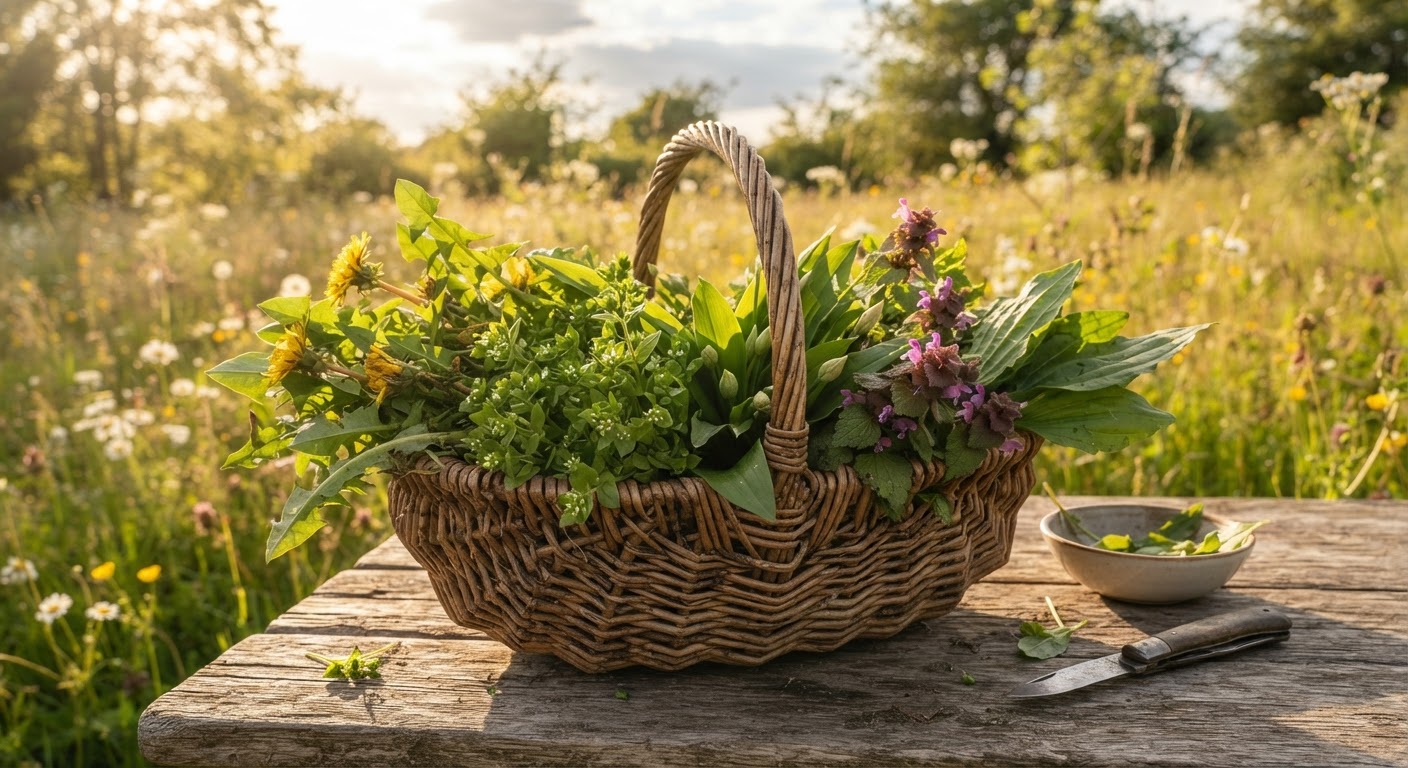
Here’s the problem with almost every list of edible wild plants on the internet: it hands you forty names and zero system. You read it, feel briefly unstoppable, then stand in an actual field ten minutes later and recognize absolutely nothing. Names on a screen don’t teach you what a young nettle looks like next to a path, or why the dandelion patch behind the gas station is a bad idea while the one behind the old barn is dinner.
This guide works differently. Instead of dumping a list and wishing you luck, it walks you through the whole path in order — the safety rules first, then the twelve plants genuinely worth learning as a beginner, then where to find them, when they show up, how to double-check an identification before it touches your mouth, and finally how to get wild plants onto an actual plate. Work through the steps in order and by the end of it you’ll have a working skill, not trivia. That’s the goal here. Let’s go.
First, the Four Rules That Keep Foragers Out of Trouble
Before any plant names, you need the frame that experienced foragers carry everywhere. These four rules are boring and non-negotiable, which is exactly why the people who follow them are still foraging decades later.
- Never eat anything you haven’t identified with 100% certainty. Not 90%. Not “pretty sure.” A plant that might be wild garlic but might also be lily of the valley is lily of the valley as far as your kitchen is concerned. In foraging, “probably edible” and “poisonous” are the same category.
- Learn the dangerous lookalikes alongside the edibles. For every good plant you adopt, spend ten minutes learning what gets confused with it and what the difference is. This habit alone eliminates most of the real risk in foraging.
- Location decides safety as much as species does. A perfectly edible plant growing out of a roadside ditch has been drinking exhaust runoff. Plants from sprayed lawns, industrial edges, and dog-walking routes carry problems no amount of washing fixes. Right plant, wrong place, still a no.
- Introduce one new plant at a time, in small amounts. Even genuinely edible plants disagree with some individuals. First time you eat chickweed, eat a small portion of chickweed only. If your body files no complaints over the next day, it’s on your list for good.
One more mindset note: the goal of your first year isn’t variety. It’s depth on a handful of plants you can identify from a moving car. A person who confidently knows five plants eats better than a person who half-recognizes fifty.
Step 1: Start With the 12 Gateway Plants
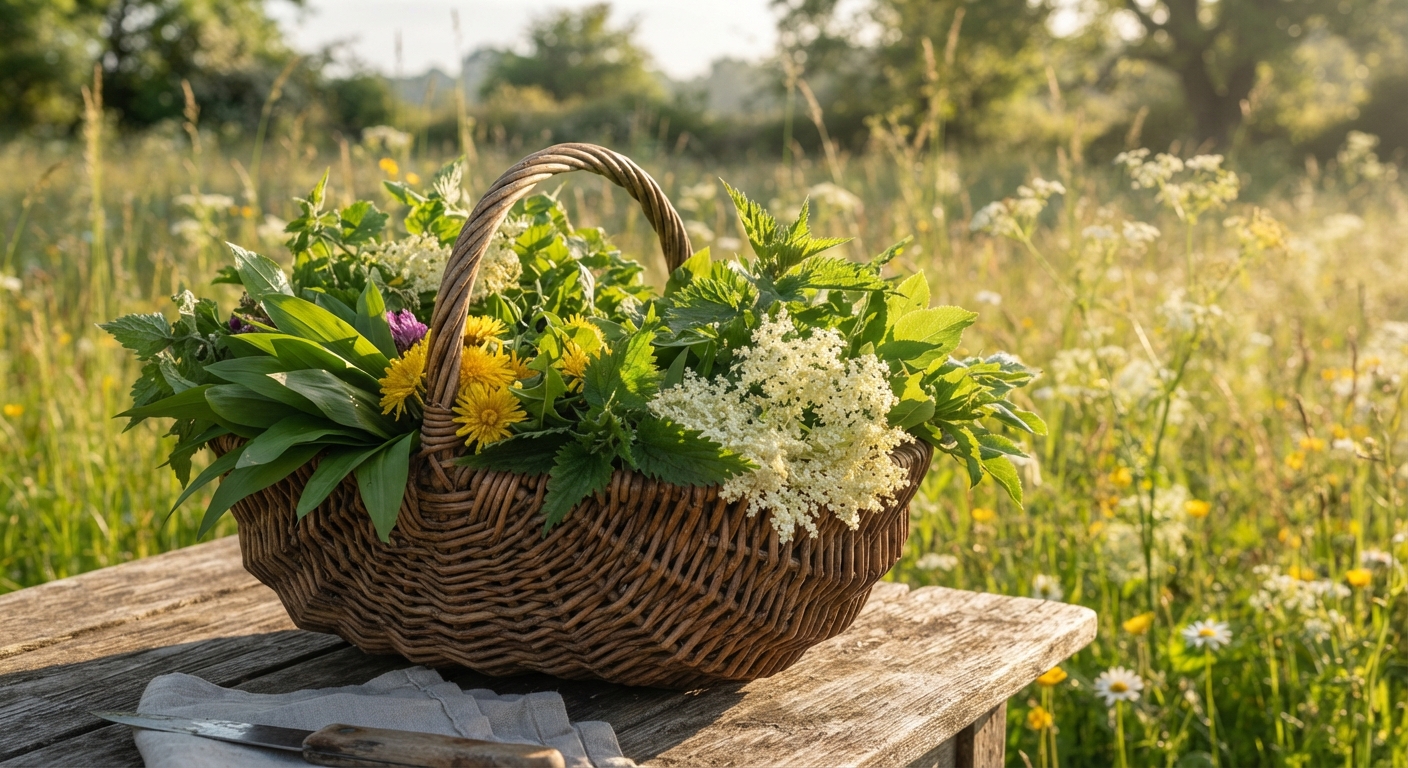
These twelve made the cut because they share the beginner trifecta: they’re common near where people actually live, they have few or no deadly lookalikes, and they’re easy to prepare. Several are probably growing within a ten-minute walk of your front door right now.
| # | Plant | How to recognize it | Where to look | How to eat it |
|---|---|---|---|---|
| 1 | Dandelion | Jagged toothed leaves in a flat rosette, hollow stems with milky sap, familiar yellow flower | Lawns, meadows, field edges — everywhere | Young leaves in salads or cooked; flowers for fritters; roots roasted |
| 2 | Chickweed | Low mat-forming plant, tiny white star flowers, single line of hairs running up the stem | Garden beds, shady disturbed soil, path edges | Raw in salads, or wilted like spinach; mild and pleasant |
| 3 | Stinging nettle | Opposite pairs of serrated, heart-shaped leaves; fine stinging hairs on stem and underside | Moist rich soil, riverbanks, edges of woods, old farmyards | Cooked like spinach (heat kills the sting); tea from leaves; soup |
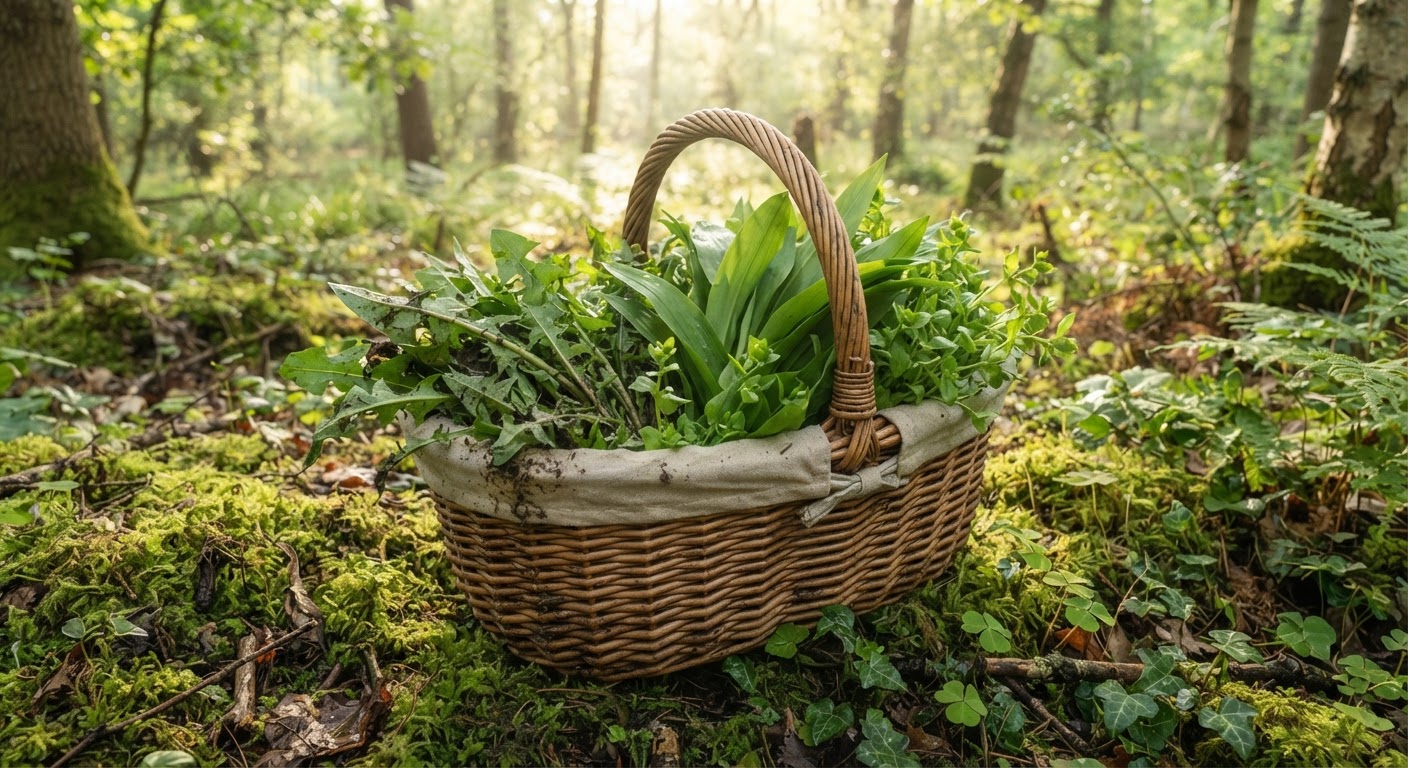
| 4 | Wild garlic (ramps) | Broad smooth green leaves, unmistakable strong garlic-onion smell when crushed | Shady damp woodland, often in large colonies | Raw in pesto, chopped into salads, or cooked briefly |
| 5 | Wood sorrel | Clover-like heart-shaped leaflets folding at dusk, delicate yellow (or white) flowers, sour taste | Woodland edges, shady lawns, garden corners | Small amounts raw as a lemony garnish; never huge quantities |
| 6 | Lamb’s quarters | Dusty blue-green diamond leaves with white mealy coating on new growth, faintly grooved stems | Gardens, barnyards, rich disturbed soil | Cooked like spinach; one of the most nutritious greens there is |
| 7 | Broadleaf plantain | Oval ribbed leaves in a low rosette, green flower spikes on leafless stalks | Lawns, trampled ground, path edges — the ultimate sidewalk plant | Young leaves cooked; older leaves better boiled with a water change |
| 8 | Wild blackberry (bramble) | Arching thorny canes, palmate leaves in groups of 3–5, berries that ripen red to black | Hedgerows, field edges, woodland borders, wasteland | Fruit raw or in anything; young leaves dried for tea |
| 9 | Elderflower / elderberry | Large flat-topped clusters of tiny creamy flowers with a sweet Muscat scent; berries later | Woodland edges, hedgerows, damp ground | Flowers steeped for cordial or frittered; ripe cooked berries only |
| 10 | Cattail | Tall sword-like leaves, brown sausage flower spike in summer, grows straight out of standing water | Ditches, pond margins, marsh edges, wet roadside swales | Spring shoots raw or cooked; pollen as flour; roots for starch |
| 11 | Mulberry | Medium tree with glossy lobed leaves, berries that ripen white to red to deep purple | Old yards, park edges, fence lines, cities | Ripe fruit raw by the handful; stains everything, worth it |
| 12 | Purslane | Low spreading succulent with smooth reddish stems and paddle-shaped fleshy leaves, clear sap | Gardens, sidewalk cracks, bare sunny soil | Raw in salads (lemony, crunchy) or lightly sautéed; rich in omega-3s |
A note on elder, because it’s the one entry on this list with real rules attached: the flowers and ripe, cooked berries are the food. Everything else — stems, leaves, roots, unripe berries — is not. If that feels like too much complexity for your first month, park elder until later; the other eleven have no asterisks like that.
If you want the fastest possible start, begin with the three that have no dangerous lookalikes at all: dandelion, chickweed, and blackberry. Dandelion is so distinctive that misidentification is nearly impossible, chickweed’s mat-and-starflower look is unique in the lawn, and a thorny cane with black berries is blackberry to anyone who has ever picked a pint of them.
Step 2: Learn Where Wild Food Actually Grows
Beginners imagine foraging happens deep in untouched forest. Experienced foragers know it happens on edges — the places two habitats meet and disturbed soil gives opportunistic plants first dibs. Once you see this, your entire neighborhood reorganizes itself into a grocery map.
The habitats worth checking, in rough order of productivity:
- Your own lawn and garden beds (if untreated). The single best beginner patch: you know its history, it’s legal, and dandelion, chickweed, plantain, lamb’s quarters and purslane all treat a garden as prime real estate.
- Field edges and hedgerows. The boundary zone between mowed and unmowed is where blackberries, elder, and nettle concentrate.
- Trail and path edges. Constant disturbance, plenty of light. Walk any greenway with your eyes on the margins and you’ll spot plantain, chickweed and dandelion within minutes.
- Stream banks and pond margins. Wet ground is nutrient-rich ground. Nettles and cattails live here, and mulberries often overhang the water.
- Old farmyards, vacant lots and abandoned home sites. Historically fertilized soil with decades of seed bank. Wild fruit trees, lamb’s quarters and purslane love these spots.
Two habitat red flags to respect: roadsides (anything within roughly 50 meters of heavy traffic is a no — lead and exhaust residue end up in the leaves) and treated landscapes ( manicured lawns, parks with “pesticide application” signage, industrial edges). The prettiest dandelion in town is worthless if it grew up on a chemical diet.
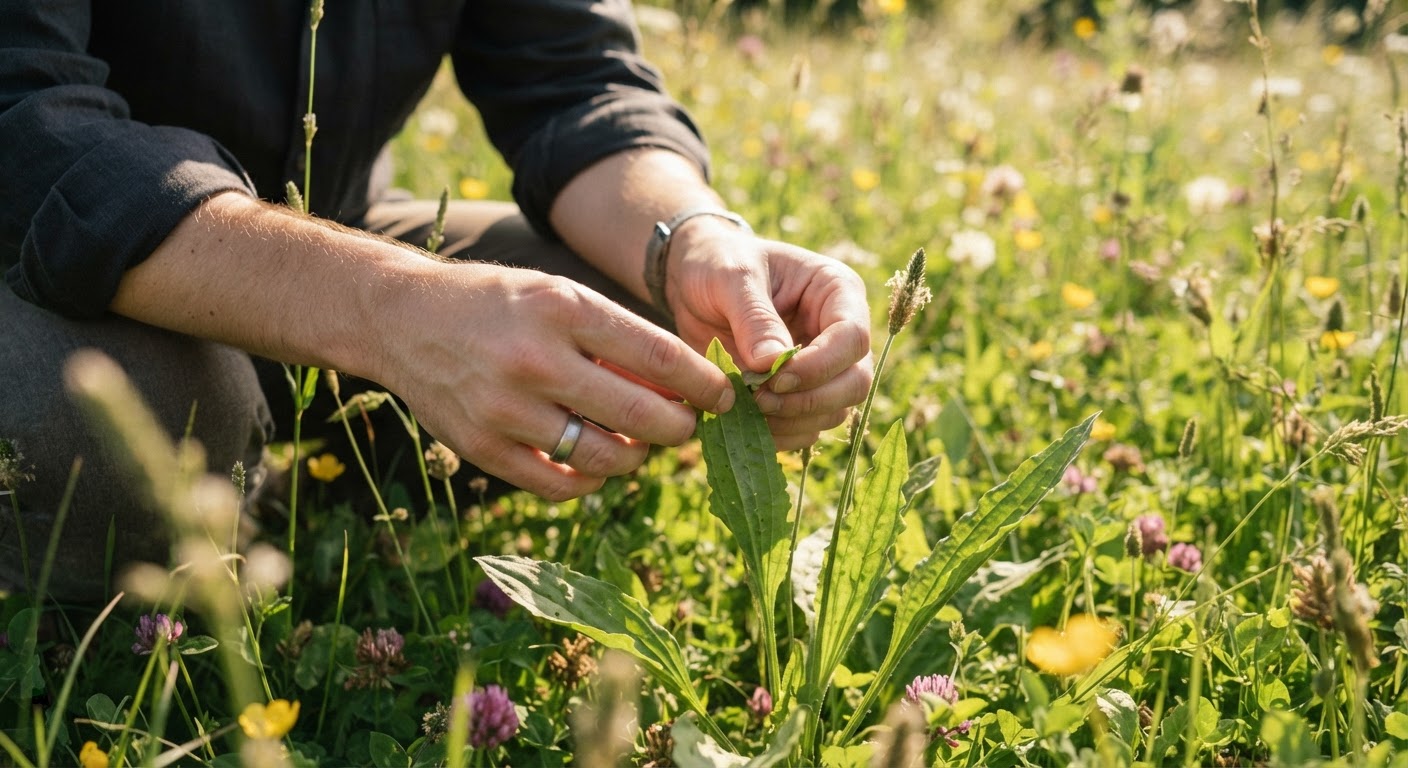
The habit that turns this knowledge into skill: every time you walk a regular route — to work, to the store, around the block — play a game of “name three plants.” Point out three plants you recognize and say their name out loud. Two weeks of this does more for your foraging eye than any amount of reading, because recognition needs repetition in real light, on real plants, at real scale.
Step 3: Learn the Season Chart
Wild food is seasonal by definition, and nothing frustrates a beginner more than hunting a plant that isn’t there. This chart shows you what’s producing when, so you always know what to look for before you leave the house.
| Season | What’s producing | Beginner star picks |
|---|---|---|
| Early spring | Tender new greens before trees leaf out; root energy still stored in plants | Dandelion leaves ( mildest now), chickweed, nettle tops, wild garlic |
| Late spring | Flowers and shoots; greens get tougher as plants race to flower | Elderflower, cattail shoots, wood sorrel, lamb’s quarters starts |
| Summer | Fruits take over while heat-loving greens thrive | Mulberries (early), purslane, lamb’s quarters, chickweed in shade |
| Late summer | Peak fruit season | Blackberries, ripe elderberries (cooked), more mulberries |
| Fall | Roots rebuild energy, seeds set, last flush of greens | Dandelion and burdock roots, cattail roots, late plantain |
| Winter | The quiet season — but not empty | Chickweed under snow line, cattail roots, dried nettle tea from your summer stash |
Read that table the way a farmer reads a planting calendar: as a schedule, not a menu. The move that separates organized foragers from frustrated ones is seasonal stacking — in May, when nettles are everywhere, pick three times what you need and dry or blanch the surplus. A few hour-long sessions in spring fill your tea tin and freezer for the whole year. In foraging, abundance is a season, not a guarantee, so you bank it when it comes.
One underappreciated truth from the chart: early spring is peak season for greens, late summer is peak season for fruit, and the in-between lulls are completely normal. If your June foraging basket looks thin, it’s not you. Plan projects around what the season is actually offering and every month has something.
Step 4: Cross-Check Every ID Before You Eat
This is the step that turns “I saw a list once” into genuine competence, so we’re going to slow down here. The core habit is the three-feature rule: before anything gets picked, confirm three separate, independent features against a trusted reference — leaf shape and stem character and smell, for example. One feature is a guess. Two is a decent hypothesis. Three matching is a plant you can take home.
Why three? Because misidentifications almost never happen from a total mismatch. They happen when one convincing feature overrides everything else. Broad smooth green leaves do look like wild garlic — right up until you notice they have no smell at all, which is the moment lily of the valley stops being lunch. The three-feature rule forces that noticing.
Know the pairs that actually matter for a beginner:
| Edible plant | Lookalike to know | How you tell them apart |
|---|---|---|
| Wild garlic | Lily of the valley (highly toxic) | Crush a leaf: garlic smells unmistakably of garlic. Lily of the valley has no odor, and its leaves grow in pairs from one stem base. |
| Wild carrot (Queen Anne’s lace) | Poison hemlock (deadly) | Hemlock: smooth hairless stem with purple blotches, musty mouse-like smell. Wild carrot: hairy stem, carroty smell. If in doubt, leave it. |
| Purslane | Spurge (causes vomiting) | Spurge oozes milky white sap when snapped; purslane’s sap is clear, stems are fleshy and usually red. |
| Cattail shoots | Iris leaves (toxic root) | Both grow in wet ground; iris leaves are flat in one plane forming a fan, while cattail leaves are spongy with a rounded base. Check for the brown seed spike. |
| Blackberry | Black raspberry (harmless confusion) | No danger here — both are edible. Good news pair to build your confidence on. |
Notice the pattern in that table: every dangerous confusion is resolved by smell, stem, or sap — features people forget to check because photos only capture shape. That’s why “compare a photo” is the weakest form of identification and a habit worth dropping early. Photos flatten the very details that keep you safe.
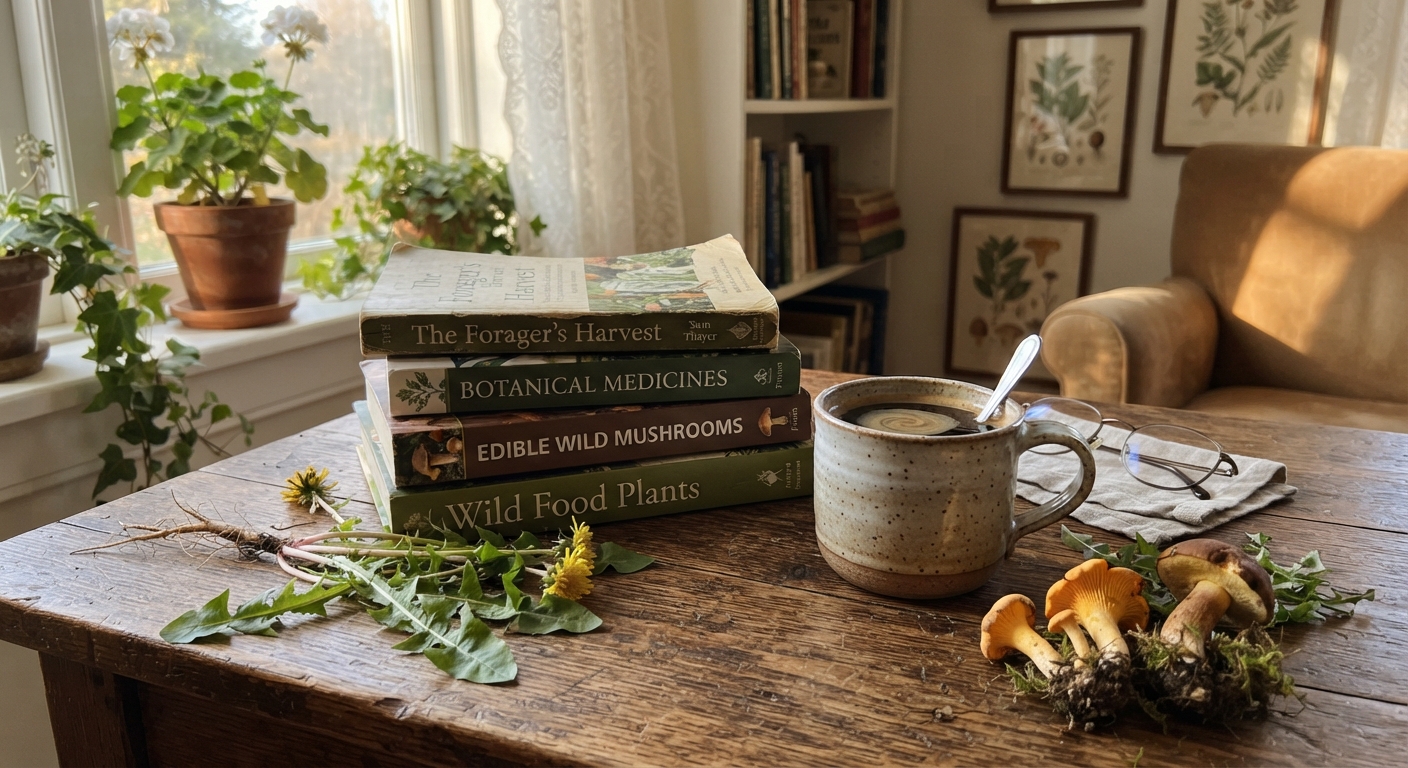
And a word on the apps and field guides you’ll use for cross-checking: they’re tools for confirming a hypothesis, not for forming it. The flow that works is you-spot-the-plant, you-form-a-guess, reference-confirms-or-rejects. When someone points a phone at an unknown leaf and eats whatever the screen says with no supporting checks, that’s the exact failure mode the three-feature rule exists to prevent.
Step 5: From Plant to Plate — Prep and Taste Test
Wild plants don’t behave exactly like supermarket vegetables, and a few prep habits make the difference between “interesting” and “actually delicious.”
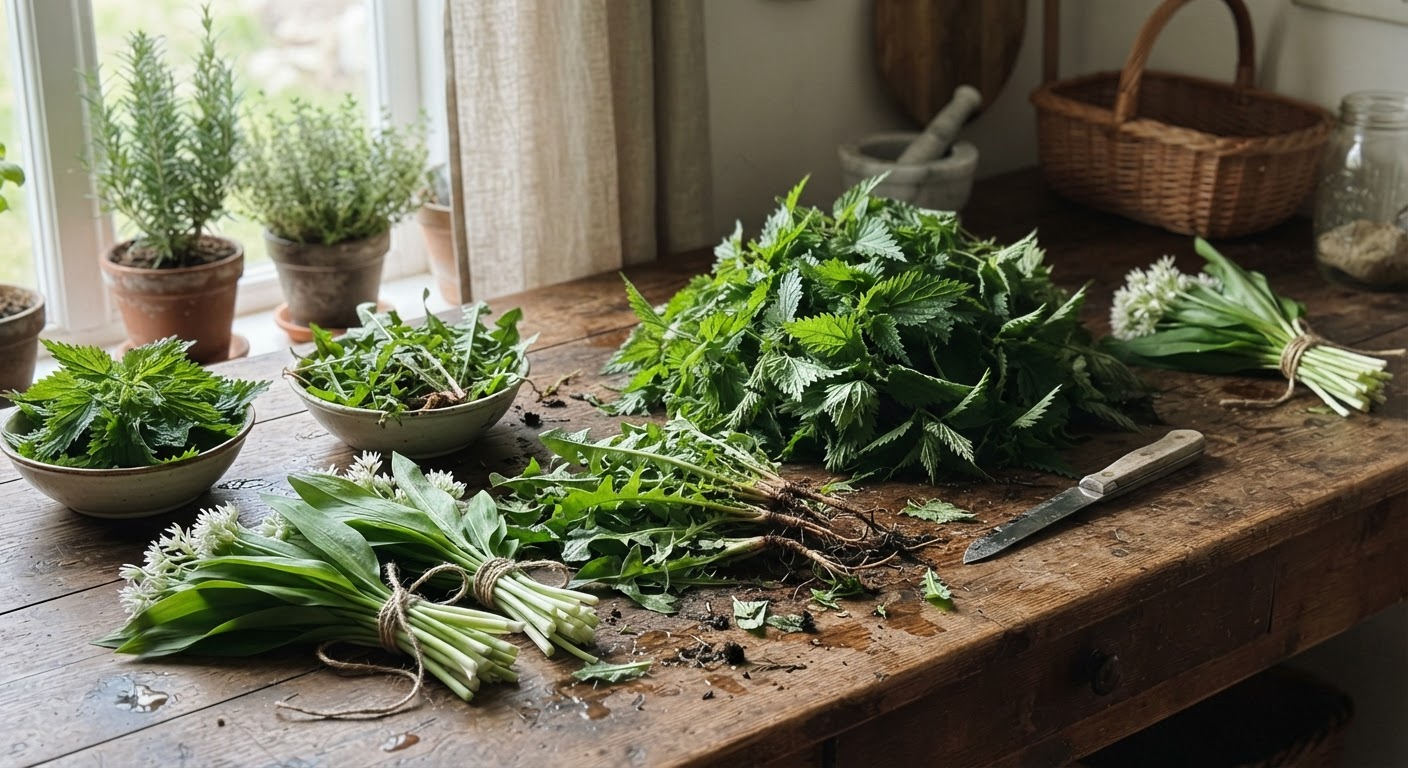
Wash like you mean it. Cold water, a real soak, and a salad spinner or towel dry. You’re removing dust, tiny insects, and the residue of the neighborhood. No soaking will make a roadside plant safe, but every plant from a clean patch still deserves a proper wash.
Cook most of your greens, at least at first. Boiling for a few minutes tames bitterness, softens fibers, and neutralizes irritants — nettle’s sting dies in seconds of heat, lamb’s quarters’ oxalates drop into the water, and dandelion’s bite mellows dramatically. Discard the boiling water for strong-flavored or high-oxalate greens; keep it for mild ones if you’re making soup anyway. Raw is reserved for the genuinely salad-friendly plants: chickweed, young dandelion, wood sorrel, purslane, ripe fruits.
Follow the first-timer protocol. When you eat a species for the very first time, make it the only new thing on the plate, keep the portion small, and see how the next 24 hours go. This isn’t fear — it’s the same logic as trying any new food, applied with a little more respect because wild plants are chemically louder than their domesticated cousins.
Start with forgiving recipes. Wild greens soup is the classic for a reason: nettle, lamb’s quarters or dandelion, potato for body, onion, stock, blend. Nearly impossible to ruin, and it presents wild food exactly the way it should be experienced — as food, not a stunt. Elderflower cordial and blackberry anything follow the same principle: simple recipes where the ingredient does the talking.
Pro Tips From Foragers Who Go Out Every Week
- Limit yourself to three new plants per season. It sounds slow; it’s actually the fastest route to real skill. Three plants learned thoroughly (ID, lookalikes, habitat, season, prep) beats twelve learned vaguely, and next season you add three more. By year’s end you know nine to twelve plants cold.
- Build a personal plant map. Note where your best patches are — a phone note or a marked map is enough. Foragers eat well in season because they already knew where to walk, not because they got lucky that morning.
- Harvest the invaders. Dandelion, chickweed, lamb’s quarters and purslane are introduced and abundant almost everywhere they grow. Nobody will ever miss them, and picking them is about as low-impact as eating gets.
- Pick morning, eat soon. Greens are crispest and least bitter early in the day, and cut greens wilt fast. Bring a basket or a paper bag — plastic bags cook leaves into sadness by afternoon.
- Learn one deadly plant in your region this month. Poison hemlock in most of the temperate world, death camas in the American West, destroying angel where you find mushrooms. Knowing what the danger actually looks like replaces vague anxiety with specific alertness — and it makes you feel, rightly, like a person who takes this seriously.
- Get one field guide for your region, not the continent. A guide covering your state or country with photos will beat a beautiful 600-species tome that mostly isn’t relevant to your path.
- Go out once with someone who knows. A local foraging walk compresses a year of solo learning into two hours. Botanical gardens, nature centers and foraging groups run these constantly, and experienced foragers are famously happy to talk about plants.
FAQ
What is the most common edible wild plant?
Dandelion, and it isn’t close. It grows on every inhabited continent, in lawns, fields, cracks in pavement — anywhere it gets sun and a little soil. Every part is usable: young leaves raw or cooked, flowers for fritters and wine, roots roasted as a coffee substitute. If you could only learn one wild plant, this would be a defensible choice.
How do I know if a wild plant is safe to eat?
You know it the way you know a friend’s face: positive identification against a trusted reference, with multiple independent features matching (shape, stem, smell — the three-feature rule), zero unresolved doubts about lookalikes, and a clean harvesting location. There is no shortcut or gadget that substitutes for this process, and anyone who tells you otherwise is selling something.
Which wild plants can you eat raw?
The safest raw plants for beginners are chickweed, wood sorrel (in small amounts), young dandelion leaves, purslane, and wild fruits like blackberries and mulberries. Everything fibrous, bitter, or irritant — nettles, lamb’s quarters, older plantain — belongs in the pot. When in doubt, cooking is the conservative move.
Is foraging legal?
It depends entirely on where you stand. Many public forests and national lands allow personal-use gathering of wild plants; most city and state parks prohibit removing anything; private land requires the owner’s permission — which, asked politely, is granted more often than you’d expect. The ten minutes it takes to check your local rules is worth it, because a $500 fine ruins a perfectly good afternoon of berry picking.
What’s the easiest wild plant for a total beginner?
Blackberries, in late summer, in most of the northern hemisphere. The plant is unmistakable (thorny canes, compound leaves, berries that everyone already recognizes), the reward is immediate, and there’s nothing dangerous that looks like it. It’s the plant that convinces people foraging is real. Runner-up: dandelion, available nearly year-round.
Can I eat wild plants from my own lawn?
Yes — and it’s the best beginner patch you’ll ever have, provided the lawn hasn’t been treated with herbicides or pesticides in the last couple of years and dogs don’t treat it as a toilet. Pick from areas you know, harvest above the lowest few centimeters, and wash thoroughly.
Do I need to take a course to start foraging?
No. You need a regional field guide, a cautious personality about identification, and a willingness to go slowly. That said, one guided walk early on accelerates everything — a good teacher shows you scale, season, and habitat context in a way that no book or app quite manages. Treat it as an accelerator, not a prerequisite.
The Bottom Line
Foraging looks like a knowledge problem from the outside, but it’s really a process problem. The rules keep you safe. Twelve well-chosen plants give you more food than you’d expect. Edge habitats and a season chart tell you where and when to walk. The three-feature rule makes every ID trustworthy. And a pot of simple soup turns the whole thing into dinner. Run that loop a few weekends in a row and something quietly shifts: the green world stops being wallpaper and starts being pantry.
Start this weekend. Pick one patch of lawn you know is clean, find the dandelions, taste a young leaf, and make the game official. Everything else in this guide builds on that single, slightly giddy moment of eating something you identified yourself.
One last practical thought. Out on a trail, phone signal fading, standing in front of a plant you think you know — that’s exactly the moment this whole system has to work, and it’s also when a second opinion helps most. That’s why the Edible Plant Identifier app exists: point your camera at any leaf and it gives you an instant identification with notes on edibility and common lookalikes, fully offline when you’re beyond cell coverage. It won’t replace the three-feature habit — no honest tool can — but it’s a genuinely useful companion check when you’re learning, and it fits in the same pocket as your field guide.