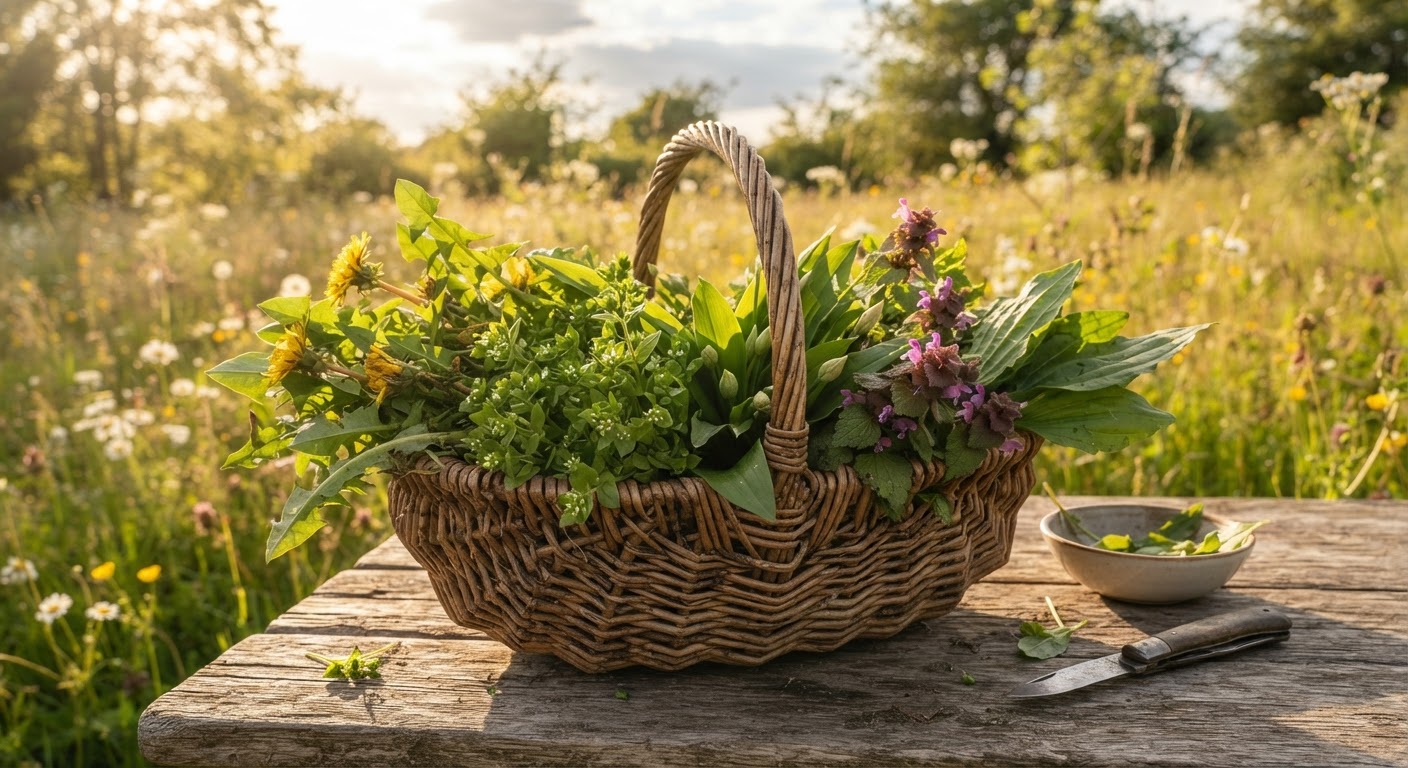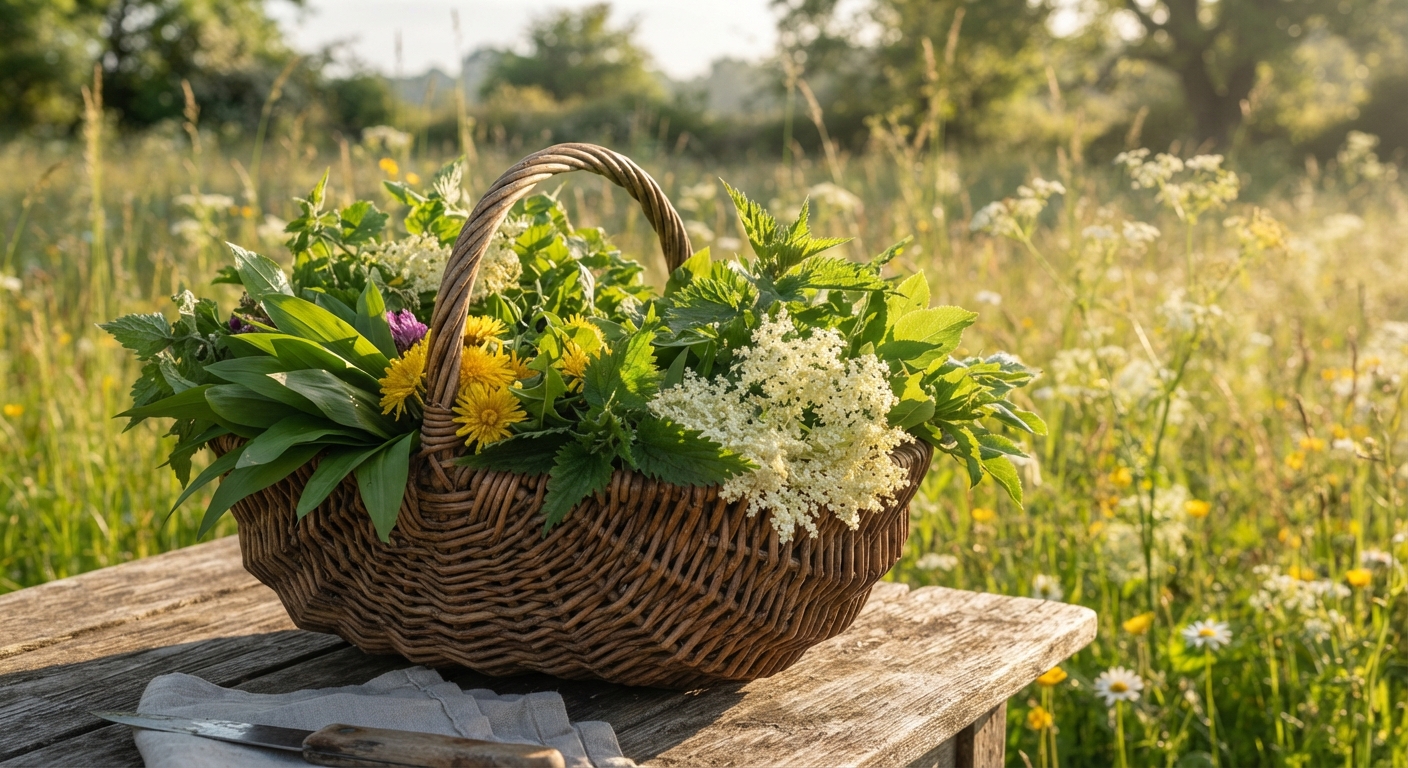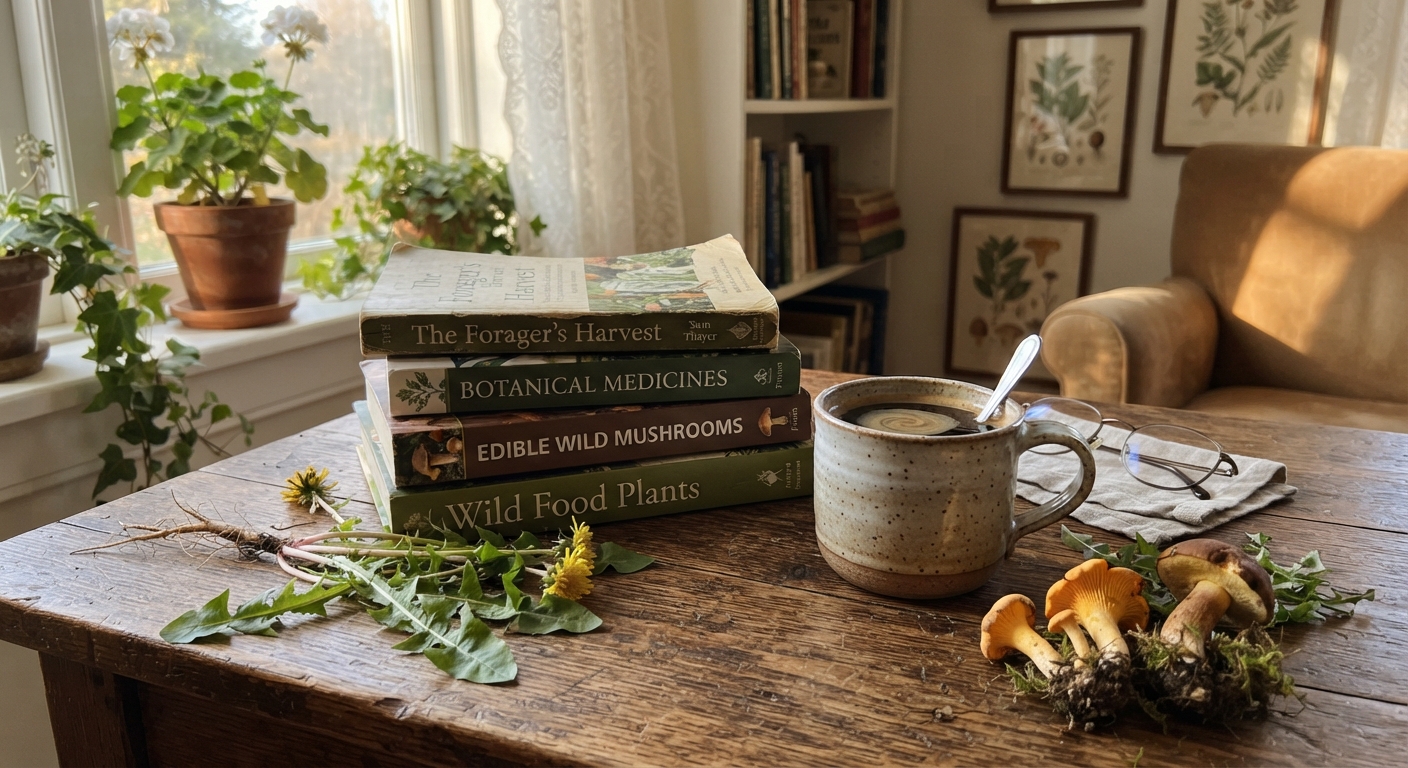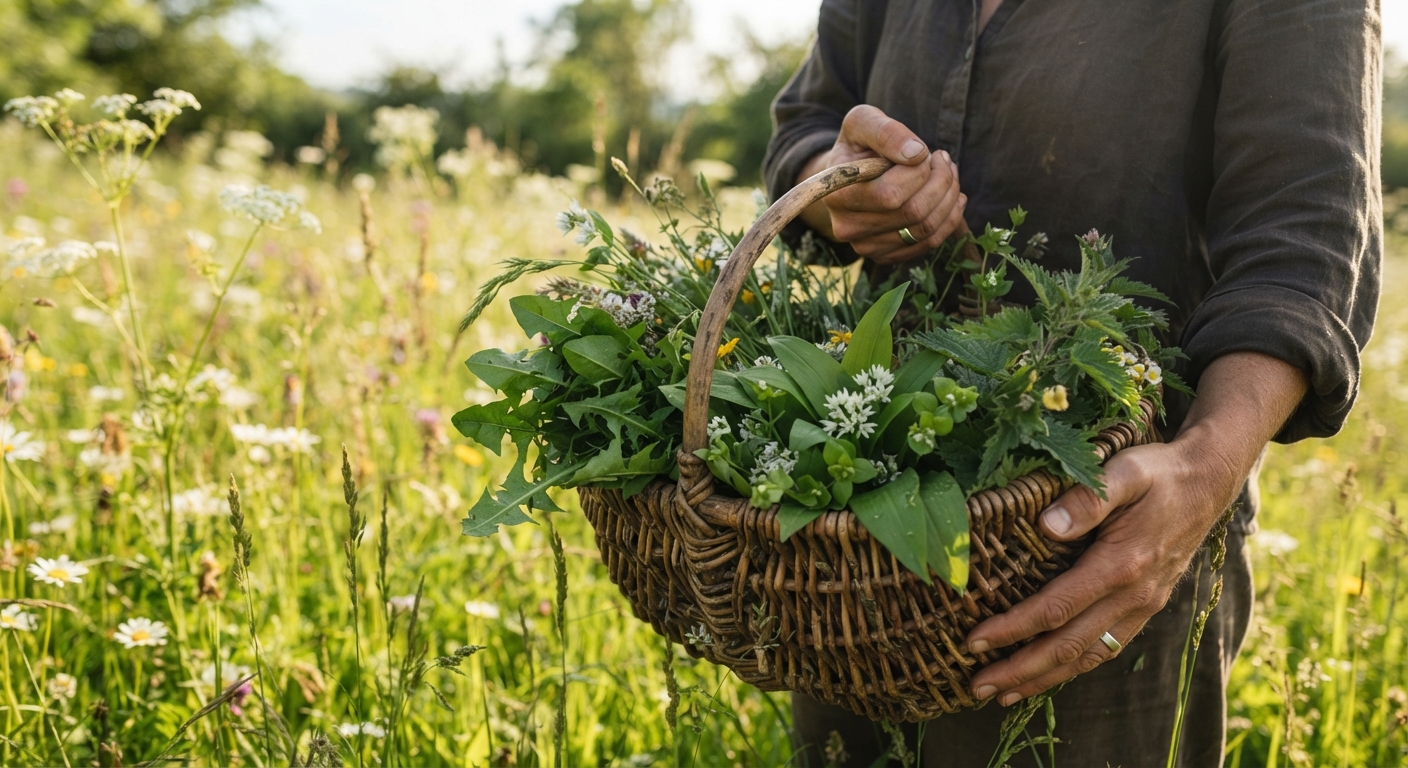
Here’s the problem with most “list of edible wild plants” articles: they dump 50 plant names on you, arranged alphabetically, with zero context about which ones you’ll actually find, when you’ll find them, or which ones are worth the brain space versus which ones are a recipe for frustration.
It’s like someone handing you a textbook on marine biology when all you wanted was to identify the fish in your local pond.
The truth that experienced foragers learn — usually the hard way — is that a useful plant list isn’t about quantity. It’s about organization. You don’t need to memorize 100 plants. You need to know the 10 you can identify with absolute certainty this month, the 5 worth learning next, and the 3 dangerous ones that might be growing next to them.
That’s what this guide is built around. Not a botanical encyclopedia — you can Google those. A practical field map that tells you what to look for, when, and in what order of priority.
The Forager’s Foundation — 5 Rules That Come Before Any Plant Name
Before anyone hands you a list of edible plants, they should hand you a safety framework. Most foraging mistakes don’t happen because someone can’t identify a plant. They happen because someone skipped a step that had nothing to do with identification.
Let’s get these out of the way first. I’ve taught enough friends to forage that I’ve seen every shortcut people try to take.
Rule 1: The 100% ID Standard Applies to Every Single Pick
You know how birdwatchers might say “I think that’s a yellow warbler, but maybe it’s a goldfinch”? Foraging doesn’t allow that margin. Every plant you eat needs a 100% positive identification — confirmed by at least two features that aren’t color (color is the least reliable identification marker in the plant kingdom). If you’re 95% sure, you’re 0% ready to eat it.
The two-feature rule: identify any plant by at least two independent characteristics. Leaf shape plus stem type. Flower structure plus growth habit. Sap color plus leaf arrangement. If both features match your field guide, proceed. If one feature is “I think” territory, the plant stays on the ground.
Rule 2: Know the Toxic Neighbors First
Before you learn dandelion, learn what grows next to dandelion that could hurt you. Before you learn wild carrot, know hemlock. For every edible plant you study, spend five minutes studying the dangerous lookalike that grows in the same habitat at the same time. This habit alone prevents more foraging accidents than any other practice.
We’ll cover the three most important lookalike pairs later in this guide.
Rule 3: The First Time You Eat Any Wild Plant, Eat One Bite and Wait
Individual allergic reactions to wild plants are real, even with universally-recognized edible species. Your body might not have encountered this exact plant chemistry before. One small bite, prepared the way you intend to eat it. Wait 20 minutes. If nothing happens, proceed with a normal portion.
This isn’t paranoia — it’s the same principle as introducing new foods to a baby. Your digestive system appreciates the courtesy.
Rule 4: Location Is Part of the Identification Process
A perfectly-identified dandelion growing from a crack in a parking lot is not the same plant as a dandelion growing in a clean meadow. Plants absorb what’s in their soil and water — heavy metals, pesticide runoff, dog urine, road salt. The plant may be correctly identified, but the location makes it inedible.
The 50-foot rule: nothing within 50 feet of a busy road (exhaust particulates and road runoff). Nothing from lawns you don’t own (you can’t know what’s been sprayed). Nothing from the base of old buildings (lead paint in soil). Nothing from industrial edges, railroad rights-of-way, or drainage ditches that receive urban runoff.
Rule 5: Harvest Sustainably — The Plant Shouldn’t Notice You Were There
Take no more than 10% of any single patch. Never pull plants up by the roots unless the root is specifically what you’re harvesting. Use scissors or a sharp knife — clean cuts heal faster than torn stems. If a plant is the only one you can see in a 30-foot radius, leave it alone. It’s holding down that territory and needs to reproduce.
These five rules aren’t optional suggestions. They’re the difference between foraging and gambling.
The “No Excuses” Tier — 10 Plants You Can Find and Identify This Weekend
These are the plants that forgive beginner mistakes. Every one of them has one or two features that are genuinely unmistakable once you’ve seen them in person. No close lookalikes that are dangerous (the few lookalikes that exist are either also edible or just unpleasant-tasting). All of them grow abundantly across most of North America and Europe.
| Plant | Unmistakable Feature | Best Season | Where It Grows | Edible Parts | Start With This |
|---|---|---|---|---|---|
| Dandelion (Taraxacum officinale) | Single flower per hollow stem; jagged “lion’s tooth” leaves | Spring–Fall | Lawns, fields, sidewalk cracks | Leaves, flowers, roots | Leaves in salad; flowers for tea |
| Broadleaf Plantain (Plantago major) | Parallel veins running stem-to-tip; thick, rubbery leaves | Spring–Fall | Compacted soil, paths, lawns | Young leaves, seeds | Sautéed young leaves |
| Chickweed (Stellaria media) | Single line of tiny hairs running up one side of stem; tiny white star flowers | Late winter–Spring | Gardens, moist shady spots | Leaves, stems, flowers | Raw in salads (mild, sweet) |
| Wild Garlic / Field Garlic (Allium vineale) | Smells unmistakably like garlic/onion when crushed | Spring–Early summer | Lawns, fields, roadsides | Leaves, bulbs | Chopped raw as garnish |
| Stinging Nettle (Urtica dioica) | Tiny stinging hairs that hurt on contact; opposite toothed leaves | Spring | Rich soil, stream banks, woods edges | Young tops (cooked) | Blanched with butter |
| Lambsquarters (Chenopodium album) | Powdery silver-white coating on youngest leaves; diamond-shaped leaves | Late spring–Fall | Gardens, farm fields, disturbed soil | Leaves, young stems, seeds | Sautéed like spinach |
| Purslane (Portulaca oleracea) | Thick, succulent, rubbery leaves; reddish prostrate stems | Summer | Gardens, sidewalk cracks, bare soil | Leaves, stems, flowers | Raw in salads |
| Wood Sorrel (Oxalis spp.) | Three heart-shaped leaflets like clover; tastes sharply lemony | Spring–Fall | Woods edges, lawns, gardens | Leaves, flowers, seed pods | Raw — adds lemon zing |
| Violet (Viola spp.) | Distinctive 5-petaled purple/white flowers; heart-shaped leaves | Spring | Lawns, woods edges, shady gardens | Flowers, young leaves | Flowers raw on salads |
| Curly Dock / Yellow Dock (Rumex crispus) | Long, narrow leaves with distinctly wavy/curled edges; tall rusty seed stalk | Spring–Fall | Fields, roadsides, disturbed soil | Young leaves (cooked), seeds | Young leaves boiled |
The goal with this tier isn’t to cook a five-course wild meal. It’s to get your eyes calibrated. Spend an hour in any unmowed field or overgrown garden and you’ll find at least five of these plants. Pick them. Identify them using the two-feature rule. Bring them home. Cook one of them in the simplest way possible — sautéed with olive oil and salt. That’s your first win.
Dandelion and plantain alone are in every lawn on the continent. Chickweed covers garden beds like a green carpet in early spring. Wild garlic announces itself by smell before you even bend down. These aren’t rare plants that require special trips to special places. They’re the plants you’ve been walking past your entire life.
Seasonal Availability — What to Look for and When
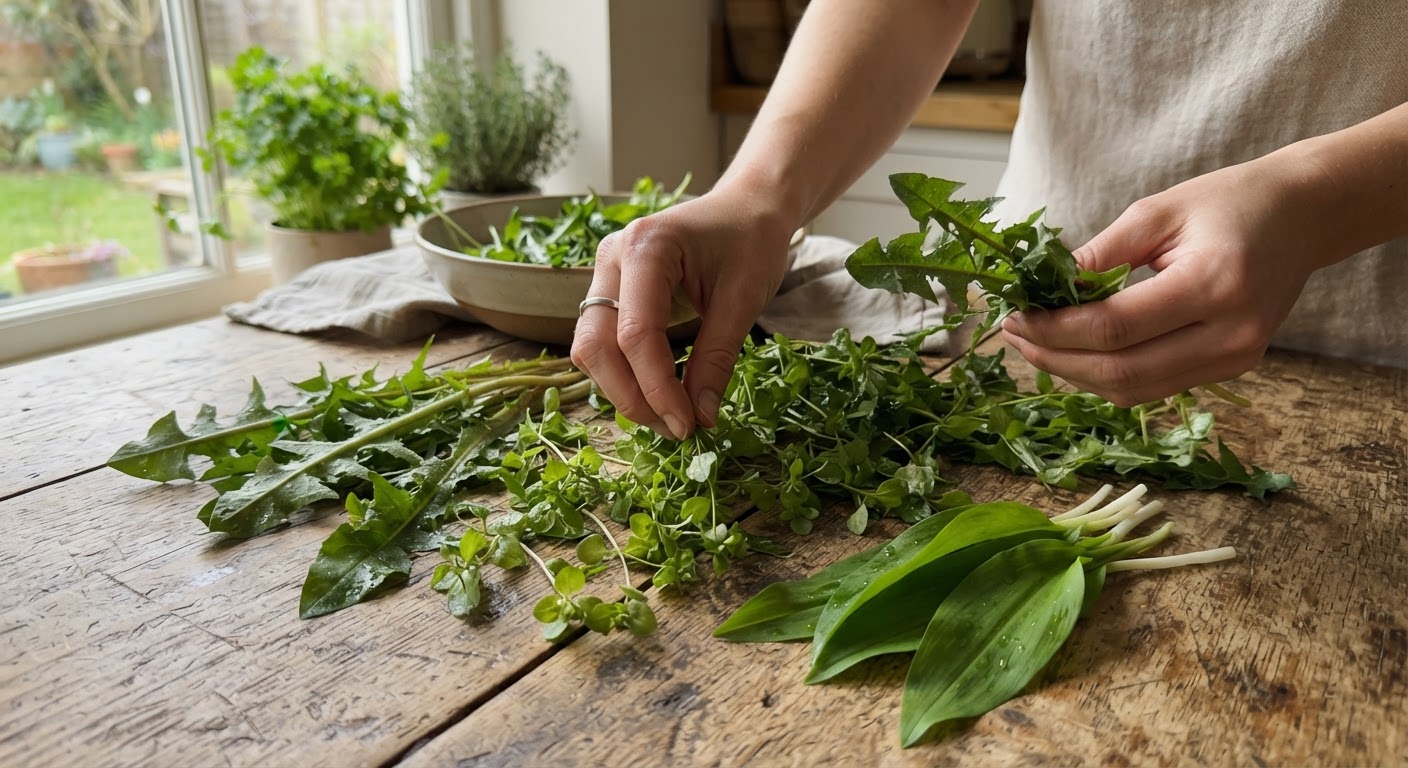
Wild plants don’t read your calendar, but they follow patterns that are predictable enough to plan around. Here’s your at-a-glance seasonal guide for the Northern Hemisphere.
| Season | What’s Peaking | Where to Look | Key Tip |
|---|---|---|---|
| Early Spring (March–April) | Chickweed, wild garlic, dandelion greens, violet flowers, dead nettle | South-facing slopes, garden beds, lawn edges | This is prime greens season — tender and least bitter. Harvest before plants flower. |
| Late Spring (May) | Nettles, lambsquarters (first flush), violet leaves, garlic mustard, dandelion flowers | Stream banks, garden edges, woods edges | Nettles are at peak tenderness now. Once they flower, they get fibrous and develop gritty particles. |
| Summer (June–August) | Purslane, lambsquarters (mature), wood sorrel, amaranth, curly dock leaves | Gardens, sidewalk cracks, farm fields, disturbed soil | Morning harvest is critical — leaves are crisper and more hydrated. Purslane loves hot, bare ground. |
| Early Fall (September) | Lambsquarters seed heads, curly dock seeds, dandelion (second flush), chickweed (second flush) | Fields, roadsides, garden edges | Many spring greens return briefly as temperatures cool. Seed harvesting season begins. |
| Late Fall (October–November) | Dandelion roots, wild garlic bulbs, dock roots, chickweed | Fields, lawns, woods edges | Root harvesting season — energy has moved underground. Roots are starchier and more medicinal. |
| Winter (December–February) | Chickweed (mild climates), wintercress, dandelion greens (mild areas) | Protected south-facing spots, under snow cover, near thermal sources | Slim pickings in cold climates, but chickweed often survives light frost. Good time to study field guides indoors. |
The seasonal sweet spot for beginners is late spring through early summer. Plants are abundant, tender, and the weather cooperates. If you’re starting at any other time of year, adjust expectations — your “easy tier” plant list shrinks in winter and expands in May.
The “Reward Tier” — 8 Plants Worth Extra Effort When You’re Ready
Once you’ve got the beginner plants down cold — I’m talking multiple successful harvests, not just one confident identification — you can expand into plants that offer bigger rewards but require sharper identification skills. These plants either have lookalikes that need careful attention, specific harvesting windows, or preparation requirements that go beyond “sauté with butter.”
Wild Berries and Fruits (Mid-to-Late Summer)
- Blackberries / Raspberries (Rubus spp.): The compound berry structure — a cluster of small drupelets — is shared across the entire Rubus genus, with zero toxic members in North America. If it looks like a blackberry and grows on a bramble, it’s edible. The thorns and leaf shape vary by species, but the berry structure is your safety net.
- Elderberries (Sambucus canadensis/nigra): Dark purple-black berries in flat-topped clusters on woody shrubs. Here’s the critical detail: the berries must be cooked. Raw elderberries can cause nausea. The stems, leaves, and unripe green berries contain cyanogenic compounds. Harvest only fully-ripe dark purple clusters, strip the berries from the stems, and always cook them.
- Wild Strawberries (Fragaria vesca/virginiana): Tiny — way smaller than grocery store strawberries — but flavor that puts commercial varieties to shame. Distinguished from the tasteless mock strawberry (Potentilla indica) by the position of the seeds: wild strawberries have seeds embedded in the surface; mock strawberries have seeds that protrude outward. Both have yellow flowers… wait, no — wild strawberry has white flowers, mock strawberry has yellow. Both are safe, but only one tastes like anything.
Nutritious Greens (When You Want More Than Salad)
- Amaranth / Pigweed (Amaranthus retroflexus): A summer heat-lover that looks unremarkable until you notice the distinctive spiky flower/seed head at the top. Young leaves cook like spinach, and the tiny black seeds (one plant can produce 60,000+) are a legitimate grain that sustained Aztec civilizations. No toxic North American lookalikes. The catch: older leaves can accumulate nitrates from fertilized soil, so stick to young plants from unfertilized ground.
- Garlic Mustard (Alliaria petiolata): A highly invasive plant in North America, which means harvesting it is actually doing the ecosystem a favor. Crushed leaves smell like garlic crossed with mustard — a combination so specific that it’s essentially a built-in identification test. Harvest before it flowers (spring to early summer); older leaves become bitter. The roots taste like horseradish.
- Sheep Sorrel (Rumex acetosella): Small arrowhead-shaped leaves with a sharp, lemony tang that’s unmistakable once tasted. Grows in acidic, sandy, or disturbed soil — often near blueberry patches, which is convenient. The sourness comes from oxalic acid, so moderation matters (the same chemical that gives spinach and rhubarb their bite). A handful in salad is wonderful; a bowlful as a main dish is too much.
Mushroom-Adjacent (The Careful Introduction)
- Morels (Morchella spp.): The honeycomb cap structure is genuinely unique in the fungus world — if it has a hollow, pitted, conical cap attached directly to a hollow stem, it’s a morel. The “false morel” (Gyromitra) has a brain-like, wrinkled (not pitted) cap and is filled with chambered tissue, not hollow. Cut every morel in half lengthwise. Hollow throughout = safe. Solid or chambered = discard. Season: a narrow spring window, usually 2-4 weeks, when soil temperatures hit 50-55°F.
- Chicken of the Woods (Laetiporus sulphureus): Bright orange-yellow shelf fungus growing on dead or dying hardwood trees. Looks nothing like any other common fungus — the color and growth habit are genuinely unmistakable. Must be cooked thoroughly. A small percentage of people have digestive sensitivity to it regardless, so follow Rule 3 religiously. Harvest only young, tender specimens; older ones get woody and unpalatable.
3 Lookalikes That Matter — The Pairings Worth Memorizing
This isn’t a comprehensive toxic plant guide. It’s the three pairings that cause the most real-world confusion among foragers I’ve talked to. If you learn nothing else from the “dangerous lookalikes” category, learn these three.
Every time you harvest an edible from the left column, scan for the plant in the right column growing nearby. If you find it growing intermixed — which happens — harvest with extra caution.
| Edible Plant | Toxic Lookalike | Key Difference | Risk Level |
|---|---|---|---|
| Wild Carrot / Queen Anne’s Lace (Daucus carota) | Poison Hemlock (Conium maculatum) | Wild carrot: hairy stem (fine white fuzz), usually single tiny purple flower in center of white cluster, smells like carrot. Hemlock: smooth hairless stem with purple blotches, no central purple flower, smells unpleasant/musty when crushed. | ☠️ Fatal — hemlock killed Socrates. Do not harvest wild carrot unless the hairy stem is confirmed. |
| Wild Garlic / Field Garlic (Allium) | Death Camas (Toxicoscordion / Zigadenus) | Wild garlic: always smells like garlic/onion when any part is crushed. Death camas: no onion/garlic smell at all — smells like nothing or slightly grassy. | ☠️ Potentially fatal. The smell test is definitive, but only if you actually do it every time. Never “assume” Allium. |
| Morel (Morchella) | False Morel (Gyromitra) | True morel: hollow from tip to base when cut lengthwise, cap attached to stem. False morel: chambered or solid interior, cap hangs free from stem like a skirt. | ☠️ Contains monomethylhydrazine (rocket fuel compound). Severely toxic. Always cut every morel in half lengthwise. |
The hemlock-versus-wild-carrot pairing is the one that deserves the most respect. Hemlock is widespread, looks superficially similar, and the consequences of a mistake are irreversible. Most experienced foragers I know simply skip wild carrot entirely — the culinary payoff isn’t high enough to justify the risk of even a remote misidentification.
The wild garlic rule is refreshingly simple: smell it. No garlic smell, no harvest. This test alone eliminates all risk from the only genuinely dangerous lookalike.
From Field to Fork — What Nobody Tells You About Preparing Wild Plants
Identifying plants is the science of foraging. Preparing them well is the art. Here’s what the field guides tend to skip.
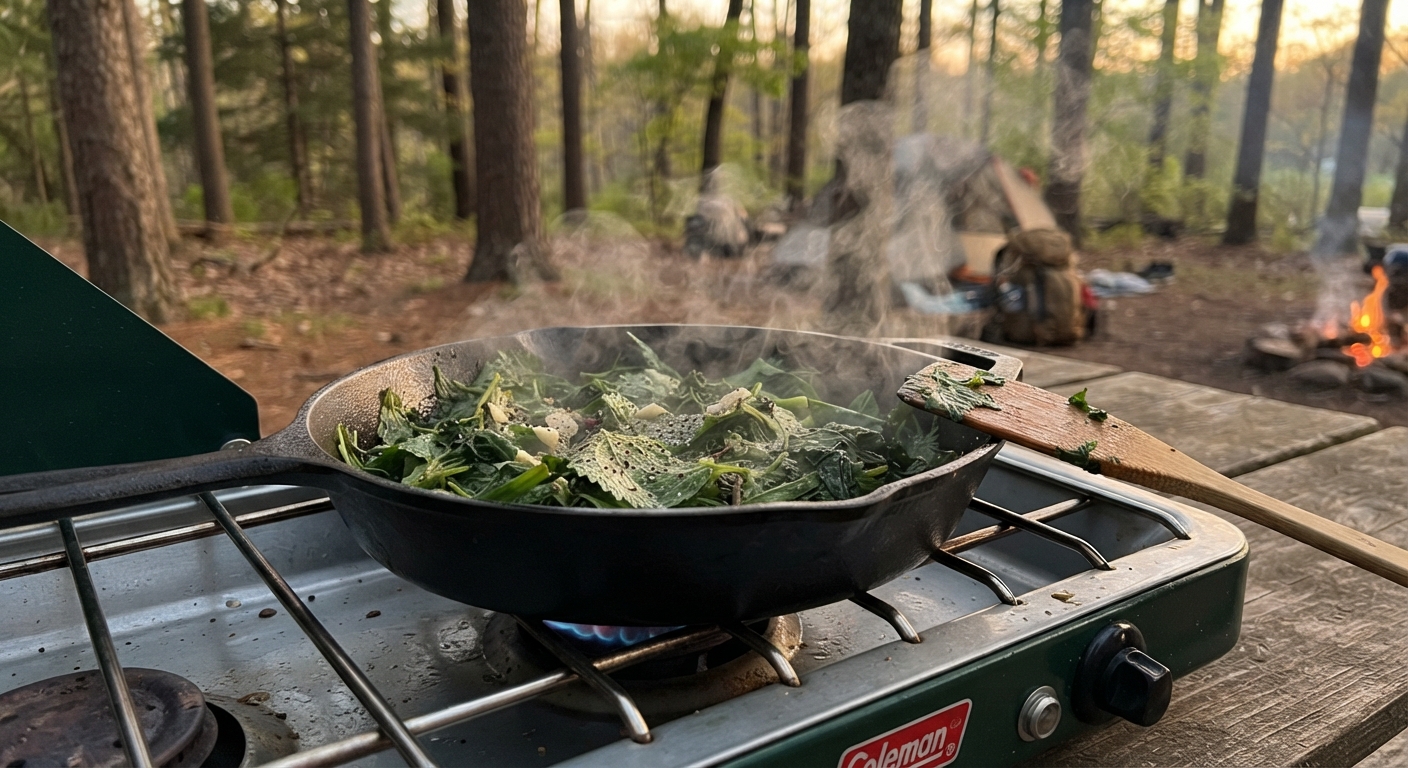
The soaking step that changes everything. Fill your sink or a large bowl with cold water. Submerge your harvest fully. Add a splash of white vinegar (roughly 1 tablespoon per gallon). Let it sit 5-10 minutes. You’ll be shocked at what floats to the surface — tiny insects, grit, spider webs, the occasional slug that hitched a ride. Swirl the greens around, lift them out (don’t pour — you’ll redeposit the grit), and repeat with fresh water if needed. Dry in a salad spinner or between clean kitchen towels.
Why cooking method matters more for wild greens than store-bought ones. Store spinach has been bred for generations to be mild and tender whether raw or cooked. Wild greens haven’t. Many are higher in oxalic acid (dandelion, wood sorrel, curly dock, sheep sorrel) which gives a slightly astringent mouthfeel when raw. A quick blanch — 30-60 seconds in boiling water, then into ice water — neutralizes much of the oxalic acid and softens tough leaf textures without turning them mushy. Some greens (nettles, older lambsquarters, curly dock) should always be cooked. Others (chickweed, purslane, young dandelion, violet leaves) are genuinely good raw.
The batch-cooking trick for consistent results. Different wild greens cook at different speeds. Lambsquarters wilts in 90 seconds; curly dock takes closer to 4 minutes. If you’re cooking a mixed wild harvest — which you should, because a single plant rarely yields enough for a full side dish — blanch each type separately in the same pot, removing the tender greens first and letting the tougher ones stay longer. Then combine them in a hot skillet with garlic, oil, and salt for the final minute.
Flavor pairing that actually works. Wild greens tend to be more assertive than their domesticated cousins — more mineral, more bitter, more earthy. Instead of fighting that, lean into it. Fat (butter, olive oil, bacon drippings) smooths bitterness. Acid (lemon juice, vinegar) brightens the mineral notes. Salt pulls everything together. Garlic, chili flakes, and nutmeg are the three seasonings that consistently make wild greens taste intentional rather than “well, I foraged it so I’m eating it.”
Real Talk — Questions Every New Forager Asks (But Most Guides Skip)
“What if I’m wrong about a plant and get sick tonight?”
This is the question behind every other question, and most guides dance around it. Here’s the honest answer: with the beginner-tier plants in this guide, the odds of serious harm are effectively zero. Dandelion, plantain, chickweed, wild garlic, and wood sorrel have no dangerously toxic lookalikes that would put you in an emergency room. Worst case with a misidentification in this tier: an unpleasant taste, maybe some mild stomach discomfort.
That said, if you ever experience throat swelling, difficulty breathing, severe abdominal pain, or persistent vomiting after eating any wild plant, stop rationalizing and get to an emergency room. Bring a sample of the plant you ate. The “wait, I’ll see if it gets worse” instinct is your enemy here.
“How do I know a spot hasn’t been sprayed with pesticides?”
You can’t always know with certainty, but you can read the clues. Lawns that look like golf courses — uniform green, zero weeds, striped mowing patterns — are almost certainly chemically treated. The absence of plant diversity is your warning sign. Conversely, a field with 15+ different plant species growing together, visible insect life, and uneven growth is likely unsprayed. When in doubt, ask. Property owners, park managers, and community garden coordinators usually know their spray history. If they don’t know or won’t say, find another spot.
“Is it really worth the time when I can just buy spinach?”
Some days, no. If you’re tired, hungry, and just need dinner on the table, buy the spinach. Foraging isn’t a grocery replacement — it’s a different category of activity entirely. The value proposition isn’t “free food.” It’s “I know exactly where this came from, it’s fresher than anything money can buy, I learned something about the land I live on, and it tastes completely different from anything in a plastic clamshell.” The nutritional density is a bonus, not the point.
“When should I tell someone else I’m eating foraged food, and when should I keep it to myself?”
Tell your partner or whoever you live with — if you have a reaction, someone needs to know what you ate. Tell anyone you’re cooking for — informed consent applies to wild food too. Beyond that? Use judgment. Some people hear “I picked this from the yard” and hear “I’m eating poison.” Others think it’s the coolest thing ever. The food speaks for itself — cook something genuinely delicious and let them form their opinions from the plate, not the premise.
“What’s the one piece of gear that actually makes a difference?”
A good pair of scissors. Specifically, herb snips or kitchen shears — something sharp enough to cut through fibrous stems without mangling the plant. You can forage with your hands, but scissors give you cleaner cuts, faster harvesting, and less dirt in your basket because you’re not ripping plants out of the ground. Second place: a field guide specific to your region. Phone apps help, but a physical guide with detailed drawings or photos that you can flip through while standing in a field with no signal — that’s irreplaceable.
Where This Takes You
Foraging starts with one correctly-identified plant. Then two. Then a season passes and you realize you can name everything growing along your usual walking route. Somewhere along the way, a walk in the woods stops being exercise and starts being a grocery run where everything’s on the house.
The goal isn’t to become a survivalist or to reject grocery stores. It’s to develop a second layer of awareness about the living world around you — the one that’s been providing food long before supermarkets existed and will keep doing so long after we’ve forgotten how to read a landscape.
Start with the five rules. Pick three plants from the beginner tier that grow in your area right now. Find them. Cook one of them tonight. That’s the whole assignment. The rest builds itself from there.