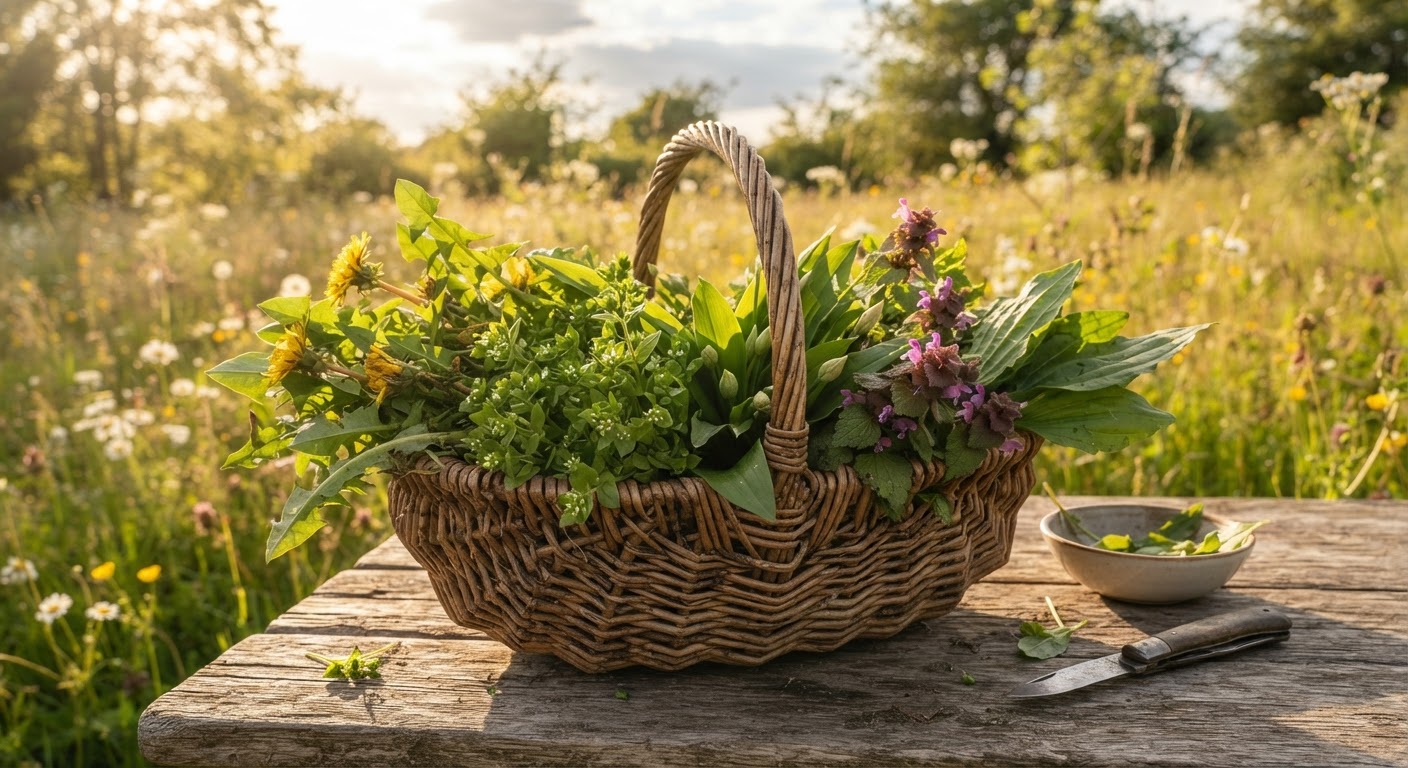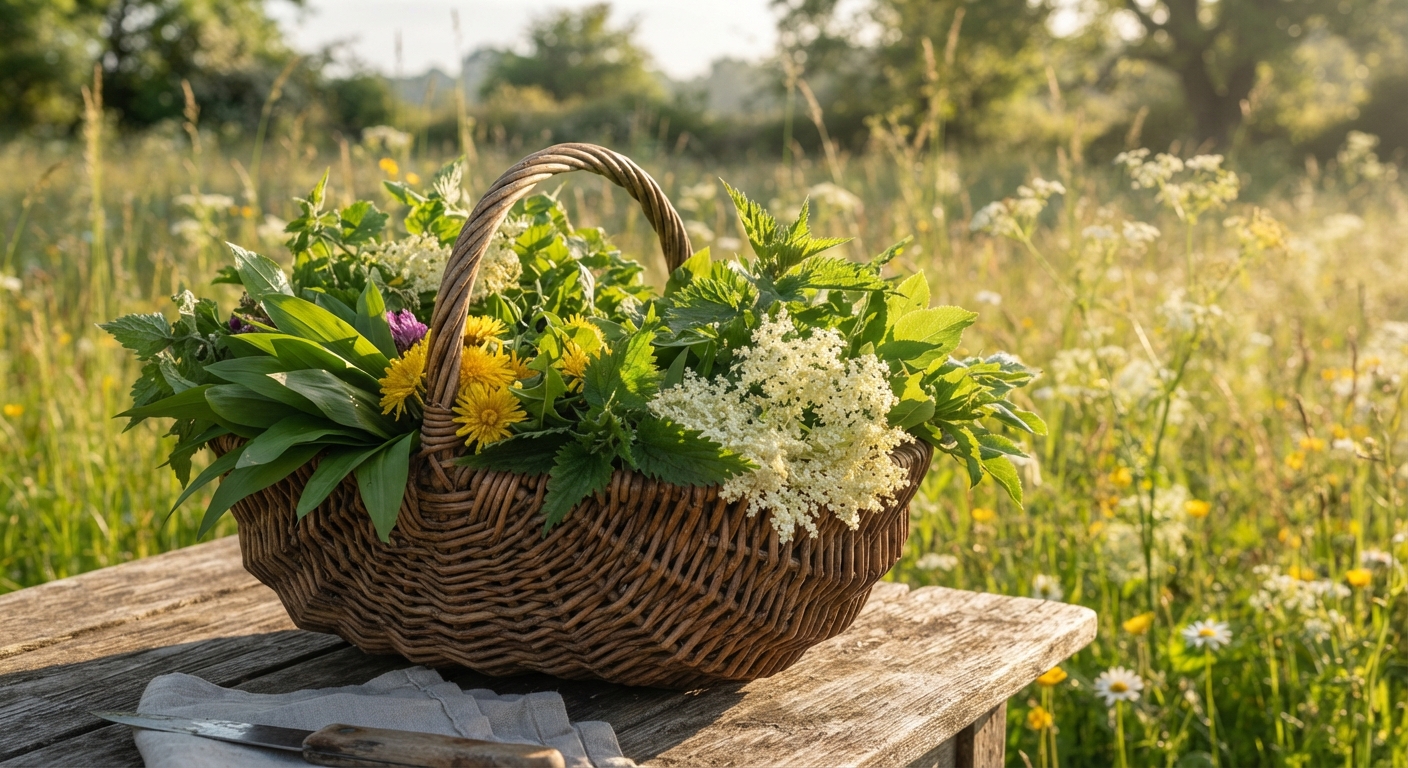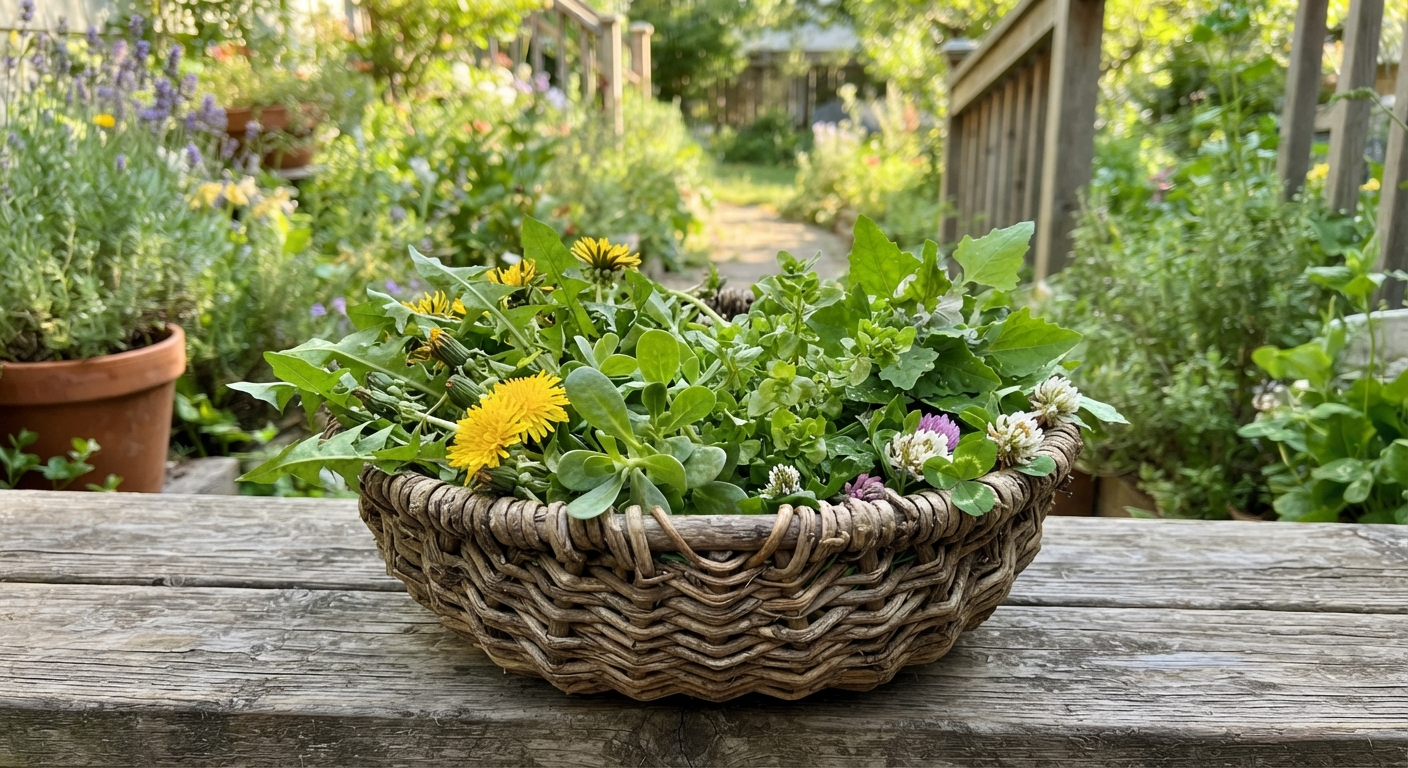
If there’s a garden, a lawn, or a single crack in the pavement within fifty feet of your door, there’s a decent chance you spent part of this summer pulling dinner out of the ground and throwing it in the compost. The plants we call weeds — dandelion, purslane, chickweed, lamb’s quarters — are, in many cases, the exact plants our grandparents ate on purpose.
I kept a running tally one season: every “weed” I pulled from a single raised bed could have fed me lunch for a week. Dandelion greens, a handful of chickweed, purslane by the fistful. All of it went into the green bin before I knew better.
This list is for the person standing over that same raised bed, trowel in hand, wondering if what they’re about to yank is actually food. It ranks twelve of the most common edible weeds by how easy they are to identify correctly, tells you the one feature that makes each one unmistakable, and ends with the safety rules that matter more than any plant list. No rare alpine finds here — just the stuff already growing where you live.
What Makes Something a “Weed,” Anyway
“Weed” isn’t a botanical category. It’s a value judgment — a plant growing somewhere a human decided it shouldn’t. Dandelions aren’t weeds in a French market; they’re a salad green sold by the bunch. Purslane isn’t a weed in Mexico; it’s verdolaga, a staple vegetable. The only difference is which side of the garden fence the plant happens to be on.
That’s the shift in thinking this whole list is built on. A weed becomes food the moment you can (a) identify it with certainty, (b) confirm it’s growing somewhere clean, and (c) prepare it properly. Everything below clears those three bars — some with more effort than others.
The One-Page Cheat Sheet
Here’s the full dozen, side by side, before we get into detail. Read the “The tell” column first: it’s the single feature that separates each plant from its lookalikes, and it’s what you’ll actually lean on in the field.
| Weed | The tell | Where it grows | Best part | Flavor |
|---|---|---|---|---|
| Dandelion | Jagged leaves, milky sap, single yellow flower | Lawns, cracks, fields | Young leaves, flowers | Bitter to nutty |
| Purslane | Thick paddle leaves, red stems, clear sap | Driveways, dry beds | Leaves and stems | Lemony, crisp |
| Chickweed | Single line of hairs on stem, star flowers | Lawns, garden beds | Tops and leaves | Mild, grassy |
| Lamb’s quarters | White mealy coating on young leaves | Disturbed soil, beds | Leaves | Spinach-like |
| Broadleaf plantain | Parallel leaf veins, low rosette | Lawns, paths | Young leaves | Mild, chewy |
| Wood sorrel | Three heart-shaped leaves, sour taste | Shady lawns, beds | Leaves, in small amounts | Lemony, tangy |
| Stinging nettle | Stinging hairs, square stem, opposite leaves | Damp edges, woodland | Young tops, cooked | Rich, spinach-like |
| Garlic mustard | Crushed garlic smell, kidney leaves | Woodland edges, shade | Young leaves, roots | Garlicky, peppery |
| Wild violet | Heart-shaped leaves, purple/white flowers | Lawns, shade | Flowers, leaves | Mild, faintly sweet |
| Curly dock | Wavy leaf edges, tall seed stalk | Fields, roadsides | Young leaves, cooked | Tart, bitter |
| Amaranth (pigweed) | Grain-like seed heads, notched leaf tips | Gardens, disturbed soil | Leaves, seeds | Mild, earthy |
| White clover | Three-part leaves, white flower heads | Lawns everywhere | Flowers, young leaves | Sweet, hay-like |
Two honest caveats before you pick anything. First, “easy to identify” is not the same as “impossible to get wrong.” Every plant below still deserves a proper three-feature check against a field guide — the “tell” is a shortcut, not a substitute. Second, location matters as much as the plant. A dandelion growing in a sprayed lawn or a dog-walk strip is not food, no matter how textbook its leaves look.
The Dirty Dozen, Ranked
Ranking here is by identification confidence: how likely a careful beginner is to get it right on the first try. Start at the top and work down.
1. Dandelion
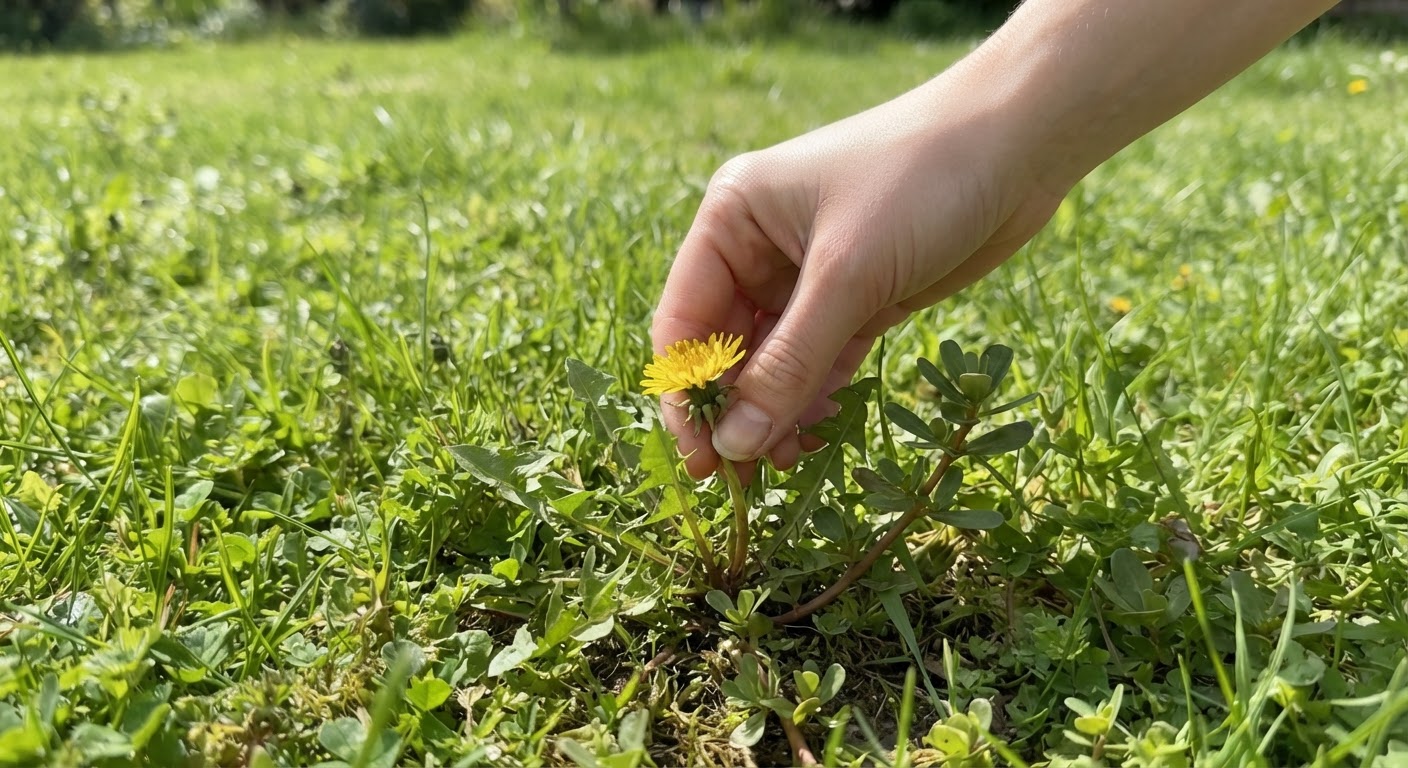
The gateway weed, and for good reason. Once you know the jagged, backward-pointing leaf lobes and the milky white sap in the stem, you’ll never seriously misidentify it. Every part is usable: young leaves in salad or sautéed, flowers battered and fried or steeped into tea, roots roasted as a coffee substitute.
The catch is bitterness. Leaves turn aggressive once the plant flowers and the weather heats up. Pick young leaves in early spring, or blanch older ones in salted water before cooking. Fat, acid, and salt do the rest.
2. Purslane
Purslane is the easiest win on this list, provided you check one thing: the sap. Break a stem. Purslane’s sap runs clear; its lookalike, spotted spurge, bleeds milky white. That single habit — break, look, then eat — is the whole ID.
The plant itself is unmistakable: thick, rubbery, paddle-shaped leaves on reddish stems, sprawling flat in dry, sunny spots. It’s crunchy, slightly lemony, and holds up better in a salad than most grocery lettuce.
3. Chickweed
The friendliest green here. Chickweed is mild enough to eat raw by the handful, and its signature feature — a single line of fine hairs running down one side of the stem — is something no toxic lookalike shares. The tiny white flowers look like ten petals but are actually five, deeply notched.
Eat the top few inches raw in salads and sandwiches. It’s the plant to offer someone who swears they hate weeds; almost nobody objects to chickweed.
4. Lamb’s Quarters
Often called “wild spinach,” and it earns the name. The tell is the white, powdery, almost mealy coating on the undersides of young leaves — it looks like the plant’s been dusted with flour. Diamond-shaped leaves, an erect habit, and that coating together make it genuinely hard to confuse.
Cook it exactly like spinach: rinse, then a quick wilt in a pan with butter, garlic, and salt. It barely has any bitterness to tame, which makes it the most forgiving cooked green on this list.
5. Broadleaf Plantain
Not the banana — the lawn weed. Plantain forms a low rosette of broad, oval leaves with distinctive parallel veins running lengthwise from stem to tip. Pull a leaf and those string-like veins stay attached, which is a quick confirmation.
Young leaves are the prize: mild and chewy, best cooked or added to soups where they thicken like a green. It’s also the classic “field bandage” — crushed and applied to stings and scrapes — but for eating, stick to the young growth.
6. Wood Sorrel
The one that tastes like lemon candy. Three heart-shaped leaves (clover-like but prettier) and tiny yellow or white flowers, plus a sharp, sour, genuinely pleasant tang when you chew a leaf. That tang is oxalic acid — the same compound in spinach and rhubarb — which is why the rule is moderation: a few leaves to brighten a salad, not a whole bowl.
Skip it entirely if you have kidney issues, and don’t graze on it all day. A sprinkle is delightful; a meal’s worth is too much.
7. Stinging Nettle
The plant that scares people and rewards them anyway. The sting — from tiny hairs on the stem and leaf undersides — is real, and it’s also the reason this plant is easy to trust: once you’ve felt it and seen the serrated, opposite leaves on a square stem, you won’t confuse it with much.
Wear gloves to harvest the young top leaves, then cook. Blanching or sautéing kills the sting instantly, and the result is spinach but richer, with a mineral depth store-bought greens can’t touch. Nettle soup is one of the best beginner dishes in all of foraging.
8. Garlic Mustard
The invasive you should be eating. Crush a leaf and it smells unmistakably of garlic — that’s the ID, and it’s a strong one. First-year plants have round-to-heart-shaped leaves in a low rosette; second-year plants shoot up, flower, and turn more bitter and peppery.
Young leaves go into pesto or get cooked like spinach. A good taproot, grated fresh, has a horseradish-like bite. Because it’s invasive in much of North America, eating garlic mustard is one of the few times foraging actively helps the local ecosystem.
9. Wild Violet
The prettiest entry, and the gentlest. Heart-shaped leaves with scalloped edges, and in spring, purple or white flowers that are impossible to mistake for anything dangerous. Both leaves and flowers are edible; the flowers are the payoff, mild and faintly sweet, and they turn a plain salad into something worth photographing.
Pick flowers fresh in spring. The leaves are edible year-round but get tougher as they age — stick to young ones.
10. Curly Dock
A more advanced one, worth learning but with real cautions. Curly dock’s tell is the leaf edge: distinctly wavy or “crimped,” on a plant that starts as a low rosette and sends up a tall brown seed stalk by summer.
The caution is oxalic acid — dock is high in it, like wood sorrel but more so, and the leaves get increasingly bitter and tough as they mature. Harvest young leaves, blanch them in a change of water, and treat dock as a cooked green, not a salad leaf. Skip it if you’re prone to kidney stones.
11. Amaranth (Pigweed)
The garden weed with a gourmet pedigree. Amaranth produces dense, grain-like seed heads and leaves with a distinctive notch at the tip, growing on a reddish, upright plant. The leaves cook like spinach; the seeds can be harvested and cooked as a grain.
The lookalike note: several related “pigweed” species share the same niche, and a few are less pleasant. Confirm the seed head — the dense, textured plume is the feature that marks true amaranth — before you cook a pot.
12. White Clover
The most common “weed” on earth, and entirely edible. Three-part leaves (occasionally four) and round white flower heads, growing in virtually every lawn. The flowers are the best part — sweet and slightly hay-like, eaten fresh, brewed into tea, or dried for later.
Leaves are edible too but are best cooked or eaten very young; raw, mature clover leaves are fibrous and a little hard to digest. The flowers are where the flavor and the charm are.
How They Compare on the Plate
The biggest beginner mistake isn’t misidentifying a plant — it’s treating every weed as if it cooks the same way. It doesn’t. Here’s the quick comparison that saves the most meals.
| Weed | Raw or cooked? | Best quick use | Watch out |
|---|---|---|---|
| Dandelion | Young raw; older cooked | Blanch + sauté with garlic | Bitterness in mature leaves |
| Purslane | Raw | Salad, straight in | Confirm clear sap |
| Chickweed | Raw | Sandwich green | None, once hair-line confirmed |
| Lamb’s quarters | Cooked | Sauté like spinach | Turns unpalatable after bolting |
| Broadleaf plantain | Cooked | Soup thickener | Older leaves too tough |
| Wood sorrel | Raw, small amounts | Salad brightener | Oxalic acid — moderation |
| Stinging nettle | Always cooked | Soup or pesto | Wear gloves until cooked |
| Garlic mustard | Raw or cooked | Pesto | Bitter after flowering |
| Wild violet | Raw | Salad garnish | Leaves toughen with age |
| Curly dock | Always cooked | Blanch twice | High oxalate, bitter when old |
| Amaranth | Cooked | Sauté like spinach | Confirm seed head |
| White clover | Flowers raw | Tea or salad | Mature leaves fibrous |
That “raw or cooked” column is doing more work than it looks. Three of these plants — nettle, curly dock, and mature dandelion — genuinely need heat, both to taste good and, in nettle’s case, to be safe to handle. Skip the cook and you’ll have a bad afternoon; respect it and you’ll have a great meal.
Six Rules That Keep You Out of Trouble
No plant list substitutes for judgment. These six habits matter more than any of the twelve plants above.
- Learn the lookalike before the plant. Before purslane, learn spotted spurge. Before anything ferny or umbrella-flowered, learn poison hemlock and water hemlock — or skip that family entirely for your first season. The lookalike is the risk; the edible plant is just the reward.
- Match three features, never one. A leaf shape alone isn’t an identification. Stack leaf, stem, flower, habitat, and season. If any one feature disagrees, walk away — the mismatch is the warning.
- Harvest clean and high. No sprayed lawns, no roadside strips, no dog-walk zones, nothing downhill of a farm field or septic system. Aim above the “traffic line,” and take a little from many plants rather than stripping one bare.
- Taste a tiny bit before you harvest a lot. Even a correctly identified plant varies by season, soil, and location. Nibble, wait, then decide how much to pick.
- Cook when in doubt. Heat won’t neutralize herbicides or true poisons, but it will handle most biological contamination and it tames the bitter oxalates in dock and sorrel. When you’re unsure about a clean, identified green, cooking is the safer default.
- If it doesn’t feel right, it isn’t. Your brain has been reading plants for a very long time. A plant that looks wrong, smells wrong, or just gives you a bad feeling is a plant you leave alone. There is always another one.
Straight Answers to the Questions You’ll Actually Ask
Are the weeds in my yard really safe to eat? Only if the yard itself is clean. The plants are safe when correctly identified; the location is the variable. An unsprayed lawn away from traffic and pets is fine. A treated lawn is not food, regardless of the plant.
Which edible weed should a total beginner pick first? Dandelion. It’s everywhere, genuinely hard to misidentify once you know the jagged leaves and milky sap, and the young leaves are legitimately good.
Do I have to cook these weeds? Some, yes. Purslane, chickweed, wood sorrel, violet, and young dandelion are fine raw. Nettle must be cooked, and curly dock and mature dandelion are far better cooked.
Why do dandelion leaves taste so bitter? Bitterness is the plant’s defense, and it spikes after flowering and in hot, dry weather. Pick young leaves early in the season, or blanch older ones to pull the bitterness out.
What’s the one weed I should never eat? Anything you can’t positively identify — especially plants with umbrella-shaped flower clusters or ferny leaves, which include poison hemlock and water hemlock. “I think it’s edible” isn’t good enough.
Can I forage weeds in the city? Sometimes. Community gardens, clean parks, and your own untreated yard are decent bets. Avoid roadsides, sprayed landscaping, and anywhere dogs frequent.
The Bottom Line
The weeds you’re already pulling from your garden are, more often than not, the plants your grandparents ate. Dandelion, purslane, chickweed, lamb’s quarters, plantain, clover — they’re not obstacles, they’re an entire seasonal pantry that shows up uninvited every spring.
The work isn’t memorizing a longer list. It’s the five minutes of certainty: identify with three matching features, learn the lookalike first, harvest from somewhere clean, and cook when the plant demands it. Get those habits down and the “weeds” in your yard stop looking like a chore and start looking like lunch.
You’re already doing the hard part — noticing them. Now you just need to know which ones go in the basket instead of the bin. 🦎