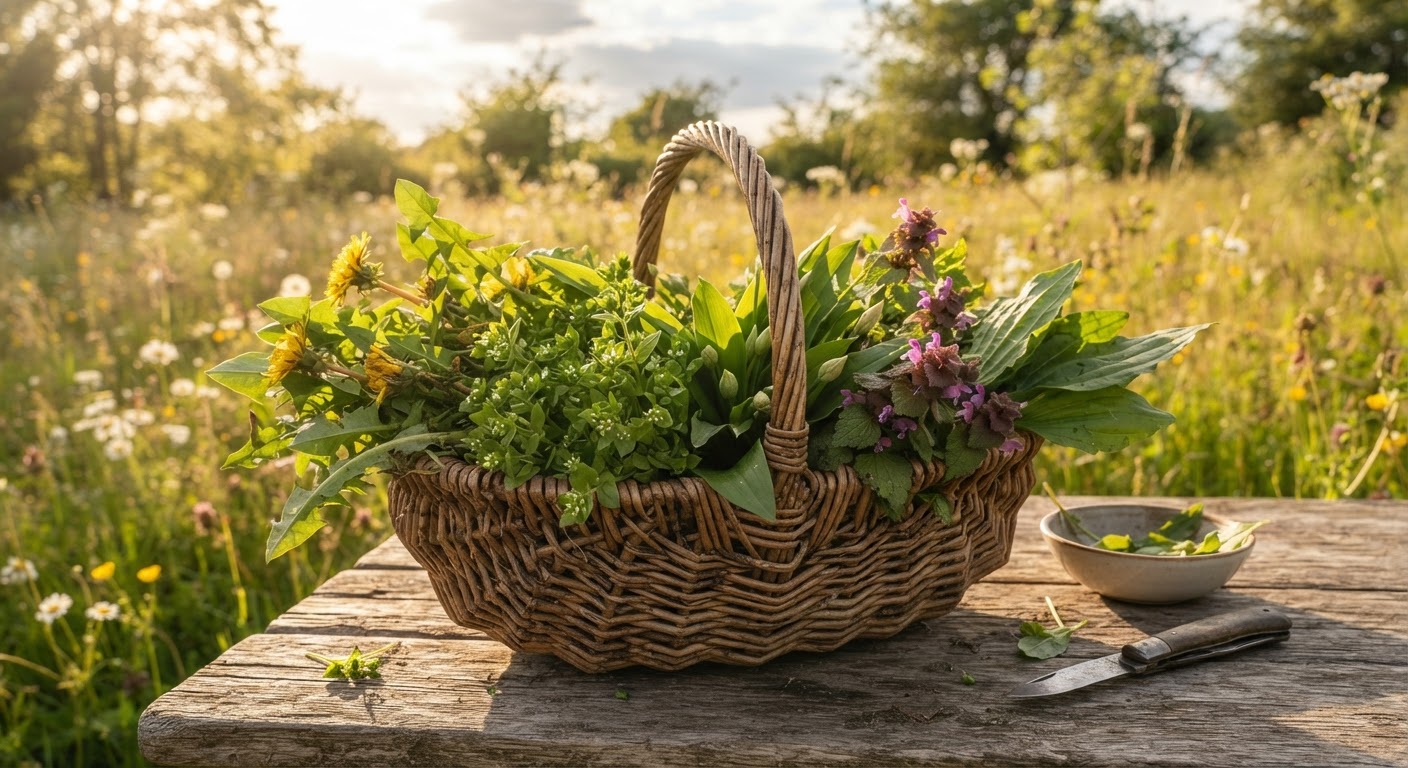
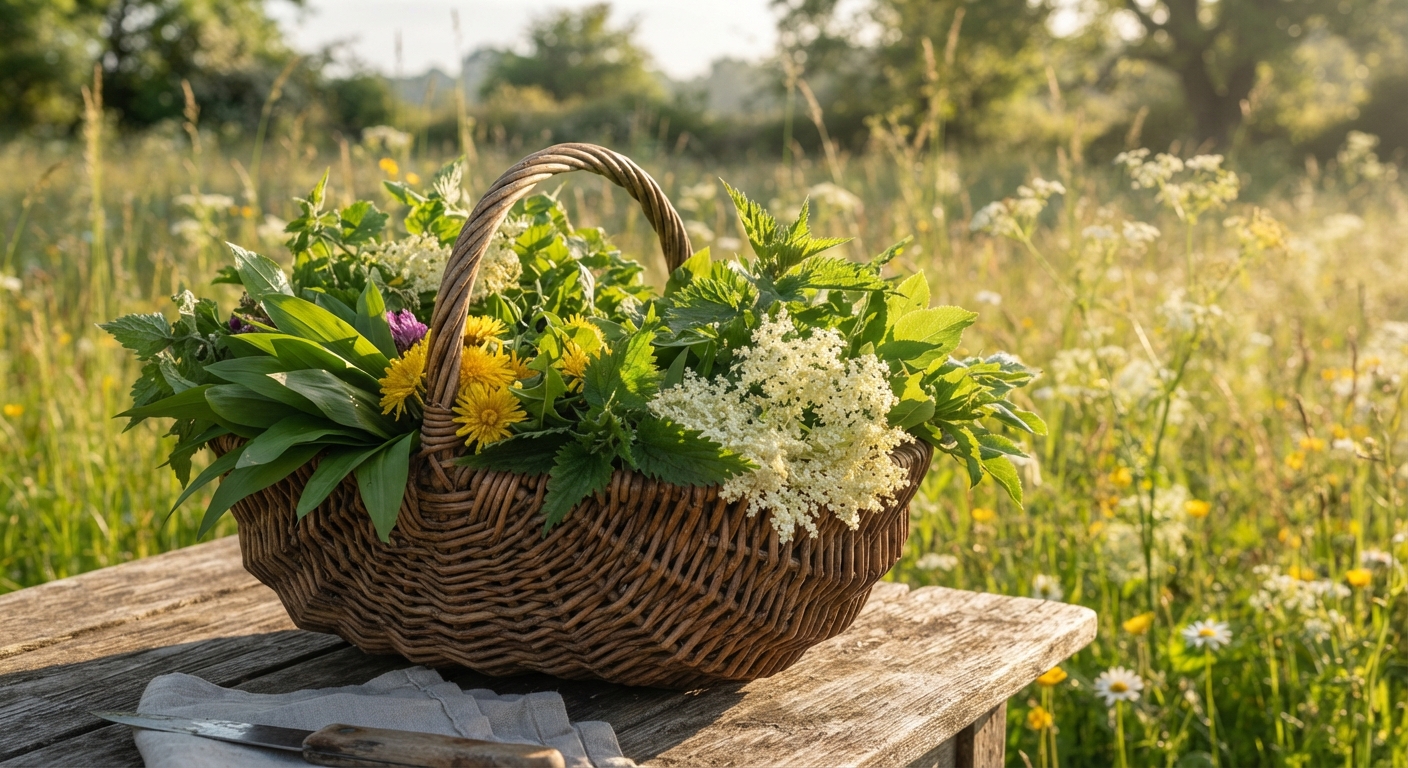
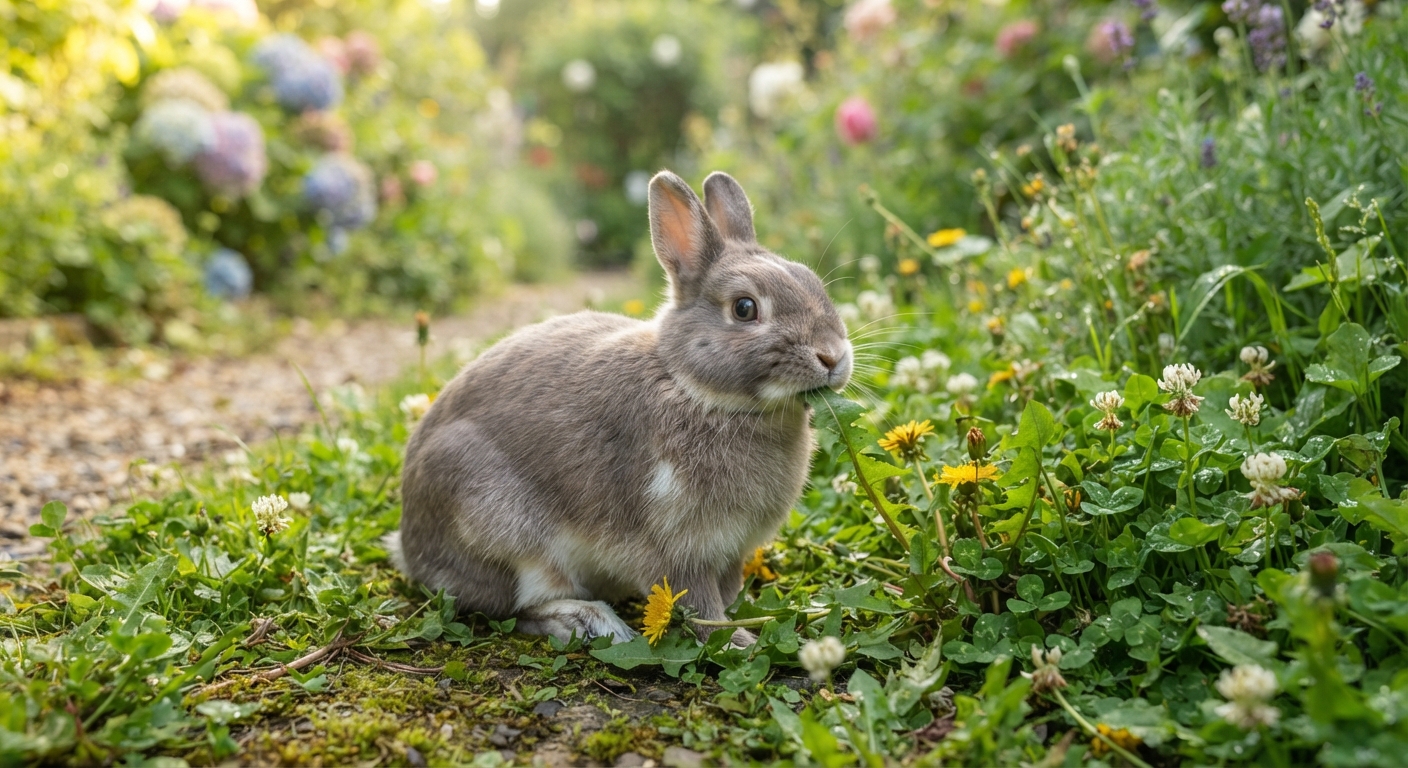
The first time I brought home a handful of dandelion leaves for my rabbit, I watched her sniff them for about half a second before she demolished the entire pile like a tiny lawnmower on fast-forward. She didn’t even look up for air.
That got me thinking: if rabbits go this crazy over a common weed from the yard, what else could I forage for her? How much of what’s growing outside my door is actually rabbit food?
Turns out — a lot. Way more than I expected.
Rabbits in the wild spend their days browsing dozens of different plant species. They don’t eat the same two pellets every day. Their digestive systems evolved for variety — leaves, stems, flowers, bark, roots — and that diversity keeps them healthy in ways a bag of commercial pellets simply can’t match.
This guide covers everything I’ve learned about foraging wild plants for rabbits. I’ll walk you through 30+ safe plants, the ones you absolutely need to avoid, seasonal availability, and how to introduce wild greens without upsetting your bunny’s sensitive stomach.
Why Feed Wild Plants to Rabbits?
Before we jump into the plant list, it’s worth understanding why wild greens matter for domestic rabbits.
Commercial rabbit pellets are convenient, but they’re essentially fast food. They’re calorie-dense, uniform in nutrition, and they don’t require any of the chewing or foraging behavior that keeps a rabbit’s teeth and mind healthy. A rabbit fed exclusively on pellets misses out on the mental stimulation, dental wear, and nutritional variety that comes from eating fresh plants.
Wild greens offer several specific benefits that pellets don’t:
Dental health. Rabbit teeth grow continuously — roughly 2 to 3 millimeters per week. Chewing tough, fibrous plant stems and leaves wears teeth down naturally. Without that wear, teeth overgrow, leading to painful malocclusion that requires veterinary intervention. Soft pellets don’t provide nearly the same grinding action.
Gut motility. The fiber structure in wild plants is more complex than what you’ll find in hay or pellets. Soluble fiber, insoluble fiber, lignin, pectin — each plays a different role in moving food through the digestive tract. A diverse fiber profile supports healthier gut bacteria and reduces the risk of GI stasis, which is one of the leading causes of death in domestic rabbits.
Micronutrient density. Wild plants grow in living soil, pulling up minerals through deep root systems. Dandelions, for instance, contain more calcium, iron, and vitamin A per gram than most store-bought greens. Chickweed is rich in vitamin C. Plantain leaves contain zinc and selenium. These nutrients accumulate naturally in wild plants in a way that hydroponically-grown supermarket greens often miss.
Mental enrichment. Foraging is hardwired into rabbit behavior. Presenting a fresh bundle of mixed wild greens engages their brain the same way a puzzle feeder does. They sniff, select, nibble, and work through the pile. It’s breakfast and entertainment in one.
Cost. It’s free. That matters when you’re buying fresh greens weekly and watching the grocery bill climb.
That said, wild greens aren’t a total pellet replacement — think of them as a supplement that adds variety, nutrition, and enrichment to a hay-based diet. Hay (timothy, orchard grass, meadow hay) should still make up roughly 80 to 85 percent of what your rabbit eats.
30+ Safe Edible Plants for Rabbits
I’ve organized these by how easy they are to find. Most of these grow in backyards, parks, roadsides, and meadows across North America, Europe, and many parts of Asia. If you live somewhere else, check local field guides — many of these plants are cosmopolitan weeds that have spread worldwide.
Common Backyard Weeds
These are the plants you probably have growing within 50 feet of your door right now.
Dandelion (Taraxacum officinale) — The rabbit superfood. Every part is edible: leaves, flowers, and roots. High in calcium and vitamin A. Most rabbits go absolutely wild for dandelion leaves, and the flowers make a sweet occasional treat. Feed the leaves daily, flowers 2 or 3 times a week.
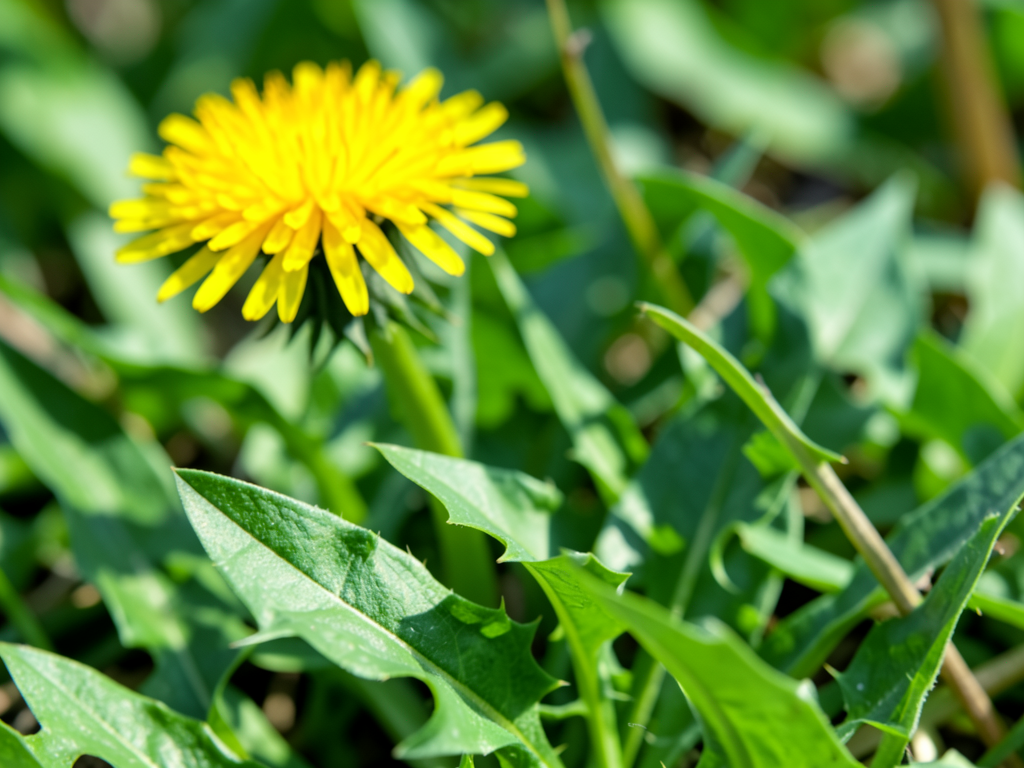
Broadleaf Plantain (Plantago major) — Not the banana relative. This is the low-growing weed with broad, oval leaves and vertical seed stalks you’ve stepped on a thousand times. Mild-tasting, high in fiber, and excellent for digestive health. Many rabbit owners report that plantain helps with loose stools.
Narrowleaf Plantain (Plantago lanceolata) — Similar to broadleaf but with long, narrow, ribbed leaves. Even higher in fiber. Grows abundantly in lawns and fields. One of the safest and most reliable wild greens you can feed.
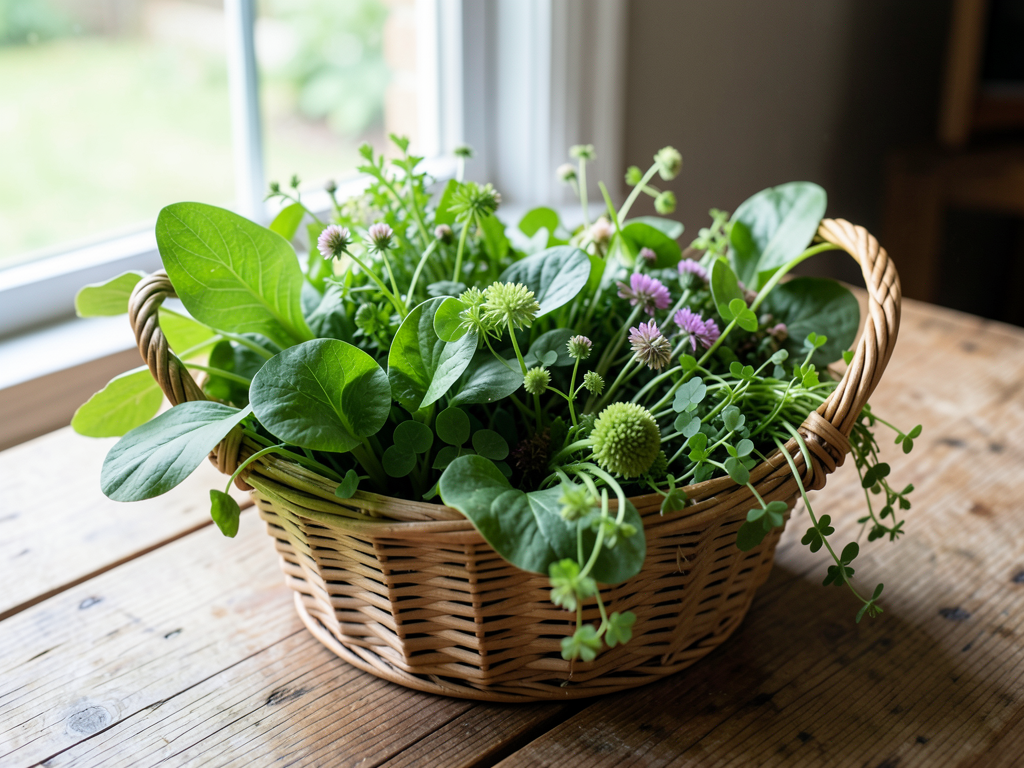
White Clover (Trifolium repens) — Leaves, stems, and flowers are all edible. Rich in protein, which makes it a good supplement for growing or nursing rabbits. Feed in moderation — clover can be gassy in large amounts because of its protein content. A small handful mixed with other greens works well.
Red Clover (Trifolium pratense) — Similar to white clover but with larger, pink-purple flower heads. Same feeding guidelines apply: nutritious but don’t overdo it.
Chickweed (Stellaria media) — A delicate, sprawling weed with tiny white star-shaped flowers. Mild and moist, rabbits love it. One of the first greens to appear in early spring. Excellent source of vitamin C and iron. Feed freely.
Cleavers / Stickyweed (Galium aparine) — That annoying plant that sticks to your clothes with tiny hooked hairs. Turns out it’s great rabbit food. Best harvested young and tender in spring before it gets stringy. Supports the lymphatic system and urinary tract.
Shepherd’s Purse (Capsella bursa-pastoris) — Named for its distinctive heart-shaped seed pods. The whole plant is edible — leaves, stems, flowers, and seed pods. Mild peppery taste. A good astringent herb that can help with minor digestive upset.
Mallow (Malva neglecta and Malva sylvestris) — Round, crinkled leaves with a mild, almost mucilaginous texture. Very gentle on the stomach. The flowers and immature seed pods (little “cheeses,” as kids call them) are edible too.
Nettle (Urtica dioica) — Yes, the stinging kind. But once you wilt, dry, or briefly blanch the leaves, the sting completely disappears, leaving behind one of the most nutrient-dense greens on earth. Nettle contains iron, calcium, magnesium, and more protein than most leafy greens. Wear gloves to harvest. Never feed fresh and raw — always wilt, dry, or blanch first. Rabbits go crazy for dried nettle.
Groundsel (Senecio vulgaris) — Controversial one. Some sources list it as safe in small amounts; others warn about pyrrolizidine alkaloids. I personally avoid it because the risk-reward ratio doesn’t make sense when so many safer options are available. Skip this one unless you’ve done your own research and made an informed call.
Garden and Hedgerow Plants
These are the slightly less weedy plants you’ll find at the edges of gardens, along fences, and in hedgerows.
Raspberry Leaves (Rubus idaeus) — An absolute favorite. Rabbits love the mild, slightly astringent leaves. Raspberry leaf is also known for supporting reproductive health in female rabbits (and humans). Feed fresh or dried.
Blackberry Leaves (Rubus fruticosus) — Same family as raspberry, similar benefits. The young, tender leaves in spring are best. Older leaves get tougher and more bitter but are still safe.
Strawberry Leaves (Fragaria × ananassa and Fragaria vesca) — Safe and well-liked. The leaves contain tannins that can help with minor digestive issues. Wild strawberry leaves tend to be smaller and more tender than cultivated varieties.
Rose Petals and Leaves (Rosa spp.) — Unsprayed rose petals are a fragrant treat that most rabbits adore. The leaves are also edible. Make sure they haven’t been treated with pesticides or systemic fungicides — roses from florists are almost always sprayed.
Hibiscus Flowers (Hibiscus rosa-sinensis and Hibiscus sabdariffa) — High in vitamin C and antioxidants. Both the flowers and leaves are safe. Dried hibiscus flowers make a colorful, healthy treat.
Hazel Leaves (Corylus avellana) — Mild and safe. Young leaves in spring are tender; older leaves are tougher but provide good chewing material for dental wear. The twigs are also safe for chewing.
Willow Leaves and Twigs (Salix spp.) — Willow bark contains salicin, a natural compound similar to aspirin. Small amounts of leaves and twigs are safe and may provide mild pain-relieving benefits. The twigs are excellent for dental wear. Weeping willow, white willow, and pussy willow are all safe.
Apple Leaves and Twigs (Malus domestica) — Safe and well-liked. Young apple twigs are one of the best natural chew toys for rabbits. Make sure the tree hasn’t been sprayed.
Hawthorn Leaves (Crataegus spp.) — Safe and nutritious. Hawthorn is traditionally used for heart health, and the leaves, flowers, and berries (without seeds) are all edible for rabbits.
Birch Leaves (Betula spp.) — Mild, slightly astringent. Safe in moderate amounts. Birch twigs also make good chew material.
Wild Flowers and Herbs
These add variety, color, and specific nutrients to your rabbit’s diet.
Calendula / Pot Marigold (Calendula officinalis) — Not to be confused with French marigolds (Tagetes), which are toxic. Calendula petals are anti-inflammatory and add a splash of orange-yellow color to your rabbit’s bowl. Feed the flowers and leaves.
Chamomile (Matricaria chamomilla) — The small, daisy-like flowers have a gentle calming effect. Great for nervous or stressed rabbits. Feed fresh or dried flowers in small amounts.
Yarrow (Achillea millefolium) — Feed in very small amounts. Yarrow is astringent and can help with mild digestive complaints, but it’s potent. A few leaves here and there, not handfuls.
Lemon Balm (Melissa officinalis) — Mildly calming with a pleasant lemony scent. Most rabbits like it. Safe to feed regularly as part of a varied mix.
Mint (Mentha spp.) — Peppermint, spearmint, applemint — all safe in moderate amounts. Strong-tasting, so some rabbits love it and others ignore it completely. Mint can also help repel fleas when placed in bedding.
Basil (Ocimum basilicum) — Safe and often loved. Sweet basil, Thai basil, and holy basil are all fine. A fragrant addition to the fresh greens bowl.
Coriander / Cilantro (Coriandrum sativum) — The leaves and stems are safe and widely fed. Some rabbits go crazy for it; others don’t care. Worth trying.
Parsley (Petroselinum crispum) — Safe but best fed in moderation. Parsley is high in calcium and oxalates, which can contribute to bladder sludge in rabbits prone to urinary issues. A few sprigs per day is fine; don’t feed it as a staple.
Fennel (Foeniculum vulgare) — The fronds, stalks, and seeds are all safe. Fennel is traditionally used to reduce gas and bloating — helpful for rabbits, who can’t burp or vomit. A gentle digestive herb.
Borage (Borago officinalis) — Leaves and blue star-shaped flowers are safe. Feed leaves in moderation — they contain small amounts of pyrrolizidine alkaloids, though at much lower levels than comfrey.
Nasturtium (Tropaeolum majus) — The round leaves and bright orange-red-yellow flowers are safe and have a peppery kick. Some rabbits love the taste; others are put off by it. Worth offering to see which camp yours falls in.
Plants You Should NEVER Feed Your Rabbit
Knowing what to avoid matters as much as knowing what to pick. Some common plants are genuinely dangerous for rabbits.
| Toxic Plant | Why It’s Dangerous | Where You’ll Find It |
|---|---|---|
| Foxglove (Digitalis) | Contains cardiac glycosides — affects heart rhythm. Fatal in small doses. | Gardens, woodland edges |
| Lily of the Valley (Convallaria) | Cardiac glycosides. Even the water from a vase containing these can be toxic. | Shady gardens, florist bouquets |
| Buttercup (Ranunculus) | Contains protoanemonin, which causes severe mouth and digestive irritation. | Lawns, meadows, everywhere |
| Nightshade (Solanum) | Contains solanine — affects the nervous system. This includes tomato leaves, potato leaves, and deadly nightshade berries. | Gardens, hedgerows |
| Rhubarb Leaves | High in oxalic acid and anthraquinone glycosides. The stalks are also not recommended for rabbits. | Vegetable gardens |
| Avocado | Contains persin, which causes respiratory distress and fluid accumulation. All parts — fruit, pit, leaves, bark. | Supermarkets (don’t share your toast) |
| Onion & Garlic (Allium) | Contains thiosulfate, which causes hemolytic anemia. Includes leeks, chives, shallots, and wild garlic. | Gardens, wild in woodlands |
| Rhubarb Leaves | Oxalic acid toxicity. | Gardens |
| Ivy (Hedera helix) | Contains triterpenoid saponins. Causes vomiting, diarrhea, and in large amounts, coma. | Climbing on walls, trees everywhere |
| Rhododendron / Azalea | Contains grayanotoxins that disrupt sodium channels. Even a few leaves can be fatal. | Ornamental gardens |
| Yew (Taxus) | Contains taxine alkaloids. Extremely toxic — sudden death is often the first symptom. | Churchyards, gardens, hedges |
| Buttercup (Ranunculus) | Contains protoanemonin, irritant. | Fields and lawns |
| Hemlock (Conium maculatum) | Contains coniine, a neurotoxin. Causes paralysis starting from the legs. Socrates was executed with this. | Roadsides, damp areas |
| Ragwort (Jacobaea vulgaris) | Pyrrolizidine alkaloids cause cumulative liver damage. | Fields, roadsides |
This list isn’t exhaustive — it covers the most common dangerous plants you’re likely to encounter. When in doubt, don’t feed it. A rabbit’s digestive system is too sensitive for guesswork.
A good rule: if you can’t identify a plant with 100 percent confidence, it stays in the ground. No “probably” or “I think it’s.” Positive identification only.
How to Forage Safely for Your Rabbit
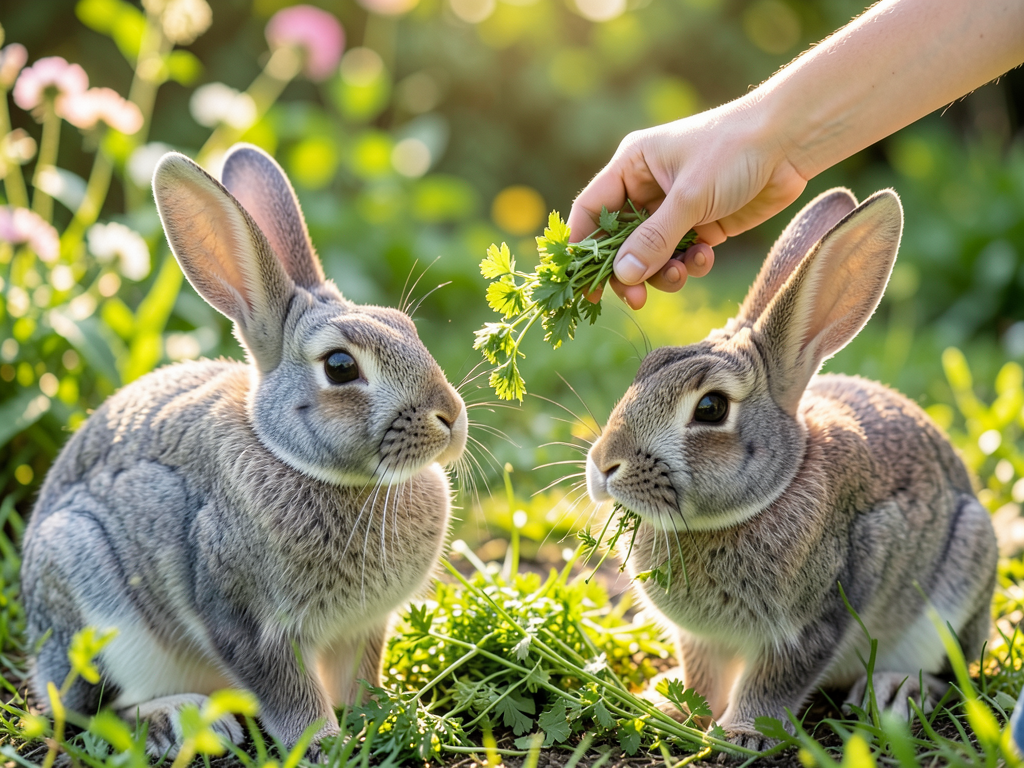
Finding the right plants is half the job. Collecting them safely is the other half.
Pick Clean — Avoid Contaminated Spots
Never forage from:
- Roadsides. Vehicle exhaust deposits heavy metals and hydrocarbons on plants. A buffer of at least 50 feet from any road is a good minimum.
- Dog-walking areas. Urine and feces carry pathogens. If you see dogs being walked there regularly, find another spot.
- Sprayed lawns. If the grass looks unnaturally perfect — no dandelions, no clover, no weeds — it’s almost certainly been treated with herbicides. Avoid it completely.
- Industrial areas. Soil contamination from past industrial use doesn’t go away. Old factory sites, railway edges, and brownfield land are not safe foraging zones.
- Agricultural field edges. Pesticide drift from conventional farms can travel hundreds of feet. If you’re near a farm, ask what they spray and when.
Harvest Responsibly
Take what you need, but leave the plant alive and healthy:
- Take leaves, not the whole plant. Pinch off individual leaves or snip stems with scissors. If you pull the plant out by the roots, it won’t regrow.
- Spread your harvest. Don’t strip a single patch bare. Take a few leaves from multiple plants. The population stays healthy, and you’ll have a renewable source.
- Leave flowers for pollinators. Bees and butterflies need them more than your rabbit does. Pick a few flowers, not all of them.
- Check local regulations. Some public parks and nature reserves prohibit plant collection. Know the rules before you pick.
Wash Everything Thoroughly
Wild plants have dirt, insects, bird droppings, and microorganisms on them. Rinse everything under running water, then soak in a bowl of clean water for a few minutes to dislodge anything hiding in the crevices. Pat or spin dry before serving.
A salad spinner works beautifully for this. I keep a dedicated one just for rabbit greens.
How to Introduce Wild Greens to Your Rabbit
A rabbit’s digestive system is built for consistency — it relies on a stable population of gut bacteria to ferment fiber. When you introduce new foods too quickly, you disrupt that bacterial balance, and the result is soft stools, gas, or worse: GI stasis.
Follow this introduction schedule:
Day 1–3: Pick one new plant. Give your rabbit a single small leaf or a tiny sprig. Watch for any changes in appetite, stool consistency, or behavior. If everything looks normal, proceed.
Day 4–6: Increase to a small handful of that same plant, mixed with their regular greens or hay. Still watching for digestive changes.
Day 7: If all is well, that plant is now part of the safe rotation. Start the process over with a new plant.
Never introduce more than one new food at a time. If your rabbit has a bad reaction, you need to know which plant caused it. Introducing three new greens on the same day creates a guessing game you don’t want to play.
Signs a Plant Isn’t Agreeing
Stop feeding immediately if you see:
- Smaller or fewer fecal pellets
- Soft, pasty, or misshapen droppings
- Uneaten cecotropes (the soft, nutrient-rich droppings rabbits normally re-ingest)
- Bloated or distended belly
- Reduced appetite
- Lethargy or hiding
- Teeth grinding (a pain sign in rabbits)
If you see any of these for more than a few hours, call a rabbit-savvy vet. GI stasis can kill a rabbit in 24 hours.
Seasonal Foraging Calendar
One of the best things about foraging for your rabbit is that the menu changes with the seasons. Here’s what to look for throughout the year:
Spring (March–May)
Spring is peak foraging season. Tender new growth everywhere.
- Dandelion (leaves and flowers)
- Chickweed
- Cleavers (harvest young before they toughen)
- Nettle (wear gloves, then wilt or dry)
- Young raspberry and blackberry leaves
- Clover (white and red)
- Hawthorn leaves
- Young plantain leaves
- Ground ivy (Glechoma hederacea — safe in moderation)
Summer (June–August)
Growth slows slightly in heat, but plenty is still available.
- Plantain (broadleaf and narrowleaf — at their peak)
- Mallow
- Calendula flowers
- Borage
- Lemon balm
- Mint
- Basil
- Nasturtium
- Rose petals (check for spray)
Autumn (September–November)
The season shifts. Leaves are tougher but still nutritious.
- Raspberry and blackberry leaves (starting to turn, still safe)
- Plantain
- Dandelion (second flush after summer)
- Willow leaves (tougher but good for teeth)
- Apple leaves (falling, grab them before they’re gone)
- Hazel leaves
- Hawthorn berries (without seeds)
Winter (December–February)
Foraging gets harder. This is when dried and stored greens shine.
- Dried nettle (harvested in spring)
- Dried raspberry leaves
- Dried dandelion leaves
- Dried chamomile
- Evergreen plantain (narrowleaf plantain often survives mild winters)
- Willow and apple twigs (harvest and store for winter chewing)
The key to winter feeding is drying and storing greens during the abundant spring and summer months. A dehydrator or a well-ventilated rack in a warm, dry room works well. Once completely dry, store in paper bags or glass jars in a cool, dark cupboard.
Nutritional Comparison: Wild vs Store-Bought Greens
Wild plants often outperform their cultivated counterparts in nutritional density. Here’s a quick comparison:
| Nutrient | Dandelion (wild) | Romaine Lettuce (store) | Benefit for Rabbits |
|---|---|---|---|
| Calcium | 187 mg/100g | 33 mg/100g | Bone and tooth health |
| Vitamin A | 508 mcg/100g | 436 mcg/100g | Vision, immune function |
| Vitamin K | 778 mcg/100g | 102 mcg/100g | Blood clotting |
| Iron | 3.1 mg/100g | 0.97 mg/100g | Oxygen transport |
| Fiber | 3.5 g/100g | 2.1 g/100g | Gut motility |
| Nutrient | Chickweed (wild) | Iceberg Lettuce (store) | Benefit |
|---|---|---|---|
| Vitamin C | 38 mg/100g | 2.8 mg/100g | Immune support |
| Calcium | 66 mg/100g | 18 mg/100g | Bone health |
| Magnesium | 23 mg/100g | 7 mg/100g | Muscle function |
Dandelion greens pack roughly five times the calcium of romaine and more than triple the iron. Chickweed has over ten times the vitamin C of iceberg lettuce. These differences matter when you’re trying to maximize nutrition from a small daily portion of fresh greens.
Common Questions About Feeding Wild Plants to Rabbits
Can wild plants replace hay?
No. Hay should always make up 80 to 85 percent of a rabbit’s diet. Wild greens are a supplement — they add variety, nutrients, and enrichment — but they don’t replace the consistent, long-stem fiber that hay provides. Think of wild greens as a multivitamin, not the main course.
How much wild greens should I feed per day?
A good guideline is about 1 packed cup of mixed fresh greens per 2 pounds (roughly 1 kg) of body weight per day. If your rabbit weighs 4 pounds, aim for about 2 cups. Adjust based on how your rabbit responds — some tolerate more greens than others.
Can baby rabbits eat wild greens?
Baby rabbits under 12 weeks should not eat fresh greens at all. Their digestive systems aren’t mature enough. Stick to hay and their mother’s milk, or alfalfa hay and pellets if they’re weaned. Introduce greens gradually starting around 12 weeks, one at a time.
Do I need to dry all wild greens before feeding?
Only stinging nettle requires drying or wilting before feeding. Everything else can be fed fresh. Drying is a preservation method for winter storage, not a safety requirement for most plants.
My rabbit won’t eat the wild greens I picked. What’s wrong?
Rabbits have individual taste preferences, just like people. If your rabbit ignores something, try a different plant. Also check that you’ve correctly identified the plant — rabbits can be surprisingly good at rejecting things that aren’t good for them. Trust their nose. Try offering the greens in different ways: some rabbits prefer them slightly wilted, others like them fresh and crisp.
Can I forage in public parks?
Check local regulations first. Many parks prohibit plant removal. Even if it’s allowed, be mindful of dog traffic and possible pesticide use. Public parks are often sprayed more than people realize. Scout the park on a weekday morning to see if maintenance crews are applying anything.
What’s the absolute safest plant to start with?
Dandelion leaves. They’re easy to identify, grow everywhere, have no toxic lookalikes that a reasonable adult would confuse them with, and almost every rabbit loves them. If you’re nervous about foraging for your rabbit, start with dandelions. You can’t go wrong.
How do I store foraged greens?
Rinse, dry thoroughly, wrap loosely in a slightly damp paper towel, and place in an open plastic bag in the refrigerator. Most wild greens will keep for 3 to 5 days this way. For longer storage, dry them completely and keep in airtight containers.
Are there any plants that help with specific health issues?
Yes — several plants have traditionally been used for specific conditions:
- Plantain and mallow for digestive soothing
- Raspberry leaf for reproductive health in does
- Chamomile and lemon balm for calming anxious rabbits
- Dandelion as a gentle diuretic for urinary tract support
- Fennel for reducing gas
- Willow twigs for mild pain relief (natural salicin)
These aren’t replacements for veterinary care — they’re gentle supportive herbs. If your rabbit is genuinely sick, see a vet.
Quick Reference Checklist
Here’s what to run through every time you head out to forage for your bunny:
- I can identify this plant with 100 percent confidence
- The foraging spot is at least 50 feet from any road
- The area is not a dog-walking spot
- The ground hasn’t been sprayed (no perfect weed-free lawns)
- I’m taking leaves, not pulling up whole plants
- I’m spreading my harvest across multiple plants
- I’m washing everything thoroughly before serving
- I’m introducing only one new plant at a time
- I’m watching for changes in droppings or behavior
- If anything seems off, I stop and call a vet
Print this out or save it on your phone. It takes two minutes to run through and prevents a lot of problems.
The Joy of Foraging for Your Rabbit
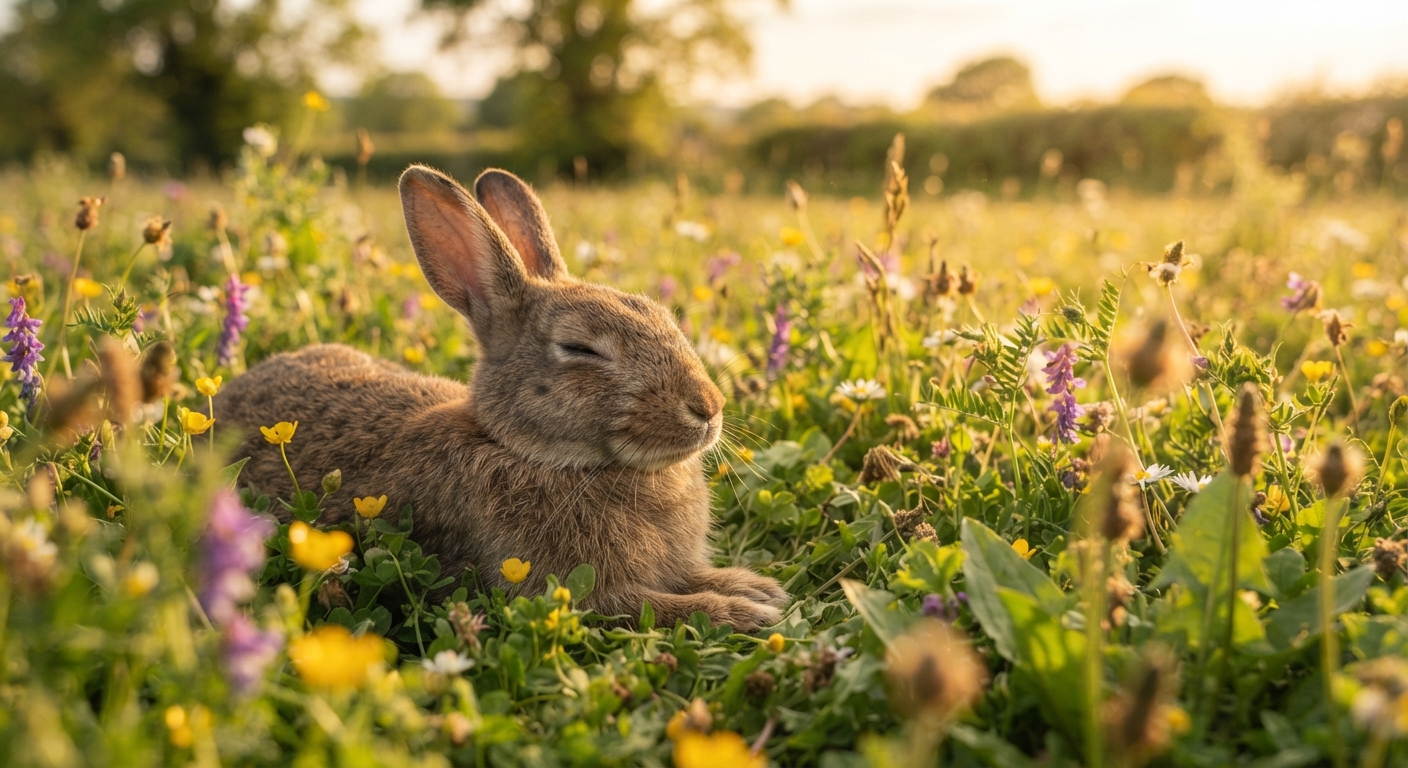
There’s something deeply satisfying about walking outside and seeing your yard through your rabbit’s eyes. That patch of dandelions you used to resent? It’s a salad bar. Those plantain leaves in the sidewalk crack? Rabbit groceries. The clover taking over your lawn? A protein-rich superfood.
Foraging changes your relationship with the land around you. You start noticing what’s growing, what’s in season, what looks healthy and what doesn’t. You scan hedgerows. You carry scissors and a cloth bag in your pocket. You learn the names of plants you walked past for years without seeing.
And then you walk inside with a bundle of fresh greens, your rabbit hears the rustle of leaves, runs to the front of the enclosure, stands up on two legs, nose twitching, ears forward.
Worth it every time.
Disclaimer: This guide is for informational purposes only. Always consult with a rabbit-savvy veterinarian before making significant changes to your rabbit’s diet. Plant identification is your responsibility — use multiple reliable field guides and when in doubt, don’t feed it.