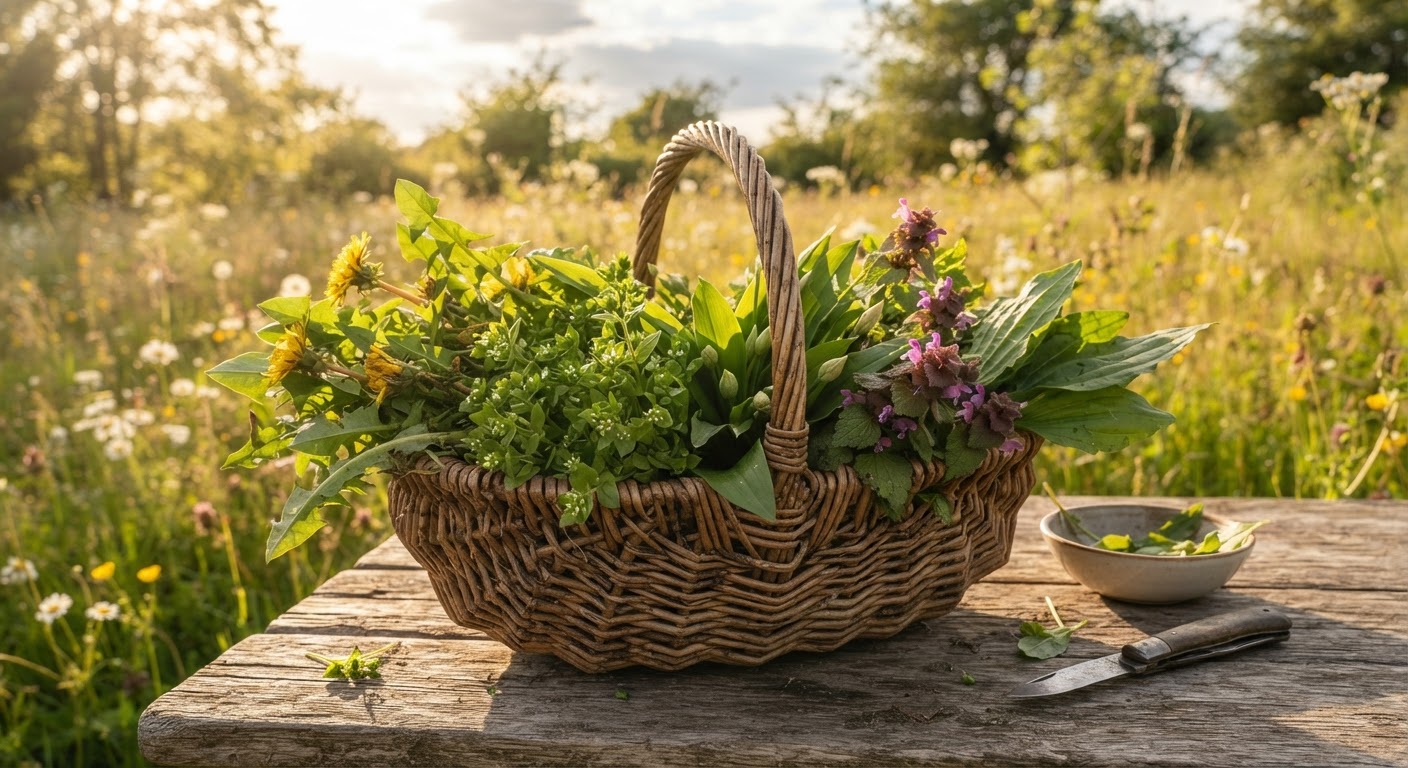
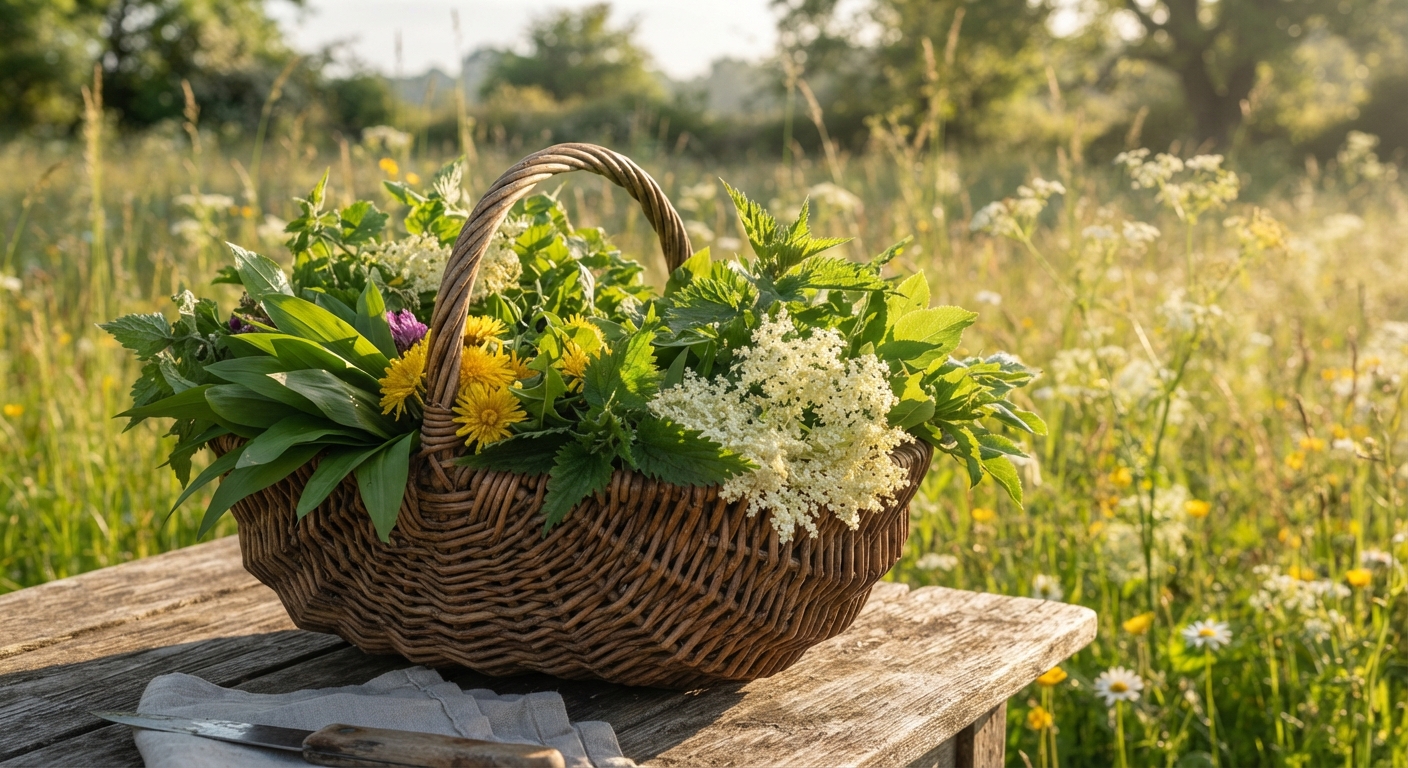
Imagine walking into your backyard and picking breakfast straight from a lush, layered garden that takes care of itself. No tilling. No chemical fertilizers. No annual replanting marathons every spring. That’s not fantasy — that’s what happens when you combine edible plants with permaculture design.
Permaculture isn’t just a gardening method. It’s a way of thinking about ecosystems and plugging yourself into them as a participant rather than a controller. And the edible plants you choose determine whether your system actually feeds you or just looks pretty.
I’ve spent years helping people transform bare lawns into productive food forests, and the single biggest mistake I see is choosing the wrong plants for the wrong spots. So let’s fix that right now.
What Makes a Plant “Permaculture-Worthy”?
Not every edible plant belongs in a permaculture system. Permaculture favors plants that pull their weight in multiple ways — they don’t just produce food. They also build soil, attract pollinators, provide mulch, fix nitrogen, or create habitat for beneficial insects.
A permaculture-worthy edible plant typically checks several of these boxes:
- Perennial or self-seeding — comes back year after year without replanting
- Low maintenance — thrives without constant watering, fertilizing, or pest control
- Multiple functions — provides food plus another ecosystem service
- Well-adapted to your climate — native or naturalized plants require less intervention
- Fits into a guild — plays well with neighboring plants rather than competing aggressively
This is fundamentally different from conventional vegetable gardening, where you till the soil, plant annuals in neat rows, and start over every season. Permaculture asks: what if the garden could sustain itself?
The Seven Layers of a Food Forest
A productive permaculture food forest mimics the structure of a natural forest — but everything in it is edible, medicinal, or otherwise useful. Understanding these layers is the foundation of designing with edible plants.
1. The Canopy Layer (Tall Trees)
These are your largest trees — typically 9 meters (30 feet) or taller at maturity. In a food forest, canopy trees provide shade, wind protection, and habitat while producing nuts, fruits, or pods.
Top edible canopy plants:
| Plant | Edible Yield | Additional Functions |
|---|---|---|
| Walnut (Juglans regia) | Nuts | Timber, shade, wildlife habitat |
| Chestnut (Castanea sativa) | Nuts | Coppice wood, leaf mulch |
| Honey Locust (Gleditsia triacanthos) | Sweet pods | Nitrogen fixation, livestock fodder |
| Mulberry (Morus alba/nigra) | Berries | Fast-growing shade, poultry forage |
| Pecan (Carya illinoinensis) | Nuts | Long-term timber value |
If you’re working with a smaller space, skip the canopy layer entirely and start with smaller trees. Trying to cram a walnut tree into a suburban backyard is a recipe for frustration — the juglone it releases through its roots will suppress many other plants anyway.
2. The Understory Layer (Small Trees & Large Shrubs)
The understory sits beneath the canopy, thriving in dappled light. This is where many of our familiar fruit trees actually belong.
Top edible understory plants:
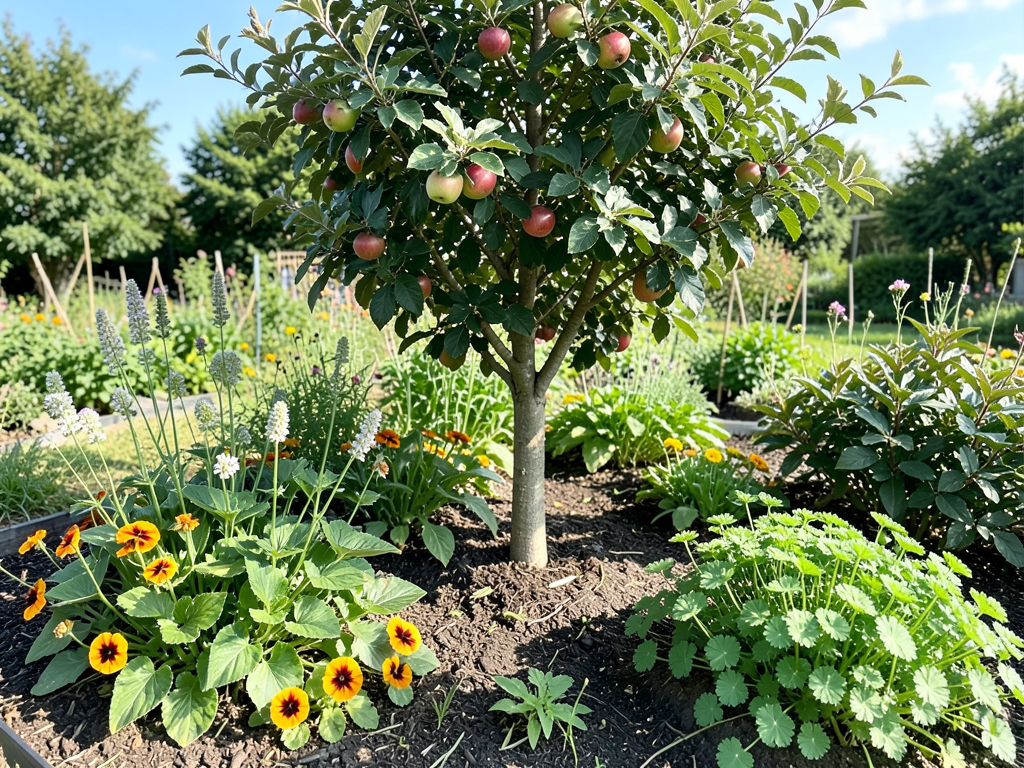
- Apple & Pear — standard and semi-dwarf varieties work beautifully in the understory, though they need at least 6 hours of sun. In truly shaded spots, go with pawpaw or serviceberry instead.
- Pawpaw (Asimina triloba) — North America’s largest native fruit, tastes like banana custard. Actually prefers partial shade when young.
- Persimmon (Diospyros virginiana) — American persimmons are practically indestructible once established, and the fruit is ambrosia-sweet after the first frost.
- Elderberry (Sambucus nigra/canadensis) — Prolific berries for syrup and immune support, plus the flowers make incredible cordial.
- Hazelnut (Corylus americana) — Shrubby, shade-tolerant, and produces nuts within 3-5 years.
3. The Shrub Layer
This is the workhorse layer of any food forest — typically 1 to 3 meters tall. Shrubs fill the space between trees and provide the bulk of your berries and soft fruits.
Must-have edible shrubs:
- Blueberry (Vaccinium spp.) — Requires acidic soil (pH 4.5-5.5). Plant them where pine needles naturally accumulate.
- Raspberry & Blackberry (Rubus spp.) — Incredibly productive, but know that blackberries can become invasive if left unchecked. Use root barriers or dedicated patches.
- Gooseberry & Currant (Ribes spp.) — Shade-tolerant and incredibly cold-hardy. White currants are surprisingly sweet eaten fresh.
- Goumi Berry (Elaeagnus multiflora) — Nitrogen-fixing shrub that produces tart red berries rich in lycopene. Pairs beautifully with fruit trees.
- Aronia (Aronia melanocarpa) — Also called chokeberry. The name doesn’t do it justice — the berries make phenomenal jam and are packed with antioxidants.
One pattern I’ve seen work consistently: surround each fruit tree with a ring of goumi berry and currant shrubs. The goumi fixes nitrogen for the tree, the currants thrive in the partial shade, and you get three harvests from one spot.
4. The Herbaceous Layer
This includes perennial vegetables, herbs, and flowers that die back to the ground each winter but regrow from the roots in spring. This is where permaculture really shines compared to annual gardening — zero replanting, year after year.
Perennial edible powerhouses:
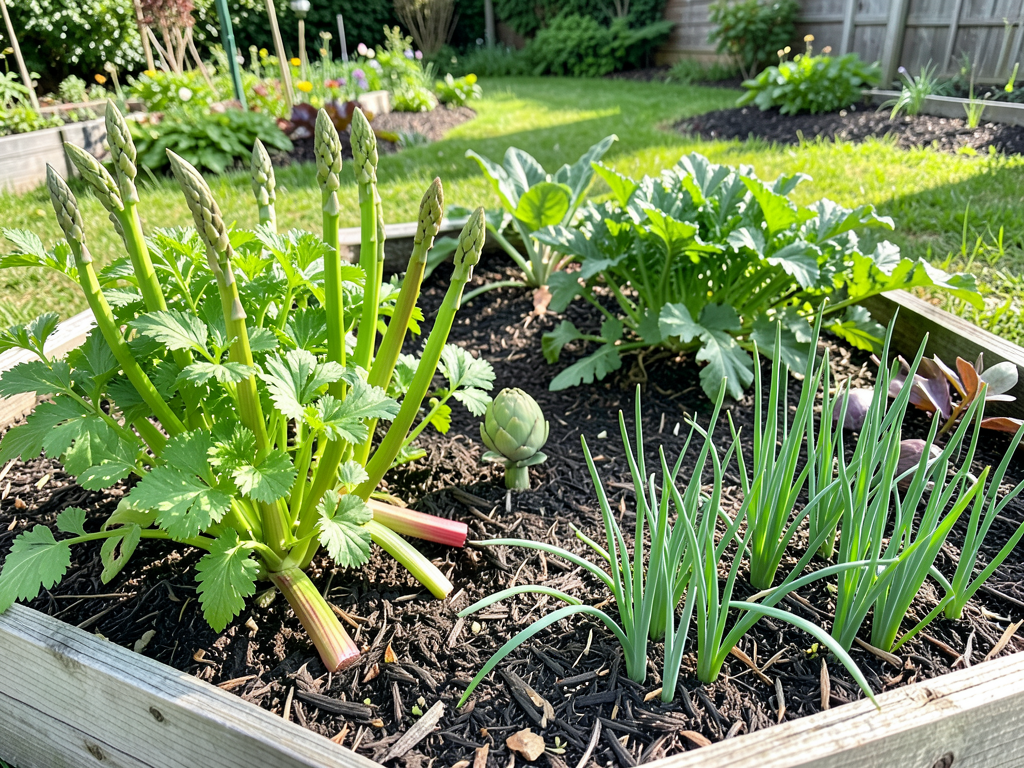
- Asparagus — Takes 3 years to establish, then produces for 20+ years. Plant crowns once, harvest for decades.
- Rhubarb — One of the earliest spring harvests. Thrives with minimal attention. The leaves are toxic (oxalic acid), but the stalks are delicious.
- Globe Artichoke — Stunning architectural plant that produces edible flower buds. Even the unharvested buds turn into gorgeous purple flowers pollinators love.
- Good King Henry (Chenopodium bonus-henricus) — A perennial spinach alternative. Use the young shoots like asparagus and the leaves like spinach.
- Sea Kale (Crambe maritima) — Perennial brassica with edible leaves, shoots, and flower buds. Looks beautiful with its blue-green foliage and clouds of white flowers.
5. The Ground Cover Layer
Ground covers are the living mulch of a food forest. They suppress weeds, retain soil moisture, and in a permaculture system, they should also produce something edible.
Edible ground covers that pull double duty:
- Sweet Potato (Ipomoea batatas) — Grown as a perennial ground cover in zones 8+. The dense vines shade out weeds completely, and you harvest tubers at season’s end. The young leaves are edible too — stir-fry them like spinach.
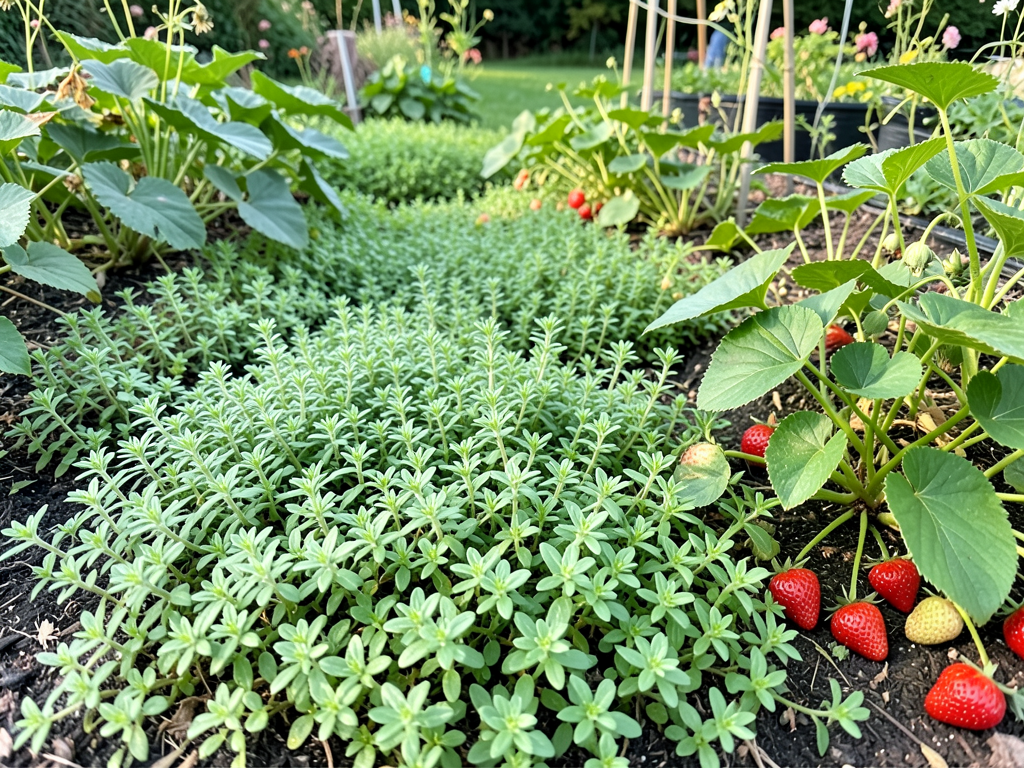
- Strawberry (Fragaria spp.) — Alpine strawberries and everbearing varieties form excellent living mulch under fruit trees. They don’t compete aggressively with tree roots and provide a steady trickle of berries all season.
- Creeping Thyme (Thymus serpyllum) — Edible, aromatic, bee-friendly, and walkable. Perfect for paths between garden beds.
- Oregano (Origanum vulgare) — Vigorous spreading herb that doubles as ground cover. Pollinators go absolutely nuts for the flowers.
- Nasturtium (Tropaeolum majus) — Self-seeding annual with entirely edible leaves, flowers, and seed pods (the “poor man’s caper”). Excellent trap crop for aphids too.
6. The Root Layer
The root layer includes all underground crops — root vegetables, tubers, and rhizomes. In a permaculture context, root crops also improve soil structure by breaking up compaction and creating channels for water and air.
Perennial root crops worth planting:
- Jerusalem Artichoke (Helianthus tuberosus) — Also called sunchoke. One of the easiest crops on earth. Warning: plant it where you’re happy for it to spread, because it will.
- Horseradish (Armoracia rusticana) — Perennial root used as a condiment. The deep taproot mines minerals from the subsoil and brings them to the surface.
- Walking Onion (Allium x proliferum) — Also called Egyptian onion. Produces edible bulbs, greens, and topsets that bend over and plant themselves. It literally walks across your garden.
- Yacon (Smallanthus sonchifolius) — Sweet, crunchy tuber from the Andes. Tastes like apple-meets-watermelon. Stores well and is surprisingly productive in temperate climates.
- Oca (Oxalis tuberosa) — Another Andean tuber, colorful and lemony. Needs short day lengths to tuberize, so it’s a late fall harvest.
7. The Vertical Layer (Climbers & Vines)
Climbers use vertical space that would otherwise go to waste. In a food forest context, they grow up trees, trellises, fences, and arbors.
Edible climbers for permaculture:
- Hardy Kiwi (Actinidia arguta) — Smaller and fuzz-free compared to grocery store kiwis. Eat them whole like grapes. Extremely vigorous — give it a sturdy structure.
- Grapes (Vitis spp.) — Classic choice. Muscadine grapes thrive in the humid Southeast; Concord-types excel in cooler regions.
- Passionfruit (Passiflora spp.) — Spectacular flowers followed by aromatic fruit. Maypop (Passiflora incarnata) is hardy to zone 6.
- Runner Beans (Phaseolus coccineus) — Perennial in zones 7+, grown as an annual elsewhere. Beautiful red flowers, edible pods and beans, plus nitrogen fixation.
Plant Guilds: The Secret Sauce of Permaculture
A guild is a community of plants that support each other — like a neighborhood where everyone brings something to the table. The classic permaculture guild centers around a fruit tree, but the concept scales up or down.
The classic apple tree guild looks something like this:
- Apple tree (center) — main crop
- Comfrey (herbaceous) — dynamic accumulator that mines deep nutrients; chop-and-drop mulch machine
- Daffodils (herbaceous) — suppress grass around the tree’s drip line; deer and vole deterrent
- Goumi berry (shrub) — nitrogen fixer on the south side
- Clover or vetch (ground cover) — living mulch, nitrogen fixation
- Dill & Yarrow (herbaceous) — attract beneficial insects including parasitic wasps that control codling moth larvae
The beauty of a well-designed guild is that it reduces work. The comfrey mulches the tree. The nitrogen fixers feed it. The beneficial insect attractors handle pest control. You get more food from the same space with less intervention.
Designing Your Edible Permaculture Garden
Start With Observation
Before planting anything, spend time watching your site through at least one full season if you can. Notice:
- Where does the sun hit at different times of day?
- Where does water pool after rain?
- Which areas are frost pockets?
- What’s already growing (including weeds — they tell you about soil conditions)?
- Where do you naturally walk through the space?
This observation phase saves you from expensive mistakes. A fruit tree planted in a frost pocket will consistently lose its blossoms. A sun-loving plant in a shady corner will languish.
Sector Analysis
Map the energies flowing through your site:
- Sun sectors — seasonal sun paths for optimal placement
- Wind sectors — prevailing winds and where windbreaks are needed
- Water sectors — slopes, drainage patterns, rainwater harvesting opportunities
- Wildlife sectors — deer trails, rabbit warrens, bird flight paths
- Access sectors — how you move through the space daily
Place elements in relation to each other based on how frequently you need to interact with them. The salad greens and herbs you harvest daily should be closest to your kitchen door. The chestnut tree you visit once a year in fall can live at the far edge.
Zone Planning
Permaculture uses zones to organize elements by frequency of use:
- Zone 1 — Just outside your door. Daily-harvest herbs, salad greens, and the plants that need the most attention.
- Zone 2 — Weekly visits. Perennial vegetables, berry bushes, chicken coop.
- Zone 3 — Less frequent. Larger fruit trees, nut trees, main crop areas.
- Zone 4 — Semi-wild. Coppice wood, wild foraging, mushroom logs.
- Zone 5 — Wilderness. Observation only, a place to learn from natural systems.
Even on a quarter-acre lot, this zoning thinking applies. Put your kitchen herbs in pots by the back door (Zone 1), berry bushes along the path you walk to the compost bin (Zone 2), and the mulberry tree at the back fence (Zone 3).
Common Mistakes When Choosing Edible Plants for Permaculture
1. Planting Too Many Annuals
Look, I love tomatoes as much as the next person. But if 80% of your permaculture garden is annual vegetables that need replanting, fertilizing, and coddling every year, you’ve missed the point. Aim for at least 70% perennials in your plant palette.
2. Ignoring Mature Size
That cute little chestnut sapling will become a 60-foot tree. That blackberry patch will double in size every year. Spacing plants based on their mature size rather than their nursery-pot size prevents costly removal later.
3. Poor Succession Planning
What happens when your canopy trees mature and cast deep shade? Do you have shade-tolerant species ready to fill the understory? A food forest evolves over decades — plan for year 5, year 10, and year 20.
4. Choosing Plants Without Considering Function
Pretty plants are great, but in a permaculture system, every plant should earn its keep in multiple ways. A plant that only does one thing (like a purely ornamental rose) is a missed opportunity when a rugosa rose offers edible hips, pollinator forage, and thorny security hedging.
5. Not Accounting for Harvest Reality
Your mulberry tree drops fruit for three weeks straight. Are you ready to harvest, process, and preserve 50 pounds of mulberries? If not, plant a smaller variety or share with neighbors. Overwhelm leads to waste, and wasted harvest is wasted effort.
Frequently Asked Questions
Can you do permaculture in a small urban backyard?
Absolutely. In fact, small spaces are perfect for intensive permaculture because you can easily reach everything. Focus on dwarf fruit trees, vertical growing, container-friendly perennials, and maximizing edge effects. A 400-square-foot yard can produce a surprising amount of food with layered planting.
How long does it take before a food forest produces food?
You’ll get harvests in year one from annual vegetables, herbs, and fast crops like radishes and salad greens. Strawberries and rhubarb produce in year two. Most fruit bushes start yielding in years 2-3. Dwarf fruit trees typically produce in 3-5 years. Nut trees take the longest — 7-15 years, so plant them first.
Do I need to start with all seven layers?
No! Start with what you can manage. Adding a shrub layer and ground cover around an existing fruit tree is a perfect beginner project. Build complexity gradually as you learn what works in your specific site.
What if I rent and can’t plant permanent trees?
Container gardening with dwarf varieties, portable raised beds for perennial vegetables, and focusing on herbaceous perennials that can be dug up and moved gives you flexibility. Many permaculture principles apply just fine to rented spaces.
Are there edible plants that work in deep shade?
Yes, though options are limited. Hostas (young shoots taste like asparagus), ramps (Allium tricoccum), ostrich fern (fiddleheads), and pawpaw trees all tolerate heavy shade. Most mints will survive in shade too, though they’ll be less vigorous.
Getting Started This Week
You don’t need to transform your entire property overnight. Pick one small area — even a 10x10 foot patch — and start layering:
- Plant one fruit tree suited to your climate and space
- Add three comfrey plants around the drip line
- Sow a ground cover mix of white clover and strawberries beneath
- Tuck in some chives and oregano at the edges
- Mulch everything heavily with wood chips or straw
- Observe — watch how the mini-guild performs over the season
That single 10x10 patch, properly layered with edible plants, will produce more food with less work than a conventional vegetable bed twice its size. And each year, it’ll get better.
The real magic of permaculture isn’t in any individual plant — it’s in the relationships between them. When comfrey roots mine minerals from deep soil and deposit them as leaf mulch on the surface, when clover pulls nitrogen from the air and feeds it to your fruit trees, when beneficial insects move into the habitat you’ve created and handle your pest problems for free — that’s when you know the system is working.
And that’s when you can walk outside, coffee in hand, and pick breakfast from a garden that basically runs itself.
Further Reading
- Gaia’s Garden by Toby Hemenway — the best introduction to home-scale permaculture
- Edible Forest Gardens (Vol 1 & 2) by Dave Jacke and Eric Toensmeier — the definitive reference for temperate food forests
- Perennial Vegetables by Eric Toensmeier — comprehensive guide to edible perennials worldwide
Have questions about designing your own edible permaculture garden? Drop them in the comments below and I’ll help you figure out which plants will work best for your specific situation.