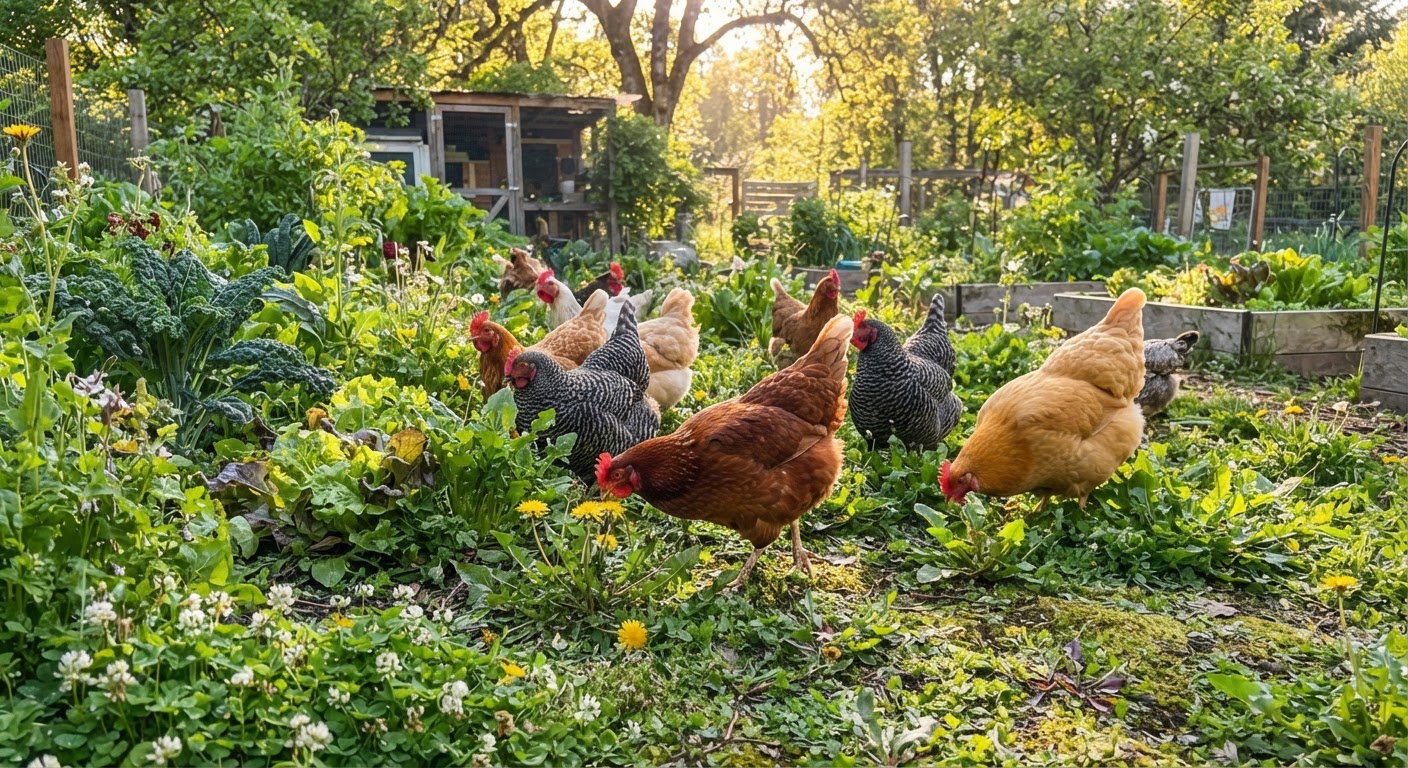
The first time I tossed a handful of chickweed into my chicken run, I expected cautious pecking. Instead, five hens turned into tiny feathered piranhas. The greens disappeared in roughly four seconds — faster than any commercial feed I’d ever put down.
That moment changed how I think about feeding chickens. Here’s the thing most chicken-keeping guides gloss over: chickens are natural foragers, and a surprising number of common weeds, garden plants, and wild greens are not just safe for them — they’re nutritionally superior to bagged feed for certain vitamins and minerals.
Before we go further: I’m not saying you should stop buying layer feed. Commercial feed provides a balanced base ration that’s hard to replicate with forage alone. But supplementing with wild plants? That’s where the magic happens. Lower feed bills, healthier birds, deeper yolk color, and eggs that actually taste like something.
This guide covers every edible plant your chickens can safely eat, the ones that’ll put them in the ground, seasonal strategies, and a practical system for introducing forage without tanking their nutrition.
Why Feed Wild Plants to Your Chickens? (Beyond Saving Money)
Let’s get the obvious out of the way: yes, free chicken food grows in your yard. But the benefits go way deeper than shaving a few dollars off your feed bill.
The Nutritional Gap in Commercial Feed
Layer feed is formulated to keep hens producing eggs — that’s the baseline. It’s not formulated for optimal health. Wild greens fill nutritional gaps that even premium organic feed misses:
- Omega-3 fatty acids: Purslane and lamb’s quarters contain more omega-3s than most commercial enrichments
- Xanthophylls: The deep orange yolks from pasture-raised eggs come from carotenoids in fresh greens, not feed additives
- Vitamin E: Fresh chickweed and dandelion greens provide bioavailable vitamin E that degrades rapidly in stored feed
- Trace minerals: Soil-dusted plant roots carry beneficial microbes and minerals hens instinctively seek out
Behavioral Benefits You Can’t Bottle
Chickens confined to a run with nothing but pellets are bored chickens. Bored chickens feather-pick. They bully. They develop neurotic behaviors that cascade into health problems.
Foraging changes the entire dynamic. When hens spend hours scratching through leaf litter and snipping at weeds, they’re mentally engaged. The pecking order settles. Cannibalism rates drop. A hen with a mouthful of clover is a hen that’s not terrorizing her flock mates.
Researchers at the University of Bristol found that providing foraging enrichment reduced aggressive pecking by up to 70% in confined flocks. That’s not a small improvement — that’s the difference between a peaceful coop and a feather-streaked bloodbath.
25+ Edible Plants Your Chickens Can Safely Eat
I’ve organized these by where you’re most likely to find them — your lawn, your garden, the edges of your property, or intentionally planted patches.
Common Weeds (Free Chicken Food Hiding in Plain Sight)
These plants are probably growing in your yard right now. Most people spray them with herbicide. You’re about to see them differently.
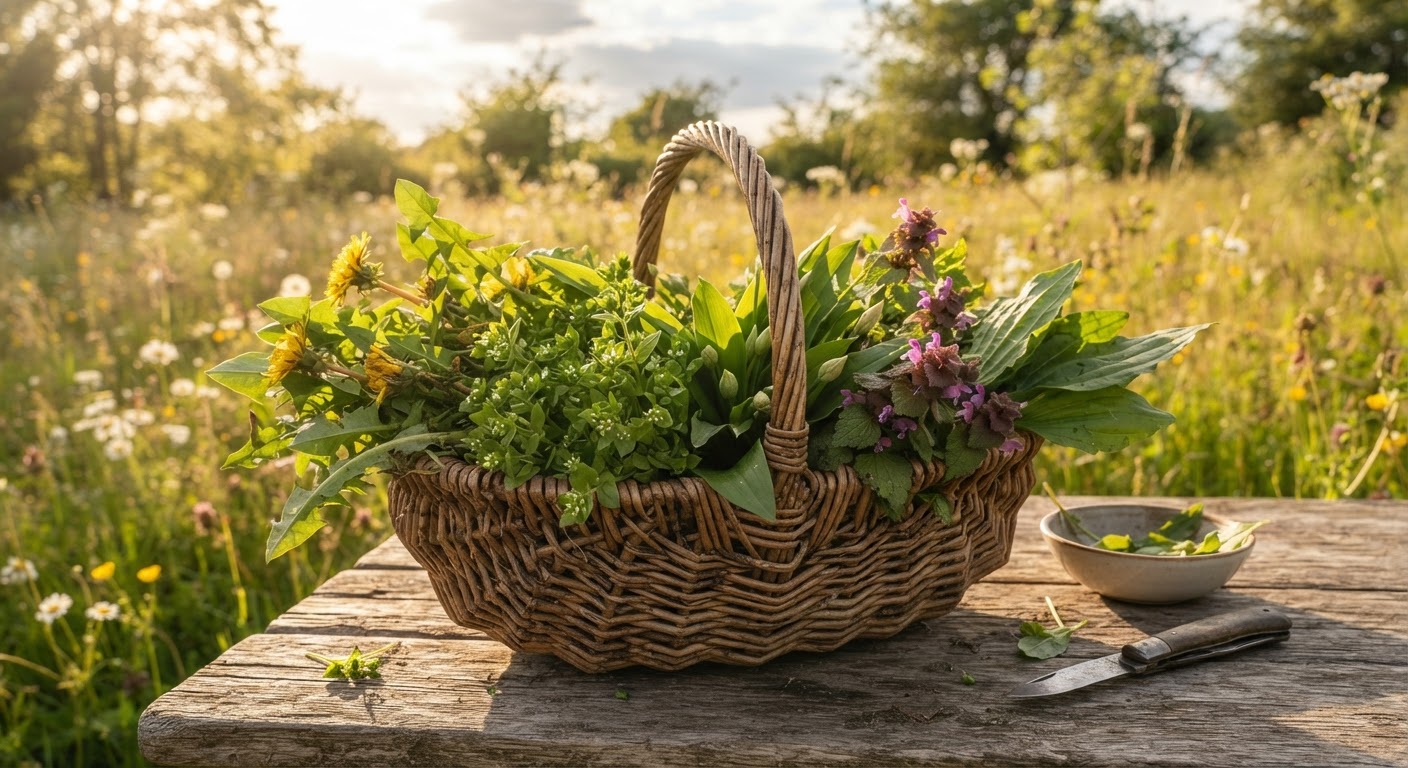
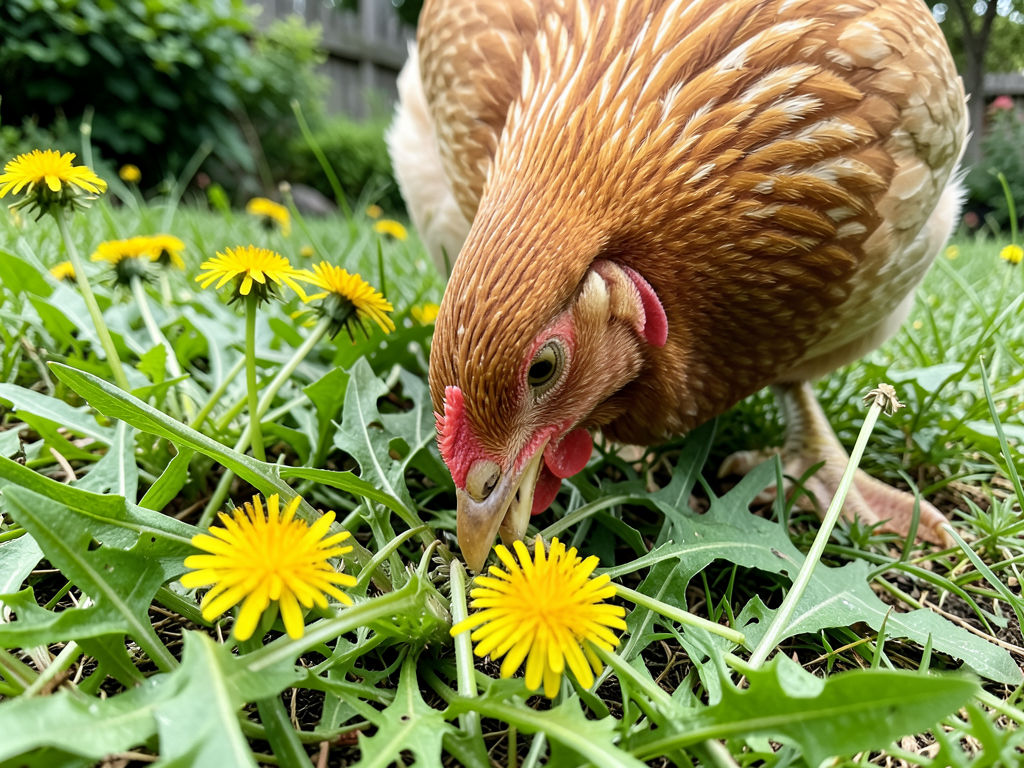
1. Dandelion (Taraxacum officinale) — The undisputed champion of chicken forage. Every part is edible: leaves, flowers, and roots. Dandelion leaves contain more vitamin A than carrots gram-for-gram, plus calcium, iron, and potassium. The flowers are rich in lutein, which deepens yolk color. Pro tip: toss entire plants into the run roots and all — the soil clinging to roots provides grit and beneficial microbes.
2. Chickweed (Stellaria media) — If dandelion is the champion, chickweed is the crowd favorite. Chickens go absolutely nuts for this stuff. It’s packed with vitamin C, calcium, magnesium, and omega-3 fatty acids. One of the few plants that stays green through mild winters in most climates. When you pull chickweed from garden beds, you’re harvesting premium chicken snacks.
3. White Clover (Trifolium repens) — High in protein for a wild plant (around 15-20% dry matter) and loaded with minerals. The flowers are what hens zero in on first. Clover also fixes nitrogen in your soil, so letting chickens forage on clover patches actually improves the ground underneath them.
4. Lamb’s Quarters (Chenopodium album) — Also called wild spinach, and for good reason. The nutritional profile is nearly identical to cultivated spinach — massive doses of vitamin A, vitamin C, calcium, and iron. The leaves have a slightly dusty white coating that chickens don’t mind at all. This plant can grow 6 feet tall in good soil, which means a single plant can feed your flock for days.
5. Plantain (Plantago major) — Not the banana relative. Broadleaf plantain is the low-growing weed with parallel-veined leaves commonly found in compacted soil and along pathways. It’s a medicinal plant traditionally used for wound healing, and chickens benefit from its antimicrobial properties. The young leaves are tender; older leaves get stringy but are still edible.
6. Purslane (Portulaca oleracea) — You know those thick, succulent little weeds that grow in sidewalk cracks? That’s purslane, and it’s arguably the most nutritious plant on this list. It has more omega-3 fatty acids than any other leafy plant tested, plus melatonin and antioxidants. Chickens will eat the whole plant — stems, leaves, and tiny yellow flowers.
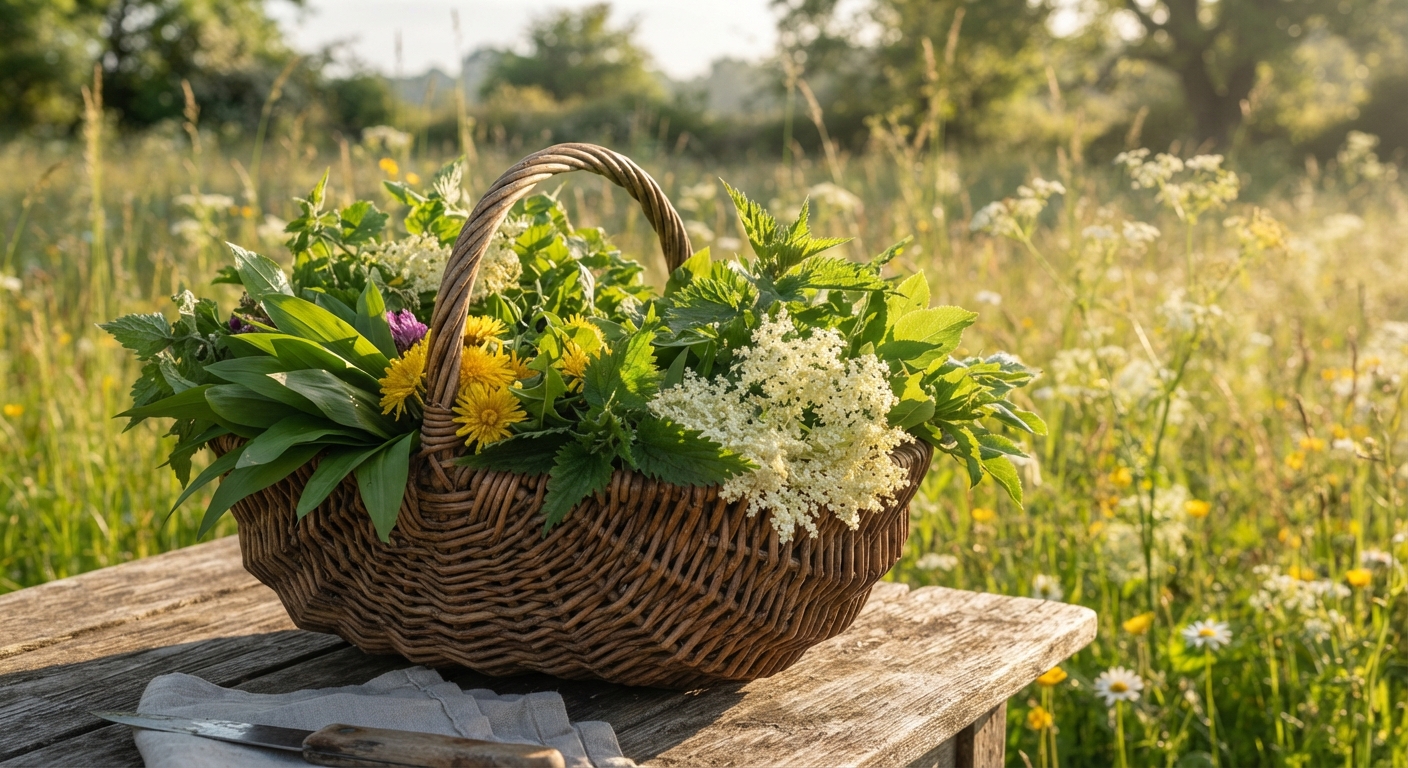
7. Nettle (Urtica dioica) — Before you panic: chickens eat stinging nettle raw with zero issues. Their beaks and feet are impervious to the sting. Nettle is absurdly nutritious — up to 25% protein dry weight, plus iron, calcium, and silica that supports eggshell strength. If harvesting for yourself (nettle tea is great), wear gloves. Your hens don’t need them.
8. Shepherd’s Purse (Capsella bursa-pastoris) — A member of the mustard family with distinctive heart-shaped seed pods. The leaves are mild and chickens eat them readily. Historically used as a food source in many cultures, so you can share this one with your flock.
9. Amaranth (Amaranthus retroflexus) — Another wild green that rivals cultivated spinach. Pigweed, as it’s often called, produces both edible leaves and grain-like seeds that chickens scratch for eagerly. The leaves are high in calcium and vitamin C.
10. Wild Garlic / Wild Onion (Allium spp.) — In moderation, the greens from wild alliums add flavor compounds to eggs and act as gentle natural dewormers. Don’t overdo it — large quantities of onion-family plants can cause anemia in birds — but small amounts scattered through forage are beneficial and safe.

Garden Plants and Herbs (Intentionally Grown Forage)
If you’re planting a garden anyway, dedicating a small section to chicken forage pays for itself in reduced feed costs and healthier birds.
11. Kale — The poster child of superfoods works for chickens too. High in calcium for strong eggshells. Hang whole kale leaves from the run ceiling like a piñata — the hens will jump for them, getting exercise along with their greens.
12. Swiss Chard — Another calcium powerhouse. The colorful stems (rainbow chard) add visual enrichment. Chickens prefer the leaves but will tackle the stems once softened by pecking.
13. Comfrey (Symphytum officinale) — This is a game-changer plant for chicken keepers. Comfrey is one of the few plants rich in vitamin B12 (rare outside animal products), plus it’s packed with protein and minerals. It grows prolifically — you can cut it back to the ground and it’ll regrow 3-4 times per season. Warning: comfrey contains pyrrolizidine alkaloids that can damage the liver in large quantities over extended periods. Using it as a supplement (not the primary feed) appears safe based on current research.
14. Borage (Borago officinalis) — The star-shaped blue flowers look beautiful in a salad — and chickens agree. Borage leaves and flowers are edible and rich in calcium and potassium. It self-seeds aggressively, which is actually desirable when you need a constant supply of chicken greens.
15. Sunflower (Helianthus annuus) — Two-for-one: the leaves are edible forage, and the seed heads are chicken crack. Let sunflowers mature fully, then toss whole heads into the run in fall for hours of entertainment and nutrition. The seeds are high in protein and healthy fats.
16. Nasturtium (Tropaeolum majus) — Both leaves and flowers are edible with a peppery kick. Nasturtium has natural antibacterial properties and the bright orange and red flowers are rich in lutein.
17. Mint (Mentha spp.) — Hang bunches of mint in the coop during summer. The aromatic oils deter flies and mites, and hens will peck at the leaves. Mint also spreads aggressively — plant it in a contained area or you’ll have a mint lawn within two seasons.
18. Parsley — High in vitamin K and antioxidants. Both curly and flat-leaf varieties are excellent for chickens. Some keepers report that parsley improves respiratory health in their flocks.
19. Fennel — The feathery fronds, stalks, and seeds are all chicken-edible. Fennel seeds have digestive benefits and can help reduce the worm load naturally.
20. Oregano — More than just pizza seasoning. Oregano oil has been studied as a natural antibiotic alternative in poultry production, with measurable improvements in gut health and egg quality. Fresh oregano plants provide the same benefits in diluted form.
Berries and Fruits (Seasonal Treats)
21. Mulberries — If you have a mulberry tree, your chickens already know. They’ll camp under it waiting for drops. Mulberries are rich in anthocyanins and resveratrol.
22. Elderberries (cooked only) — Raw elderberries contain cyanogenic glycosides that can cause digestive distress. Cooked elderberries are safe and packed with immune-boosting compounds. Either cook them first or let the chickens eat them off the bush in small quantities.
23. Blackberries / Raspberries — Bramble berries are chicken-safe and rich in antioxidants. Let chickens forage around bramble patches — they’ll eat the low-hanging fruit and the leaves too.
24. Rose Hips — The fruit of wild roses, rose hips contain more vitamin C than oranges. Chickens peck at them through fall and winter when other forage is scarce.
25. Fallen Apples and Pears — Moderation is key here — too much fruit can cause sour crop and digestive upset. But a few fallen apples in the run? Chickens love pecking them down to the core. Remove seeds if you’re concerned about cyanide (the dose in a few apple seeds is negligible for a chicken, but better safe).

8 Plants That Will Kill Your Chickens (And Common Lookalikes)
This section is non-negotiable. Read it carefully. Some of these plants look similar to the safe ones listed above, and that’s exactly how accidents happen.
The Deadliest Plants for Chickens
1. Hemlock (Conium maculatum) — The plant that killed Socrates is equally lethal to chickens. ALL parts are toxic. The fern-like leaves resemble wild carrot (Queen Anne’s lace), carrot tops, and parsley. Key identifier: hemlock stems have distinctive purple-red blotches. Wild carrot stems are solid green and hairy. If you see purple spots on the stem, it’s hemlock — remove it immediately.
2. Deadly Nightshade (Atropa belladonna) — The glossy black berries look appetizing. They cause paralysis and death in birds. The purple bell-shaped flowers and black berries are characteristic. Found in disturbed soil and woodland edges.
3. Castor Bean (Ricinus communis) — One of the most toxic plants on Earth. The seeds contain ricin — a single bean can kill a chicken. Unfortunately, castor bean is often planted ornamentally in gardens. The large, star-shaped leaves are distinctive. If you have this anywhere on your property, remove it completely.
4. Foxglove (Digitalis purpurea) — Beautiful purple flower spikes, but the entire plant contains digitoxin — a cardiac glycoside that stops the heart. Even water from a vase that held foxglove can be toxic. Common in cottage gardens and wild areas.
5. Yew (Taxus spp.) — All parts of yew trees and shrubs are deadly except the red aril (flesh) around the seed. Even that red flesh has a toxic seed inside. The flat, dark-green needles can be confused with fir or spruce by people who aren’t paying attention. Yew is extremely common in landscaping — check your entire property.
6. Oleander (Nerium oleander) — Contains cardiac glycosides throughout the plant, including the nectar. Leaves, stems, flowers, roots — all toxic. A single leaf can kill a chicken. Popular in warm climates as an ornamental shrub. The long, narrow leaves and pink, white, or red flower clusters are distinctive.
7. Rhododendron / Azalea (Rhododendron spp.) — Contains grayanotoxins that affect the nervous system and heart. The large leathery leaves and showy flower clusters are characteristic. Extremely common in landscaping across North America and Europe.
8. Rhubarb Leaves — The stalks are edible for humans, the leaves are toxic to EVERYONE, including chickens. Rhubarb leaves contain high levels of oxalic acid and anthraquinone glycosides. Don’t toss rhubarb leaves into the chicken run thinking “it’s just vegetable waste.”
Safety Protocol: The 5-Step Plant Verification Rule
Before throwing any unfamiliar plant into your chicken run:
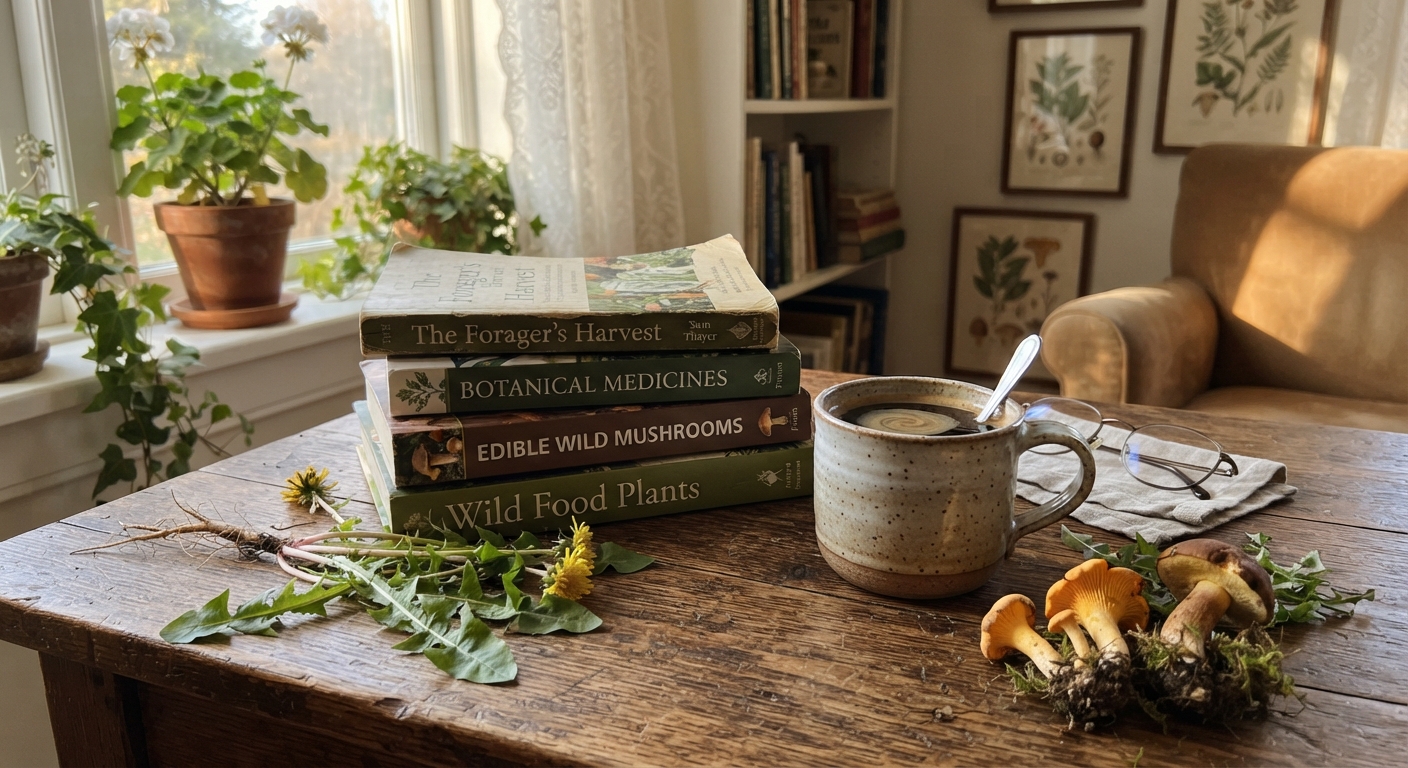
- Identify with 100% certainty. Use at least two independent identification sources (field guide + verified app, or field guide + experienced forager).
- Check against the toxic list. If it’s on the deadly list above, don’t touch it.
- Know the lookalikes. Every edible plant has toxic mimics. Learn the differences for each plant you collect.
- Test with one bird first. Offer a small amount to a single hen and observe for 24 hours before feeding the full flock.
- Introduce gradually. Even safe plants can cause digestive upset when introduced suddenly. Start with small amounts and increase over a week.
Seasonal Foraging Calendar for Chickens
Chickens eat differently across the year. Here’s what’s available in each season and how to use it.
| Season | Available Plants | Strategy |
|---|---|---|
| Spring | Dandelion, chickweed, nettle (young), lamb’s quarters, clover, plantain, wild garlic | Peak forage season. Let chickens free-range as much as possible. Harvest excess and dry for winter. Freeze nettle in blocks. |
| Summer | Purslane, amaranth, borage, comfrey, nasturtium, berries, mulberries | Heat stress management: provide water-rich plants (purslane, borage) during hot afternoons. Harvest seed heads (sunflower, amaranth) for fall/winter. |
| Fall | Rose hips, elderberries (cooked), fallen fruit, sunflower seeds, amaranth seeds | Transition period. Dry the last harvest of greens. Collect fallen apples in moderation. Plant winter greens (kale, chard) in a protected area. |
| Winter | Chickweed (mild climates), kale, Swiss chard, dried nettle, dried comfrey | Rely on stored forage: dried greens, frozen nettle blocks. Hang kale from run ceiling. Sprout grains (wheat, barley) indoors for fresh greens. |
The 80/20 Rule Every Chicken Keeper Should Know
Forage and treats should never exceed 20% of a chicken’s total diet by weight. The other 80% needs to be a balanced layer feed.
Why? Layer feed is formulated with precise ratios of protein (16-18%), calcium (3-4%), and micronutrients that chickens need for egg production and health. Wild plants are nutritionally variable.
When hens fill up on low-protein weeds, they eat less layer feed. Then egg production drops, shells get thin, and health problems cascade. It’s called “dilution effect” in poultry nutrition literature, and it’s the most common mistake I see new chicken keepers make when they discover foraging.
The fix is simple: offer forage after the morning feed, not instead of it. Let hens fill their crops with balanced feed first, then release them to forage. They’ll still eat plenty of greens, but they won’t substitute plants for pellets.
How to Start Your Chickens on Forage Plants
If your chickens have lived their entire lives on commercial feed, don’t dump a wheelbarrow of weeds into the run tomorrow. Their gut microbiome needs time to adapt.
Week 1: Introduce one plant variety at a time. Start with dandelion greens — they’re mild and universally accepted. Offer a small handful per 3-4 birds in the afternoon (after morning feed).
Week 2: Add a second plant (chickweed or clover). Gradually increase the quantity. Watch droppings — loose stool means you’re going too fast.
Week 3: Introduce 2-3 more varieties. Your hens’ digestive systems should now handle diverse greens comfortably. The color of their yolks will visibly deepen around this point.
Week 4 onward: Free-range on diverse pasture or offer mixed greens daily. Maintain the 80/20 feed-to-forage ratio.
DIY Chicken Forage Garden (200 Square Feet Feeds 6 Hens)
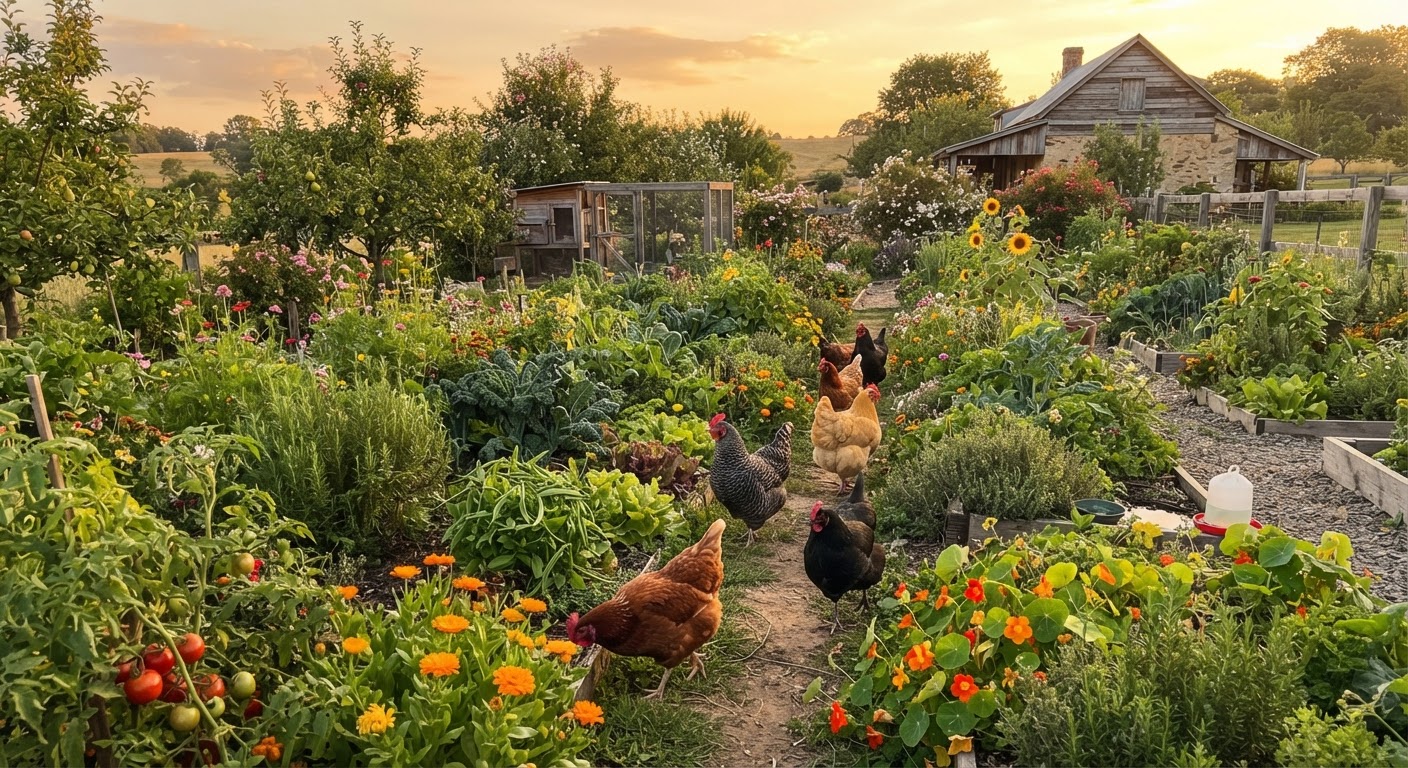
You don’t need acreage to supplement feed with plants. A 10x20 foot plot strategically planted can supply daily greens for 6 hens through the growing season.
Layout:
- Perennial border (back): Comfrey, mint (in buried containers to control spread), oregano, fennel
- Annual rows (middle): Kale, Swiss chard, amaranth, sunflowers, borage
- Ground cover (front and paths): White clover, chickweed (naturally occurs), plantain
- Vertical elements: Nasturtium trailing from trellises
Management: Use rotational access. Divide the garden into 3 sections with portable fencing. Let hens forage one section while the other two recover. Rotate every 7-10 days. This prevents the hens from scratching the plot to bare dirt and allows plants to regrow.
Common Myths About Feeding Plants to Chickens
Myth: “Chickens instinctively know what’s poisonous.” Reality: This is dangerously wrong. Chickens are curious and will sample unfamiliar plants. They have no magical toxin-detection ability. The “animals instinctively avoid poison” myth has killed countless chickens.
Myth: “Avocado is toxic to chickens in all forms.” Reality: Partially true, but overgeneralized. The pit and skin contain persin, which is toxic. The flesh contains much lower levels. Many chicken keepers feed small amounts of avocado flesh without issues. The safest approach: avoid avocado entirely. The risk isn’t worth the marginal nutritional benefit.
Myth: “Raw potato peels are fine.” Reality: Green potato skins and potato plants contain solanine, which is toxic to chickens. White potato peels in small quantities are generally safe, but solanine concentrates in peels, especially if they’ve been exposed to light. Cooked potatoes without green parts are fine. Many keepers avoid potato peels entirely to be safe.
Myth: “Garlic makes eggs taste bad.” Reality: Small amounts of garlic (a clove per gallon of water, or fresh greens mixed into forage) actually provide health benefits, including mild deworming and immune support. It takes significant overfeeding before garlic flavor transfers to eggs. Most keepers find the threshold well above normal supplemental levels.
Myth: “You need special ‘chicken pasture’ seed mixes.” Reality: Seed companies have figured out that chicken keepers will pay premium prices for “pasture blends.” The ingredients are almost always identical to standard pasture mixes — white clover, perennial rye, alfalfa, chicory. Buy the regular seed mix and save 60%. Your chickens won’t read the label.
Frequently Asked Questions
Can chickens eat grass clippings? Yes, but with a critical caveat: only long, dry clippings. Wet, matted grass clippings can cause impacted crop — a potentially fatal blockage where grass wads up in the crop and rots instead of digesting. If you mow and collect clippings, spread them thin in the sun first. Even better: let chickens graze living grass directly instead of feeding clippings.
What about feeding plants from roadsides or public areas? Avoid it. Roadside plants accumulate heavy metals from exhaust and road runoff. Public parks and rights-of-way are often sprayed with herbicides you can’t see. Collect forage only from your own property or land where you know the spray history.
Do I need to wash plants before giving them to chickens? Not if they’re from your unsprayed property. The soil on roots provides grit and microbes. If you’re unsure about contamination, a quick rinse won’t hurt. Don’t wash with anything other than water — soap residue can cause digestive issues.
Can baby chicks eat wild plants? Chicks under 4 weeks should be on chick starter exclusively. Their digestive systems aren’t developed enough for raw greens. From 4-8 weeks, offer tiny amounts of finely chopped tender greens (chickweed, young dandelion). After 8 weeks, transition to the same plants you’d feed adults.
Will foraging reduce my feed bill significantly? Yes — but not eliminate it entirely. Keepers with established forage systems typically reduce commercial feed consumption by 20-35% during the growing season. Winter foraging reduces those savings to maybe 5-10%. The real value is in healthier birds, better eggs, and behavioral enrichment — feed savings are a bonus.
What if my chickens ignore a plant I offer? Chickens are individuals with preferences, not instinct-driven automatons. If they ignore something safe, try it again a few days later. Sometimes presentation matters — hanging greens from the run ceiling triggers their foraging instinct more effectively than greens sitting on the ground. If they consistently reject a plant after several attempts, don’t force it. There are plenty of alternatives.
The Bottom Line
Edible plants for chickens aren’t just free food — they’re the difference between chickens that merely survive and chickens that thrive. The yolk color alone tells the story: pale yellow from confinement operations, deep sunset-orange from birds that eat living plants.
Start with the common weeds in your yard. Dandelion, chickweed, clover — these three alone can transform your flock’s diet during the growing season. Learn the toxic plants before you learn the edible ones. Respect the 80/20 ratio. And for the love of healthy hens, never trust a plant identification app with your flock’s life.
Your chickens already know what’s good for them. Your job is to make sure it’s safe — and to point them in the right direction.
Have questions about a specific plant in your yard? Take a clear photo and cross-reference with at least two field guides. For plants mentioned in this article, the botanical names are provided — use those in your research, not common names, which vary by region and can be dangerously ambiguous.