What If Your Phone Could Tell You Exactly Which Plants Are Safe to Eat?
You’re on a hike. You spot a berry bush. It looks familiar — but is it the edible kind, or the one that sends people to the emergency room?
For most people, that moment ends with a shrug and a “better not risk it.” But for anyone who’s ever been curious about wild food, it’s a moment of frustration. Nature is literally handing you free food, and you can’t tell if it’s safe.
Edible Plant Identifier changes that.
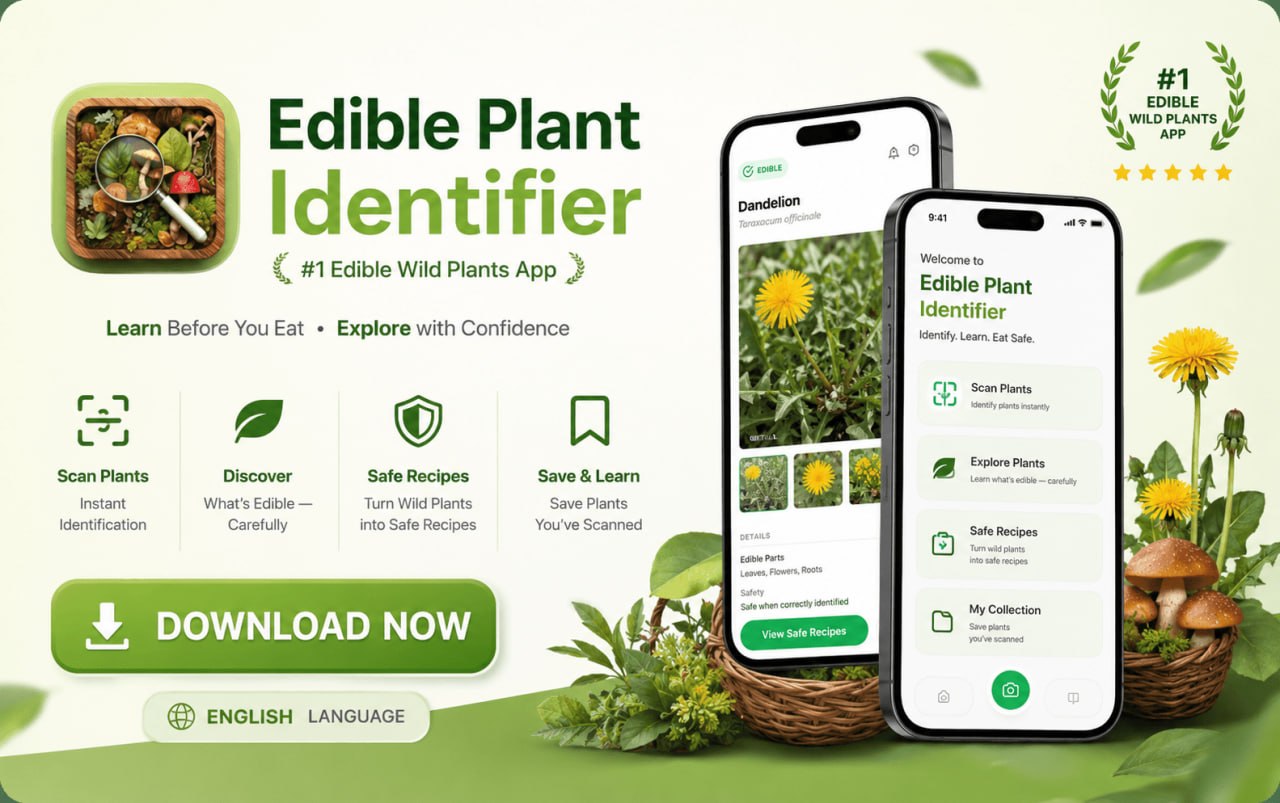
It’s an iOS app that uses AI to identify thousands of plants, fungi, and berries — then tells you whether you can eat them, how to cook them, and what to watch out for.
No botany degree required. Just your phone.
Why This App Is Different From Every Other Plant ID App
The App Store has dozens of plant identification apps. Most of them do one thing: tell you the plant’s name. That’s it.
Edible Plant Identifier goes several steps further:
- Instant AI identification — snap a photo, get results in seconds
- Edibility verdict — clear yes/no on whether it’s safe to eat
- Safety warnings — toxic lookalikes, allergic reactions, proper preparation
- Culinary guidance — how to cook it, what parts to use, flavor profile
- Recipe finder — discover recipes based on the plants you’ve identified
In short: this isn’t just a plant namer. It’s a foraging companion.
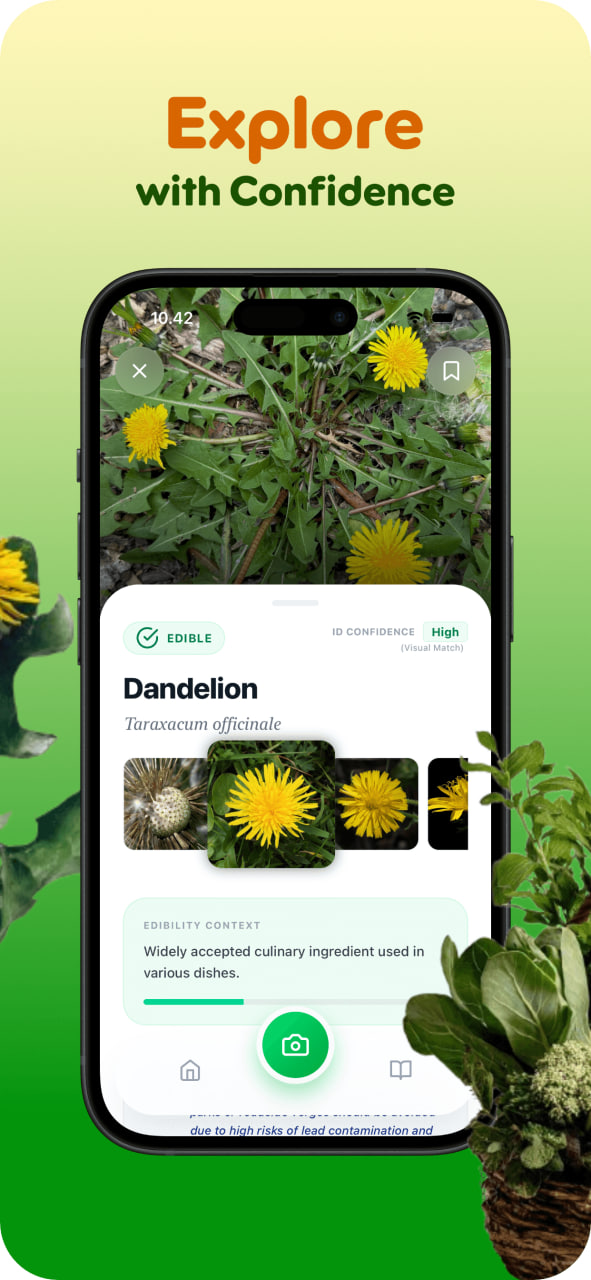
How It Works: Three Steps From “What’s That?” to “Let’s Eat”
1. Point Your Camera
Open the app, frame the plant you’re curious about, and snap. The AI model processes the image in seconds, comparing it against a database of thousands of species.
2. Read the Verdict
The app returns a clear result: Edible or Not Edible. But it doesn’t stop there.
For edible plants, you get:
- Common and scientific names
- Which parts are edible (leaves, roots, berries, flowers)
- How to prepare them safely
- Nutritional highlights
- Flavor description
3. Take Action
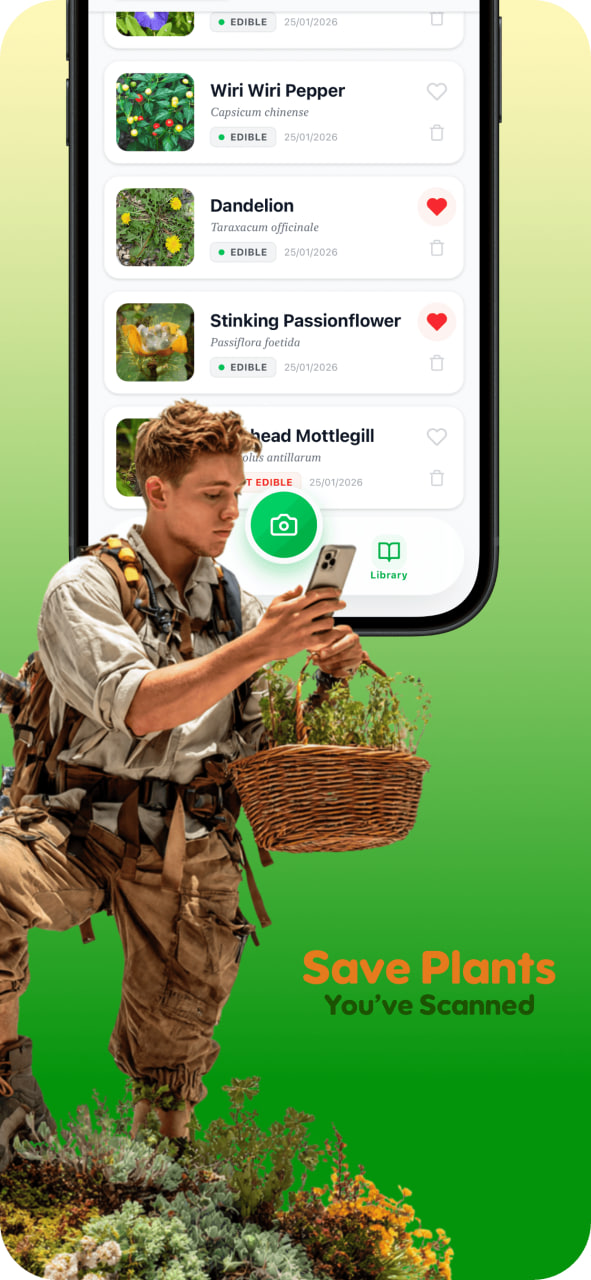
Save the plant to your personal collection, look up recipes that use it, or share your find with friends. The app becomes your growing field journal of edible discoveries.
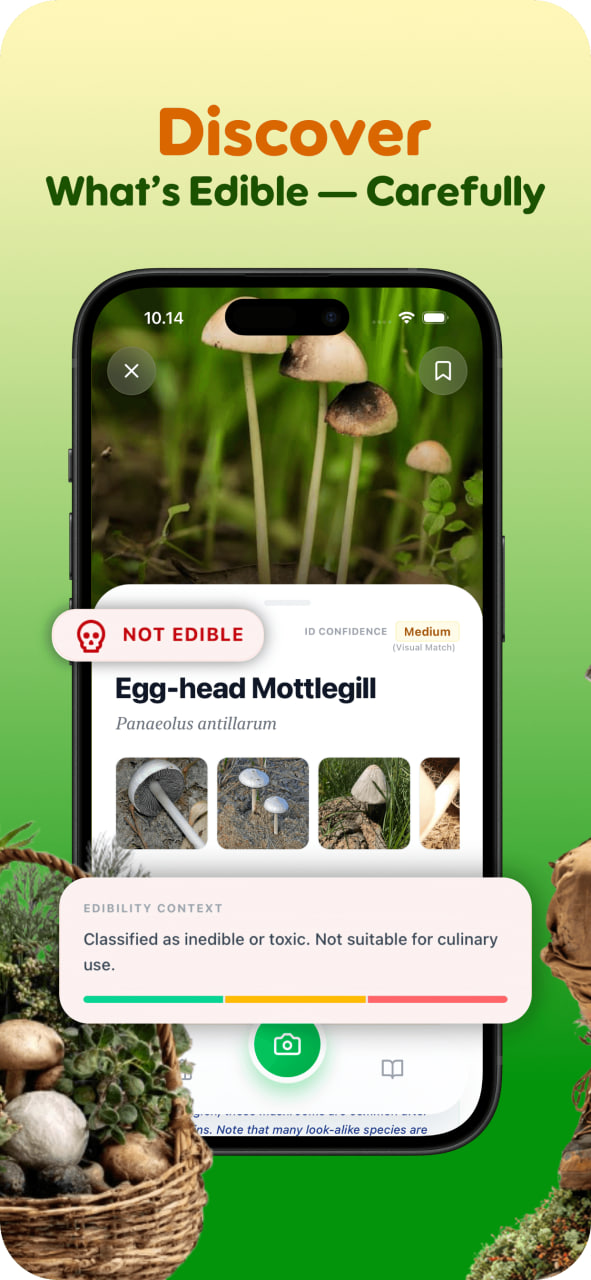
The Safety Feature That Could Save Your Life
This is the part that makes Edible Plant Identifier genuinely important.
When the AI identifies a plant as not edible, it doesn’t just say “nope.” It tells you why:
- What toxins the plant contains
- What symptoms to expect if ingested
- Whether it’s a lookalike for something edible
- How to distinguish it from safe alternatives
For foragers, this feature is gold. Some of the most dangerous plants in North America — like water hemlock, deadly nightshade, and poison hemlock — look deceptively similar to edible species. A plant ID app that only gives you the name could still get you in trouble. One that specifically flags the danger is a real safety tool.
“I’m a beginner forager and this app has literally saved me from picking something toxic twice already.”
The app isn’t a replacement for proper foraging education (always cross-reference multiple sources, especially as a beginner). But as a field companion, it adds a powerful first line of defense.
Your Personal Plant Journal: Track Every Discovery
Every plant you identify gets saved to your personal collection — a visual record of everything you’ve found.
This matters more than you’d think:
- Track seasonal patterns — which plants appear in spring vs. summer
- Build location awareness — what grows in forests vs. meadows vs. your backyard
- Learn faster — seeing your collection grow is genuinely motivating
- Share discoveries — send interesting finds to foraging buddies
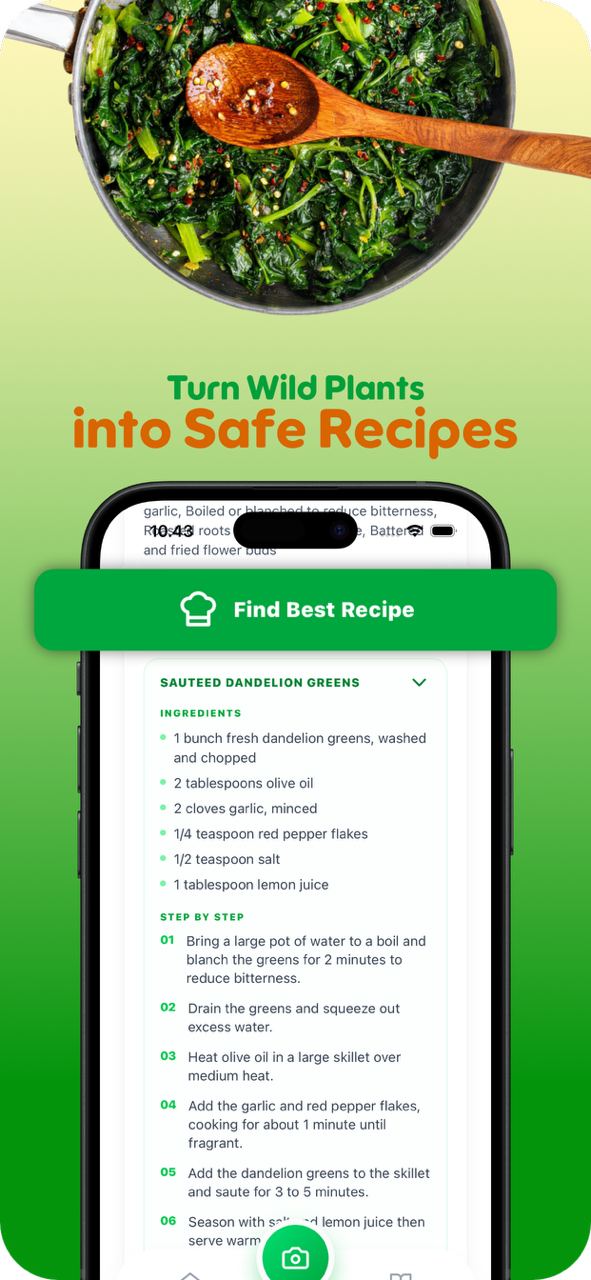
From Plant to Plate: Built-In Recipe Finder
Okay — you identified an edible plant. Now what do you do with it?
The recipe finder answers that question. It matches identified plants with recipes that use them as ingredients, so you can go from identification to cooking without opening another app or searching Google.
- Purslane? → Purslane tzatziki, stir-fry, or salad
- Stinging nettle? → Nettle soup, pesto, or chips
- Dandelion? → Dandelion fritters, tea, or greens
Each recipe includes ingredients, instructions, and prep tips specific to wild food — because cooking foraged plants is different from cooking supermarket produce.
Who Is This App For?
Edible Plant Identifier is built for:
| Who | Why They’ll Love It |
|---|---|
| 🥾 Hikers & campers | Quick plant ID on the trail |
| 🌿 Beginner foragers | Safe, guided introduction to wild food |
| 👨🍳 Home cooks | Discover new wild ingredients and recipes |
| 🌱 Gardeners | Identify volunteer plants in your yard |
| 👨👩👧 Parents | Keep kids safe by identifying backyard plants |
| 📚 Nature enthusiasts | Build your plant knowledge over time |
Whether you’re a complete beginner who can’t tell a nettle from a thistle, or an experienced forager who wants a faster way to catalog finds — the app meets you where you are.
Frequently Asked Questions
How accurate is the plant identification? The app uses an advanced AI model trained on thousands of plant species. Results are typically 90%+ accurate for common plants, though rare or region-specific species may vary. Always treat AI results as a starting point, not a final verdict — cross-reference with field guides for critical decisions.
Does the app work offline? The plant identification feature requires an internet connection to process images. However, your saved plant collection is accessible offline anytime.
Is this a free app? Edible Plant Identifier is free to download and use. Core features — including plant identification, edibility checks, and safety information — are included.
What plants can it identify? The app covers thousands of species including wild plants, garden vegetables, herbs, fungi, berries, trees, and common weeds found across North America, Europe, and Asia.
Does it work on iPad? Yes. The app is designed for both iPhone and iPad, with a layout optimized for each screen size.
How is this different from Google Lens or Apple Visual Lookup? General image recognition tools can sometimes identify plants, but they lack foraging-specific context. Edible Plant Identifier focuses specifically on edibility assessment, lookalike warnings, preparation guidance, and culinary use — purpose-built for foragers and wild food enthusiasts.
Your Phone Is Now a Foraging Tool
Foraging used to require years of mentorship, a shelf full of field guides, and the confidence that comes from experience. Technology doesn’t replace any of that — but it does lower the barrier to entry significantly.
Edible Plant Identifier puts expert-level plant knowledge in your pocket. It helps beginners build confidence safely. It gives experienced foragers a faster way to log and catalog discoveries. And it makes the whole experience of wild food exploration more accessible and more fun.
If you’ve ever looked at a plant and thought, “I wonder if I could eat that?” — now you have your answer.
The app and this article are part of the Edible Wild Plants ecosystem — helping foragers safely discover and enjoy wild food through technology and education. Always practice responsible foraging: positively identify plants, harvest sustainably, and respect local regulations.