12 Easy Edible Wild Plants to Start Foraging (A Field List)
There are roughly 300,000 plant species on Earth, and something like 20,000 of them are edible by humans. The average person can name maybe five. Here’s the kicker: at least a dozen of those 20,000 are growing within walking distance of your front door right now — in the lawn, the park, the sidewalk crack, the empty lot.
You don’t need a botany degree to start eating them. You need a short list of plants that are common, easy to identify, and hard to confuse with anything dangerous. That’s exactly what this is: the 12 wild plants I’d hand a complete beginner, in order of “how hard is it to mess this up.”
Grab a basket. Don’t eat anything from a sprayed lawn, a roadside within 50 feet of traffic, or a dog-frequented park.
The Quick Reference Table
If you only save one part of this article, make it this. It’s the whole list condensed into what you can eat, when, and what to watch for.
| Plant | Part to Eat | Best Season | Prep | Watch For |
|---|---|---|---|---|
| Dandelion | Leaves, flowers, roots | Spring–fall | Raw young leaves, cook older ones | Don’t confuse with chicory (fine) — just avoid sprayed lawns |
| Purslane | Leaves, stems, seeds | Summer | Raw in salad, or sauté | Spotted spurge lookalike (milky sap = don’t eat) |
| Chickweed | Leaves, stems, flowers | Spring–early summer | Raw or lightly cooked | Scarlet pimpernel (poisonous, red flowers) |
| Wood sorrel | Leaves, flowers, seed pods | Spring–fall | Raw, sparingly | Don’t overeat (oxalic acid) |
| Lamb’s quarters | Leaves, young shoots | Spring–summer | Cook like spinach | Very high oxalates — cook it |
| Stinging nettle | Young tops and leaves | Spring | Must cook or dry to neutralize sting | Obviously the sting itself |
| Wild garlic / field garlic | Leaves, bulbs | Spring–fall | Raw or cooked | Don’t confuse with lily-of-the-valley (toxic) |
| Plantain (broadleaf) | Young leaves | Spring–fall | Cook; older leaves are stringy | Fibrous — pick small ones |
| Clover (white & red) | Leaves, flowers | Spring–fall | Flowers raw, leaves cooked | Bloat if eaten raw in bulk |
| Wild violet | Leaves, flowers | Spring | Raw flowers, leaves as greens | Mild — mostly a garnish |
| Curly dock | Young leaves | Spring | Cook, change water to cut bitterness | Older leaves are bitter and high in oxalates |
| Cattail | Shoots, pollen, rhizome | Spring (shoots), summer (pollen) | Cook shoots, use pollen as flour | Don’t confuse with iris (toxic) — check the “cattail” seed head |
That table is your cheat sheet. Now here’s what each one actually looks like in the field, and how to prepare it without ruining dinner.
The 12 Plants, One by One
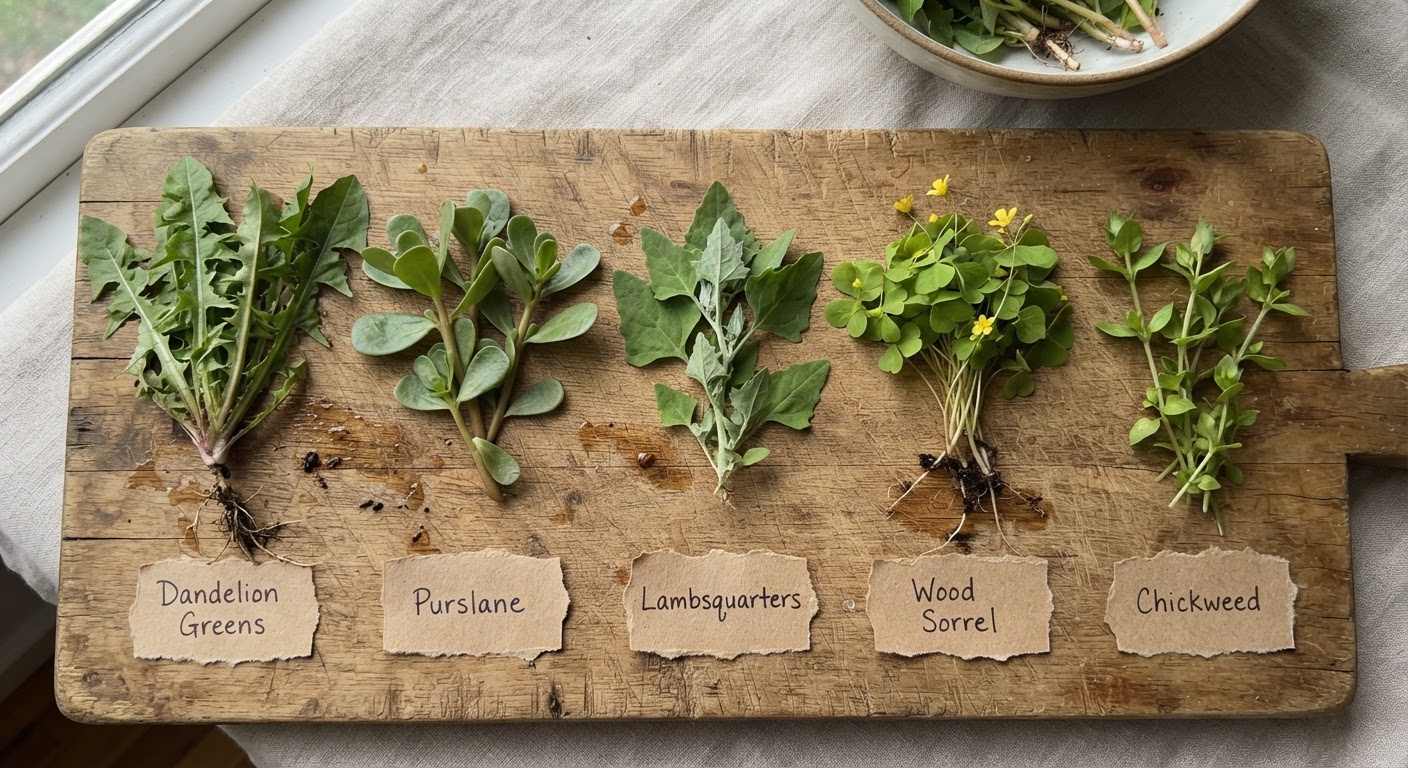
1. Dandelion (Taraxacum officinale)
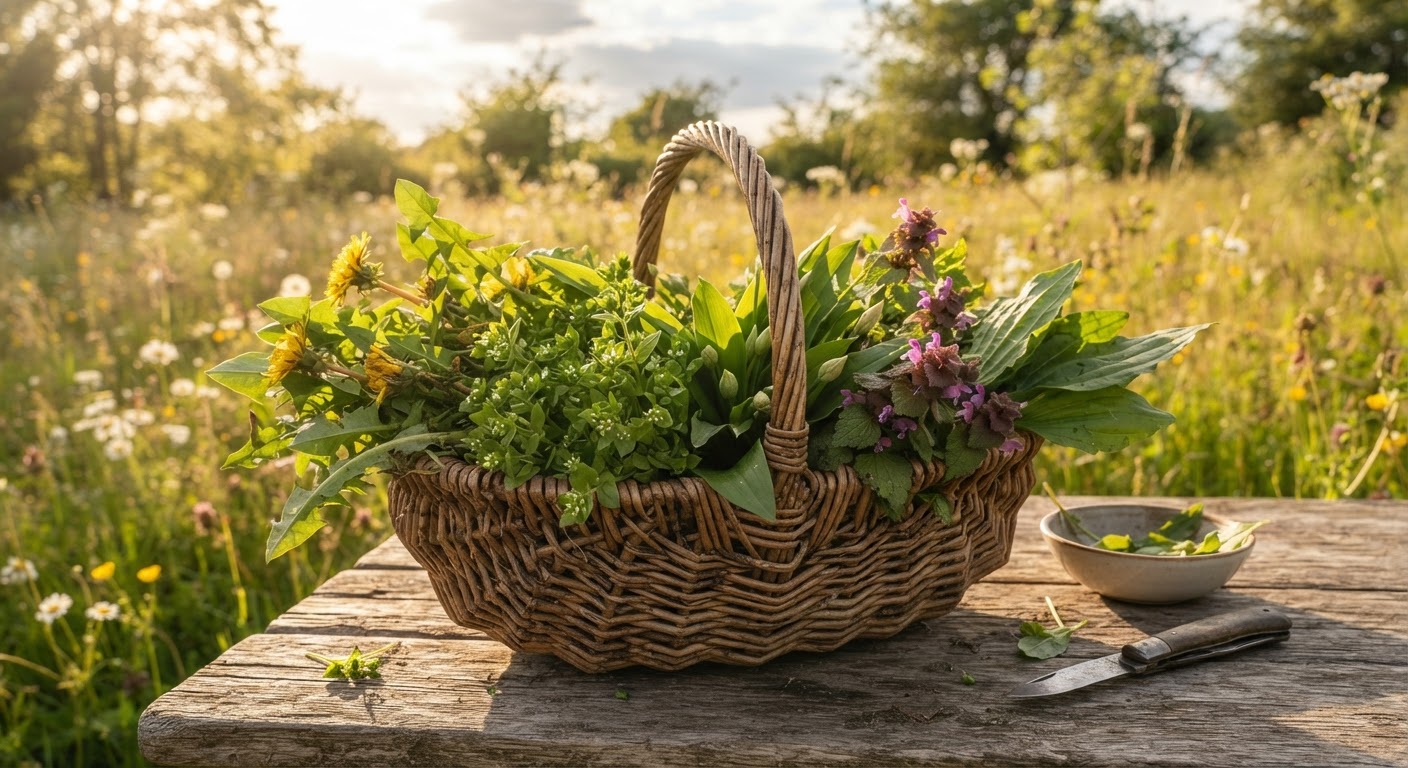
The plant everyone knows and almost no one eats. Every part is usable. The young leaves — picked before the flower opens — are pleasantly bitter and excellent raw in a salad. Once it flowers, the leaves turn tough and harsh; cook them like collards. The flowers make a bright yellow fritter or a quick “poor man’s honey” syrup, and the roasted root was a coffee substitute for centuries.
The one rule: pick from ground you trust. Dandelions are magnets for lawn chemicals, and a “free salad” from a treated yard is a chemical salad.
2. Purslane (Portulaca oleracea)
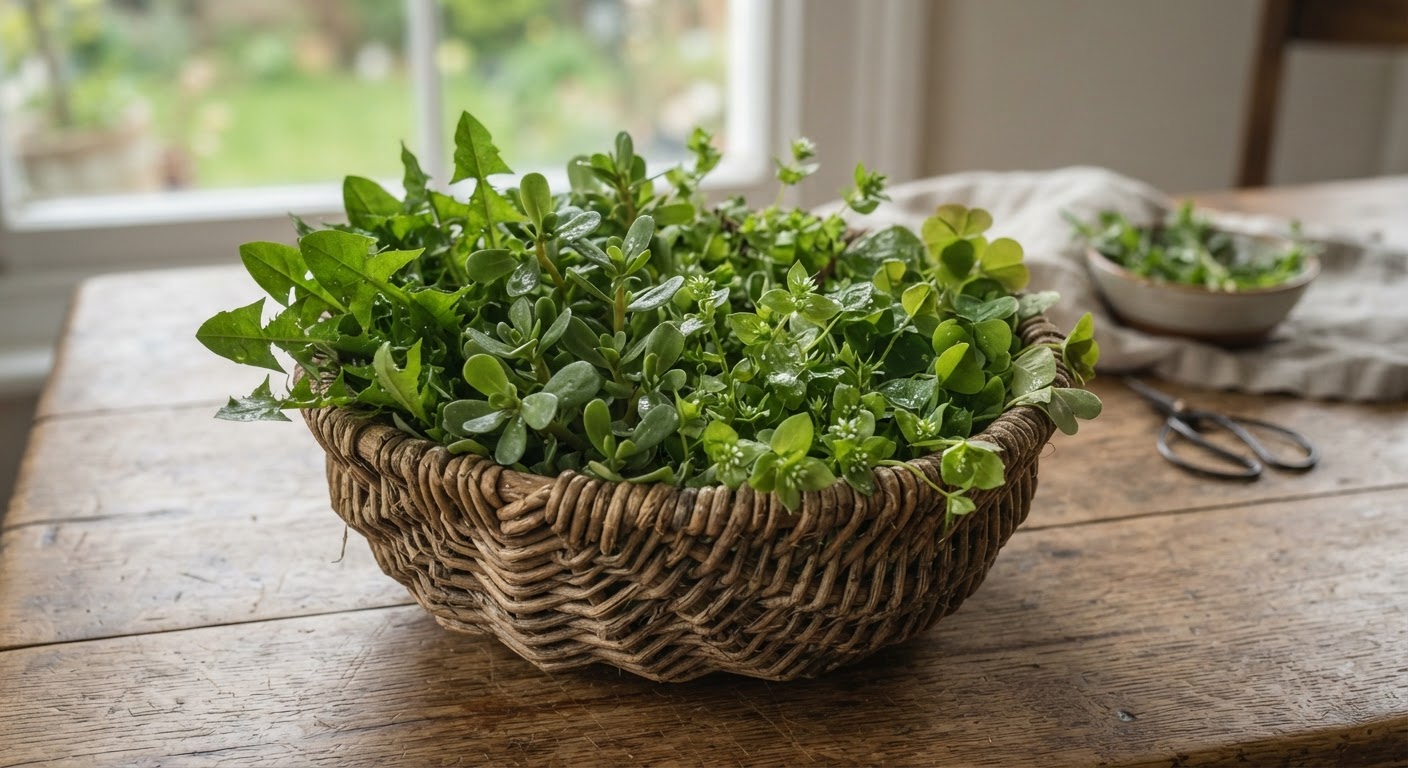
Purslane is a succulent that sprawls flat along the ground with thick, reddish stems and paddle-shaped leaves. It’s one of the few plants with meaningful omega-3 fatty acids in the leaves, which is rare in the plant world. Eat it raw — the stems snap and have a mild, lemony, slightly mucilaginous texture — or throw it in a hot pan for a minute.
The one rule: its toxic lookalike is spotted spurge, which grows flat too but leaks milky white sap when you break the stem. Purslane’s sap is clear. Milky sap = walk away.
3. Chickweed (Stellaria media)
Chickweed forms low, tangled mats with tiny white star-shaped flowers and a single line of fine hairs running down one side of the stem. That hair line is the tell — if you roll the stem between your fingers you’ll feel it. It tastes like mild corn silk and works raw in sandwiches or wilted into eggs.
The one rule: its poisonous lookalike, scarlet pimpernel, has orange-red flowers (not white) and no hair line. Wrong flower color, don’t eat it.
4. Wood Sorrel (Oxalis spp.)
The shamrock-looking one. Three heart-shaped leaflets, tiny yellow or pink flowers, and a sharp lemon flavor that comes from oxalic acid. Kids love it raw as a trail snack; it brightens a salad instantly. It’s also why “sorrel lemonade” recipes exist.
The one rule: oxalic acid is fine in small doses but rough on kidneys in large ones. Treat wood sorrel as a seasoning, not a meal.
5. Lamb’s Quarters (Chenopodium album)
Also called wild spinach, and the name is earned — the young leaves cook down almost exactly like spinach, only with more body. You’ll spot it by the mealy, silvery-white coating on the underside of young leaves (it looks dusted with powder) and a diamond-shaped leaf. Harvest the top few inches of young growth.
The one rule: like spinach and beets, it’s high in oxalates, so boil it and pour off the water rather than eating it raw in quantity.
6. Stinging Nettle (Urtica dioica)
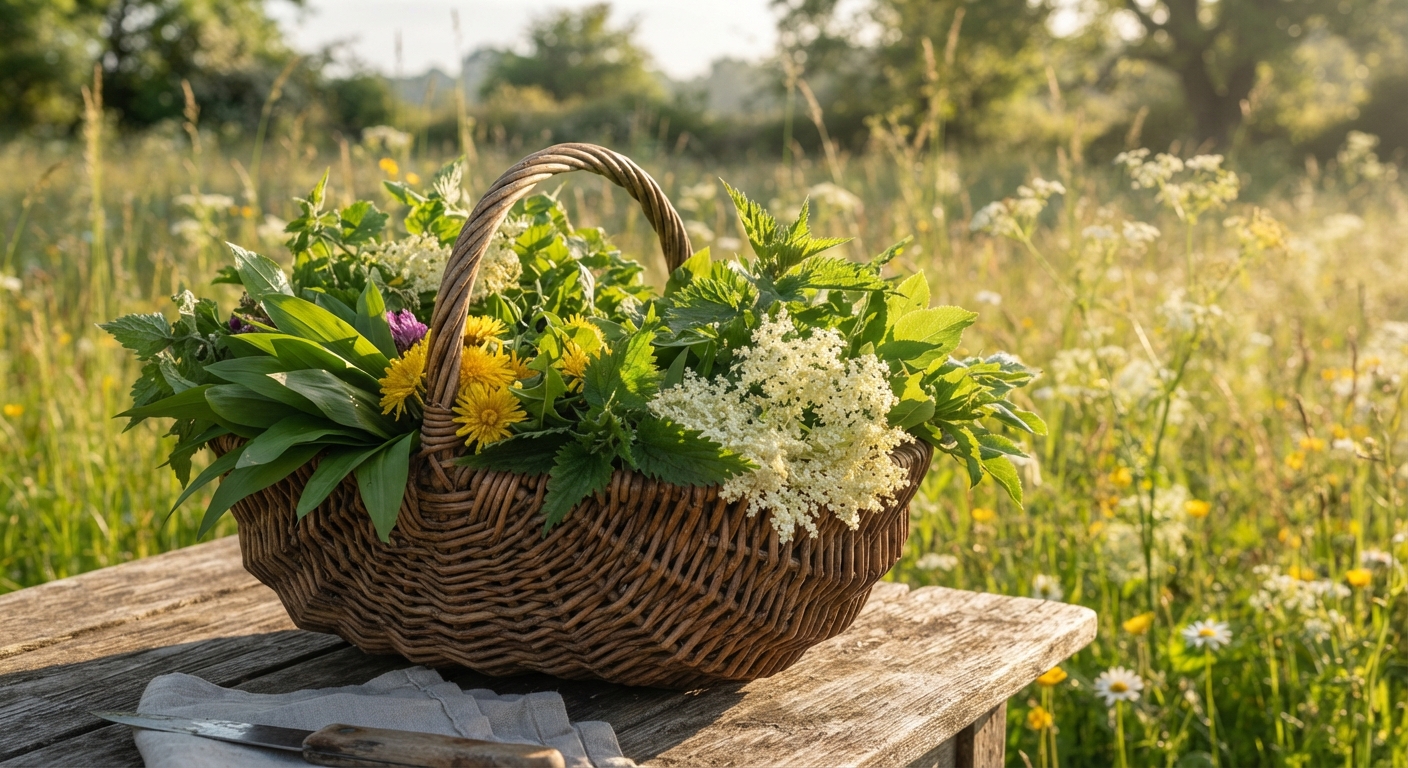
The plant that bites back is also one of the most nutritious greens you can forage. Young spring tops, picked with gloves, lose their sting completely after a minute in boiling water or a thorough drying. Then they behave like spinach with a deep, earthy flavor — classic in soup, pesto, and tea.
The one rule: harvest only the top few inches in early spring. Older plants turn fibrous and gritty, and the sting gets more aggressive.
7. Wild Garlic / Field Garlic (Allium vineale)
If it smells like garlic or onion when you crush it, it’s in the allium family and it’s safe to eat. That’s the whole identification trick, and it’s a good one — no poisonous plant in North America mimics that exact onion smell. The thin, hollow, round leaves are the giveaway versus flat-leaved toxic plants.
The one rule: always confirm the smell. Lily-of-the-valley looks vaguely similar and has no onion scent — it’s toxic, and it kills people who skip the sniff test.
8. Broadleaf Plantain (Plantago major)
Not the banana. This is the low weed with broad, ribbed leaves and vertical veins, the one that grows in compacted dirt and sidewalk cracks. The young leaves cook into a decent green, and the plant is famously soothing as a poultice for bug bites and stings. Pick the smallest, most tender leaves.
The one rule: the veins are stringy, so mature leaves need a long cook or a spin through a blender. If it’s tough to tear, it’ll be tough to chew.
9. Clover (Trifolium spp.)
White and red clover are both edible. The flowers are the easiest entry point — sweet, mild, and good raw in salads or dried for tea. The leaves are edible too but are better cooked; raw clover leaves in quantity can cause bloating.
The one rule: harvest flowers that are still bright and fresh, not brown or slimy. And go easy on the raw leaves.
10. Wild Violet (Viola spp.)
The heart-shaped leaves and purple (sometimes white or yellow) flowers are both edible and mild. Violets are mostly a garnish and a tea ingredient — the flowers crystallize beautifully for cakes, and the leaves make a soft, tender green. They’re low-risk because they’re easy to recognize.
The one rule: they’re not a filling food. Think of them as a garnish and a mood, not a meal.
11. Curly Dock (Rumex crispus)
Curly dock has long, wavy-edged leaves that grow in a rosette. Only the young spring leaves are worth eating — they’re lemony and slightly bitter, and they soften nicely when boiled with a water change. Older leaves are aggressively bitter and full of oxalates.
The one rule: cook it, and change the water once. Raw mature dock is a stomachache waiting to happen.
12. Cattail (Typha latifolia)
The “supermarket of the swamp,” and one of the few plants where you can eat a different part in every season. Spring shoots peel and cook like asparagus. Summer pollen taps off as a flour substitute. The rhizome is starchy year-round, though it’s a chore to process.
The one rule: only harvest cattails from clean, slow-moving water — they absorb whatever is in the water — and be certain it’s a true cattail with the characteristic brown “hot dog” seed head. Young iris shoots look similar and are toxic.
The Beginner Tier vs. The “Wait a Bit” Tier
If 12 plants feels like a lot, here’s the honest shortcut. The first four are nearly impossible to mess up once you know the one rule for each. The rest reward a little more patience.
Start with these (low risk, high reward):
- Dandelion — everyone can find it, every part works.
- Purslane — distinctive, delicious, one clear lookalike.
- Chickweed — the hair-line trick is easy to learn.
- Wood sorrel — unmistakable shamrock shape.
Graduate to these (more prep or more care needed):
- Stinging nettle — great, but you’ll get stung learning.
- Lamb’s quarters — fine, but you must cook it properly.
- Cattail — fantastic, but water source matters.
- Curly dock — good, but only in early spring.
Five Rules That Keep Foragers Out of Trouble
- Positive ID or it stays on the ground. “Probably” doesn’t count. If you can’t name it with confidence, you don’t eat it.
- Smell is a real test for the onion family. Allium (garlic/onion) smell = safe. No smell + grassy leaves = not for beginners.
- Milky sap is a yellow flag. Some milky-sap plants are fine (dandelion, wild lettuce); others are not. Beginners should treat milky sap as “don’t eat” unless they’ve positively identified a known-safe plant.
- Cook the high-oxalate greens. Lamb’s quarters, curly dock, and older dandelion all get boiled with a water change. Raw in bulk, they’re rough on you.
- Location matters as much as identification. No roadsides, no sprayed lawns, no dog parks, no water with runoff. You can identify a plant perfectly and still get sick from where it grew.
Summary: Where to Actually Start
Don’t try to learn all 12 in a weekend. Learn three — dandelion, purslane, and chickweed — until you can identify them cold, in different light, at different stages. Those three grow almost everywhere, cover the “salad green” category, and each has exactly one clear lookalike rule to remember.
Then add wood sorrel for flavor, lamb’s quarters for cooked greens, and nettle once you’re comfortable with gloves. That’s six plants, one harvest basket, and more free food than most people realize is sitting in their own yard.
Foraging isn’t about knowing 100 plants. It’s about knowing 10 plants completely — what they look like, when to pick them, and when to leave them alone.
FAQ
What’s the single easiest wild plant for a total beginner? Dandelion. It’s everywhere, unmistakable, and every part is usable. Pick young leaves before it flowers.
Are dandelion leaves safe to eat raw? Yes, young leaves are fine raw. They get bitter and tough after the plant flowers, so cook older leaves or pick earlier.
How do I tell purslane from its poisonous lookalike? Break a stem. Purslane has clear sap and thick, fleshy leaves. Spotted spurge leaks milky white sap and has thinner leaves with a dark spot. Milky sap means don’t eat.
Is chickweed safe to eat? Yes, when properly identified. Check for tiny white star flowers and a single line of hairs on the stem. The toxic lookalike, scarlet pimpernel, has orange-red flowers.
Why do I have to cook nettle and lamb’s quarters? Nettle must be cooked or dried to neutralize its sting. Lamb’s quarters is high in oxalates, so boiling (and discarding the water) makes it safe and pleasant.
Can I eat wild plants from my lawn? Only if the lawn has never been treated with herbicide, pesticide, or fertilizer, and no pets use it. When in doubt, harvest from a cleaner spot.
How much wood sorrel is too much? It’s high in oxalic acid, so treat it as a flavoring, not a main dish. A small handful raw is fine for most people; large amounts regularly are not.