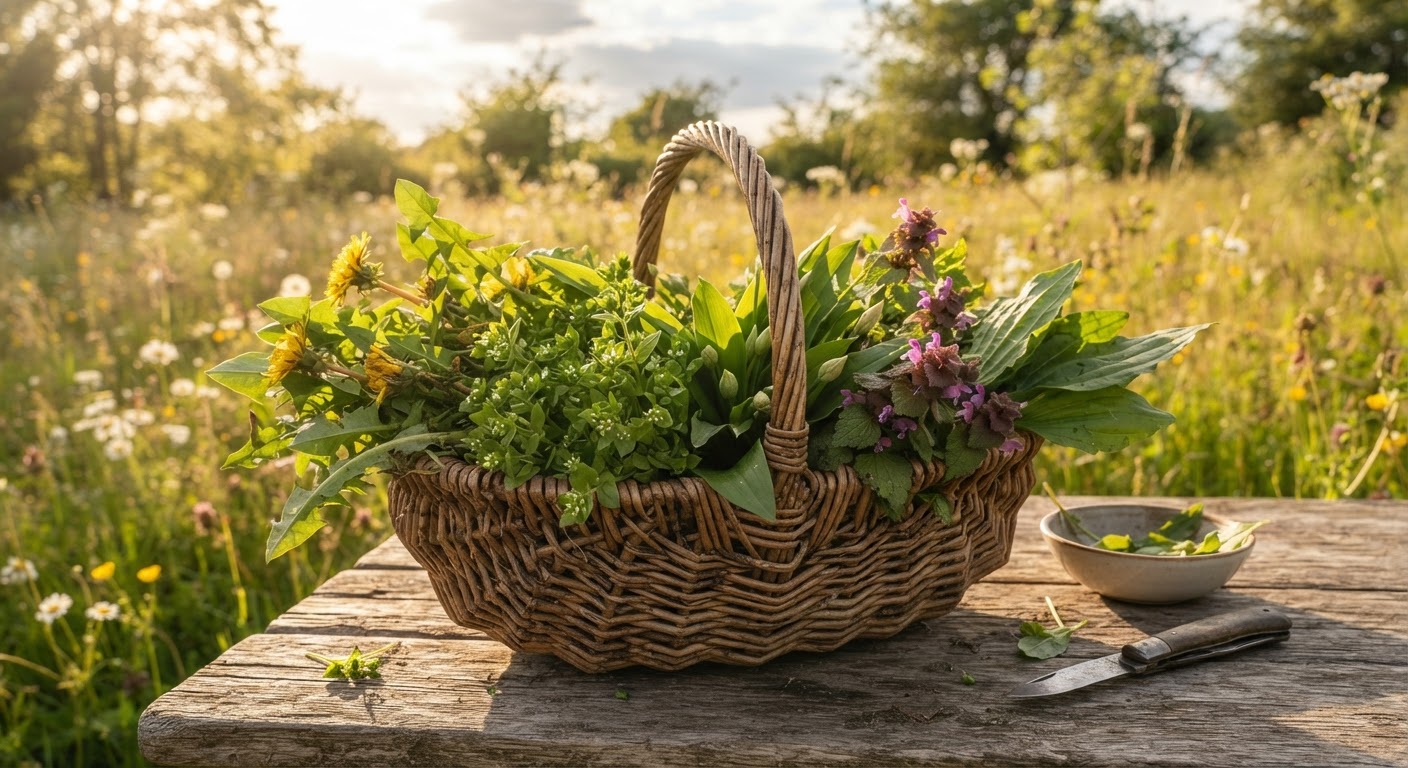
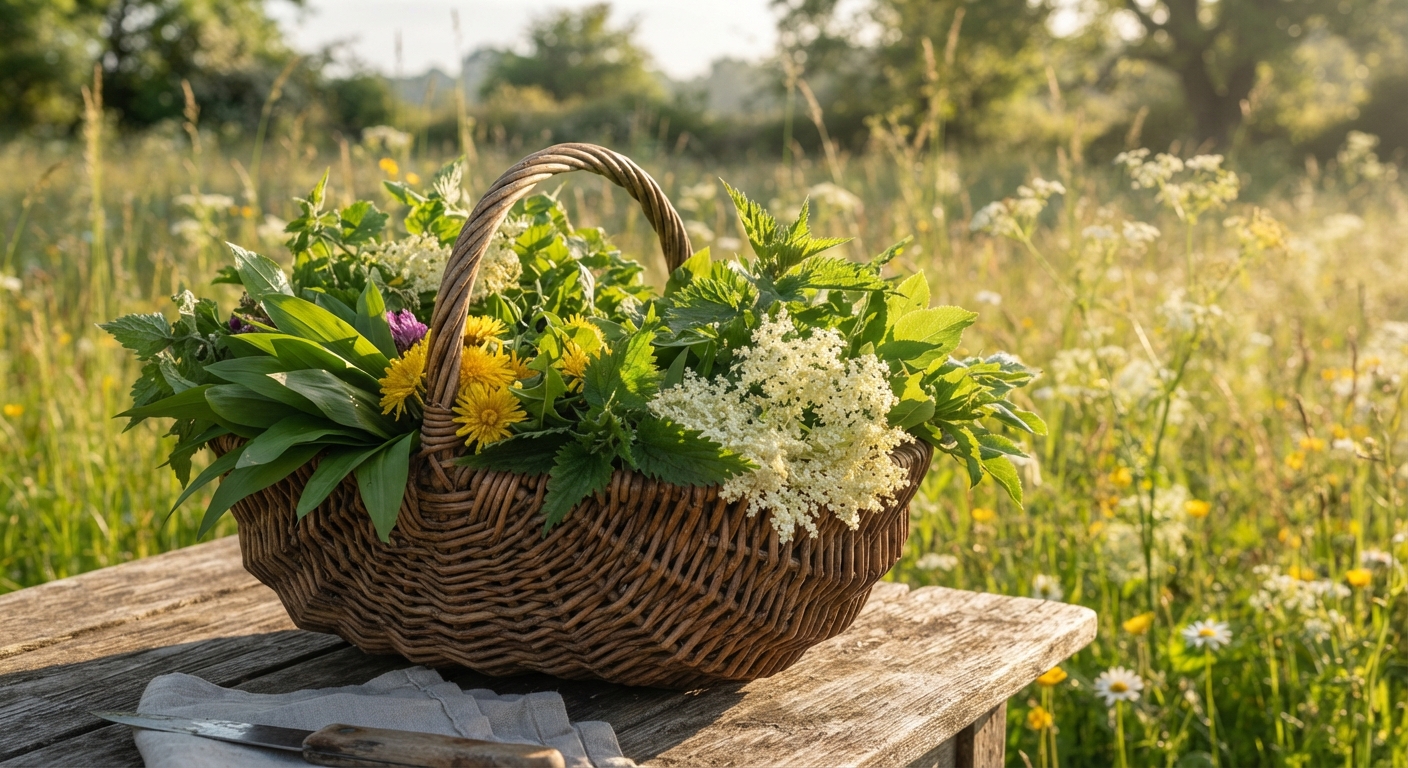
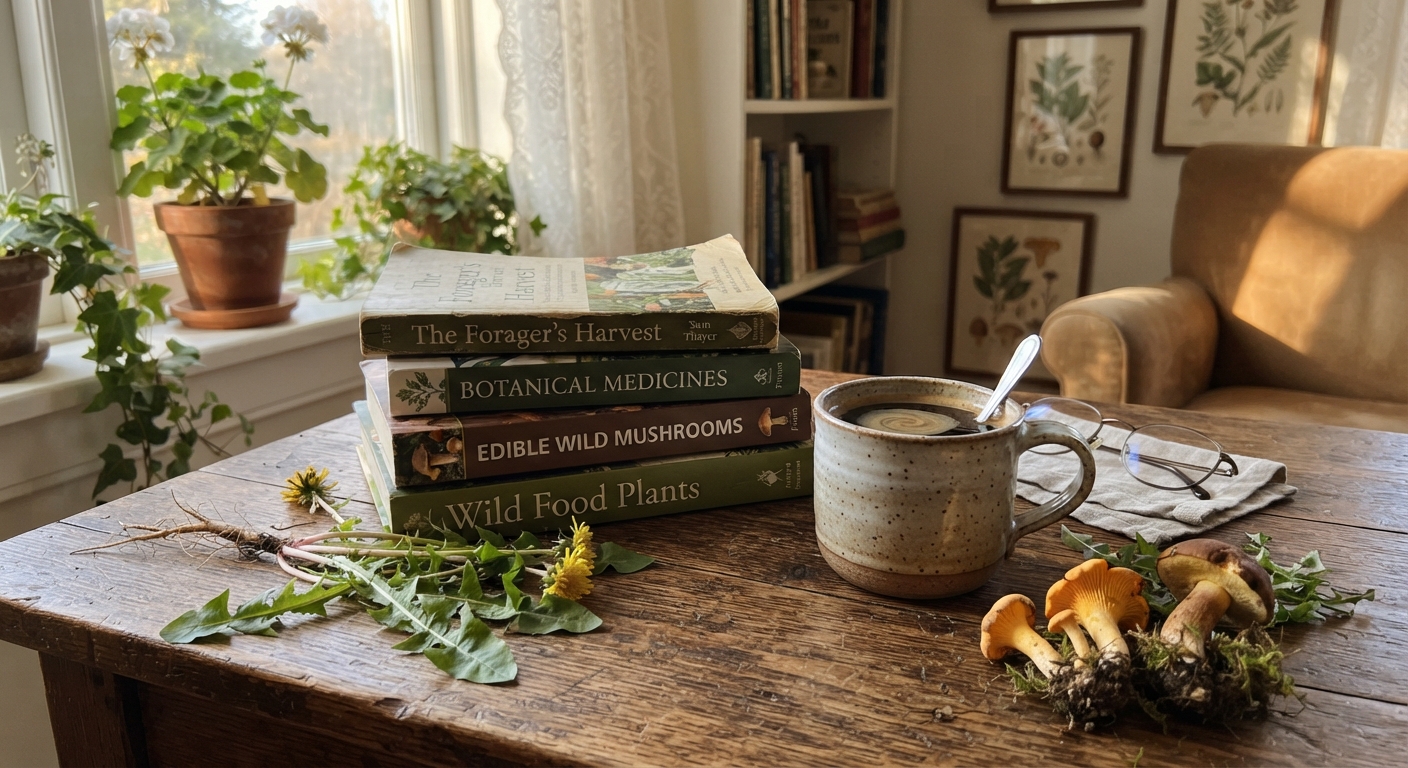
Every spring, around late March, I walk the same stretch of woods behind my property. It’s a patchy second-growth forest — mostly maple and oak, a creek running through the middle, and an old stone wall that probably dates back to when this land was farmland. For eleven months of the year it’s quiet. Then, almost overnight, it wakes up.
The first time I went spring foraging, I came home with a plastic grocery bag full of plants I confidently believed to be wild garlic. They were not wild garlic. They were lily-of-the-valley — every part of them toxic. My foraging mentor at the time looked at my haul, looked at me, and said the six words that probably saved my life: “Put that down. Wash your hands.”
That was fifteen years ago. I’ve made plenty of mistakes since then, but I’ve also eaten some of the best meals of my life from plants that most people walk right past. This guide is everything I wish someone had handed me before my first spring foraging trip.
What Makes Early Spring Foraging Special
Early spring — roughly late February through April in most of North America — offers something no other season can match: the first fresh greens after months of winter. The plants that emerge earliest are often the most tender, the most nutrient-dense, and in many cases the most delicious.
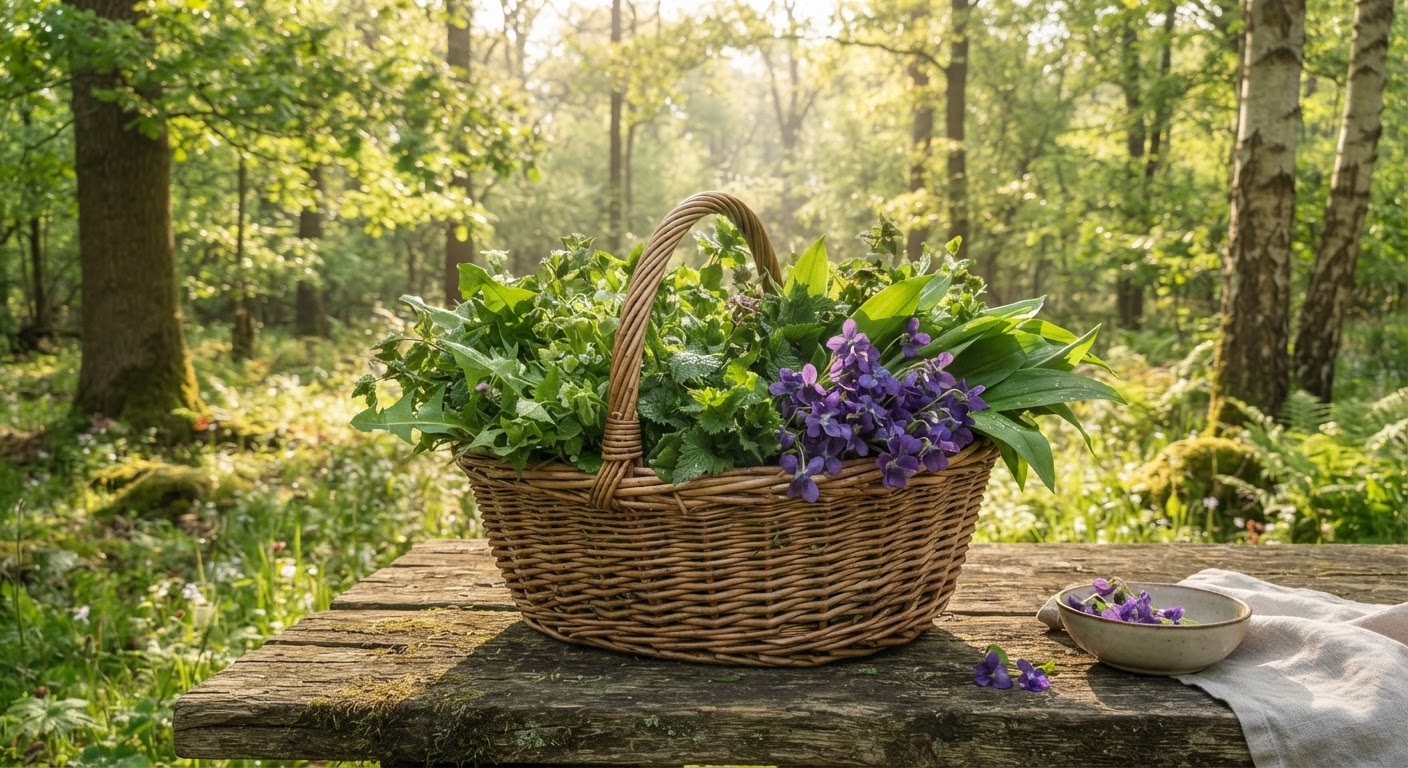
There’s a practical reason spring is the ideal time to start foraging: identification is often easier. Many spring edibles emerge before most of their toxic look-alikes. The landscape is sparse — fewer leaves, fewer competing plants — which means your target species are easier to spot. Walk the same patch of woods in July and you’ll be fighting through a wall of green. In April, that garlic mustard colony is practically waving at you.
Spring plants also pack a nutritional punch. Stinging nettle has more iron than spinach. Chickweed contains significant amounts of vitamin C, calcium, and magnesium. Dandelion greens have more vitamin A than carrots. After a winter of eating stored vegetables and supermarket produce, your body will thank you.
The Spring Foraging Window by Region
| Region | Typical Window | Key Indicator Plants |
|---|---|---|
| Northeast US | March – May | Skunk cabbage, coltsfoot |
| Southeast US | February – April | Chickweed, henbit |
| Midwest US | March – May | Dandelion, wild garlic |
| Pacific Northwest | February – May | Stinging nettle, miner’s lettuce |
| UK & Northern Europe | March – May | Ramsons (wild garlic), hawthorn buds |
| Southern Europe | February – April | Borage, wild asparagus |
The window is narrow. Many spring greens — chickweed, bittercress, dead nettle — will bolt and turn tough or bitter once temperatures consistently stay above 70°F (21°C). Ramps have a season that might last only three weeks. Fiddleheads are at their peak for maybe ten days. If you wait too long, you wait another year.
15 Early Spring Wild Edibles to Look For
These are roughly in order of appearance, from the earliest risers to those that show up as spring really settles in. Every plant listed here grows across much of temperate North America and Europe.
1. Dandelion (Taraxacum officinale)
Dandelions don’t need an introduction — you’ve been pulling them out of your lawn since childhood. But if you’re not eating them, you’re missing one of the most versatile wild foods available.
What to harvest: Young leaves (before flowers appear), flower buds, open flowers, and roots. Early spring leaves, especially from plants still shaded by last year’s dead grass, are substantially less bitter than summer dandelion.
Key identification: Toothed leaves in a basal rosette (no stem on the leaves themselves), hollow flower stalks with milky sap, single yellow flower head per stalk. If it has a branching flower stem with multiple flowers, it’s not dandelion — it’s likely a look-alike like cat’s ear or hawkweed.
How to eat: Young leaves raw in salads, sautéed with garlic and olive oil, or blanched to reduce bitterness. Flower petals can be pulled from the green base and added to pancakes, fritters, or homemade wine. Roots can be roasted and ground for a caffeine-free coffee substitute.
One thing beginners get wrong: They wait until the plant is flowering, grab the big leaves, and declare dandelions too bitter to eat. The leaves are sweetest before the flower stalk shoots up. Once the plant flowers, pick only the smallest interior leaves.
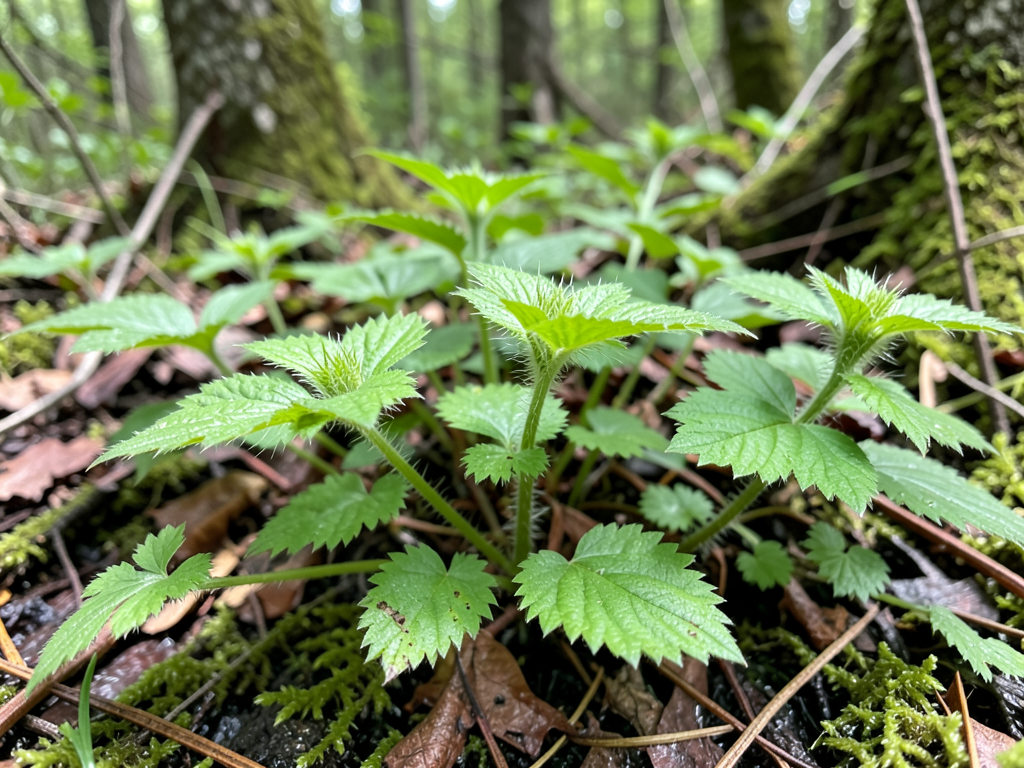
2. Stinging Nettle (Urtica dioica)
If you’ve ever accidentally brushed against nettle while hiking, you might wonder why anyone would deliberately seek it out. The answer is simple: cooked nettle is one of the best-tasting wild greens on earth. Think spinach, but richer, with a slight nuttiness. It also contains more protein than any other leafy green — roughly 25% protein by dry weight.
What to harvest: The top 4–6 inches of young plants, before they flower. Once nettle flowers and goes to seed, it develops gritty particles called cystoliths that can irritate the kidneys.
Key identification: Opposite, serrated leaves with a heart-shaped base, square stems, and those unmistakable stinging hairs. The sting comes from hollow silica-tipped hairs that inject histamine, formic acid, and other irritants.
How to eat: Cooking or drying completely neutralizes the sting. Steam, blanch, or sauté for soups, pesto, spanakopita-style pies, and pasta fillings. Nettle tea is also excellent — just steep fresh or dried leaves in hot water for 10 minutes.
Gear tip: Wear gloves. The thin nitrile-coated garden gloves work better than thick leather ones because you can still feel what you’re doing. A long-sleeved shirt doesn’t hurt either.
3. Ramps (Allium tricoccum)
Ramps — also called wild leeks or ramson in some regions — are the celebrity of the spring foraging world. They’re the reason restaurants in New York and Chicago put “foraged ramps” on their menus at $18 a plate. They taste like a cross between garlic, onion, and something entirely their own.
What to harvest: Leaves and bulbs. But here’s where it gets complicated — see the sustainability section below.
Key identification: Two or three broad, smooth, bright-green leaves emerging from the forest floor, typically in clusters or large patches. Crush a leaf — it should smell unmistakably of garlic and onion. The bulbs are white with a purplish or reddish sheath at the base.
Critical safety check: Ramps have a deadly look-alike: lily-of-the-valley (Convallaria majalis). The foolproof test is smell. Ramps smell like onion/garlic. Lily-of-the-valley smells like… a plant. No allium odor at all. If you’re uncertain, do not eat it. Lily-of-the-valley contains cardiac glycosides that can kill you.
How to eat: Raw in pesto, pickled bulbs, sautéed with butter as a side dish, folded into scrambled eggs, or used anywhere you’d use garlic or scallions. The leaves are milder and more versatile than the bulbs.
Harvesting sustainably: This is important. Ramp patches take 5–7 years to recover if you dig up the bulbs. Many foraging communities now recommend harvesting only one leaf per plant, leaving the bulb intact. A mature ramp can spare one leaf and still thrive. If you find a patch with fewer than 100 plants, consider leaving it alone entirely.
4. Chickweed (Stellaria media)
Chickweed is the unsung hero of spring foraging. It grows everywhere — garden beds, disturbed soil, the edges of lawns, cracks in sidewalks — and it’s genuinely delicious. Mild, slightly grassy, with a texture somewhere between lettuce and tender spinach. If you’ve ever looked at your garden in March and thought “great, more weeds,” chances are some of those weeds were chickweed.
What to harvest: The entire above-ground plant — stems, leaves, and flowers.
Key identification: Small, pointed-oval leaves growing in opposite pairs along thin, fragile stems. There’s a single line of fine hairs running along one side of the stem that switches sides between leaf nodes. The flowers are tiny, white, with five petals so deeply notched they look like ten. That last detail is the key: if the petals aren’t deeply split, it’s not chickweed.
How to eat: Raw in salads, on sandwiches in place of lettuce, lightly wilted in soups, or blended into a pesto-style sauce. It cooks down dramatically, like spinach, so harvest more than you think you need.
Look-alike warning: Scarlet pimpernel (Anagallis arvensis) looks vaguely similar but has orange or red flowers and no line of hairs on the stem. Spurge species have a milky white sap when you break the stem — chickweed has clear, watery sap. Never eat anything with milky white sap unless you’re 100% certain of the identification.
5. Violet (Viola spp.)
Wild violets are everywhere in spring — lawns, woodland edges, gardens, even cracks in pavement. Most people know them as pretty flowers. Few realize that both the leaves and flowers are edible, and the flowers are one of the prettiest things you can put on a plate.
What to harvest: Young leaves and open flowers. The common blue violet (Viola sororia), sweet violet (Viola odorata), and yellow violet (Viola pubescens) are all edible.
Key identification: Heart-shaped leaves with scalloped edges, growing in a basal rosette. The flowers have five petals — two upper, two lateral, and one lower with a spur at the back. Colors range from deep purple to blue, white, yellow, or bicolor.
How to eat: Flowers are wonderful candied for cake decorations, frozen into ice cubes, tossed fresh into salads, or pressed into shortbread cookies. Leaves have a mild, slightly sweet flavor and can be used raw in salads or cooked like spinach. They’re also rich in mucilage, making them soothing for sore throats when brewed as tea.
6. Dead Nettle (Lamium purpureum)
Dead nettle is the plant that launched a thousand confused forum posts. It looks like it should sting — it’s called nettle, it has slightly fuzzy leaves, and it often grows near stinging nettle. But it doesn’t sting at all. The “dead” in the name means “doesn’t sting.” The “purple” in the scientific name describes the color of the upper leaves, which turn a reddish-purple as the plant matures.
What to harvest: The top 3–4 inches of young plants, including leaves, stems, and flowers.
Key identification: Square stems (it’s in the mint family), opposite leaves with scalloped edges, and small pink-purple tubular flowers clustered at the top. The upper leaves are often tinged reddish-purple. When you crush a leaf, it has a mild, earthy, slightly minty scent — completely unlike stinging nettle.
How to eat: Raw in salads (the young tips are best), cooked in soups and stews, or dried for tea. The flowers are slightly sweet and make a nice garnish. Dead nettle is also a decent source of iron and has mild anti-inflammatory properties.
7. Garlic Mustard (Alliaria petiolata)
Garlic mustard is an invasive species in North America — one of the few plants you’re actually encouraged to harvest as much as you can carry. It was brought over by European settlers as a culinary herb and has been spreading through forests ever since, crowding out native wildflowers. Eating it is a public service.
What to harvest: First-year rosettes (the best part) and second-year leaves, flower buds, and flowers. Second-year leaves are noticeably more bitter.
Key identification: First-year plants form a low rosette of kidney-shaped leaves with scalloped edges. Second-year plants send up a stalk with triangular, sharply toothed leaves and clusters of small white four-petaled flowers at the top. The definitive ID test: crush a leaf and smell it. It should smell distinctly of garlic, sometimes with a hint of mustard. No garlic smell = not garlic mustard.
How to eat: Young leaves are fantastic raw in salads or as a sandwich green. Slightly older leaves work well in pesto, sautéed as a side, or wilted into pasta. The flower buds can be pickled like capers. The roots taste like horseradish and can be grated fresh.
One caution: Garlic mustard accumulates heavy metals from the soil. Avoid harvesting from roadsides, industrial areas, or anywhere downstream of agricultural runoff.
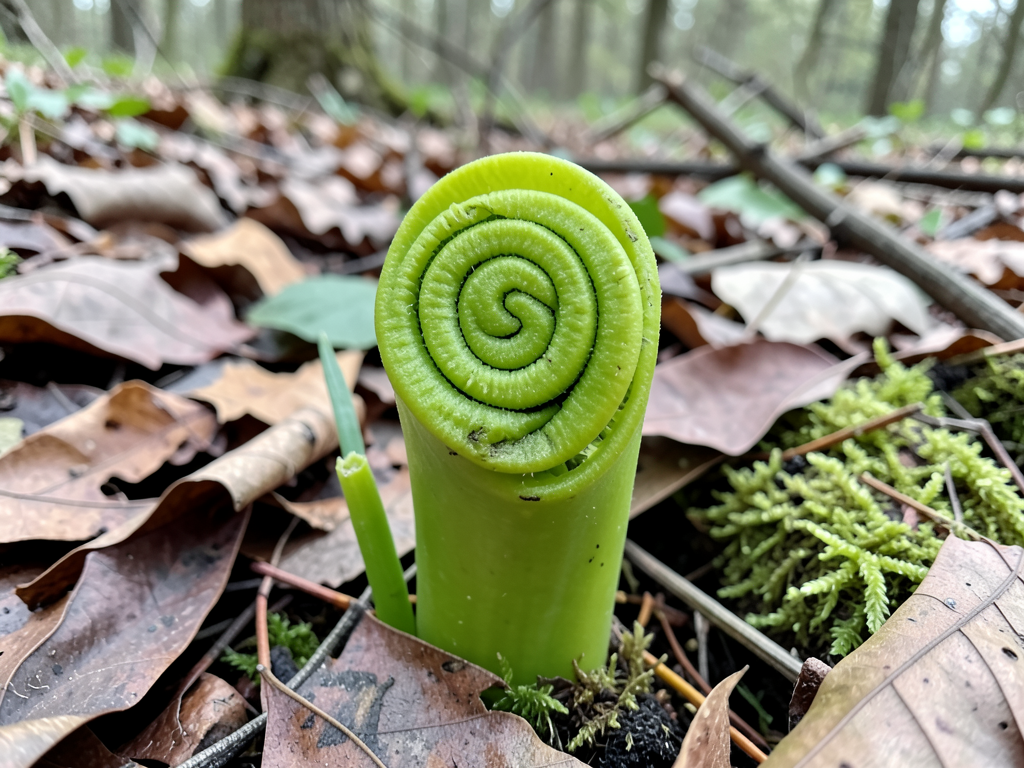
8. Fiddlehead Ferns (Matteuccia struthiopteris)
Fiddleheads are the tightly coiled young fronds of certain fern species, and they’re among the most prized wild foods of spring. The ostrich fern (Matteuccia struthiopteris) is the species most commonly harvested for eating — other ferns range from unpalatable to carcinogenic.
What to harvest: The ostrich fern fiddlehead, when the coil is still tight and the stem is no more than 2–3 inches tall.
Key identification: Ostrich fern fiddleheads have three key features: (1) a deep U-shaped groove running down the inside of the smooth stem (like celery), (2) thin, papery brown scales loosely attached to the coil (not woolly or fuzzy), and (3) a smooth, bright green stem with no fuzz or hair. If the stem is fuzzy, hairy, or round (no groove), it’s not ostrich fern — do not eat it.
How to eat: Fiddleheads MUST be cooked. Never eat them raw — they can cause serious gastrointestinal issues. Boil for 10–15 minutes or steam for 10–12 minutes, then sauté with butter, lemon, and garlic. The texture is somewhere between asparagus and green beans, with a flavor that’s earthy, nutty, and slightly reminiscent of artichoke.
Safety note: There have been multiple documented cases of food poisoning from eating raw or undercooked fiddleheads. The exact toxin hasn’t been identified, but thorough cooking (minimum 10 minutes boiling) reliably removes it. Don’t wing this one.
9. Wild Garlic / Field Garlic (Allium vineale)
Wild garlic is one of the easiest spring plants to identify safely because of the smell test. If it looks like a grass or small onion and smells like garlic, it’s something in the allium family and it’s edible. If it looks like an allium but doesn’t smell like garlic or onion, you might be looking at a toxic lily.
What to harvest: The entire plant — hollow, tube-like leaves, bulbs underground, and bulblets that form at the top of the stem later in the season.
Key identification: Thin, hollow, round leaves rising from a small bulb. The leaves look similar to chives but are hollow and round rather than hollow and flattened. The smell is the definitive identifier — crush any part and you’ll get an immediate garlic/onion scent.
How to eat: Chop the leaves and use them exactly like chives. The bulbs can be used like small onions or garlic cloves. The tiny aerial bulblets that form on top of the stalk in late spring are excellent for pickling.
10. Cleavers (Galium aparine)
Cleavers — also called goosegrass, sticky willy, or bedstraw — is the plant that sticks to your clothes when you walk through tall grass. Its stems and leaves are covered in tiny hooked hairs that cling to fabric and fur like natural velcro. It’s also edible, surprisingly nutritious, and makes a refreshing spring tonic.
What to harvest: The top 4–6 inches of young plants, before they flower. Once cleavers flowers and sets seed (the little round burrs), the plant becomes too fibrous and gritty to eat.
Key identification: Whorls of 6–8 narrow leaves radiating from a square stem, growing in a sprawling, climbing habit up to several feet long. The stems and leaves feel sticky or rough when you touch them — those tiny hooks do the work. Tiny white four-petaled flowers appear at the leaf nodes in late spring.
How to eat: Raw cleavers is too scratchy for most people. Instead, juice it (it’s a traditional spring tonic for the lymphatic system), blend it into smoothies, or cook it briefly. Cooking softens the hooks. Some foragers steep it in cold water overnight to make “cleavers water” — a traditional remedy for skin issues and spring detox.
11. Hairy Bittercress (Cardamine hirsuta)
Hairy bittercress is the tiny plant you’ve probably been weeding out of your garden beds for years. It pops up in late winter, sometimes even pushing through snow, and it’s a member of the mustard family — which means it’s edible and has a pleasant, peppery kick.
What to harvest: The entire rosette — leaves, stems, flowers, and immature seed pods.
Key identification: A low rosette of small, roundish leaves with lobed leaflets (each leaf has a larger terminal lobe and several smaller side lobes). The plant sends up thin stalks with tiny white four-petaled flowers, followed by slender seed pods that, when mature, explode at the slightest touch — hence the name “shot weed.”
How to eat: Raw in salads (it adds a peppery, watercress-like flavor), as a garnish on soups, or mixed into compound butter. The immature green seed pods are surprisingly tasty — spicy and crunchy, like wild wasabi. Mature brown pods, however, are too fibrous.
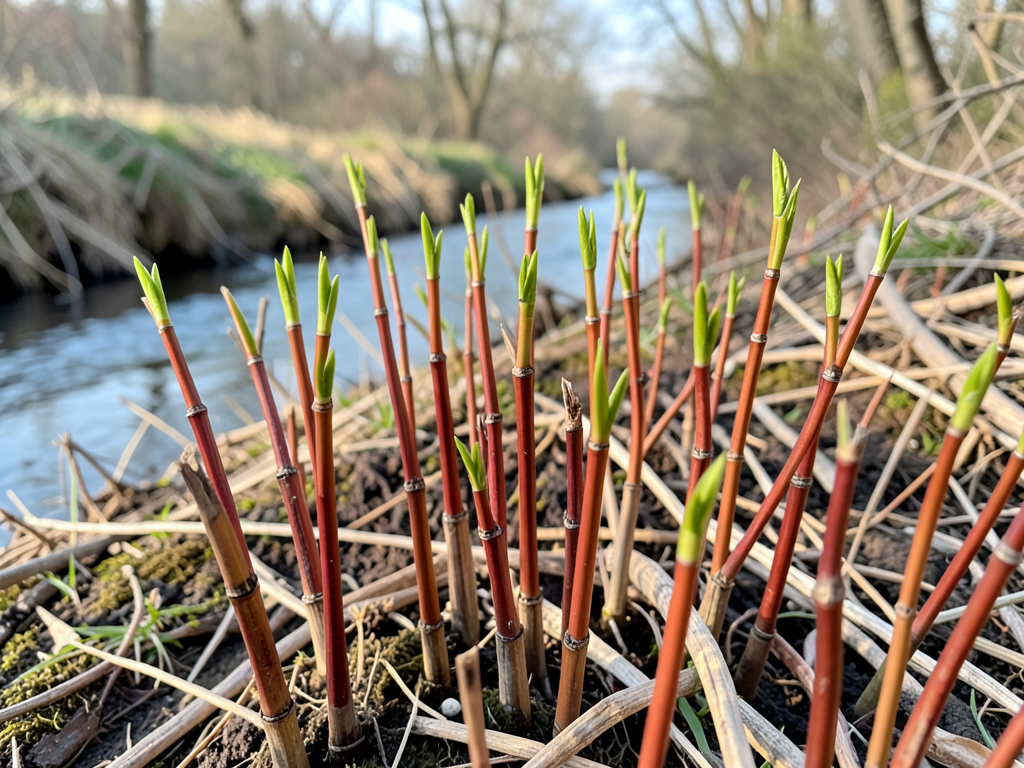
12. Japanese Knotweed (Reynoutria japonica)
Japanese knotweed is another invasive species you should feel great about eating. In the UK, having knotweed on your property can actually make it harder to get a mortgage. It’s that aggressive. But in early spring, when the shoots first emerge, it’s also delicious.
What to harvest: Young shoots 6–12 inches tall, before they become woody. They look like reddish-green asparagus spears with distinct nodes.
Key identification: Hollow, segmented stems emerging from last year’s dead canes. The shoots are green with reddish-purple speckles, and the leaves are roughly heart-shaped with a pointed tip. It looks a lot like asparagus when young, but the telltale sign is the hollow, compartmented interior — snap a stem and you’ll see chambers inside, like bamboo.
How to eat: Peel the outer skin (it can be slightly fibrous), then cook exactly like rhubarb — stewed with sugar in pies, crumbles, or compotes. It has a tart, lemony flavor similar to rhubarb but milder. It also makes excellent pickles, chutney, and even wine. Raw, it’s quite sour and astringent.
Harvesting note: Take all you want. Seriously. This plant is so invasive that some regions legally require landowners to control it. You’re not going to damage the population — the rhizomes can survive being buried under 10 feet of soil.
13. Wood Sorrel (Oxalis spp.)
Wood sorrel looks like clover but tastes like lemon. It’s one of the easiest plants to identify even for complete beginners, and it’s found in forests, gardens, and lawns across most of the world.
What to harvest: Leaves, flowers, and seed pods. All species of the Oxalis genus are edible in moderate quantities.
Key identification: Three heart-shaped leaflets per leaf, resembling a three-leaf clover but with a distinct fold down the middle of each leaflet. The flowers have five petals, typically yellow or white with purple veins, though some species are pink or violet. The sour, lemony taste is the definitive ID — no similar-looking toxic plant has it.
How to eat: Raw in salads, as a garnish for fish or soups, muddled into cocktails, or steeped as a lemony tea. The sour flavor comes from oxalic acid, the same compound found in spinach and rhubarb. It’s perfectly safe in normal culinary quantities, but people with kidney issues, gout, or a history of calcium oxalate kidney stones should limit their intake.
14. Cattail Shoots (Typha spp.)
Cattails are sometimes called “the supermarket of the swamp” because almost every part is edible at some point in the year. In early spring, it’s the young shoots and the tender inner core of the stalk that are worth seeking out.
What to harvest: Young shoots 12–18 inches tall, and the inner core of slightly taller stalks before the flower head develops.
Key identification: Tall, grass-like leaves growing in dense stands in shallow water or very wet soil. In spring, look for new green shoots pushing up through last year’s dead brown stalks and the iconic brown seed heads (the “cattail” or “hot dog on a stick”). If you don’t see last year’s cattail heads, be absolutely certain of your identification — there are toxic look-alikes in the iris family.
How to eat: Grab the shoot near the base and pull firmly — the tender inner core will often separate from the outer leaves. This white inner core can be eaten raw (it tastes like cucumber) or cooked like asparagus. The young flower heads, before they emerge from their sheath, can be boiled and eaten like corn on the cob.
Safety note: Cattails growing in polluted water will absorb and concentrate those pollutants. Only harvest from clean water sources. Avoid cattails growing near roads, agricultural runoff, industrial sites, or urban waterways.
15. Morel Mushrooms (Morchella spp.)
Morels are the holy grail of spring foraging. These honeycomb-capped mushrooms can sell for $50–100 per pound fresh, and for good reason — they’re unbelievably delicious, with an earthy, nutty, almost meaty flavor that’s impossible to replicate.
What to harvest: The entire above-ground mushroom, cut at the base.
Key identification: Conical or oval cap with a distinctive honeycomb or sponge-like pattern of pits and ridges. The cap is hollow inside (from tip to stem base — this is crucial). The stem is also hollow. If you slice a morel in half lengthwise, it should be one continuous hollow chamber from the top of the cap to the bottom of the stem.
How to eat: Morels MUST be cooked — they’re toxic raw. Sautéed in butter with a pinch of salt is the classic preparation and arguably the best way to taste them. They’re also wonderful in cream sauces over pasta, stuffed with cheese and baked, or dried for later use.
Dangerous look-alike: The false morel (Gyromitra esculenta) contains monomethylhydrazine — yes, the same chemical found in rocket fuel. It can cause severe illness or death. False morels have an irregular, brain-like or wavy cap rather than a honeycomb pattern. Cut them in half: false morels have a chambered or cottony-solid interior, not a completely hollow one. If there’s any doubt, do not eat.
At-a-Glance Safety Summary
| Plant | Key ID Test | Toxic Look-Alike | Risk Level |
|---|---|---|---|
| Dandelion | Milky sap, single flower per stalk, no branching | Hawkweed (non-toxic) | Very Low |
| Stinging Nettle | Stinging hairs, opposite leaves, square stem | Dead nettle (edible) | Very Low |
| Ramps | Strong onion/garlic odor when crushed | Lily-of-the-valley | High |
| Chickweed | Single line of hairs on stem, deeply split petals | Scarlet pimpernel | Moderate |
| Fiddleheads | U-shaped stem groove, papery brown scales | Bracken fern, other ferns | High |
| Morels | Completely hollow interior, honeycomb cap | False morel (Gyromitra) | High |
Where to Look: Best Early Spring Foraging Habitats
Finding the right habitat is half the battle. Each plant has its preferred environment, and knowing where to look will dramatically increase your success rate.
Woodland edges and forest openings: This is your best bet for spring foraging. The edge habitat — where forest meets meadow or trail — catches enough sunlight for understory plants to thrive early. Ramps, garlic mustard, violets, and morels all favor these transition zones. Look especially around dead or dying elm trees for morels.
Disturbed soil and gardens: Chickweed, dead nettle, hairy bittercress, and dandelion all prefer soil that’s been recently turned or disturbed. Your own vegetable garden, before you’ve planted anything, is probably already growing edible weeds. The edges of parking lots, construction sites (with permission), and mulched beds are also productive.
Moist bottomlands and creek banks: Stinging nettle, fiddleheads, and garlic mustard thrive in rich, moist soil near water. Follow a creek upstream in April and you’ll probably find all three. Nettle in particular loves the nitrogen-rich soil around old barn sites and compost piles.
Lawns and yards: Before you mow for the first time in spring, walk your lawn. You’ll likely find dandelions, violets, wild garlic, wood sorrel, chickweed, and dead nettle — all right there. The key is knowing when the last chemical treatment was applied. If you or your neighbors use herbicides or pesticides, avoid foraging from those areas.
Old fields and meadows: Wild garlic, wood sorrel, and cleavers are common in abandoned fields. These open areas warm up faster in spring than forest floors, so plants here often emerge a week or two earlier.
Essential Gear for Spring Foraging
You don’t need much, but a handful of items will make your foraging trips dramatically more productive and safe.
A reliable field guide — Not an app. A physical book with clear photographs, ideally one specific to your region. Apps are a supplement, not a replacement. The Newcomb’s Wildflower Guide and Peterson’s Field Guide to Edible Wild Plants are both excellent starting points.
Gloves — Nitrile-dipped gardening gloves give you dexterity while protecting against nettle stings, thorns, and unknown plants. Bring two pairs — they get wet and muddy.
A foraging knife — A simple Opinel or Mora knife works perfectly. You’re cutting plant stems and mushroom bases, not batoning firewood. The Hori Hori (Japanese digging knife) is ideal because it cuts, digs, and has measurements marked on the blade.
Collection containers — Paper bags for mushrooms (plastic makes them sweat and spoil faster), mesh or cloth bags for greens, and a basket or canvas bag for general use. Bring separate bags for different plants so you don’t accidentally cross-contaminate something you’re uncertain about.
Clothing — Waterproof boots are non-negotiable in spring. Long pants and sleeves protect against ticks (which are active surprisingly early) and nettle. A hat with a brim helps with both sun and branches. Tick check when you get home — Lyme disease doesn’t take the winter off.
Water and a small first aid kit — Basic. You know why.
Safety Rules Every Spring Forager Must Follow
I keep this checklist in the front of my field journal. It’s saved me from myself more than once.
Rule 1: 100% identification, 100% of the time. There is no “probably.” There is no “looks close enough.” If you cannot identify a plant with complete certainty using at least three distinct characteristics, you do not eat it. Period.
Rule 2: Use the smell test. For alliums (ramps, wild garlic, garlic mustard), this is your most reliable field test. No allium odor = not an allium = not safe.
Rule 3: Know the toxic look-alikes BEFORE you harvest. You should be able to name and identify the dangerous plants that resemble whatever you’re picking. If you can’t, you haven’t done enough homework.
Rule 4: Cook what needs cooking. Some spring edibles are safe raw (chickweed, dandelion, violet). Others absolutely must be cooked (morels, fiddleheads, nettle). Know which is which.
Rule 5: Start with one new plant at a time. The classic beginner mistake is reading a guidebook, getting excited, and trying five new species in one weekend. If you have a reaction — and wild foods can cause individual sensitivities even when correctly identified — you won’t know which one caused it. Try one new plant, wait 24 hours, then try another.
Rule 6: Avoid contaminated areas. Never forage within 50 feet of a road, in areas treated with pesticides or herbicides, downstream of agricultural runoff, near railroad tracks (herbicides are heavily used), or in urban areas where soil testing hasn’t been done.
Rule 7: When in doubt, throw it out. This is the forager’s golden rule. No meal is worth a trip to the emergency room.
How to Harvest Sustainably in Early Spring
Spring foraging carries a particular responsibility. You’re harvesting plants at their most vulnerable stage — they’ve just emerged from dormancy, and they need enough energy reserves to grow, flower, and reproduce.
The 10% rule (or stricter): Never take more than 10% of what’s available in any one patch. For slow-growing perennials like ramps, that maximum drops to 5%. Some experienced foragers recommend 0% for ramp bulbs — take only one leaf per plant and move on.
Use scissors or a knife, don’t yank: A clean cut above the growing point allows many plants to regrow. Pulling plants up by the roots kills them and damages the surrounding soil structure.
Know the invasive species: Garlic mustard, Japanese knotweed, and dandelion (outside its native range) are invasive in many regions. For these, harvest freely — you’re helping the ecosystem, not hurting it.
Rotate your spots: Don’t return to the same patch year after year and harvest heavily. Give wild populations time to recover. A good rule is to have at least three different harvesting locations for each species and rotate through them.
Leave the largest and smallest: Take the medium-sized plants. Leave the largest specimens to produce seed and the smallest to grow for next year.
Learn which plants are at risk: Ramps are declining across much of their range due to overharvesting. American ginseng (Panax quinquefolius) is CITES-listed and should never be wild-harvested without understanding local regulations. Before you harvest any native perennial, check its conservation status.
Simple Ways to Use Your Spring Harvest
Once you’ve got a basket full of spring greens, what do you do with them? Here are a few approaches that work with almost any combination of early spring edibles.
Spring Tonic Soup: Combine nettle, chickweed, dandelion greens, wild garlic, and any other tender greens in a pot with good vegetable stock, potatoes, and a splash of cream. Blend until smooth. It’s intensely green, deeply nourishing, and tastes like spring in a bowl.
Wild Pesto: Traditional basil pesto gets a spring makeover. Blend garlic mustard leaves (or ramp leaves), wild garlic, olive oil, Parmesan or nutritional yeast, nuts (walnuts or pine nuts), and a squeeze of lemon. This works with almost any aromatic spring green — experiment with combinations.
Sautéed Mixed Greens: The simplest preparation and often the best. Heat olive oil or butter in a pan, add chopped wild garlic or ramp bulbs, then toss in a mix of cleaned spring greens. A splash of lemon juice and a pinch of salt, and you’re done. Serve as a side dish or pile onto toast with a fried egg on top.
Wild Green Frittata: Whisk eggs, fold in chopped wild greens (nettle, chickweed, dandelion), some cheese, and bake or cook on the stovetop. Perfect for breakfast, lunch, or a light dinner.
Foraged Spring Salad: A raw mix of chickweed, young dandelion leaves (the inner ones), violet flowers and leaves, wood sorrel, and bittercress. Dress lightly with olive oil, lemon juice, and salt. The wood sorrel and bittercress provide enough acidity that you can often skip the vinegar entirely.
Pickled Wild Garlic Bulbs / Ramp Bulbs: Pack cleaned bulbs into a jar with a brine of equal parts water and vinegar, plus salt, sugar, peppercorns, and mustard seeds. Ready in a week, keeps for months.
Drying for Later: Nettle, dead nettle, violet leaves, and garlic mustard all dry well. Spread them in a single layer in a well-ventilated area out of direct sun, or use a dehydrator at low temperature. Dried nettle in particular is wonderful — you can crumble it into soups, stews, and smoothies all year long.
Frequently Asked Questions
Is it legal to forage in public parks and forests?
It depends entirely on where you are. In the US, foraging is prohibited in most national parks but permitted (with limits) in many national forests and BLM land. State and local parks have their own rules. In the UK, foraging for personal use is generally permitted on public land under common law but restricted in nature reserves and SSSIs. Always check local regulations before harvesting. When in doubt, ask the park ranger — they’re usually happy to clarify.
What’s the single easiest plant for a complete beginner to start with?
Dandelion. Everyone knows what a dandelion looks like. There’s nothing toxic that looks like a dandelion. Every part is edible. You almost certainly have some growing within 100 feet of where you’re sitting right now. Start there, gain confidence, then move on to chickweed and wild garlic.
Can I get sick from eating the wrong wild plant?
Yes, absolutely. The risks range from mild stomach upset to organ failure and death, depending on the plant and the quantity eaten. Plants like poison hemlock (Conium maculatum), water hemlock (Cicuta spp.), and death cap mushrooms (Amanita phalloides) are responsible for fatalities every year. This is not a reason to avoid foraging — it’s a reason to take identification seriously.
When exactly does “early spring” foraging start?
It’s less about the calendar date and more about what’s happening outside. A good rule of thumb: when the soil temperature at 4 inches deep reaches 50°F (10°C), spring edibles start emerging. In practice, this usually means when snow has melted and daytime temperatures are consistently above 45°F (7°C). Watch for coltsfoot blooming, skunk cabbage emerging in wet areas, and the first dandelion leaves appearing — these are your indicators that spring foraging season has begun.
Should I wash wild plants differently than store-bought produce?
Yes. Wild plants are exactly that — wild. They may have been visited by animals, insects, and anything else that moves through the landscape. Soak greens in cold water with a splash of vinegar for 5–10 minutes, then rinse thoroughly. For plants with lots of crevices (like nettle tips or fiddleheads), multiple rinses are a good idea. And yes, you should still wash plants even if you’re cooking them.
Can I freeze spring greens for later?
Most spring greens freeze well if blanched first. Blanch in boiling water for 1–2 minutes, plunge into ice water, squeeze out excess moisture, and pack into freezer bags. Nettle, garlic mustard, chickweed, and dandelion all freeze beautifully this way. Morels are best dried rather than frozen — freezing tends to make them mushy.
A Final Word Before You Head Out
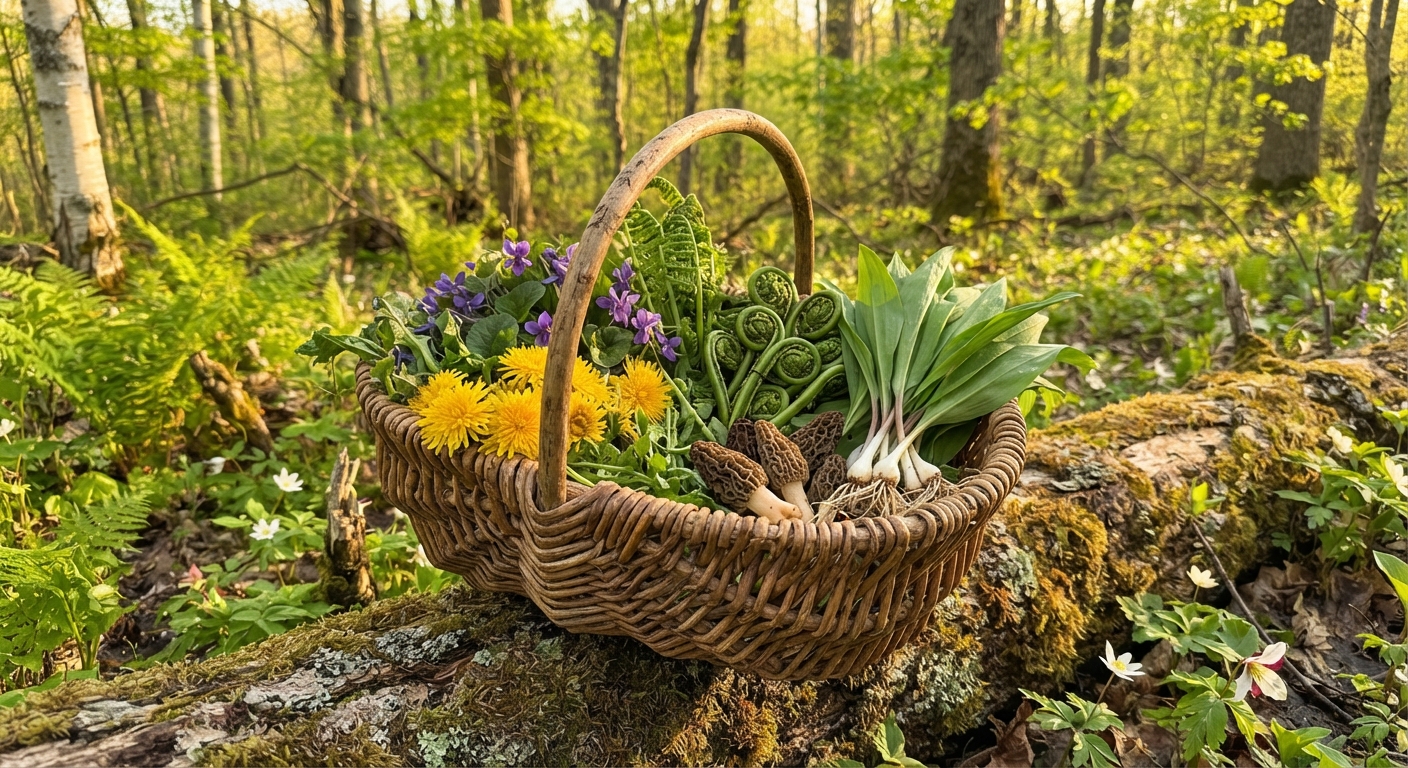
Spring foraging is one of those rare activities where the process is as rewarding as the result. There’s something deeply satisfying about walking through a forest or meadow, recognizing the plants around you by name, and knowing which ones can feed you. It connects you to the landscape in a way that few other activities do.
But I want to leave you with one thought that took me years to really internalize: the goal isn’t to fill your basket. The goal is to fill your knowledge. The first season, measure success by how many plants you can confidently identify — not by how much you bring home. Learn the botany. Learn the families. Learn which toxic plants grow in your area and what they look like at every stage of growth. The harvest will follow naturally.
Start with dandelions. Move on to chickweed and wild garlic. Work your way through the list at your own pace. Bring a friend who knows more than you do. Join a local foraging group. Take a guided walk with an expert. Every plant you learn is a tool you’ll carry for the rest of your life.
And if you’re ever unsure — truly unsure, that gut-feeling kind of unsure — put it down. The woods aren’t going anywhere. That plant will be there next week, next month, next year. There’s no deadline on learning. Take your time.
Happy foraging.