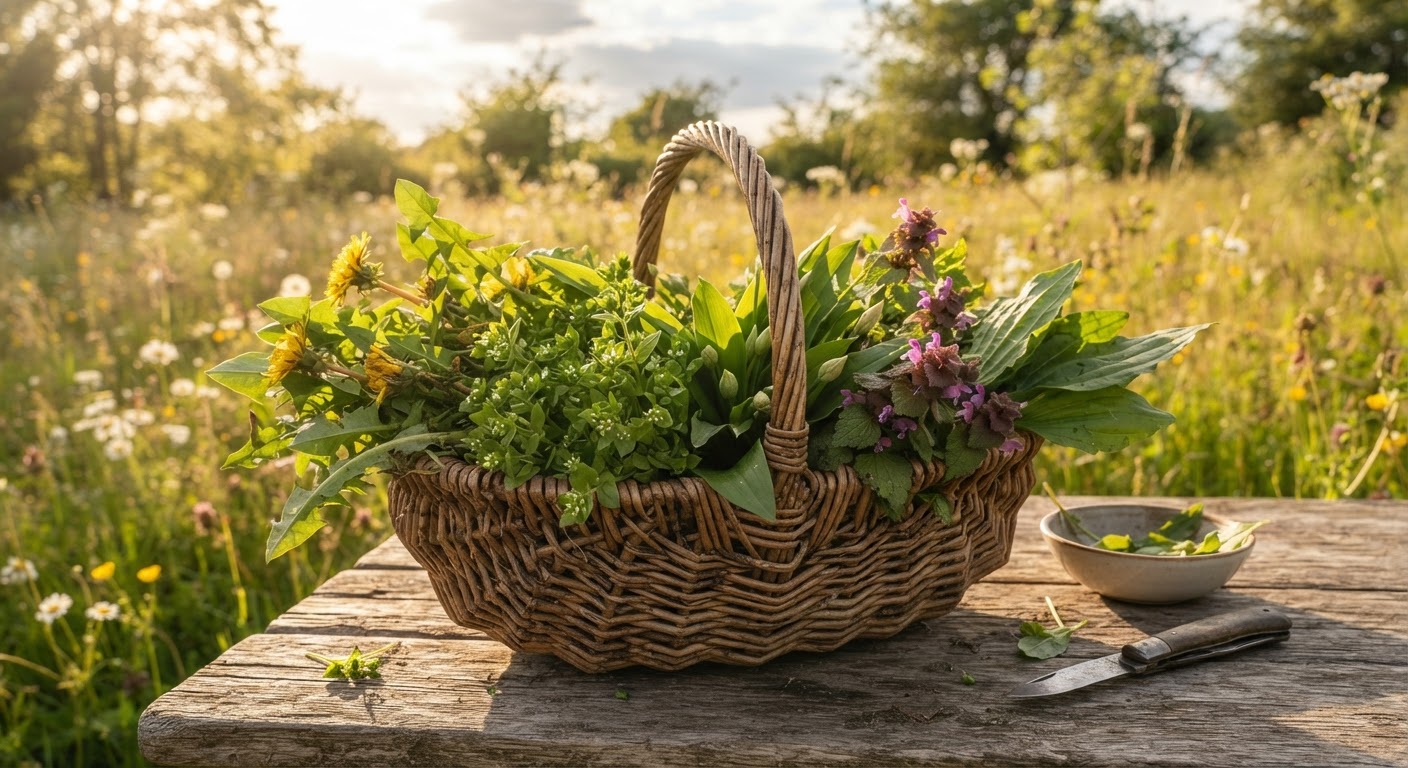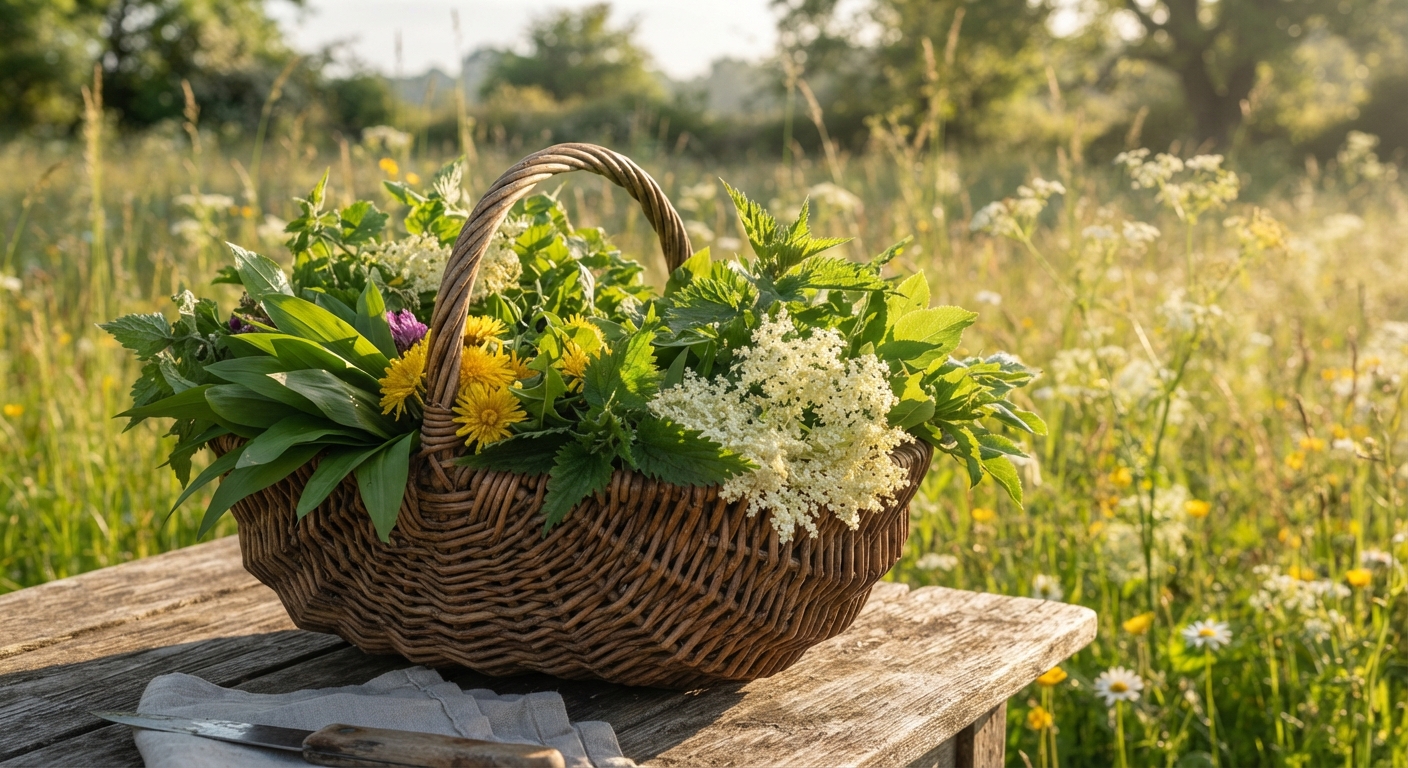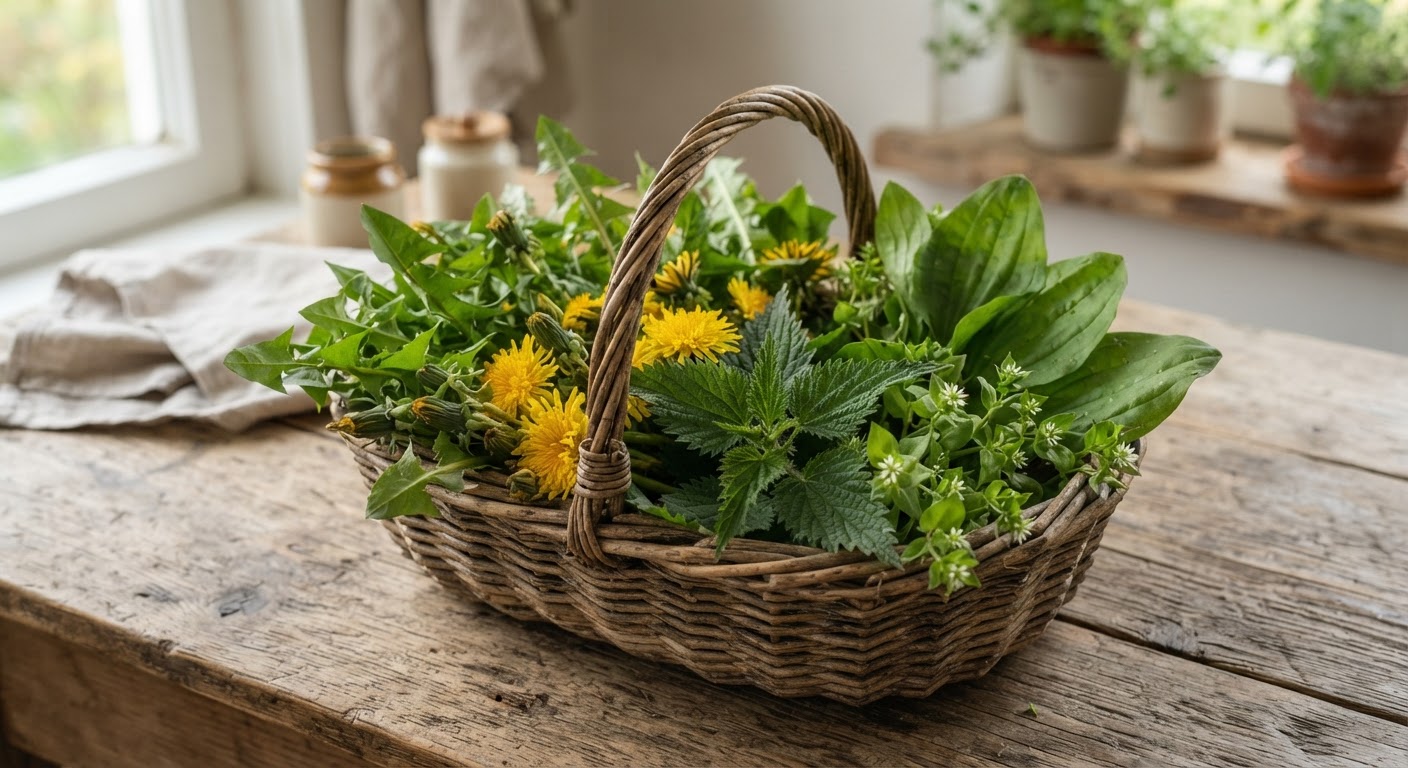
Ask a forager who has been at this for years what separates a useful plant from a novelty, and you’ll get the same answer almost every time: useful plants earn their spot twice. They show up on the plate and in the first-aid kit. That overlap — the plants that feed you and treat you — is the most practical corner of foraging, and it’s where most people should start.
Here’s why the overlap matters more than you’d think. When a plant has both a food use and a medicinal use, you get two reasons to learn it well, which means you actually do learn it well. A plant you only know as “something for tea” is easy to half-remember. A plant you’ve eaten in a salad, tasted, and cooked with is a plant you’ll never misidentify again.
This list is a shortlist, not a field guide. I’ve ranked ten dual-purpose wild plants from easiest to trickiest, so you can start at the top and stop whenever you want. Each entry covers the food side, the medicine side, and the one thing most people get wrong.
How to Read This List
The ranking is based on three things, weighted in this order:
- Identification difficulty — how easy it is to confidently name the plant in the field.
- Lookalike danger — whether a poisonous plant could be mistaken for it.
- Usefulness — how often you’ll actually reach for it in the kitchen or for a remedy.
A plant near the top is one you can learn in an afternoon and use safely by the weekend. A plant near the bottom needs more care, more study, or more prep before it’s worth the effort. That doesn’t make it bad — it just makes it next month’s plant, not today’s.
One rule overrides the whole list, so let’s put it up front: medicine is not a substitute for care. The plants below are traditional, widely documented remedies for minor, self-limiting complaints — scrapes, itchy skin, mild digestive grumbles, the common cold. They are not a treatment for anything serious. If a symptom is severe, persistent, or you’re on medication or pregnant, talk to a real medical professional before using any wild plant as medicine.
The 10 Plants, Ranked Easiest First
1. Dandelion (Taraxacum officinale)
Dandelion is the perfect starter dual-purpose plant because it’s everywhere and you already know what it looks like. The trick is learning that every part is usable.
Food side: Young leaves go in salads; they’re bitter but mellow cooked. The roots can be roasted and ground into a coffee substitute, and the flowers get battered, tossed into salads, or brewed into wine.
Medicine side: Traditionally used as a gentle liver and digestive tonic. The root is the classic “dandelion root” you see in detox teas; the leaves are mildly diuretic — hence the old nickname “piss-en-lit.”
The part most people get wrong: Older, mature leaves get aggressively bitter. Harvest them young, or blanch them, and the bitterness drops way down.
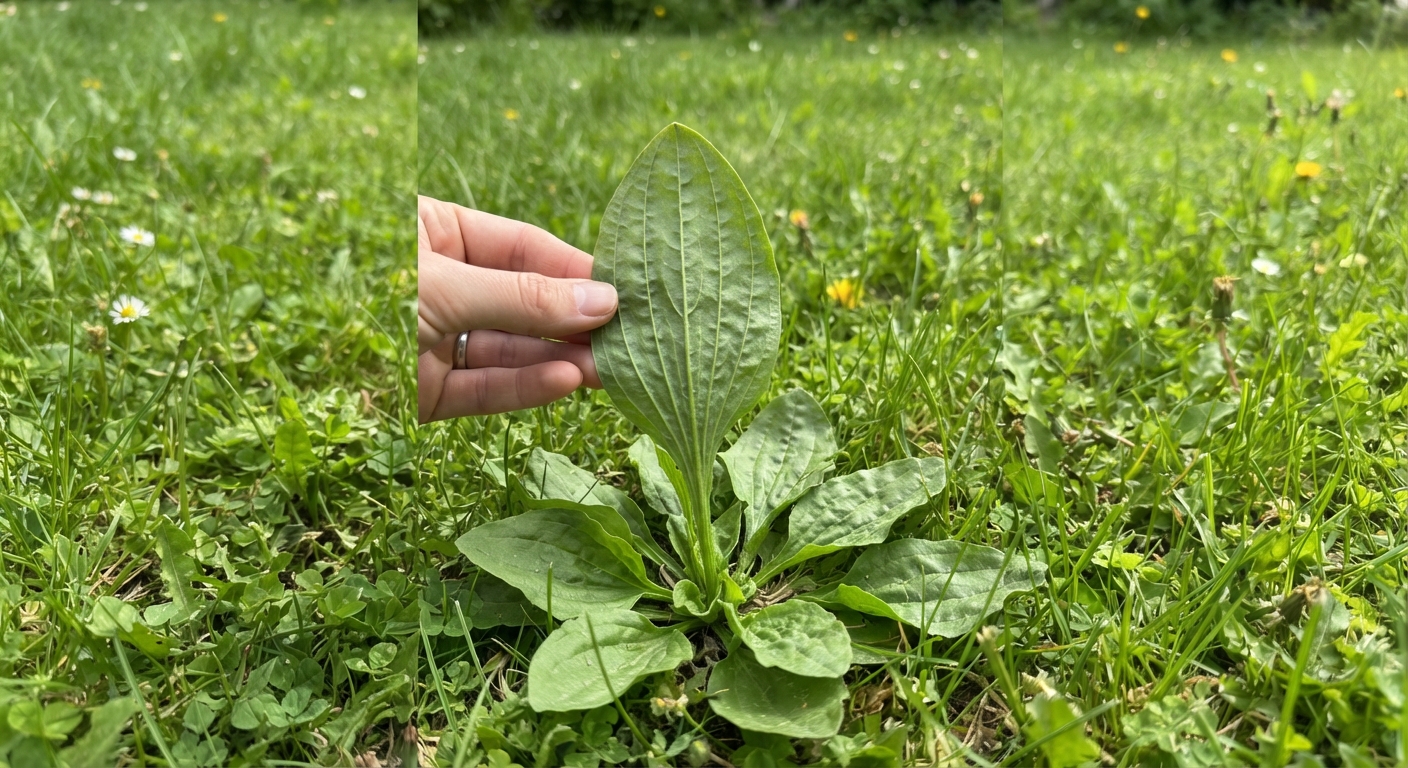
2. Broadleaf Plantain (Plantago major)
If dandelion is the plant everyone knows, plantain is the plant everyone steps on. It grows in lawns, sidewalk cracks, and driveways across most of the world.
Food side: Young leaves are edible raw in small amounts; older leaves are stringy and better cooked or added to soup. Think of it as a green that’s better as a minor ingredient than a main course.
Medicine side: This is where plantain shines. Crushed fresh leaves are the classic field remedy for insect bites, stings, and minor scrapes — a “spit poultice” (chew a leaf, slap it on) genuinely takes the sting out of a mosquito bite. It’s the base of dozens of skin salves.
The part most people get wrong: People confuse plantain with hostas or other broad-leafed yard plants. Check for the tell-tale parallel veins — plantain leaves have stringy veins running lengthwise that pull out when you tear the leaf. If it doesn’t have those, it isn’t plantain.
3. Stinging Nettle (Urtica dioica)
Nettle has a reputation as a painful plant — and it earns it — but that sting disappears completely the moment you cook or dry it. What’s left is one of the most nutritious greens and one of the most useful remedy plants in a forager’s toolkit.
Food side: Cooked nettle leaves are a mineral-dense green, excellent in soup, pesto, or as a spinach substitute. Never eat them raw; the sting is neutralized by heat.
Medicine side: Nettle is traditionally used as a general tonic for its iron and mineral content, and modern herbalists reach for it as an anti-inflammatory and for seasonal allergy support.
The part most people get wrong: The harvest. Wear gloves, pinch the top few leaves (the tenderest), and get them into a pot or a bag without touching your face. The sting is annoying, not dangerous — but it is memorable.
4. Chickweed (Stellaria media)
Chickweed is the beginner’s gentle salad green that doubles as a skin soother. It’s low-growing, soft, and almost always found in the same disturbed ground where dandelions and plantain live.
Food side: The whole above-ground plant is edible and genuinely pleasant raw — mild, slightly grassy, with a texture closer to lettuce than a weed. It’s one of the few wild greens most people enjoy on the first bite, no bitterness to overcome.
Medicine side: Traditionally used as a cooling, soothing herb for itchy or irritated skin, often infused into oils and salves. It’s the “gentle” counterpart to plantain’s more aggressive first-aid role.
The part most people get wrong: Chickweed has a few small, low-growing lookalikes. The giveaway is a single line of tiny hairs running down one side of the stem (it alternates sides between joints), plus a small white flower with petals that look split in two. If you’re not sure, skip it — there are easier plants on this list.
5. Wild Garlic & Ramps (Allium ursinum, A. tricoccum)
The entire Allium family — wild garlic, ramps, field garlic, wild onion — is a gift to foragers because of one fact: if it smells like onion or garlic, it’s edible. That smell is your built-in safety check.
Food side: Leaves, bulbs, and flowers all carry that unmistakable garlic-onion flavor. Use them like you’d use chives, garlic, or spring onion — in eggs, pesto, soups, or raw in salads.
Medicine side: Like cultivated garlic, wild alliums are traditionally valued as antimicrobial and circulatory herbs. The food is the medicine here; regular use is the point.
The part most people get wrong: This is the one time the lookalike warning is genuinely serious. There are poisonous lookalikes (lily family, including some that resemble ramps) that do not smell like onion. The rule is absolute: if it doesn’t smell like onion or garlic, do not eat it. No smell, no meal.
6. Yarrow (Achillea millefolium)
Yarrow is a step up in difficulty because it’s more of a medicine plant than a food plant — but it’s on this list because its most famous use is genuinely practical in the field.
Food side: Honest answer: yarrow is barely a food. Young leaves have been used as a bitter salad herb and in herbal beers, but nobody forages yarrow for dinner. It’s here for the medicine, with food as a footnote.
Medicine side: Yarrow’s reputation is as a wound herb — it’s a traditional styptic (helps stop minor bleeding) and is used in poultices and salves for cuts. Crushed fresh leaves applied to a small nick is the classic field use. It’s also a traditional cold-and-fever herb in tea form.
The part most people get wrong: Yarrow looks like several other white-flowered, feathery-leafed plants, most famously poison hemlock’s more distant relatives. Yarrow’s deeply divided, feathery leaves and flat-topped flower clusters are distinctive, but this is a plant to learn with a guide in hand, not from a photo.
7. Elder (Sambucus nigra, S. canadensis)
Elder makes the list because it hands you two completely different products from one shrub — berries for food, flowers for medicine — and both are genuinely worth having.
Food side: Elderberries are excellent cooked — in syrup, jam, or pie. Raw elderberries can cause stomach upset, so cook them, always.
Medicine side: Elderflower tea and elderberry syrup are among the most popular traditional cold-and-flu remedies in the world. The flowers make a delicate, soothing tea; the dark berries are packed with compounds that made elderberry syrup a household name.
The part most people get wrong: Raw berries and other parts of the plant are mildly toxic until cooked. Also, elder has a lookalike — water hemlock and pokeweed are the two to watch. Learn elder’s distinctive compound leaves and umbrella-shaped flower clusters before you touch the berries.
8. Burdock (Arctium lappa)
Burdock is the “slow food” of this list. It takes work, but it rewards that work with a substantial root vegetable and a classic cleansing herb.
Food side: The long taproot is the prize — peeled and cooked, it’s a staple of Japanese cooking (gobo) with a sweet, earthy flavor. Young leaf stalks can be peeled and cooked too. The roots are best harvested in fall from first-year plants.
Medicine side: Burdock root is one of the traditional “blood purifiers” and liver-support herbs, long used for skin conditions and as a general detoxifying tonic.
The part most people get wrong: Harvesting it. Burdock roots run deep and are stubborn to dig; second-year plants send up a flower stalk and the root turns woody and inedible. Learn to spot first-year rosettes and bring a serious digging tool.
9. Pine (Pinus spp.)
Pine sneaks onto this list as a survival-leaning, year-round option. It’s not glamorous, but it’s available when almost nothing else is.
Food side: The inner bark is an emergency food, and young needles steeped in hot water make a vitamin-C-rich tea. That needle tea is the real everyday use — bright, resinous, and genuinely high in vitamin C.
Medicine side: Pine needle tea is the traditional cold-season remedy, valued for vitamin C and its expectorant, chest-clearing effect. Pine resin has also been used as an antiseptic wound dressing.
The part most people get wrong: Not all evergreens are pine, and some conifers (yew, most famously) are deadly. Learn to identify true pines by their needles in bundles of two to five. Yew has flat, single needles and bright red berries — leave it completely alone.
10. Calendula (Calendula officinalis)
Calendula closes the list because, while it’s easy to grow and identify, its edible use is more of a garnish and its medicine use usually requires making an oil or salve — a two-step process that puts it at the “next month” end of the ranking.
Food side: The petals are edible and were once known as “poor man’s saffron” for the golden color they add to rice and soups. They’re a pretty, mildly peppery salad garnish.
Medicine side: Calendula is the classic skin-healing herb, used in salves and creams for cuts, scrapes, and irritated skin. It’s gentle enough to be a favorite for homemade first-aid balms.
The part most people get wrong: Confusing ornamental marigolds (Tagetes) with calendula. They’re different plants. True calendula has broader, resinous, slightly sticky leaves and daisy-like flowers; garden marigolds have a sharper, pungent scent and finely divided leaves.
Quick Comparison Table
| Plant | Edible part | Traditional medicinal use | ID difficulty | Key warning |
|---|---|---|---|---|
| Dandelion | Leaves, root, flower | Liver/digestive tonic, mild diuretic | Very easy | Older leaves are very bitter |
| Broadleaf plantain | Young leaves | Wound & bite poultice, skin salve | Very easy | Check parallel leaf veins |
| Stinging nettle | Cooked leaves | Mineral tonic, anti-inflammatory, allergy support | Easy | Never eat raw; wear gloves |
| Chickweed | Whole plant raw | Soothing herb for itchy skin | Moderate | Small low lookalikes |
| Wild garlic / ramps | Leaves, bulb, flower | Antimicrobial, circulatory | Easy if it smells | Poisonous no-smell lookalikes |
| Yarrow | Young leaves (minor) | Wound styptic, cold & fever herb | Moderate | Learn with a guide |
| Elder | Cooked berries | Elderflower/berry cold & flu remedy | Moderate | Raw parts mildly toxic |
| Burdock | First-year root | Liver/skin “blood purifier” | Moderate | Digging is hard; 2nd-year root is woody |
| Pine | Inner bark, needle tea | Vitamin C tea, expectorant, antiseptic resin | Moderate | Avoid yew; know true pine |
| Calendula | Petals | Skin-healing salve | Easy | Not ornamental marigold |
Summary Tips (Read These Twice)
- Start with the top three. Dandelion, plantain, and nettle are the highest-value, lowest-risk plants on this list. Learn those before you touch anything else.
- The smell test is only for alliums. Onion/garlic smell is a reliable green light only for the onion family. It is not a universal rule.
- Cook it when in doubt. Many of these plants (nettle, elderberry, older dandelion) go from harsh or mildly toxic to perfectly fine with heat.
- Medicine and food have different rules. A plant can be great to eat but risky as a remedy if you’re pregnant, on medication, or dealing with a real illness. Food is casual; medicine is not.
- Never eat a plant you can’t name. This list is a starting point, not permission. If there’s any doubt, leave it in the ground and check a regional field guide.
FAQ
Are wild medicinal plants safe to eat? Some are, some aren’t — it depends entirely on the plant, the part, and the prep. The ten on this list are safe when used as described: right part, right season, right preparation (cooking nettles and elderberries, avoiding raw yarrow as a main food). The rule that saves you is identification first, always.
Which wild plant is best for both food and medicine? Dandelion, by a wide margin. It’s nearly impossible to misidentify, every part is usable, and it’s genuinely useful both in the kitchen and as a gentle digestive/liver tonic. For a single “learn this first” plant, nothing else comes close.
Can I use these plants instead of going to a doctor? No. These are traditional remedies for minor, self-limiting complaints — scrapes, bug bites, itchy skin, a mild cold. Anything severe, persistent, or concerning belongs with a medical professional. Wild plants are a complement to care, never a replacement for it.
How do I learn to identify these plants safely? Pick one plant, study it from at least two independent sources (a regional field guide plus a reputable online reference), and confirm it in person against three features — not one. Only add the next plant once the first one feels boring to spot.