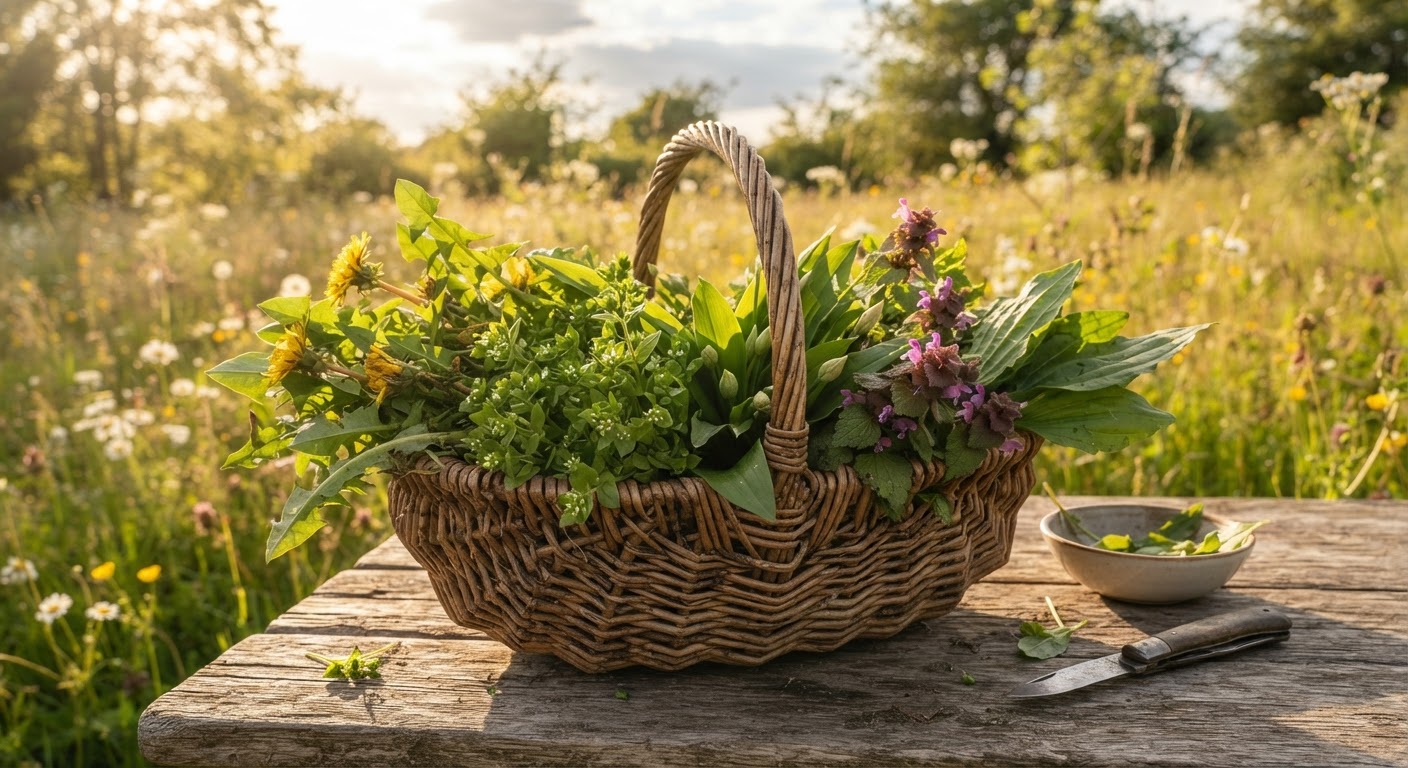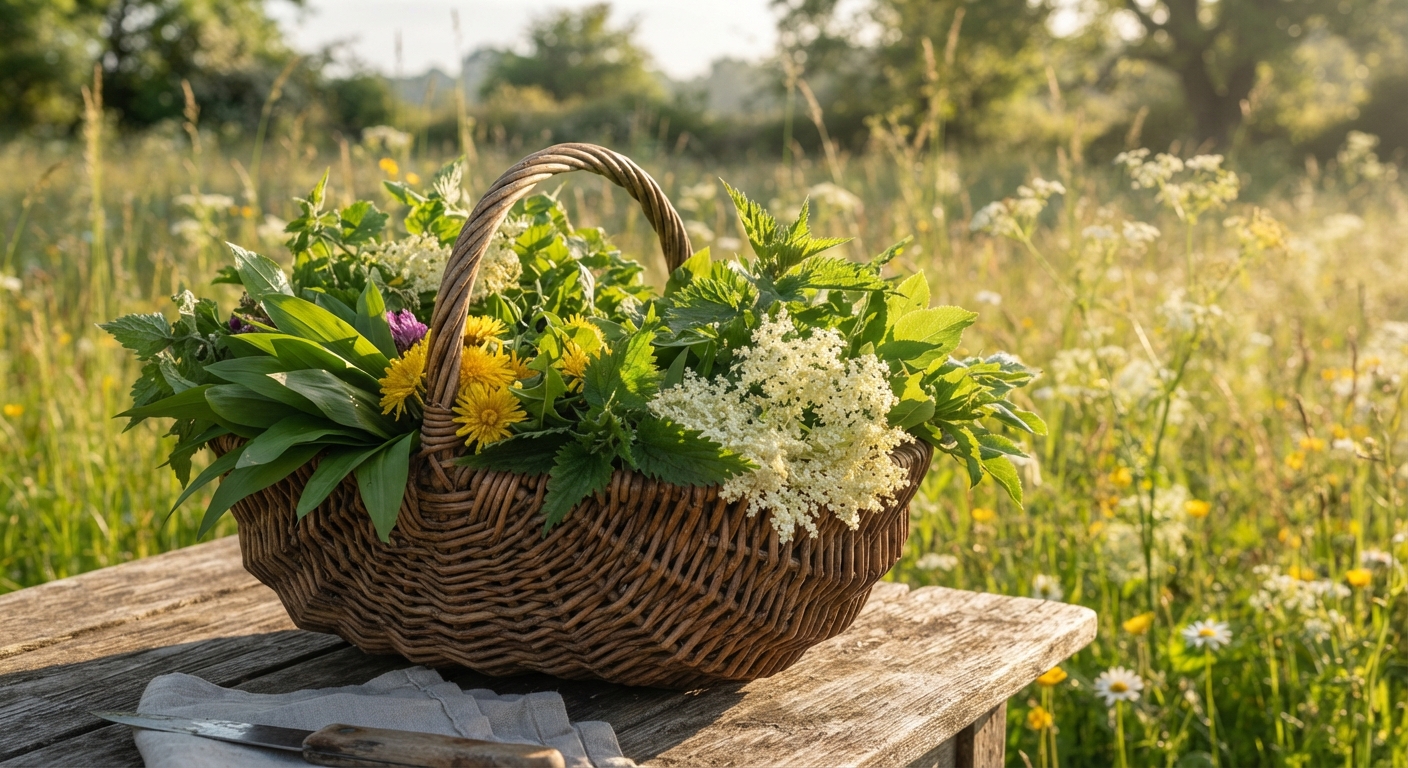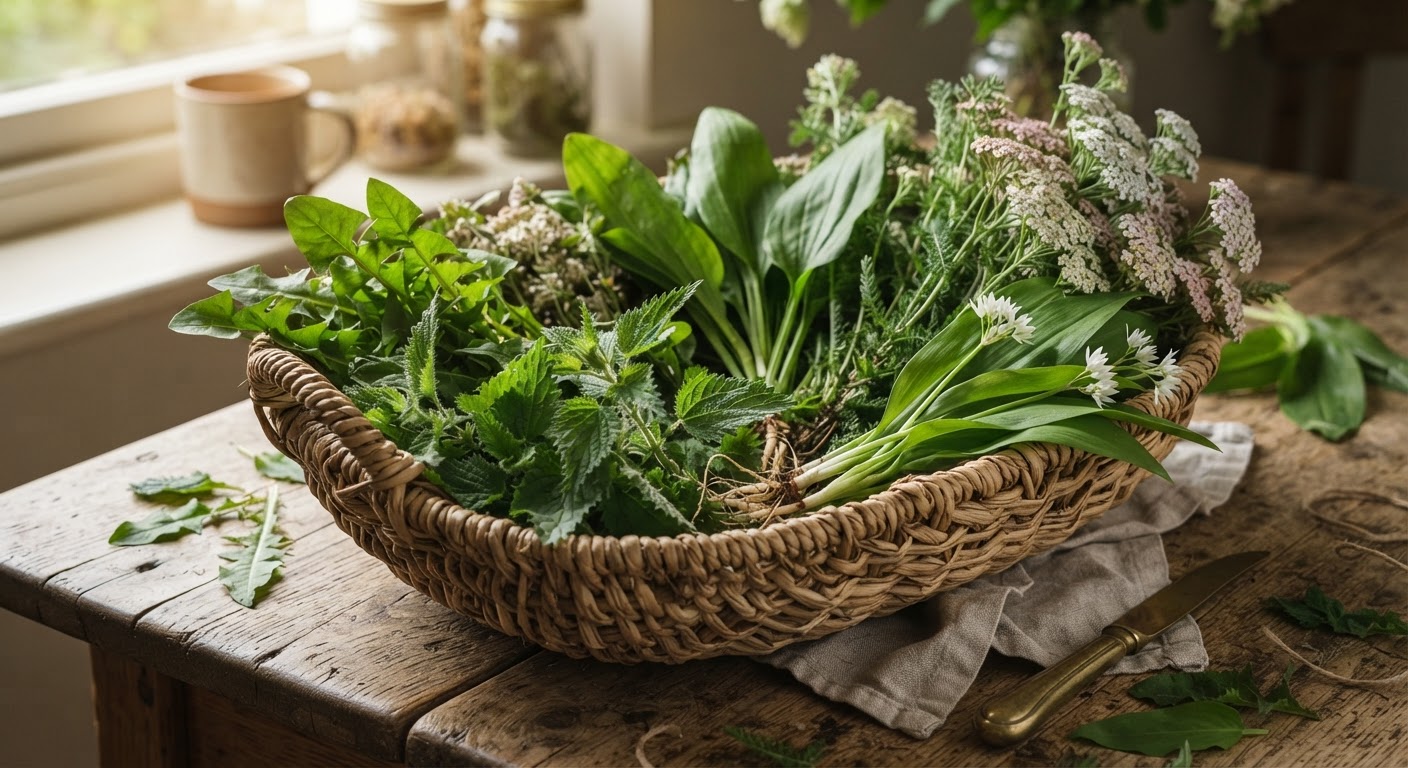
Most foraging guides make you choose: are you picking food or picking medicine? The plants don’t care about that split, and neither should you. Some of the most common wild plants growing in yards, hedgerows, and forest edges earn their keep on both sides of the fence — you can cook them into a meal and reach for them when your stomach aches or a bug bite itches.
This guide keeps it simple. Ten plants, each with the edible part, the medicinal use, and a one-line caution so you don’t grab the wrong lookalike. If you only memorize half of these, you’ll still have a working wild pharmacy and a full salad bowl within a few steps of your back door.
Here’s the short version first, then the details.
The Quick Reference Table
| Plant | Eat It As | Use It For (Medicine) | Caution |
|---|---|---|---|
| Dandelion | Leaves, flowers, roots | Digestion, mild diuretic | Bitter; pick young leaves |
| Stinging Nettle | Cooked greens, tea | Allergies, joint aches | Stings raw — cook or dry first |
| Plantain | Young leaves, seeds | Bug bites, minor wounds | Bland; use a poultice |
| Chickweed | Salad green, pesto | Itchy skin, rashes | Don’t confuse with spurge |
| Yarrow | Small amounts in tea | Stops minor bleeding | Avoid in pregnancy |
| Wild Garlic | Leaves, bulbs, flowers | Cold support, antimicrobial | Confirm the garlic smell |
| Elderberry | Cooked berries, flowers | Immune support syrup | Raw berries are toxic |
| Burdock | Root, young stalks | Skin, mild detox tonic | Root must be cooked |
| Wild Mint | Leaves, tea | Nausea, digestion | Easy to overharvest |
| Mullein | Leaf tea, flowers | Cough, chest congestion | Strain the fine hairs |
1. Dandelion — the Backyard Bitter That Does Everything
Dandelion is the plant you’ve been weeding out of your lawn while paying for it in tea bags. Every part of it is usable, which is rare enough to make it worth learning first.
Eat it: Young leaves go into salads, but they turn bitter as the season goes on — blanch older ones in boiling water for 30 seconds to tame that. The flowers can be battered and fried, and the roasted root makes a decent coffee substitute.
Use it medicinally: Dandelion root and leaf tea is a traditional digestive bitter, taken before meals to get stomach juices flowing. The leaf is also a gentle diuretic — the French folk name pissenlit basically means “wet the bed,” which tells you exactly how it works.
The caution: The bitterness you taste is part of the point. Start with young leaves and work up. If you have gallbladder issues, check with a doctor before going hard on bitters.
2. Stinging Nettle — Hurts to Touch, Heals to Drink
Nettle is the classic “why would anyone forage that” plant — until you realize the sting vanishes with heat and the payoff is enormous.
Eat it: Nettle cooks down like spinach. Blanch or sauté it and the stinging hairs collapse completely. It makes one of the best wild soups, pestos, and green smoothies you’ll ever have. The young spring tips are the prize; by mid-summer the plant gets tough and gritty.
Use it medicinally: Nettle leaf tea is a go-to for seasonal allergies and general inflammation. Some people also use a fresh nettle “sting” directly on sore joints — an old remedy called urtication — but that’s a personal-tolerance call, not a starting point.
The caution: Harvest the top four to six leaves while wearing gloves. Once cooked or dried, it’s completely safe. Don’t confuse it with dead nettle (harmless, different plant) or, worse, with stinging lookalikes if you’re unsure of the leaf shape — nettle’s serrated, opposite leaves and square stem are the ID anchors.
3. Plantain — the Weed You Should Keep in Your Pocket
Not the banana. This plantain is the flat-leafed weed that grows in every crack in the sidewalk, and it’s one of the most useful first-aid plants in temperate regions.
Eat it: Young plantain leaves are edible — mild and slightly nutty — and work in salads or cooked like greens. The seeds can be harvested too, but the leaves are the main event.
Use it medicinally: Chew a clean leaf into a mash (or crush it between your fingers) and press it onto a bug bite, minor scrape, or sting. It’s a classic field poultice that genuinely soothes itching. This is the plant you want to remember on a hike when mosquitoes have been at you.
The caution: Plantain is safe and hard to misidentify — the parallel veins running the length of the leaf are the giveaway. Just wash it if you’re picking from a sidewalk, where it may have met a dog.
4. Chickweed — the Gentle Green for Salad and Skin
Chickweed is a cool-weather ground cover that shows up in early spring, long before most garden greens are ready.
Eat it: The tender stems and small leaves are sweet and mild — one of the best raw wild salad greens there is. It also blends into pesto surprisingly well. Snip the top few inches and leave the roots.
Use it medicinally: Chickweed has a long folk history as a skin soother, applied as a crushed poultice or infused into oil for itchy, dry, or irritated skin. It’s the “cooling” plant in older herbals.
The caution: Chickweed has a toxic lookalike called spurge. The ID test is easy: chickweed has a single line of fine hairs running up one side of the stem, and it does not ooze milky white sap when broken. Spurge leaks white latex — that’s your “don’t eat this” signal.
5. Yarrow — the Wound Herb You Want to Respect
Yarrow looks feathery and delicate, but its history as a wound herb is blunt and practical.
Eat it: This is the “small amounts” plant on the list. A few young yarrow leaves can add a bitter, aromatic note to a wild tea, but it’s not a salad green.
Use it medicinally: Crushed yarrow leaves have astringent and clotting properties, which is why the plant earned the name “soldier’s woundwort” — field medics used it to slow minor bleeding. It’s best treated as a stopgap for small cuts, not a replacement for a proper bandage.
The caution: Skip yarrow if you’re pregnant, and don’t take it in large or regular doses. It’s potent, and “a little goes a long way” is the operating rule.
6. Wild Garlic — the Smell Is the Safety Net
Wild garlic (also called ramsons in some regions) carpets woodland floors in spring, and the whole plant smells unmistakably of garlic.
Eat it: Leaves, flowers, and bulbs are all edible. The leaves are the most versatile — chop them like chives, blend them into butter, or wilt them into eggs. The flowers make a pretty, peppery garnish.
Use it medicinally: Like cultivated garlic, wild garlic is packed with sulfur compounds that people reach for at the first sign of a cold. It’s food-first medicine: eating it regularly is the benefit.
The caution: The ID rule is absolute — if it doesn’t smell like garlic, it isn’t wild garlic. Lily-of-the-valley and other toxic lookalikes share the broad leaves but none of the smell. Crush a leaf and trust your nose, not the leaf shape.
7. Elderberry — Cooked Berries, Not Raw Ones
Elder is a shrub that gives you two crops: frothy white flower heads in early summer and dark purple berries in late summer.
Eat it: The flowers can be turned into cordial or fritters. The berries must be cooked — raw elderberries can cause nausea. Once simmered into syrup, they’re delicious and shelf-stable.
Use it medicinally: Elderberry syrup is the classic immune-support remedy, taken by the spoonful at the first sniffle. The flowers make a gentler tea, often paired with yarrow and mint in traditional cold-season blends.
The caution: Only the flowers and ripe, cooked berries are safe. Stems, leaves, and unripe or raw berries contain compounds that can upset the stomach. If you’re new to it, start with the flowers — they’re the lower-risk introduction.
8. Burdock — the Root That Needs a Little Work
Burdock is the plant with the giant leaves and the velcro-like burrs, and its taproot is the real prize.
Eat it: Burdock root (often called gobo) is a staple in Japanese cooking — earthy, slightly sweet, and excellent sliced and stir-fried or simmered in soup. Young stalks can be peeled and cooked too.
Use it medicinally: Burdock root is a traditional “blood purifier” and skin tonic, usually taken as a decoction (a long-simmered root tea). It’s often paired with dandelion in classic cleansing blends.
The caution: The root runs deep and is genuinely a workout to dig — bring a shovel, not a trowel. Always cook burdock root; it’s tough and unpalatable raw.
9. Wild Mint — the Upset-Stomach Standby
Wild mint grows in damp spots and announces itself the moment you brush against it.
Eat it: The leaves do everything cultivated mint does — teas, salads, a handful torn into a pitcher of water. It’s more intense than garden mint, so use a lighter hand.
Use it medicinally: Mint tea is the classic for nausea, indigestion, and bloating. The volatile oils relax the digestive tract, which is why it’s the after-dinner tea in half the world’s households.
The caution: Mint hybridizes freely and spreads aggressively, so exact species ID can be a headache — but the square stem and the unmistakable mint smell are enough for safe use. Just be sure of the smell before you brew.
10. Mullein — the Tall One for the Lungs
Mullein is hard to miss: a tall spike of yellow flowers with soft, fuzzy leaves that feel like flannel.
Eat it: Mullein isn’t really a food plant, though the flowers have been used in small amounts. It earns its spot here for the leaf tea.
Use it medicinally: Mullein leaf tea is the traditional respiratory remedy — used for coughs, chest congestion, and dry, irritated throats. It’s mild, soothing, and one of the gentler herbs on this list.
The caution: The fine hairs on the leaves can irritate the throat, so always strain mullein tea through a fine cloth or coffee filter. This is the one plant on the list where the prep step is non-negotiable.
Food vs. Medicine: How the Same Plant Switches Roles
One thing worth understanding before you run outside: the edible and medicinal uses of a plant aren’t always the same part, or the same preparation. That’s where beginners get confused.
| Plant | Food Part | Medicine Part | Prep Difference |
|---|---|---|---|
| Dandelion | Young leaves, flowers | Root (digestion) | Roast root for tea |
| Nettle | Young tips | Leaf (tea) | Cook for food, dry for tea |
| Elder | Flowers, cooked berries | Ripe berries (syrup) | Never raw |
| Burdock | Root, young stalks | Root (decoction) | Long simmer |
| Mullein | (minimal) | Leaf (tea) | Must strain |
The pattern: food uses lean toward the tender, fresh parts, while medicinal uses lean toward roots, dried leaves, and longer preparations. A dandelion leaf in your salad is food; a dandelion root simmered for 20 minutes is medicine. Same plant, different job.
Summary: What to Actually Do With This
You don’t need to memorize all ten today. Here’s the practical order of operations:
- Learn one plant a week. Start with dandelion — it’s everywhere, safe, and every part teaches you something.
- Master the ID before the use. Nose for wild garlic, milky sap for chickweed’s lookalike, parallel veins for plantain. The safety rule always beats the recipe.
- Use the food side first. Cooking a plant teaches you its taste and seasonality before you worry about its medicinal half.
- Keep a small field kit habit. Once you know plantain, you’ll never walk past it again — and a bug bite on a hike is exactly when that knowledge pays off.
- Respect the cautions. Pregnancy, pre-existing conditions, and medication interactions change the math. When in doubt, the plant goes in the salad bowl, not the medicine cabinet.
The goal isn’t to replace your medicine cabinet. It’s to build a working knowledge of the plants around you so that when you do need them, you reach for the right one with confidence — not guesswork.
FAQ
Are these plants safe for beginners to forage?
The food uses of dandelion, chickweed, wild garlic, and wild mint are beginner-friendly if you nail the identification first. Plants with stronger cautions — yarrow, elderberry, mullein — are better learned after you’ve built some ID confidence.
Can I use wild plants as a replacement for prescription medicine?
No. These plants are support, not substitutes. Never stop a prescribed medication in favor of a wild herb without talking to a doctor, and treat medicinal uses as complementary, not primary.
How do I know I’ve identified a plant correctly?
Use at least three ID markers — leaf shape, stem, smell, flower, growth habit, habitat — not just one. When a plant has a toxic lookalike (chickweed/spurge, wild garlic/lily-of-the-valley), the specific test (milky sap, garlic smell) is the deciding factor.
When is the best time to harvest these plants?
Spring is the season for tender greens like nettle, chickweed, and wild garlic. Roots like dandelion and burdock are best in fall, after the plant has stored energy. Berries and flowers come in their own season. Match the plant to the calendar, not the other way around.