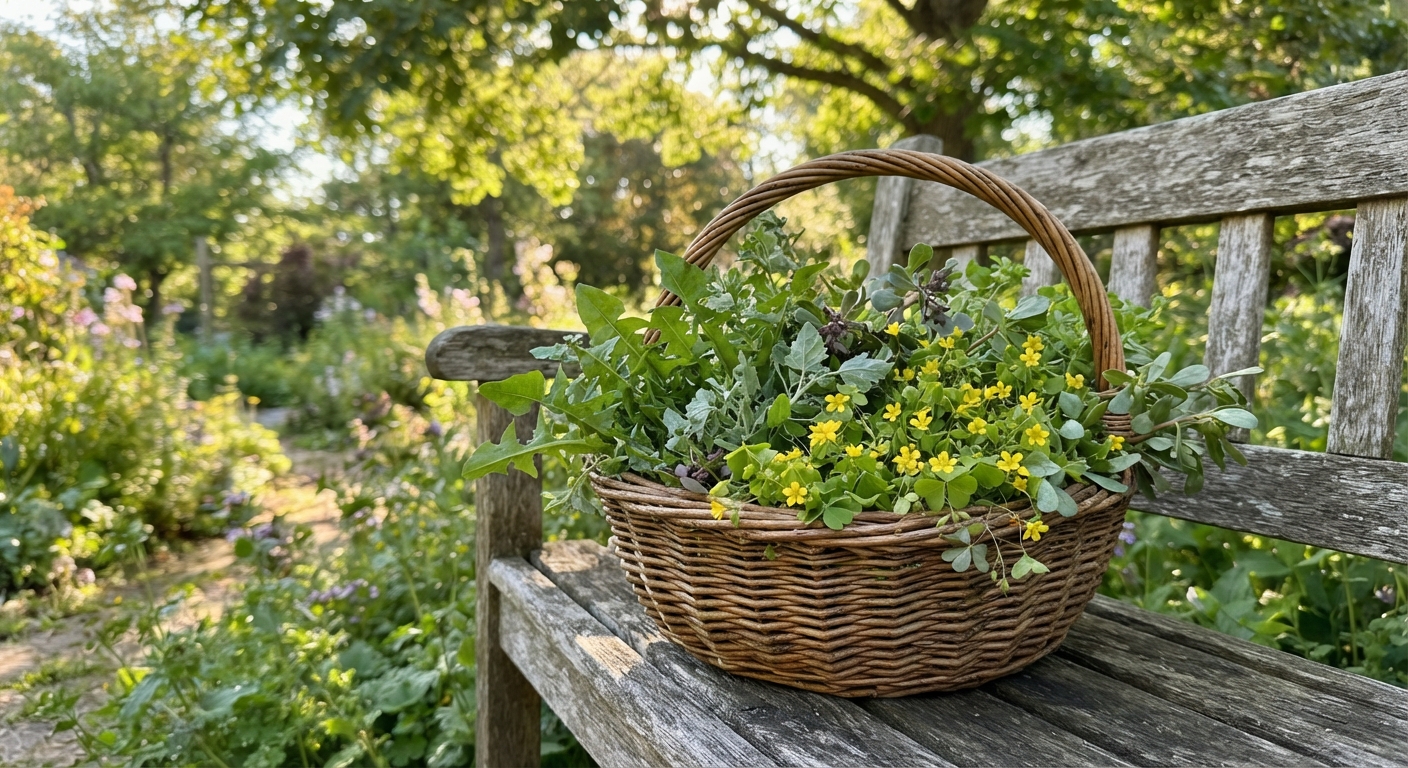
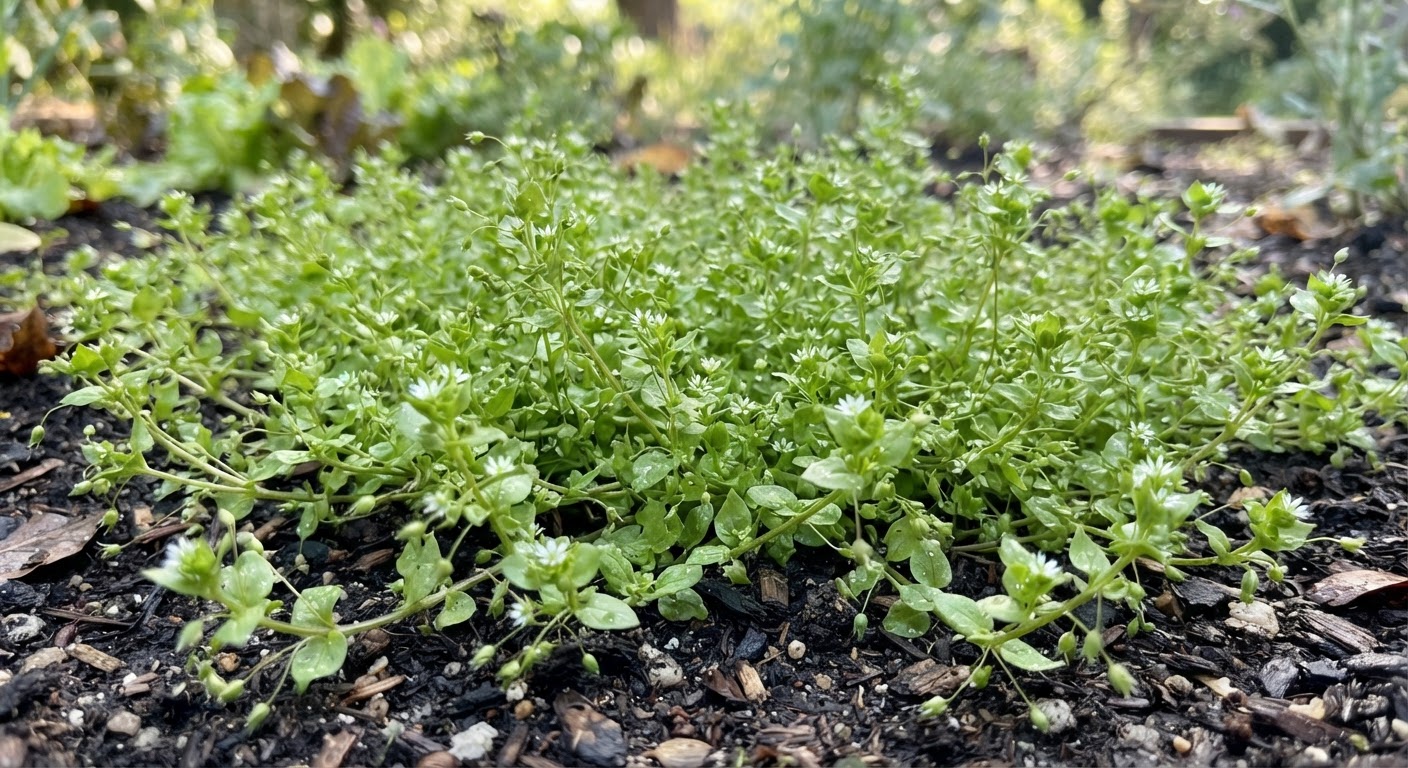
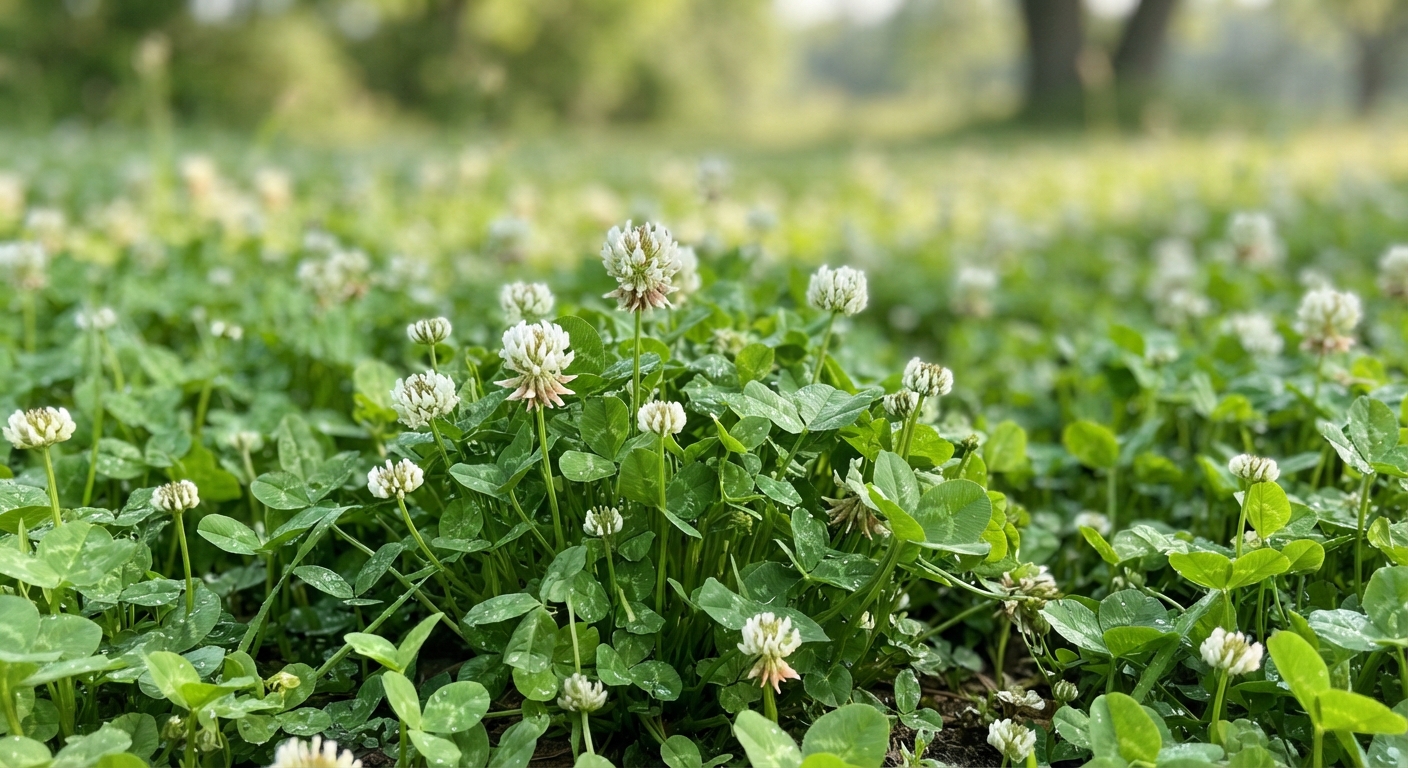
Most people spend their weekends trying to murder dandelions. They spray them, dig them out, curse at them. Meanwhile, they’re destroying one of the most nutritious, versatile, and completely free foods growing on the planet.
I’m not exaggerating. The common dandelion (Taraxacum officinale) is edible from root to flower — every single part of this plant can be eaten, and each part has its own distinct culinary personality. It’s not just “edible” in the survival-food sense either. Dandelion greens show up on Michelin-starred menus. Dandelion root coffee has a devoted following in health-food circles. Dandelion wine is an old Appalachian tradition that’s making a quiet comeback.
But here’s the problem: most foraging guides lump the whole plant into one vague section. “Dandelions are edible.” End of story. That’s like writing “chicken is edible” and calling it a cookbook. Nobody tells you which parts to pick, when to pick them, how they taste different depending on the season, or what you’re supposed to actually do with a dandelion root once you’ve dug it out of the ground.
This guide fixes that. Every edible part, covered in detail. No fluff, no AI-generated filler — just practical information from someone who’s eaten a lot of dandelions and made a lot of mistakes so you don’t have to.
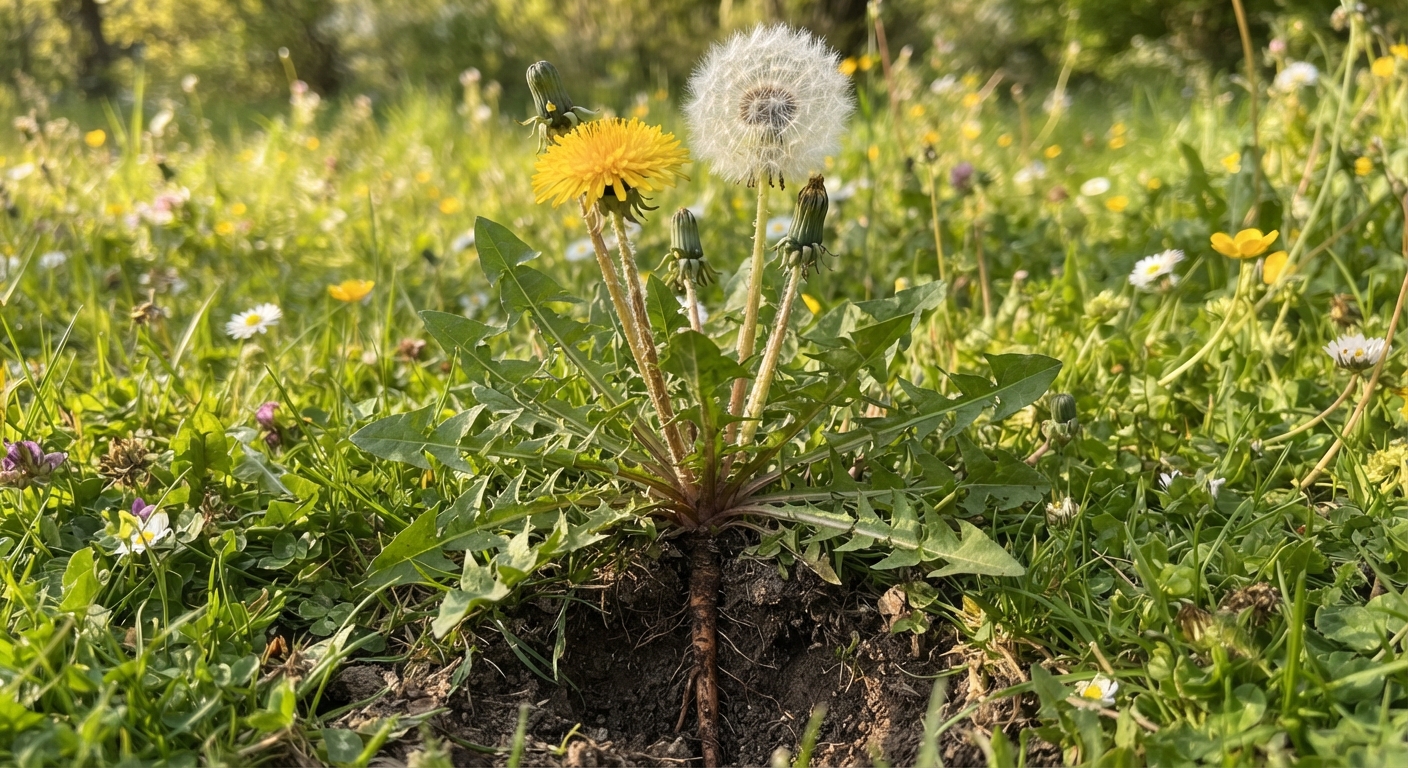
The Four Edible Parts of a Dandelion
Let’s get the basics straight first. A dandelion plant has four main edible components:
| Part | Best Season | Flavor Profile | Primary Uses |
|---|---|---|---|
| Leaves | Early spring (pre-flower) | Bitter, peppery, arugula-like | Salads, sautés, pesto, smoothies |
| Flowers | Spring through early summer | Sweet, mildly floral | Fritters, wine, syrup, tea, garnish |
| Roots | Late fall or early spring | Earthy, nutty, coffee-like when roasted | Tea, coffee substitute, tinctures |
| Crown/Stems | Spring | Mild, slightly sweet | Stir-fries, soups, pickles |
The fifth part — the seed head — isn’t really eaten, but the seeds themselves can be used. We’ll cover that too.
What surprises most beginners is that each part tastes completely different. A dandelion leaf in April is buttery and mild. That same leaf in July will be so bitter it’ll make your eyes water. Timing is everything.
Dandelion Leaves: The Most Accessible Edible Part
When and Where to Harvest
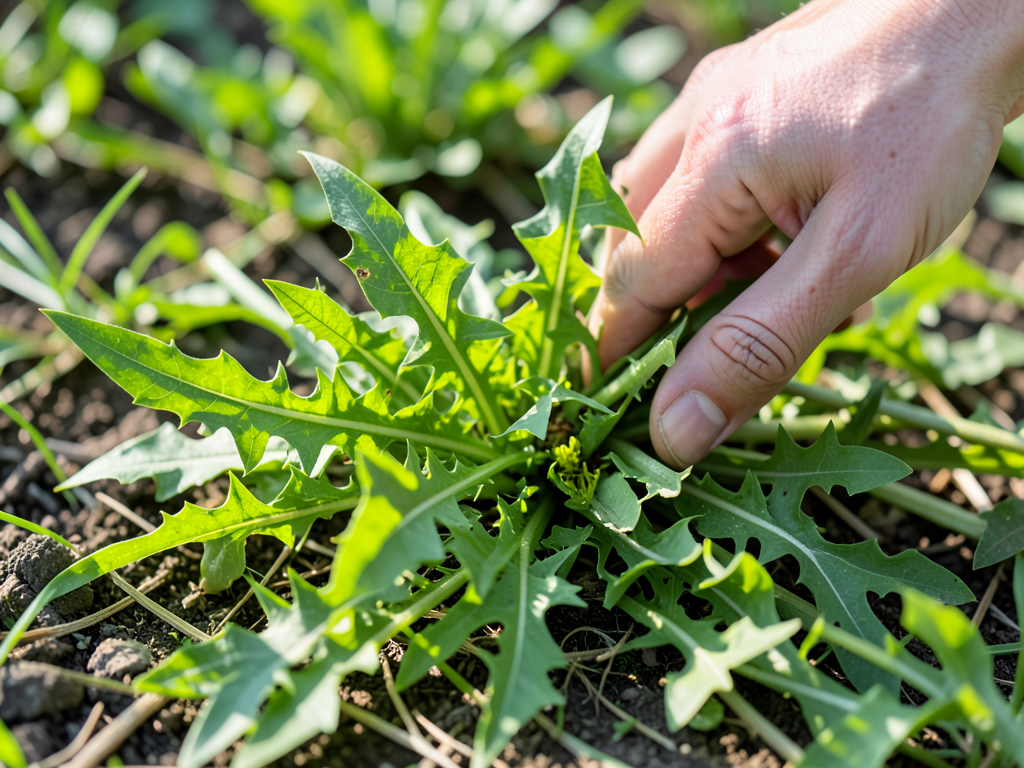
Dandelion leaves are best harvested in early spring, before the plant sends up its flower stalk. Once the yellow bloom appears, the leaves turn noticeably more bitter — nature’s way of telling herbivores to back off and let the plant reproduce.
Look for young plants with leaves still lying flat in a basal rosette. These pre-flower leaves are the culinary gold standard: tender, only mildly bitter, and packed with nutrients.
Where NOT to harvest:
- Lawns treated with herbicides or pesticides
- Roadside areas (heavy metal accumulation in soil)
- Dog parks and heavily-trafficked public spaces
- Anywhere downhill from agricultural runoff
The safest bet? Your own unsprayed yard, a trusted organic farm, or deep into a wild meadow far from roads and agriculture. Dandelions are bioaccumulators — they pull minerals (and unfortunately, toxins) from the soil. This is great for nutrition, bad if your soil isn’t clean.
Nutritional Profile
Dandelion greens are genuinely one of the most nutrient-dense foods you can eat. Here’s what you’re getting per 100g of raw leaves:
| Nutrient | Amount | % Daily Value |
|---|---|---|
| Vitamin A | 10,161 IU | 203% |
| Vitamin K | 778.4 µg | 648% |
| Vitamin C | 35 mg | 39% |
| Calcium | 187 mg | 14% |
| Iron | 3.1 mg | 17% |
| Potassium | 397 mg | 8% |
They also contain significant amounts of vitamin E, B vitamins, magnesium, and manganese. The calcium-to-phosphorus ratio is particularly favorable for absorption — something many leafy greens get wrong.
How to Use Dandelion Greens
Raw in salads: Young spring leaves work beautifully raw. Pair them with something fatty and acidic to balance the bitterness — think bacon, goat cheese, walnuts, lemon vinaigrette. A classic French salade de pissenlit does exactly this.
Sautéed with garlic: The Italian approach. Blanch the leaves for 30 seconds in boiling water (this tames bitterness dramatically), then sauté in olive oil with plenty of garlic and a squeeze of lemon. This transforms even older, more bitter leaves into something genuinely delicious.
In pesto: Swap basil for dandelion greens. Add walnuts or pine nuts, garlic, Parmesan, olive oil, and lemon juice. The bitterness mellows into something complex and savory.
In smoothies: A handful of raw young leaves disappears into a fruit smoothie. You won’t taste them, but you’ll get the nutrient boost.
One mistake beginners make: assuming all dandelion greens taste the same. They don’t. A leaf from a young plant in rich, moist soil in April will taste dramatically different from a leaf from a stressed, flowering plant in dry July soil. If your first experience is bitter, try again — earlier in the season, younger plant, richer soil.
Dandelion Flowers: The Sweet Side of the Plant
Harvesting and Selection
Dandelion flowers are at their prime when the yellow petals are fully open and vibrant — typically mid-morning on a sunny day. The flowers close at night and during rain, so timing your harvest matters.
Pick only the flower heads. Try to avoid the bitter, milky sap from the stem — it’s not harmful, but it adds an unpleasant bitterness. Some foragers snip the flowers off with scissors directly into a basket to minimize sap contact.
The green sepals (the base of the flower) are edible but slightly bitter. For the sweetest results — especially for wine or syrup — many foragers pluck just the yellow petals.
Culinary Uses
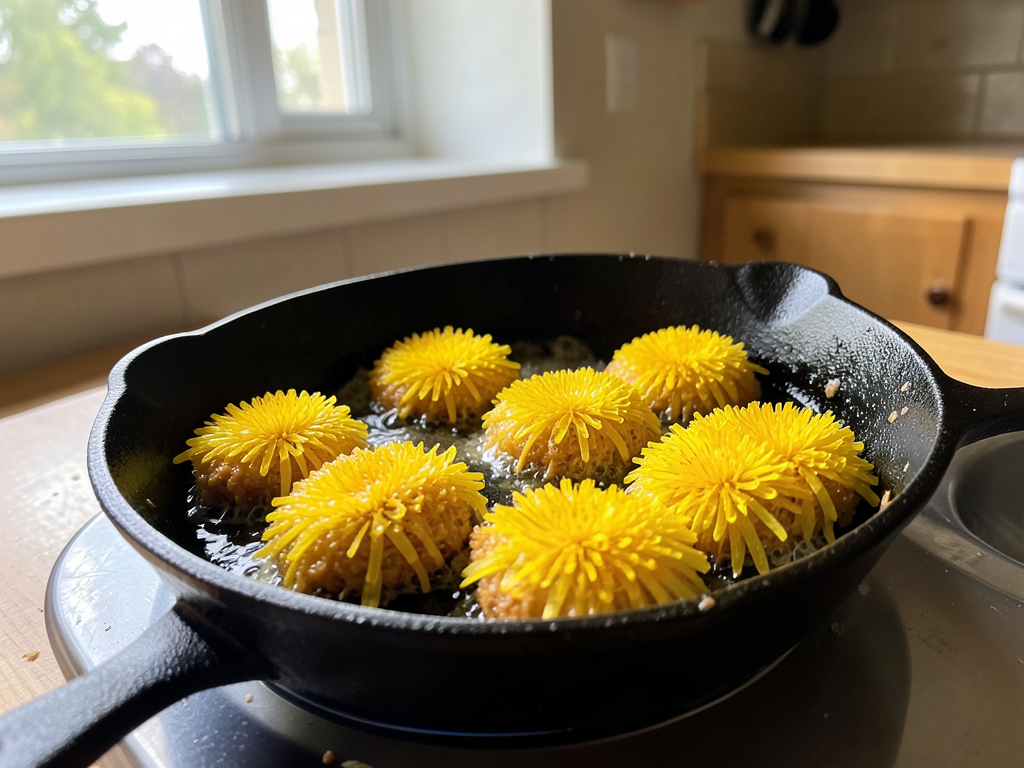
Dandelion fritters are the gateway recipe. Dip whole flower heads in a simple batter — flour, egg, milk, salt — and pan-fry until golden. They come out looking like little golden-brown medallions and taste somewhere between a savory pancake and a mushroom. Kids who won’t touch “weeds” will devour these.
Dandelion wine is a traditional Appalachian and British country recipe. It takes patience — flowers, sugar, citrus, yeast, and about six months of fermentation — but the result is a golden, honey-like wine that tastes nothing like the plant it came from.
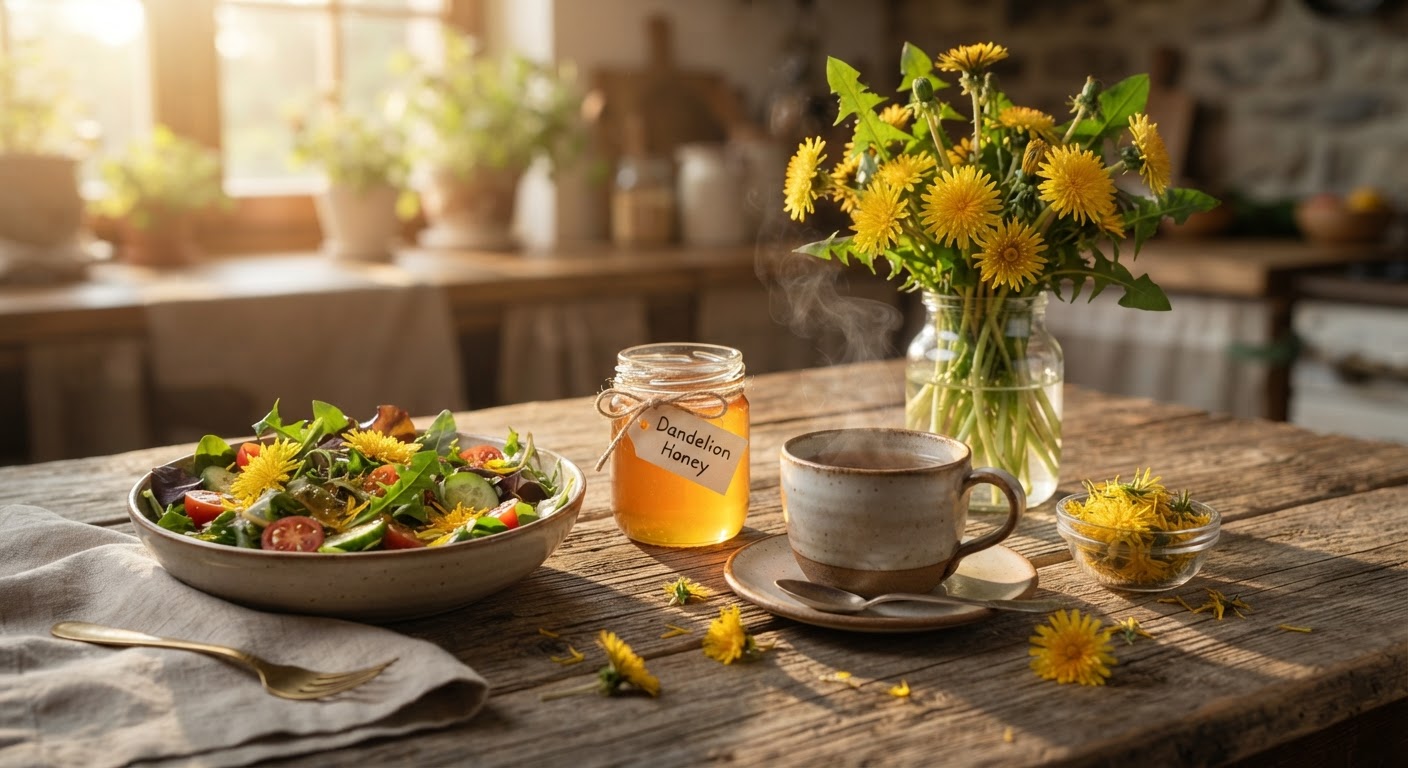
Dandelion syrup (vegan “honey”): Simmer fresh petals in water with sugar and lemon slices until reduced into a thick, golden syrup. It tastes remarkably like honey and works on pancakes, in tea, or drizzled over yogurt. Some folks call it “dandelion honey” — technically inaccurate but descriptively spot-on.
Tea: Fresh or dried petals steeped in hot water produce a mild, floral tea. Combine with chamomile or mint for a more complex profile.
Raw garnish: Fresh petals scattered over a salad add color and a whisper of sweetness. They also make any dish look instantly fancier.
Dandelion Flower Nutritional Highlights
The flowers contain lutein, beta-carotene, and various flavonoids with anti-inflammatory properties. They’re not as nutrient-dense as the leaves, but they bring antioxidants and a respectable amount of vitamins A and C to the table.
Dandelion Roots: The Underground Medicine Cabinet
Harvesting Roots
Dandelion roots require the most work to harvest, but they’re worth it. A mature dandelion taproot can extend 6 to 12 inches into the soil — some go even deeper in loose ground.
Best time to dig: Late fall (after the first frost) or very early spring (before the plant flowers). During these periods, the plant stores maximum energy in the root, making it sweeter and more nutrient-dense.
How to dig: Don’t just yank. The root will snap, and you’ll lose half of it. Use a garden fork or dandelion weeder. Loosen the soil around the plant, then carefully lift. Expect to get dirty.
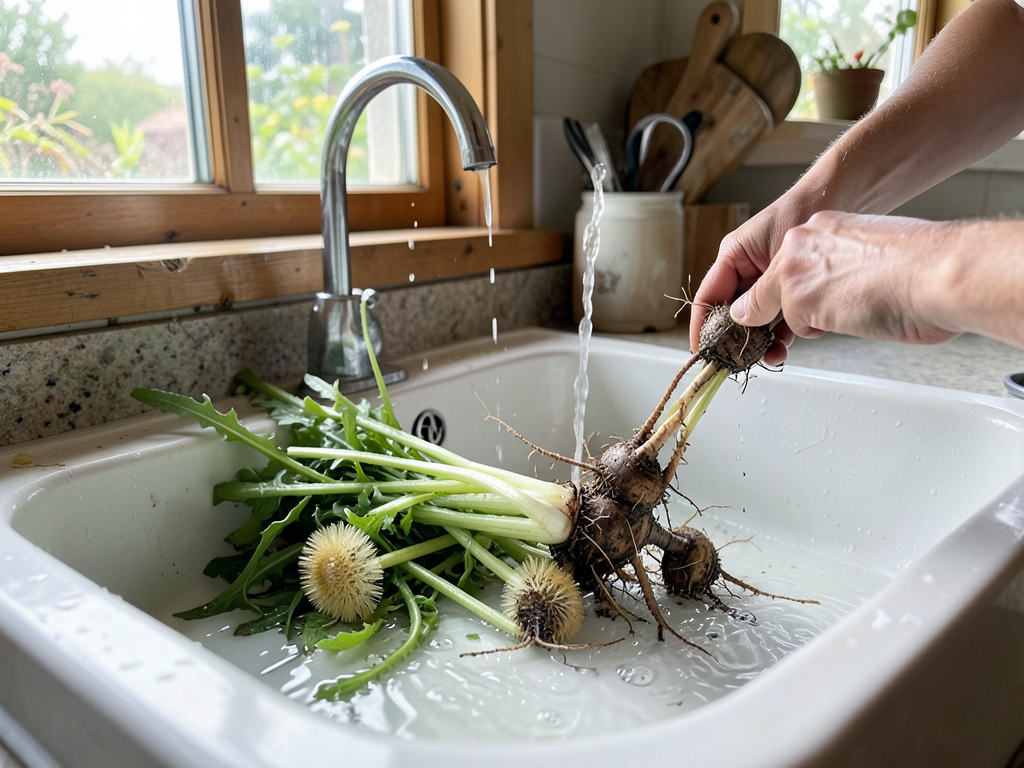
Cleaning: This is the unglamorous part. Dandelion roots are covered in soil and have tiny root hairs. Scrub thoroughly with a vegetable brush under running water. Some foragers soak them for 10-15 minutes, then scrub. Either way, get them clean.
Dandelion Root Coffee: The Classic Preparation
Roasted dandelion root tea — often called “dandelion coffee” — is the most popular root preparation, and for good reason. When you roast the roots, the inulin (a prebiotic fiber) caramelizes, transforming that earthy, bitter raw flavor into something remarkably similar to coffee — but without the caffeine.
Basic method:
- Scrub and chop roots into small, uniform pieces (about the size of coffee beans)
- Spread on a baking sheet and roast at 350°F (175°C) for 20-30 minutes
- The roots should be dark brown and smell like roasted nuts
- Grind the roasted roots in a coffee grinder
- Brew like regular coffee: 1-2 teaspoons per cup, steep 5-10 minutes
The resulting brew is dark, rich, and slightly nutty. Add cream and a touch of maple syrup, and you have a respectable coffee alternative that won’t keep you up at night.
Medicinal Uses of Dandelion Root
Dandelion root has a long history in traditional medicine, particularly in European and Native American traditions. Modern research supports several traditional uses:
Liver support: Dandelion root is classified as a hepatic — a plant that supports liver function. It’s been used traditionally as a gentle liver tonic and detoxifier.
Digestive bitter: The bitter compounds stimulate digestive secretions, which can aid digestion and nutrient absorption. This is why dandelion root tinctures show up in digestive bitters formulas.
Prebiotic fiber: Raw dandelion root contains inulin, a prebiotic fiber that feeds beneficial gut bacteria. Roasting reduces the inulin content but creates other beneficial compounds.
Diuretic effect: Dandelion’s nickname in French is pissenlit — literally “pee in bed.” It’s a natural diuretic, which means it increases urine output. Unlike pharmaceutical diuretics, dandelion also supplies potassium, which diuretics typically deplete.
Note: Consult a healthcare provider before using dandelion medicinally, especially if you’re pregnant, nursing, taking medications (particularly diuretics, lithium, or blood thinners), or have gallbladder issues.
The Crown and Stems: The Overlooked Parts
Between the root and the leaves sits the crown — the whitish, crunchy junction where all the leaves emerge. This part is often overlooked but deserves attention.
The crown has a texture similar to a radish or kohlrabi: crisp, slightly sweet, with a mild bitterness. Slice it thin and add to stir-fries, or chop it into soups where it adds body and nutrients.
The flower stems, when young and tender, can be used like celery in soups and stocks. The hollow stems also make a fun, crunchy raw snack for kids who enjoy the novelty of eating a flower stem.
Important: The milky latex sap in the stems can be bitter and slightly sticky. Blanching or cooking neutralizes this. For raw eating, stick to the youngest, most tender stems and remove the outer skin if it’s fibrous.
Dandelion Seeds: Not Just for Wishing
Here’s a part most people never think about eating: the seeds. Each dandelion seed is attached to a wispy parachute (the pappus) that carries it on the wind. While the fluff isn’t edible, the small brown seed at the base can be:
- Sprouted like microgreens for a nutty addition to salads
- Toasted and added to granola or trail mix
- Ground into a gluten-free flour (labor-intensive, but possible)
Realistically, harvesting enough dandelion seeds for a meaningful amount of flour is tedious. Sprouting is the more practical option — you can harvest a handful of seed heads, separate the seeds, and have microgreens within a week.
Seasonal Harvesting Calendar
Knowing when to pick each part is as important as knowing what to pick:
Early Spring (March-April):
├── LEAVES — Prime time. Young, tender, mildly bitter.
├── CROWNS — Crisp and sweet, pre-flowering.
└── ROOTS — Still decent, though not as sweet as fall.

Late Spring (May-June):
├── FLOWERS — Peak bloom. Harvest daily.
└── LEAVES — Getting bitter. Blanch before eating.

Summer (July-August):
├── LEAVES — Very bitter. Blanching required.
└── FLOWERS — Second, smaller flush possible.

Fall (September-November):
├── ROOTS — Prime time. Sweetest after first frost.
└── LEAVES — New growth may appear, milder again.

Winter (December-February):
└── ROOTS — Still harvestable if ground isn't frozen.
Common Mistakes to Avoid
I’ve made most of these, or watched others make them. Learn the easy way:
1. Harvesting from contaminated areas. This is the #1 mistake and the most dangerous. Dandelions absorb whatever’s in the soil — lead, pesticides, herbicides. If you wouldn’t eat the soil, don’t eat plants from it.
2. Picking too late in the season without blanching. A July dandelion leaf is intensely bitter. It’s still edible and nutritious, but you need to blanch it first. Don’t blame the plant — you picked the wrong leaf at the wrong time.
3. Confusing dandelions with look-alikes. Several plants resemble dandelions, including cat’s ear (Hypochaeris radicata), hawkweed (Hieracium), and sow thistle (Sonchus). Most of these are also edible, but some people have allergic reactions to plants in the Asteraceae family. Know what you’re picking. True dandelions have: a single flower per stem, hollow stems with milky sap, deeply toothed leaves pointing backward toward the base, and no branching on the stem.
4. Eating massive quantities on day one. Dandelion is a digestive bitter and a diuretic. Your body needs to adjust. Start with a small salad, not a giant bowl of raw greens. Give your system time to adapt.
5. Skipping the blanching step for older leaves. Blanching isn’t optional for mature greens — it’s the difference between “unpleasantly bitter” and “genuinely good.” Thirty seconds in boiling water changes everything.
6. Roasting roots before they’re fully dry. Wet roots steam instead of roast. Spread them in a single layer and give them time. Patience here pays off in flavor.
Allergy and Safety Considerations
Dandelions are in the Asteraceae family (the daisy family), which includes ragweed, chrysanthemums, marigolds, and daisies. If you have known allergies to these plants, approach dandelion cautiously.
Signs of an allergic reaction include:
- Itching or swelling of the mouth and throat
- Skin rash or hives
- Difficulty breathing (rare but serious — seek medical attention)
Start with a small amount on day one and wait 24 hours before eating more. This is good practice for any wild food you haven’t eaten before.
Frequently Asked Questions
Are all dandelion species edible? The common dandelion (Taraxacum officinale) and its close relatives are all edible. There are hundreds of Taraxacum species, and they’re all generally safe to eat. The red-seeded dandelion (Taraxacum erythrospermum) is less common but equally edible.
Can you eat dandelions from your lawn? Only if your lawn has never been treated with herbicides, pesticides, or synthetic fertilizers. If you’re not 100% certain about the lawn’s history, don’t risk it. The chemicals used on lawns aren’t meant for human consumption.
Do I need to cook dandelion greens? Young spring greens can be eaten raw. Older, more bitter greens should be blanched or cooked. Cooking also makes the nutrients more bioavailable for some people.
What does dandelion taste like? Leaves taste like arugula with extra bitterness. Flowers are mildly sweet and floral. Roots taste earthy raw, and nutty-coffee-like when roasted. Each part is its own experience.
How do you store dandelion greens? Wrap unwashed greens in a damp paper towel, place in a plastic bag, and refrigerate. They’ll keep 3-5 days. Wash just before use. For longer storage, blanch and freeze.
Is dandelion safe during pregnancy? There’s limited research, so conventional medical advice says to use caution. Some herbalists consider it safe in food quantities. Consult your healthcare provider.
Can you eat the white sap in the stem? The milky latex sap is edible but bitter. It’s traditionally been used topically for warts, though the evidence is anecdotal.
Simple Dandelion Starter Recipes
Quick Dandelion Salad (serves 2)
- 2 cups young dandelion greens, washed and torn
- 1/4 cup toasted walnuts
- 2 tbsp crumbled goat cheese or feta
- 2 tbsp olive oil
- 1 tbsp lemon juice
- Pinch of salt
Toss everything together. The fat from the oil and cheese balances the bitterness of the greens. If the greens are on the older side, massage the dressing into them for 30 seconds — this physically breaks down some of the bitter compounds.
Pan-Fried Dandelion Flower Fritters
- 20 fresh dandelion flower heads, stems removed
- 1/2 cup flour
- 1 egg
- 1/4 cup milk
- Pinch of salt and pepper
- Oil for frying
Mix flour, egg, milk, salt, and pepper into a batter slightly thicker than pancake batter. Dip each flower head, coat well, and fry in hot oil until golden on both sides, about 2 minutes per side. Drain on paper towels. Serve immediately with a squeeze of lemon.
Roasted Dandelion Root Tea
- 5-6 mature dandelion roots
- Water
- Milk and sweetener (optional)
Scrub roots clean, chop into small pieces, and roast at 350°F (175°C) for 25-30 minutes until dark brown and fragrant. Grind in a coffee grinder. Steep 1-2 teaspoons in hot water for 5-10 minutes. Strain. Add milk and maple syrup if desired.
The Bottom Line
Dandelions are not a consolation prize. They’re not “edible if you’re desperate.” They’re a genuinely excellent wild food — nutritionally superior to most cultivated greens, culinarily versatile, and growing by the millions in places most people never think to look.
The arrogance of the modern food system is that it’s convinced us to spray poison on one of the most nutritious plants on Earth so we can grow a monoculture lawn that feeds nobody.
Start with the leaves in early spring. Graduate to flower fritters when the yellow blooms appear. Dig some roots in the fall and roast your own caffeine-free coffee alternative. You’ll wonder why you ever called this plant a weed.