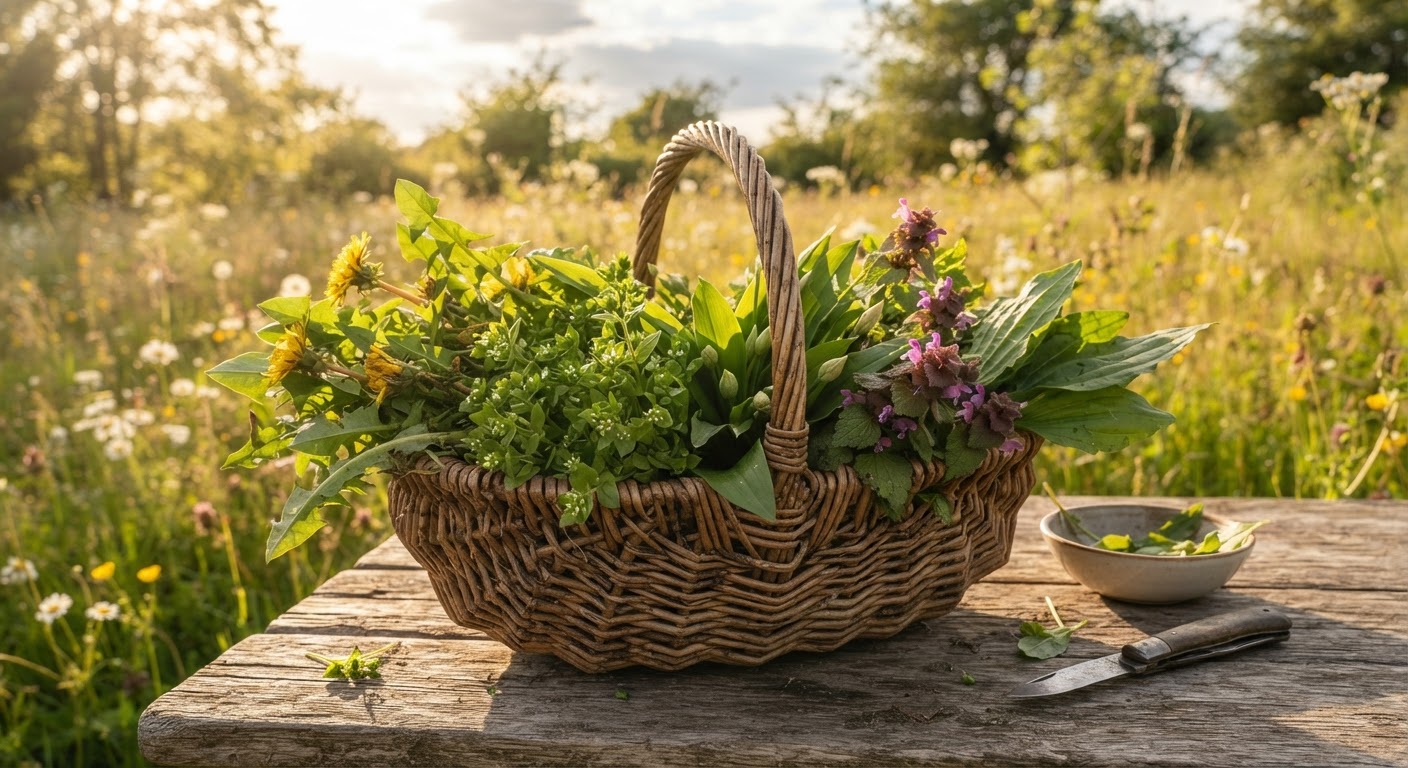
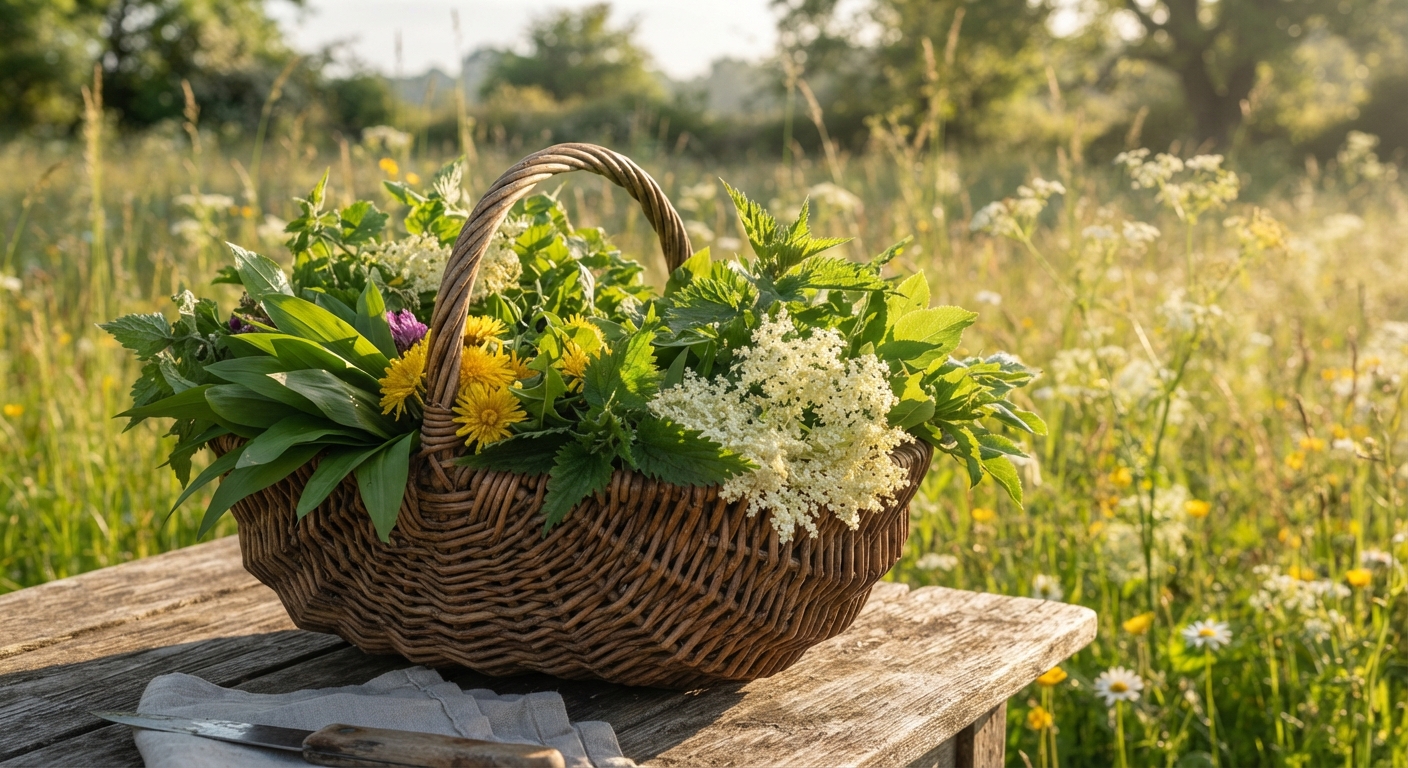
Most people walk past dinner every day without realizing it. That patch of “weeds” by the sidewalk? Probably edible. The bright yellow flowers overtaking your lawn? Delicious in a salad. The leafy green carpet in that shady corner of the park? Makes a better pesto than basil.
I learned this the hard way — by spending my first three foraging seasons terrified of everything. I carried three field guides, cross-referenced every plant obsessively, and still second-guessed myself when it came time to actually eat something I’d picked. That caution wasn’t wrong. In fact, it was exactly right. The gap between “I think this is edible” and “I know this is edible” is where foraging accidents happen.
This guide isn’t going to teach you 200 plants. That’s what 600-page field guides are for, and you should absolutely own one (or three). What this guide will do is walk you through 20 of the most common, most unmistakable edible wild plants — the ones growing in your yard, along fence lines, in empty lots, and on the edges of hiking trails. These are the plants that show up everywhere, that are genuinely hard to misidentify once you know what to look for, and that actually taste good enough to put on a plate.
Before You Pick Anything: The Non-Negotiable Safety Rules
Every foraging article should start here. If you skip this section because “yeah yeah, I know” — don’t. Even experienced foragers get complacent, and complacency is what lands people in the ER.
The Universal Edibility Rules
100% positive identification, every single time. You don’t get partial credit for “pretty sure.” If there’s a shred of doubt, take photos, consult multiple sources, and wait until you’re certain. The plant will still be there tomorrow.
Learn the poisonous lookalikes first. Before you memorize what dandelion leaves look like, memorize what makes them different from hawkweed and sow thistle. Most edible wild plants have at least one toxic imposter. Know the imposters before you know the edibles.
Never forage from contaminated ground. This is the rule beginners break most often. Roadside plants absorb heavy metals from car exhaust. Plants in manicured parks and lawns have likely been sprayed with herbicides and pesticides. Plants near industrial sites, railroad tracks, and old buildings might grow in lead-contaminated soil. The prettiest dandelion in the world isn’t worth a mouthful of glyphosate.
Harvest legally and ethically. Some public lands prohibit foraging completely. Others allow it with limits. Know the rules for wherever you’re picking. And regardless of legality: never take more than 10% of a stand, never harvest rare or threatened species, and leave the roots unless you’re absolutely sure the plant is invasive.
Start with a small taste test. Even when you’re 100% confident about identification, individual allergies exist. Eat a tiny amount first — a single leaf or a small cooked portion. Wait several hours before eating more. This is tedious but necessary.
Cook when in doubt. Many wild plants contain compounds that break down with heat. Stinging nettle loses its sting. Lamb’s quarters contain oxalates that cooking reduces significantly. Raw wild plants are riskier than cooked ones, no exceptions.
Why Apps Alone Aren’t Enough
I’m going to say something that app developers hate: do not trust a plant identification app with your life.
A 2025 independent study tested six popular plant ID apps against 50 toxic species. The best-performing app correctly flagged only 81% as dangerous or inedible. That means nearly one in five toxic plants got a clean bill of health from the best app available. The worst app failed on more than half.
Use apps as a starting point — a digital “huh, I wonder what that is.” Then confirm with at least two other sources: a reliable field guide, an experienced forager, or a regional foraging group that can verify your find. The combination of an app plus a good book plus community verification is solid. Any single one of those alone is gambling.
Seasonal Calendar: When to Find What
Timing matters more in foraging than most beginners realize. A plant that’s tender and delicious in April might be tough, bitter, and borderline inedible by June. Here’s when the plants in this guide are at their best:
| Season | What’s Ready | Parts to Harvest |
|---|---|---|
| Early Spring (March–April) | Stinging nettle, wild garlic, chickweed, dandelion greens, garlic mustard | Young leaves, shoots, bulbs |
| Late Spring (May–June) | Lamb’s quarters, purslane, wood sorrel, cattail shoots | Tender leaves, stems, pollen |
| Summer (July–August) | Purslane, amaranth, wild berries, lamb’s quarters, plantain seeds | Leaves, berries, seeds |
| Early Fall (September–October) | Acorns, wild rose hips, burdock root, dandelion root | Roots, nuts, fruit |
| Late Fall (November) | Burdock root, chicory root, rose hips, pine needles (tea) | Roots, hips, needles |
This is a rough guide for temperate North America. Your local timing might vary by 2-4 weeks depending on latitude, elevation, and that year’s specific weather patterns. When in doubt, join a local foraging group — they’ll tell you exactly what’s popping up right now in your specific area.
20 Common Edible Wild Plants You Can Find Almost Anywhere
1. Dandelion (Taraxacum officinale)
If foraging had a mascot, it would be the dandelion. This plant is so common, so versatile, and so unmistakable that it should be the first wild edible anyone learns.
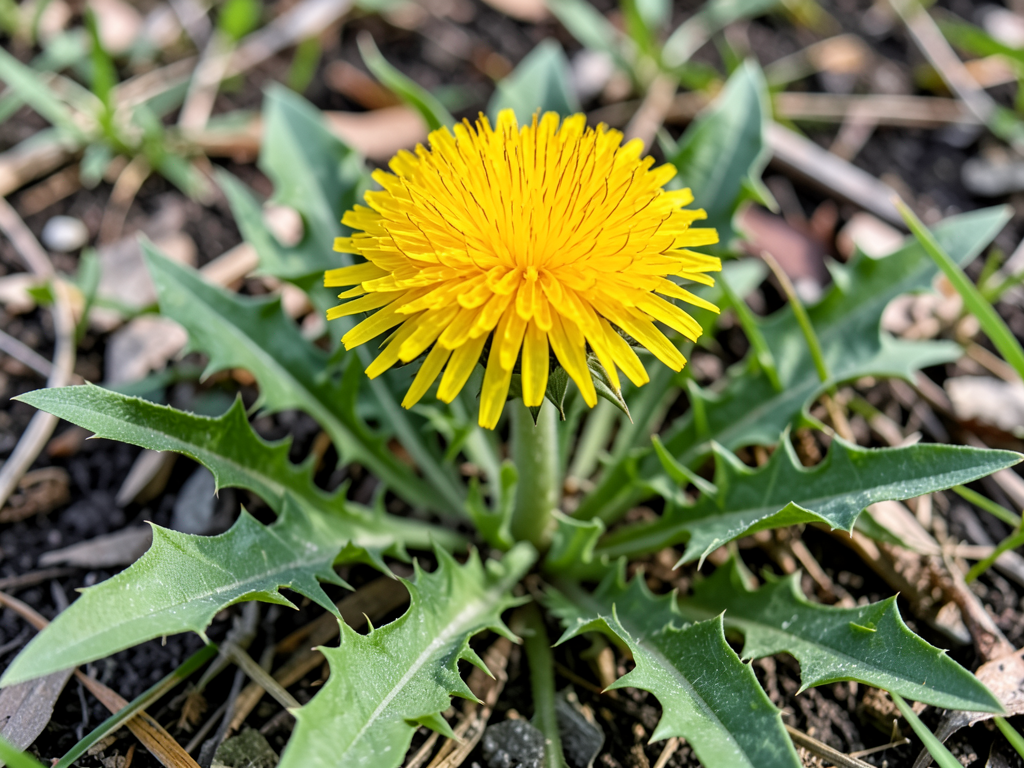
What’s edible: Everything. Leaves (raw or cooked), flowers (raw, fried, or made into wine), and roots (roasted for coffee substitute or cooked as a root vegetable).
When to harvest: Leaves are best in early spring before the plant flowers — once those yellow blooms appear, the leaves turn bitter fast. Flowers can be harvested throughout the blooming season. Roots are best in fall when they’ve stored a season’s worth of energy.
How to identify: Tell a five-year-old to find a dandelion and they’ll probably succeed. The jagged, deeply toothed leaves grow in a basal rosette — meaning they all sprout from a central point at ground level, with no stem between the leaves and the root. The flower stalks are hollow, leafless tubes that ooze white latex when broken. Each stalk holds exactly one bright yellow composite flower head that transforms into the familiar white puffball of seeds.
Lookalikes to know: The biggest danger is confusing young dandelion leaves with other rosette-forming plants. Hawkweed (Hieracium) has hairy leaves and branched flower stalks — dandelion stalks are unbranched with a single flower. Sow thistle (Sonchus) has leaves that clasp the stem, while dandelion leaves don’t. Chicory (Cichorium intybus) has blue flowers and leaves that are more deeply lobed. None of these are toxic, but the point is to build the habit of checking.
How to eat it: Young dandelion greens have a pleasant bitterness that works beautifully in salads with a sharp vinaigrette, bacon, or goat cheese. Older leaves benefit from blanching — 30 seconds in boiling water, then a quick ice bath — which tames the bitterness. The flowers make a surprisingly good fritter when dipped in thin batter and fried. And dandelion root coffee, while it won’t fool anyone who actually drinks coffee, has a pleasant roasted, nutty flavor that stands on its own merits.
One thing most guides don’t tell you: The bitterness isn’t a flaw — it’s the point. Bitterness stimulates digestive enzymes and liver function. Cultures around the world specifically seek out bitter greens as a spring tonic after a winter of heavy, rich food. Dandelion greens are basically a free, naturally occurring version of the expensive bitter salad mix you pay $6 for at the grocery store.
2. Stinging Nettle (Urtica dioica)
Yes, it stings. No, that shouldn’t stop you. Nettle is so nutritious, so versatile in the kitchen, and so abundant that learning to handle it is worth every temporary tingle on your fingertips.
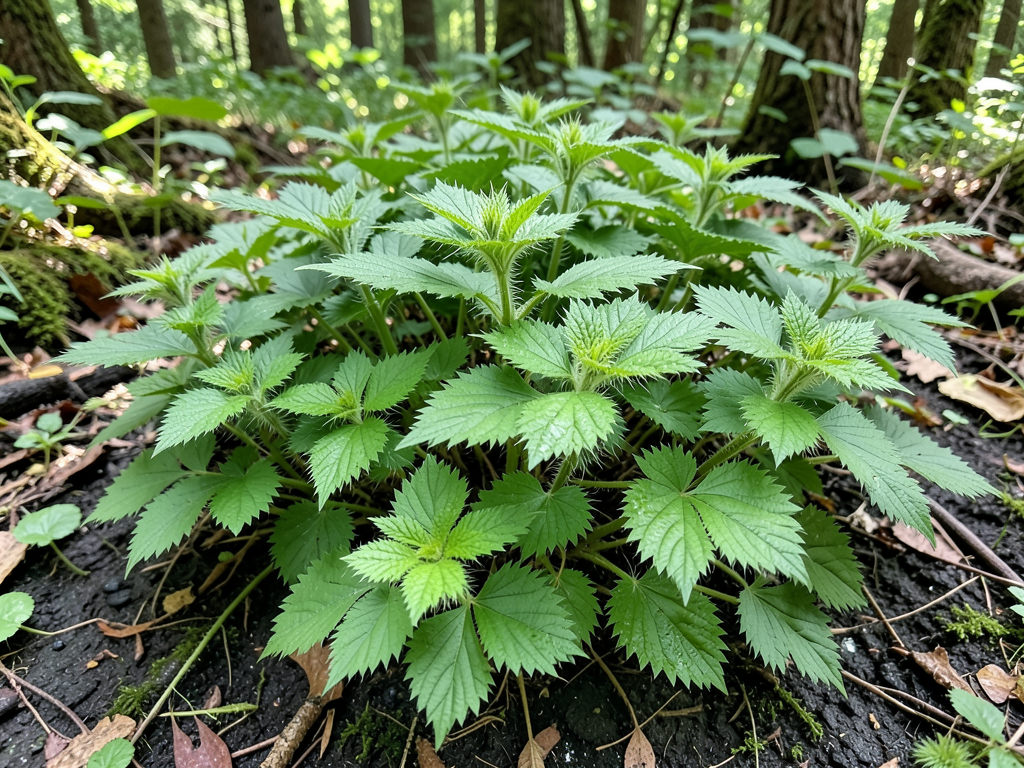
What’s edible: Young leaves and tender stem tips. Once the plant flowers or goes to seed, the older leaves develop cystoliths — microscopic calcium carbonate structures — that can irritate the kidneys if eaten in large quantities.
When to harvest: Spring through early summer, before the plant flowers. Harvest only the top 4-6 inches of growth — these are the tenderest parts and the most nutritious.
How to identify: Nettle grows in dense, waist-high patches in moist, nitrogen-rich soil — the kind of soil created by old barnyards, compost piles, and areas that have been fertilized by animal activity. The square stems, serrated opposite leaves, and tiny stinging hairs are the key identifiers. Touch it and you’ll know — the sting is unmistakable, caused by histamine and other compounds injected through those tiny silica-tipped hairs.
Lookalikes to know: False nettle (Boehmeria cylindrica) looks similar but lacks the stinging hairs. It’s not toxic, just flavorless. Members of the mint family sometimes share the square stem but never the stinging hairs. If it doesn’t sting, it’s not nettle — which means it’s not what you’re looking for.
How to eat it: Cooking completely neutralizes the sting. Even 30 seconds of steaming or blanching is enough. Nettle makes an exceptional soup — think of it as a wild spinach with more depth and minerality. It’s also fantastic as a pesto (blanch first, then blend with garlic, nuts, olive oil, and parmesan), a filling for ravioli, or simply sautéed with butter and garlic as a side dish. The cooking water makes a nourishing tea that’s rich in iron and silica.
Forager’s secret: Wear rubber dishwashing gloves for harvesting and processing. Cloth garden gloves won’t cut it — the stinging hairs go right through the weave. And if you do get stung, look around for curly dock (Rumex crispus), which almost always grows near nettle patches. Crush the dock leaves and rub the juice on the sting — the antihistamine effect is genuinely effective, and this old folk remedy actually has scientific backing.
3. Wild Garlic / Ramps / Field Garlic (Allium species)
The allium family gives you the easiest positive ID in foraging: if it smells like garlic or onion, it’s an allium. If it doesn’t, it’s not. This rule saves lives because some of the deadliest wild plants — death camas, lily of the valley — have bulbs and leaves that superficially resemble wild onions.
What’s edible: Bulbs, leaves, and flowers of all wild allium species. Field garlic (Allium vineale) is the most widespread — you’ve probably pulled it out of your lawn — while ramps (Allium tricoccum) are a celebrated delicacy in Appalachian cuisine.
When to harvest: Leaves appear in early spring and can be harvested until the plant flowers. Bulbs are best in summer after the foliage dies back.
How to identify: Grass-like leaves emerge from a bulb — but the smell test is everything. Crush a leaf. If it smells unmistakably like garlic or onion, you have an allium. If it smells like grass, or if you’re not sure, walk away. The leaves of field garlic are round and hollow, like chives. Ramp leaves are broader, more like lily of the valley leaves, which is exactly why the smell test is non-negotiable when foraging ramps.
How to eat it: Use wild garlic exactly as you would cultivated garlic or green onions. The leaves are milder and work well raw in salads and as garnish. The bulbs are more potent and fantastic in any dish that benefits from garlic. Ramps have a unique flavor somewhere between garlic and onion with an almost sweet undertone — they’re exceptional pickled, grilled whole, or turned into compound butter that you can freeze for months.
Important: Harvest ramps responsibly. They take 5-7 years to reach maturity from seed and are threatened by overharvesting in many areas. Never take more than 5-10% of a patch, and consider harvesting only the leaves (leaving the bulb) to allow the plant to regenerate.
4. Purslane (Portulaca oleracea)
Purslane might be the most nutritious weed on the planet, and it is almost certainly growing in a crack in your driveway right now. It has more omega-3 fatty acids than any other leafy plant, more vitamin E than spinach, and a lemony, slightly salty crunch that actually tastes good raw.
What’s edible: Stems, leaves, flowers, and seeds — the whole above-ground plant.
When to harvest: Summer through early fall. Purslane loves heat and thrives when other greens have bolted and turned bitter.
How to identify: Purslane is a sprawling, succulent ground cover with thick, reddish stems and fleshy, paddle-shaped leaves that grow in small clusters. The leaves are smooth and glossy, about the size of a pinky fingernail. Small yellow flowers open only in full sun. The whole plant has a juicy, crunchy texture when you break a stem — think of a miniature succulent or a very tiny jade plant.
Lookalikes to know: Spurge (Euphorbia species) is the dangerous doppelganger. Spurge leaves are thinner and flatter than purslane’s succulent leaves, and spurge stems ooze a white, milky sap when broken. Purslane stem sap is clear. The rhyme to remember: “If the sap is white, that plant’s not right.” Hairy stem spurge is another lookalike — but as the name implies, it’s hairy, while purslane is completely smooth.
How to eat it: Raw purslane has a refreshing, slightly mucilaginous crunch — it thickens soups and stews naturally, similar to okra. It’s excellent in salads (especially with cucumber and yogurt dressing), folded into omelets, or stirred into grain dishes. In Mexican cuisine, it’s called verdolagas and is cooked with pork and tomatillos. Purslane also pickles beautifully — the crunchy texture holds up to vinegar brilliantly.
5. Lamb’s Quarters / Goosefoot (Chenopodium album)
If spinach grew wild with zero cultivation effort and better nutrition, it would be lamb’s quarters. Sometimes called “wild spinach” for good reason, this plant is so common that even people who don’t forage have probably pulled it out of their garden as a weed.
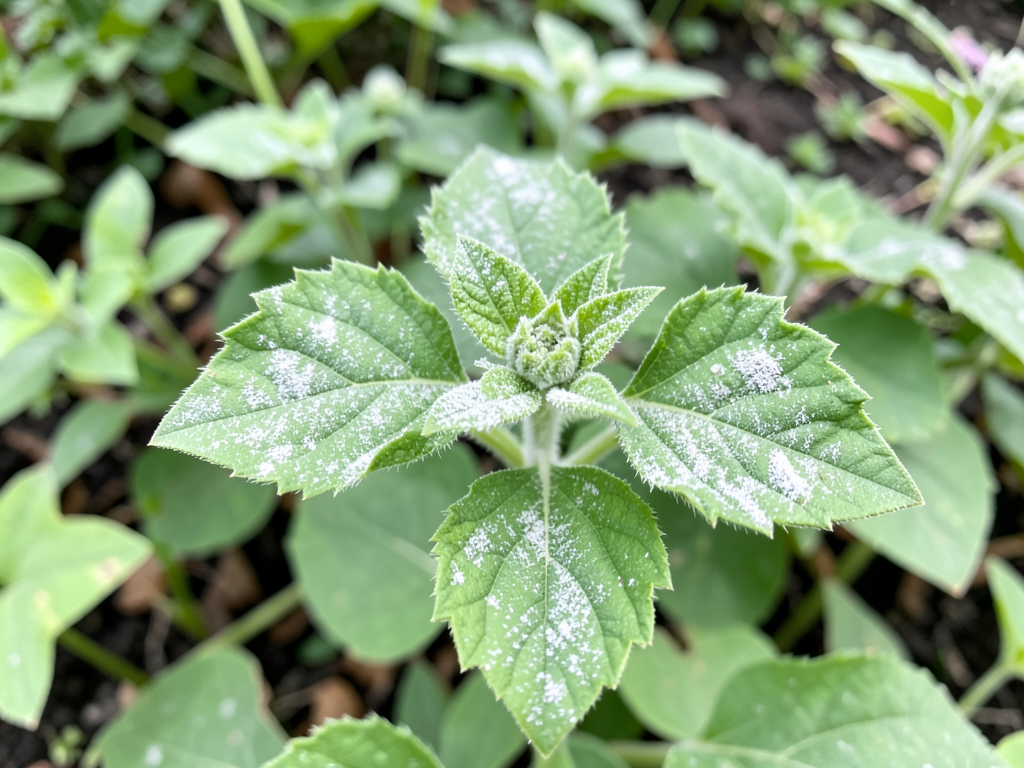
What’s edible: Young leaves, tender stems, and seeds.
When to harvest: Leaves from spring through early summer, before the plant flowers. Seeds can be collected in late summer and fall.
How to identify: The giveaway is the white, powdery coating on the youngest leaves at the growing tip — it looks almost like a dusting of flour and repels water beautifully (hence “goosefoot” — the leaf shape resembles a goose’s webbed foot). Leaves are roughly triangular to diamond-shaped with irregular, shallow teeth. Mature plants can reach 3-6 feet tall with an upright, branching growth habit.
Lookalikes to know: Nothing dangerously toxic resembles lamb’s quarters closely enough to be a serious concern for beginners, but black nightshade (Solanum nigrum) overlaps in habitat. Nightshade has entirely different leaves (broader, with smooth margins) and produces small clusters of berries — lamb’s quarters never produces berries.
How to eat it: Treat lamb’s quarters exactly like spinach. It’s slightly earthier and more mineral-forward than cultivated spinach, but the texture is nearly identical once cooked. Sauté it with garlic and olive oil, add it to quiches and frittatas, blend it into smoothies, or use young raw leaves in salads. One cup of cooked lamb’s quarters provides more calcium than a cup of milk and more vitamin A than a serving of carrots.
6. Chickweed (Stellaria media)
Chickweed is the delicate, tender green that covers bare soil in cool weather. It’s one of the mildest-tasting wild greens — no bitterness, no toughness, just a soft, pleasant, almost corn-silk flavor that even picky eaters tolerate.
What’s edible: Leaves, stems, and flowers — the whole above-ground plant.
When to harvest: Late fall through early spring. Chickweed thrives in cool, damp weather and disappears when summer heat arrives. This makes it one of the few reliable wild greens available during winter in temperate climates.
How to identify: Chickweed forms low, sprawling mats with tiny, pointed oval leaves arranged in opposite pairs along thin, delicate stems. The key identifier is the line of fine hairs that runs along only one side of the stem, switching sides at each leaf node. The tiny white flowers have five petals so deeply cleft that they look like ten. If you’ve got the hair-on-one-side-of-the-stem thing, you’ve got chickweed — it’s the single most reliable field characteristic.
Lookalikes to know: Scarlet pimpernel (Anagallis arvensis) has similar growth habit but its flowers are orange-red (not white) and its stem has no single-line-of-hairs. Spurge (Euphorbia) — that same purslane lookalike — also grows low to the ground but has the telltale white sap. If you’re harvesting chickweed and find a plant with milky sap, it’s not chickweed.
How to eat it: Chickweed’s mildness makes it one of the easiest wild greens to incorporate into everyday cooking. It’s excellent raw in salads and sandwiches (use it like sprouts or microgreens), wilted into pasta dishes at the last minute, or blended into a mild pesto. It also makes a surprisingly good — and genuinely delicious — cold-infused vinegar that captures its delicate flavor.
7. Wood Sorrel (Oxalis species)
Wood sorrel looks like a three-leaf clover with a secret: it tastes like lemon candy. That bright, sour flavor comes from oxalic acid, the same compound that gives rhubarb and spinach their characteristic tang. In small, culinary quantities, wood sorrel is a delightful wild seasoning.
What’s edible: Leaves, flowers, and immature seed pods.
When to harvest: Spring through fall, though it’s most abundant and tender in spring.
How to identify: Three heart-shaped leaflets per leaf — same arrangement as clover — but wood sorrel leaflets are distinctly heart-shaped with a fold down the center, while clover leaflets are more oval or rounded. The flowers are five-petaled with visible veins, usually yellow (Oxalis stricta) or pink-to-white with purple veins (Oxalis violacea). The taste is the clincher: a clean, sharp, unmistakably lemony-sour flavor. Clover tastes like grass.
How to eat it: Wood sorrel is a seasoning, not a main course. The oxalic acid that makes it delicious also means you shouldn’t eat giant bowls of it at once — but a handful scattered over a salad, fish dish, or soup is perfectly safe and adds a bright, citrusy note. The leaves make beautiful edible garnishes. Try steeping them in vodka or simple syrup for a unique cocktail ingredient, or blend into compound butter for fish.
8. Cattail (Typha species)
Cattails grow in wetlands across most of the world, and they’re one of the most versatile wild foods available — different parts of the same plant provide food in every season. Some foragers call them the “supermarket of the swamp” and the nickname is earned.
What’s edible: Young shoots (spring), green flower spikes (late spring), pollen (early summer), and starchy rhizome roots (fall through winter).
How to identify: Cattails are nearly impossible to misidentify if you wait for the mature brown “cigar” seed head to develop. Before that stage: long, flat, sword-like leaves growing from a central point in standing water or saturated soil. The flower stalk rises up through the center of the leaves with a green top (the male flower) and a slightly thicker green section just below it (the female flower that will become the brown cattail).
Lookalikes to know: Iris species grow in the same wetland habitat with similar sword-like leaves and are toxic. Before the cattail seed head appears, check that the leaves emerge from a round central base and the flower stalk is round, not flattened. Iris leaves are arranged in a fan shape rather than a round cluster. When in doubt, wait for the brown cattail to develop — there is nothing else in North American wetlands that produces that distinctive brown sausage-on-a-stick seed head.
How to eat it: The young shoots in spring can be pulled from the mud and peeled to reveal a tender white core that tastes like cucumber with a hint of sweetness — eat it raw or briefly sautéed. The immature green flower spikes can be boiled and eaten like corn on the cob, complete with butter and salt. The bright yellow pollen is a flour substitute and thickener. And the rhizomes, while labor-intensive to process, yield a starchy flour that’s been a staple food in cultures around the world.
9. Garlic Mustard (Alliaria petiolata)
Garlic mustard is an aggressively invasive plant in North America, which means you can harvest it guilt-free, by the bagful, and never make a dent in the local population. It’s one of the few plants where “take as much as you want” is not just allowed but actively encouraged by conservation organizations.
What’s edible: Leaves (first-year rosettes and second-year young leaves), flower buds, flowers, and seeds.
When to harvest: First-year rosettes are available fall through early spring. Second-year leaves, flower buds, and flowers appear in mid to late spring.
How to identify: Crush a leaf and smell it. If it smells like garlic crossed with mild mustard, it’s garlic mustard. First-year plants form low rosettes of kidney-shaped leaves with scalloped edges and deeply impressed veins (the leaves look almost quilted). Second-year plants send up 1-3 foot stalks with smaller, more triangular leaves and clusters of small white four-petaled flowers at the top.
Lookalikes to know: Several plants share the broad, scalloped leaf shape — notably violets (Viola species, which are actually edible) and ground ivy (Glechoma hederacea, also edible). None of them have the garlic-mustard smell when crushed. Rely on the smell test and you won’t go wrong.
How to eat it: The leaves are strongest tasting — a peppery garlic punch that’s fantastic in pesto (traditionally paired with walnuts rather than pine nuts) and as a cooked green. The roots taste similar to horseradish and can be ground into a fiery condiment. The seeds are wonderful as a wild mustard spice — dry and grind them for a seasoning that holds its own against cultivated mustard seed.
10. Chicory (Cichorium intybus)
You probably know chicory as a coffee additive, but the whole plant is edible — and those stunning blue flowers that line summer roadsides are as useful as they are beautiful.
What’s edible: Leaves (spring), flowers (summer), and roots (fall).
When to harvest: Young leaves in spring. Flowers throughout summer. Roots in fall after the first frost sweetens them.
How to identify: The flowers are the dead giveaway: sky-blue, fringed petals arranged around a flat, dandelion-like center, opening only in the morning and typically closing by afternoon. The plant grows 2-4 feet tall with tough, branching, almost woody stems. Leaves near the base look like dandelion but are more deeply lobed; stem leaves are smaller and clasp the stalk directly.
How to eat it: Young spring greens need thorough cooking and at least one change of water to tame the bitterness, but once prepared, they’re a respectable cooked green. The flowers have a mild, slightly sweet flavor and make stunning salad garnishes. The root — this is where chicory shines — is roasted until dark brown, ground, and brewed as a coffee substitute or addition. New Orleans-style café au lait with chicory is a classic for good reason.
11. Plantain (Plantago major and Plantago lanceolata)
Not the banana. The weed. Broadleaf plantain (P. major) and narrow-leaf plantain (P. lanceolata) grow in lawns, sidewalk cracks, and compacted soil across the entire continent. They’re tough, resilient, and more useful than most people realize.
What’s edible: Young leaves (best cooked), and mature seeds (harvested from the tall seed stalks).
How to identify: Broadleaf plantain forms a basal rosette of wide, oval leaves with distinctive parallel veins running lengthwise. If you snap a leaf stalk, you’ll see string-like veins pull out from the break. Narrow-leaf plantain has long, lance-shaped leaves with the same parallel vein pattern but no obvious stalk connection. The seed stalks rise straight up from the center on tough, leafless stems with tiny flowers clustered around the top — they look like miniature cattails.
How to eat it: Young plantain leaves are fibrous but edible when thoroughly cooked — blanch them first, then sauté. The more practical food use is the seeds. Plantain produces large amounts of tiny black seeds that can be collected (look for the brown, dried seed heads in late summer), ground into a flour substitute or cooked whole as a psyllium-like fiber supplement and thickener. Plantain seed husks are, in fact, the source of commercial psyllium fiber.
Bonus non-food use: A crushed plantain leaf applied directly to a bee sting, mosquito bite, or minor cut provides genuine relief. The plant contains allantoin (a cell-proliferating compound), aucubin (antimicrobial), and mucilage (soothing). It’s the first thing I reach for when the nettle stings get past my gloves.
12. Amaranth / Pigweed (Amaranthus species)
Amaranth has been cultivated as a grain for over 8,000 years — the Aztecs considered it a sacred crop. Today, it grows as a “weed” in gardens and disturbed soil across most of the world, producing both edible greens and a protein-rich grain-like seed.
What’s edible: Young leaves (cooked), tender stems, and seeds (fall).
How to identify: Look for a tall (3-8 feet), often reddish plant with alternate leaves, strongly veined, and a distinctive dense, bristly flower/seed head at the top that can be green, red, purple, or gold depending on species. The seed head is the unmistakable feature — it looks like a chunky, colorful bottlebrush or a dreadlock of tiny seeds.
Lookalikes to know: The nightshade family can overlap with young amaranth, but nightshades have alternate leaves with smooth margins and produce berries — amaranth leaves are more heavily veined and the seed head is unmistakable once it develops.
How to eat it: Young leaves and tender tips are best cooked — sautéed, added to soups, or steamed. They have a mild, slightly sweet flavor closer to beet greens than spinach. The seeds are the real prize. Gather the mature seed heads in fall, rub them between your hands over a bucket to release thousands of tiny black or gold seeds, winnow to remove chaff, and cook as a hot cereal or pop like miniature popcorn. Amaranth grain contains all essential amino acids, including lysine — the amino acid most grains lack.
13. Burdock (Arctium species)
Burdock root is a staple vegetable in Japanese cuisine (gobo), and the same plant grows wild across North America and Europe. It’s biennial, which means first-year plants give you the good root harvest.
What’s edible: First-year taproot (late fall through early spring), young leaf stalks (spring), and flower stalk (peeled, late spring).
How to identify: First-year burdock forms a rosette of enormous, elephant-ear-shaped leaves with woolly white undersides. The leaves can reach two feet long. Second-year plants bolt to 3-6 feet, producing purple thistle-like flower heads that become the infamous burrs that inspired Velcro.
How to eat it: Digging burdock root is a workout. The taproot can go down two feet or more in good soil — use a sturdy digging fork and dig wide around the plant. Peel the dark outer skin to reveal a crisp, white interior with a mild, earthy, artichoke-like flavor. Slice thin and add to stir-fries, soups, and stews. In Japan, kinpira gobo (julienned burdock sautéed with soy sauce, mirin, and sesame) is a classic dish that takes about 15 minutes and tastes like something from a restaurant.
14. Blackberry / Bramble (Rubus species)
The most accessible wild fruit in North America. Blackberries, raspberries, dewberries, and their relatives grow along the edges of fields, forests, and roadsides everywhere. They’re some of the easiest wild foods to identify with absolute certainty.
What’s edible: Berries (summer through early fall), young leaves for tea (spring).
How to identify: Thorny, arching canes with compound leaves of 3-5 leaflets, white to pink five-petaled flowers, and the distinctive aggregate fruit made of many small drupelets. The universal rule for aggregate berries in North America: if it looks like a raspberry or blackberry, it’s edible. There are no toxic Rubus species on the continent.
How to eat it: Fresh off the cane is best, obviously. But blackberries also make exceptional jam, syrup for cocktails and pancakes, pie filling, and homemade wine. Freeze them on a baking sheet in a single layer, then transfer to bags — they’ll hold their shape and you can use them all winter for smoothies and baking.
15. Wild Rose (Rosa species)
Rose hips — the bright red fruit that forms after the flowers fade — are one of the most concentrated natural sources of vitamin C available. During World War II, Britain organized national rose hip harvesting to prevent scurvy when citrus imports were cut off.
What’s edible: Petals (spring/summer) and hips (fall through winter, sweetest after first frost).
How to identify: Wild roses are thorny shrubs with compound leaves of 5-9 toothed leaflets, pink or white five-petaled flowers, and red or orange hips. The hips resemble small, elongated crabapples or large oblong berries.
How to eat it: Rose petals add a delicate floral note to salads, jams, and baked goods. The hips are the main prize — trim off the blossom end, slice in half, and scoop out the irritating inner seeds and hairs (DO NOT eat these — they’re a traditional itching powder for a reason). The cleaned hip flesh can be simmered for tea, cooked into jam, or made into syrup. Rose hip jam on toast on a cold winter morning, made from hips you picked yourself in October, tastes better than it has any right to.
16. Wild Grape (Vitis species)
Wild grapes dangle from vines in woodland edges and along rivers across much of North America. The leaves are as useful as the fruit — they’re the traditional wrapping for Greek dolmades.
What’s edible: Ripe fruit (late summer to fall), young leaves (spring), tendrils (spring).
How to identify: Woody climbing vines with peeling, shredding bark on older stems. Large, roughly heart-shaped leaves with toothed margins — often with three lobes. Tendrils grow opposite the leaves. The grapes themselves grow in hanging clusters and are much smaller than cultivated grapes — about the size of a pea, dark purple when ripe, with 2-4 seeds per fruit.
Lookalikes to know: Canada moonseed (Menispermum canadense) has similar leaves and fruits but its seeds are crescent-moon shaped (wild grape seeds are round) and its fruit is reportedly toxic. Moonseed also lacks tendrils. The seed shape rule makes this an easy distinction: one single crescent-shaped seed = moonseed, multiple round seeds = grape.
How to eat it: Wild grapes are smaller, tarter, and more seedy than store grapes. They’re better for juice, jelly, and wine than for eating out of hand. Cook them down with a splash of water, strain out the seeds and skins, and you’ve got pure wild grape juice that’s intensely flavored and naturally tart. Young grape leaves, blanched briefly and stuffed with rice and herbs, make excellent wild-food dolmades.
17. Clover (Trifolium species)
Yes, the same clover in your lawn. Both red and white clover are edible, ubiquitous, and surprisingly versatile.
What’s edible: Flowers (spring through fall), young leaves (spring, best cooked).
How to identify: The three-leaflet arrangement is one of the most recognizable patterns in the plant world. White clover (T. repens) forms low mats with white to pale pink round flower heads. Red clover (T. pratense) is taller with larger, pinkish-purple, elongated flower heads. Both have the characteristic pale chevron marking on the leaves.
How to eat it: Raw clover flowers have a sweet, mild flavor — pull them apart and scatter over salads, or steep the whole flower heads for a delicate tea. The leaves are best cooked (they’re tough and hard to digest raw) and taste similar to spinach when sautéed. Clover flower tea has a gentle, honey-like sweetness and is genuinely pleasant cold-brewed as a summer drink.
18. Curly Dock / Yellow Dock (Rumex crispus)
Curly dock is the plant you’ll often find growing right next to stinging nettle patches, which is convenient because crushed dock leaves are nature’s remedy for nettle stings.
What’s edible: Young leaves (spring, boiled with water changes), and seeds (fall).
How to identify: A basal rosette of long, narrow leaves with distinctly wavy, “curly” margins that give the plant its name. As it matures, it sends up a tall (2-4 foot) flower stalk that turns a distinctive rusty brown in fall — these stalks stand all winter and are easily spotted against the snow. The seeds are papery-winged and clustered along the upper branches.
How to eat it: Dock leaves contain oxalic acid and are quite bitter raw — they need thorough cooking with at least one change of water. Once prepared, they have a lemony, tangy flavor. The seeds are more approachable: harvest the brown stalks in fall, strip the papery seeds, and grind them into a dark, nutty flour that works well mixed 50/50 with wheat flour in pancakes, crackers, and quick breads.
19. Watercress (Nasturtium officinale)
Watercress is one of the few wild greens that most people already eat — it’s sold in grocery stores, after all. But finding it wild in a clean, cold spring or stream means free greens with a peppery kick that puts cultivated watercress to shame.
What’s edible: Leaves and stems.
When to harvest: Spring and fall — watercress bolts and turns bitter in the heat of summer.
How to identify: Floating or creeping mats of glossy, rounded compound leaves with 3-9 oval leaflets in slow-moving, clean, cold water. The stems are hollow and succulent, and the whole plant has a distinct peppery, mustard-like bite when tasted.
Critical safety warning: Watercress grows in water, and water can harbor parasites — specifically liver flukes (Fasciola hepatica) and Giardia. Only harvest from clean, tested water sources. Never harvest from water downstream of livestock. And cook or at the very least thoroughly wash watercress before eating — the flavor holds up well to light cooking.
How to eat it: Watercress soup (watercress, potato, onion, stock, cream) is a classic for good reason. It’s also excellent as a salad base with a sharp vinaigrette, folded into sandwiches, or wilted into pasta. Wild watercress tends to be more intensely flavored than cultivated, so start with less than you’d normally use.
20. Pine (Pinus species)
A tree on a foraging list? Absolutely. Pine needles make an excellent tea, pine nuts are a prized (if labor-intensive) wild food, and even the inner bark has historical use as a survival food.
What’s edible: Needles (tea, year-round), pine nuts (fall), inner bark (survival use), and young male cones (spring).
How to identify: Needles in bundles (fascicles) of 2, 3, or 5 depending on species. The bundle count helps with species identification: eastern white pine has 5 needles per bundle and is considered one of the best for tea. Avoid trees with single needles not in bundles — yew (Taxus) has single flat needles and is highly toxic.
Safety note: Avoid ponderosa pine (Pinus ponderosa) for internal use, as it contains isocupressic acid which can cause complications during pregnancy. And never eat yew (Taxus) — the needles, bark, and seeds (the red flesh of the berry isn’t toxic but the seed inside is deadly) are all dangerous.
How to eat it: Pine needle tea is the most practical use. Strip needles from a clean branch, chop them roughly to expose more surface area, steep in hot (not boiling) water for 5-10 minutes, and strain. The result is a pale, aromatic tea rich in vitamin C that tastes like a forest smells — resinous, fresh, and surprisingly pleasant with a bit of honey. Pine nuts from native species are entirely edible but often smaller and more difficult to extract than commercial pine nuts.
How to Actually Start Foraging: A Week-by-Week Beginner Plan
The hardest part of foraging isn’t plant identification — it’s building the habit of actually noticing plants. Here’s how to get started, assuming you know exactly zero plants right now:
Week 1: Learn three plants. Pick dandelion, plantain, and clover — they’re everywhere and unmistakable. Find them in your yard or a local park. Take photos. Draw them (seriously — drawing forces you to notice details photographs miss). Check your identification against at least two sources.
Week 2: Learn three more. Add chickweed, lamb’s quarters, and purslane. These are nearly as common as the first three. Practice the identification features for each one without looking at your notes. If you can walk past a plant and name it without hesitation, you’ve learned it.
Week 3: Harvest and eat something. Pick a plant you’re 100% confident about — dandelion greens are a safe place to start. Harvest a small amount from a clean location, wash it thoroughly, cook it, and do the small taste test. Congratulations: you are now officially a forager.
Week 4: Expand your range. Learn five more plants from this list. Visit a different habitat — a stream for watercress, a woodland edge for wild garlic. Notice how the same plants look different in different conditions. Join a local foraging group online — Facebook has active regional foraging communities for almost everywhere, and Reddit’s r/foraging is excellent for identification help from experienced foragers.
Ongoing: Build your seasonal calendar. Keep a foraging journal. Note what you find, where you found it, and when. Next year, you’ll know exactly where and when to look. This personal phenological record is more valuable than any book — it’s specific to your exact foraging spots.
Common Beginner Mistakes (I’ve Made Most of These)
Harvesting too much, too fast. Early enthusiasm often leads to filling bags with plants that wilt before you can process them. Start small. Pick what you’ll actually use in the next 24 hours.
Skipping the small taste test. You’re excited, you cooked something, it smells amazing — and you eat a full portion. Then you discover that raw lamb’s quarters doesn’t agree with your stomach even though it’s perfectly safe for almost everyone else. The small taste test exists for a reason.
Assuming organic-looking means unsprayed. That lush patch of chickweed in the community garden? Probably weed-free because someone sprays glyphosate around the edges. Always verify a location’s spray history before harvesting.
Trusting a single identification source. An app says it’s edible. A single blurry photo on Reddit got a “looks good to me.” Your friend who “forages all the time” gives you the nod. One source is never enough. Two is the minimum. Three plus your own confident field identification is the standard.
Harvesting roots without knowing the impact. Taking a leaf or two from a plant is usually fine. Digging up the root kills the plant. Before you harvest any root, make sure that species is abundant in your location and that you’re not removing the only patch for miles.
Wild Plants to Absolutely Avoid (For Now)
These aren’t “never eat” plants — many have edible parts when properly processed by experts. But as a beginner, put these in the “do not touch” category:
- Carrot family plants with white umbrella flower clusters (Apiaceae). This family includes delicious plants like wild carrot and deadly ones like water hemlock and poison hemlock. The differences between them can be extremely subtle. Skip the entire family until you’ve been foraging for at least a year.
- Mushrooms. This is a plant list, but since foragers inevitably get curious: start with plants, master plant identification, and only then consider mushrooms under the direct mentorship of an expert. Mushroom mistakes kill people every year.
- Any plant you can’t identify beyond doubt. This should go without saying by now, but enthusiasm has a way of reshaping reality. The plant is not the plant you want it to be. It is the plant it actually is. If those two aren’t definitely the same thing, walk away.
Quick Reference Chart
Print this, fold it, keep it in your foraging bag.
| Plant | Key ID Feature | Best Part | Season | One-liner Prep |
|---|---|---|---|---|
| Dandelion | Hollow stalk, white sap | Leaves, flowers, roots | Spring–Fall | Blanch greens, fry flowers |
| Stinging Nettle | Stinging hairs, opposite leaves | Young leaves | Spring | Cooking kills the sting |
| Wild Garlic | Smells like garlic | Leaves, bulbs | Spring | Smell test is non-negotiable |
| Purslane | Succulent, red stems, clear sap | Whole plant | Summer | Raw in salads, or cooked |
| Lamb’s Quarters | White powder on leaf tips | Young leaves | Spring–Summer | Sauté like spinach |
| Chickweed | Hair line on one stem side | Whole plant | Fall–Spring | Mild raw green, great in salads |
| Wood Sorrel | Heart-shaped leaflets, lemon taste | Leaves, flowers | Spring–Fall | Seasoning only, don’t overdo it |
| Cattail | Brown cigar seed head | Shoots, pollen, roots | Year-round | Peel shoots, eat like cucumber |
| Garlic Mustard | Garlic smell when crushed | Leaves, seeds | Spring | Make pesto, harvest freely |
| Chicory | Blue fringed flowers | Roots, young leaves | Summer–Fall | Roast root for coffee |
| Plantain | Parallel leaf veins | Seeds, young leaves | Summer–Fall | Crush leaf on stings |
| Amaranth | Bottlebrush seed head | Seeds, young leaves | Summer–Fall | Pop seeds like tiny popcorn |
| Burdock | Huge leaves, woolly undersides | First-year root | Fall–Spring | Peel, slice, stir-fry |
| Blackberry | Thorns, aggregate berries | Berries | Summer | Eat fresh, freeze surplus |
| Wild Rose | Pink flowers, red hips | Hips | Fall–Winter | Remove seed hairs first |
| Wild Grape | Peeling bark, tendrils, seeds | Fruit, leaves | Late Summer | Better for juice than eating raw |
| Clover | Three leaflets, round flower heads | Flowers | Spring–Fall | Steep flowers for tea |
| Curly Dock | Wavy leaf margins, rusty stalks | Seeds, young leaves | Fall | Grind seeds for flour |
| Watercress | Hollow stems, peppery taste | Leaves | Spring, Fall | Only from clean water |
| Pine | Needles in bundles of 2-5 | Needles for tea | Year-round | Avoid single-needle yew |
Frequently Asked Questions
Can I forage in city parks? Most city parks have rules against removing plant material. Beyond legality, urban parks are often heavily sprayed. Look for designated foraging areas, community gardens with permission, or seek out state and national forests (where rules vary — check first).
How do I know if something’s been sprayed with pesticides? You often can’t tell by looking. Signs of spray exposure include uniform wilting or browning across multiple species, blue-green residue on leaves, or perfectly weed-free zones in otherwise weedy areas. The safest approach: assume any manicured lawn, park, or “maintained” public green space has been sprayed.
What if I’m pregnant or have health conditions? Many plants that are safe for the general population haven’t been studied for safety during pregnancy or with specific medications. Consult your doctor and be conservative. This isn’t the category to experiment in.
How long do foraged greens last? Most wild greens wilt faster than supermarket produce — they’ve been through temperature changes, they’re often dirty, and their cellular structure is different from domesticated equivalents. Harvest what you’ll use within 24-48 hours. Store in the refrigerator wrapped in a slightly damp cloth inside a loose plastic bag.
Can I freeze foraged greens? Yes. Blanch greens for 30-60 seconds, plunge into ice water, squeeze out excess moisture, and freeze in portions. Nettle, lamb’s quarters, and dandelion greens all freeze well this way and are perfectly usable in soups and sautés months later.
What’s the one plant every beginner should learn first? Dandelion. It’s everywhere, it’s unmistakable, it’s entirely edible from root to flower, and it teaches the key foraging skill of understanding that the same plant has different uses in different seasons.
Your First Foraging Harvest Is Closer Than You Think
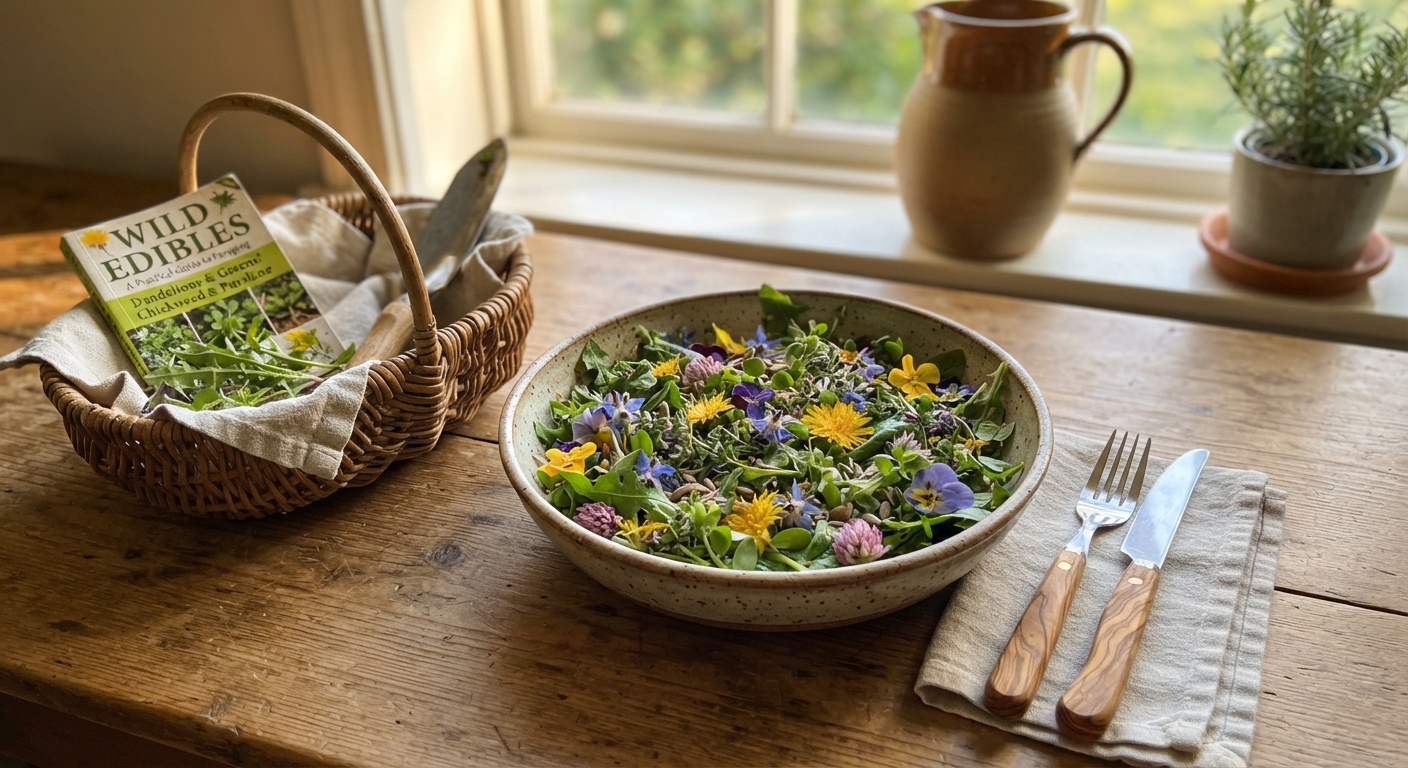
You don’t need deep wilderness, expensive gear, or years of training to start eating wild plants. You need curiosity, caution, and enough patience to check every identification three times before anything goes in your mouth.
The plants in this guide are growing within walking distance of where you’re sitting right now — in backyards, along sidewalks, at the edges of parking lots, in the unmowed corners of local parks. They’ve been there all along, waiting for you to notice them.
Start with dandelions. Learn them completely — every stage, every season, every lookalike. Then add one plant at a time, building your knowledge like a library, not a cram session. Within one growing season, you’ll be able to walk through your neighborhood and name a dozen edible plants. Within two, you’ll be cooking meals where the majority of ingredients came from the margins and forgotten edges of your local landscape.
That’s not a party trick. It’s a genuine, practical skill that connects you to place, season, and the living world in a way that grocery store produce never can.
Now go find a dandelion. It’s probably ten feet from your door.
New to foraging? Check out our guides on foraging safety for beginners and essential foraging tools and gear. For more wild food inspiration, see our guides on edible flowers you can find anywhere and early spring foraging: what to pick first.