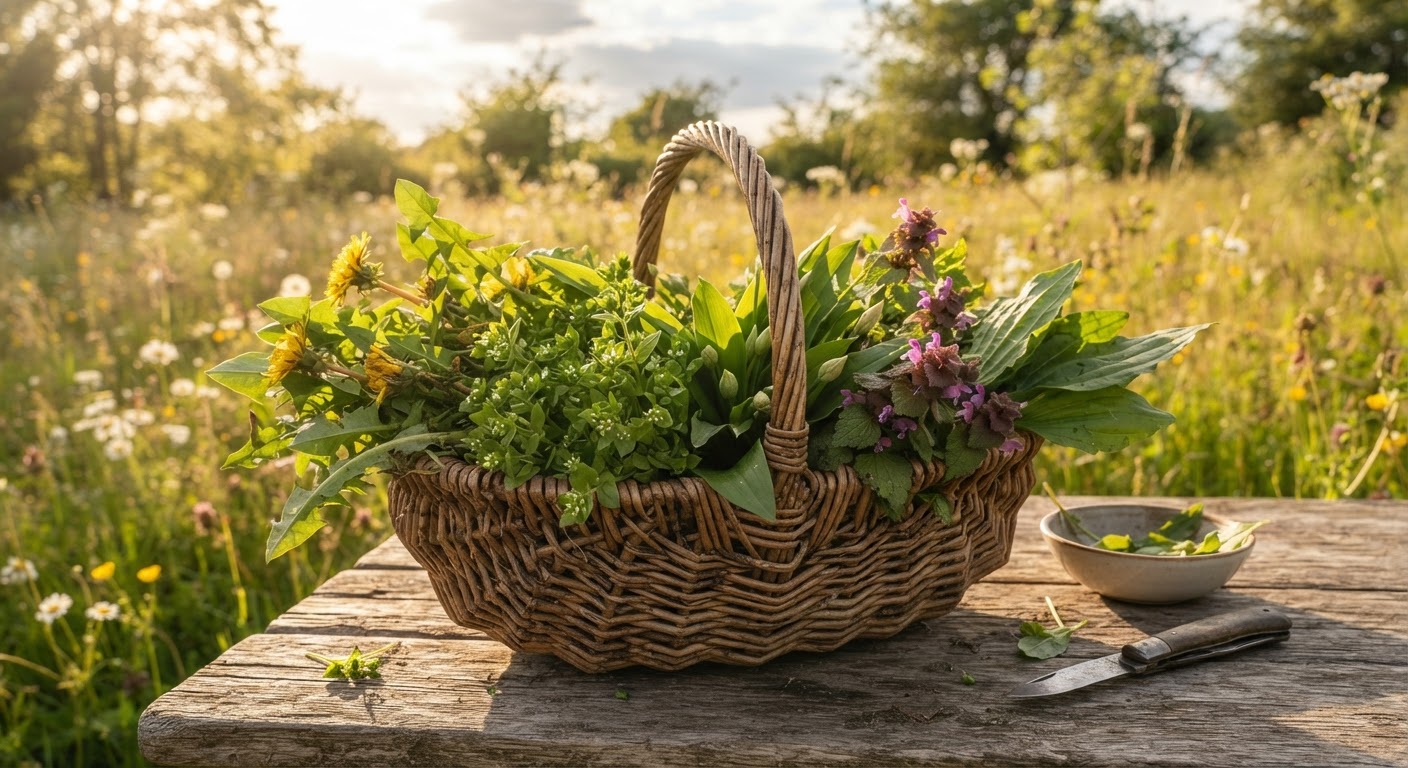
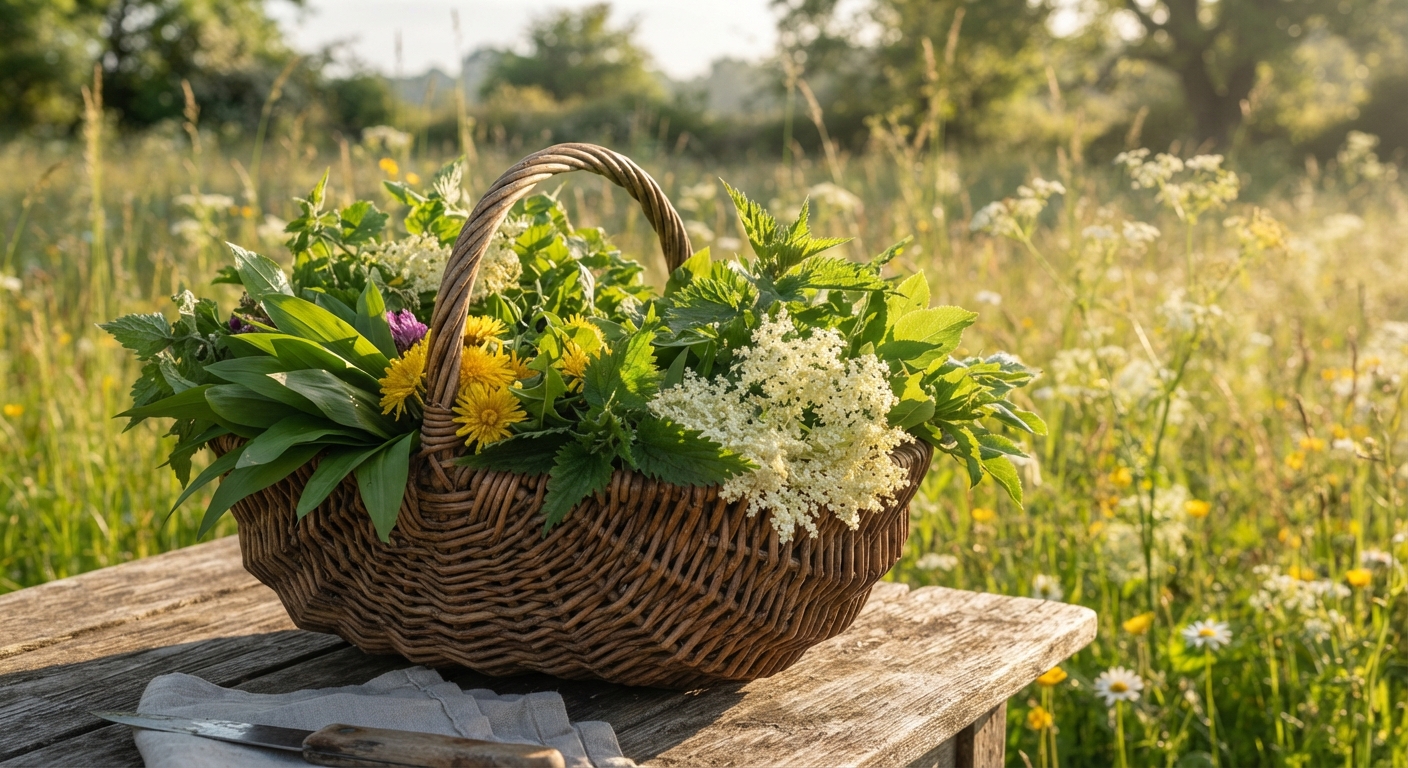
Every bushcrafter knows that gear can fail. A knife can break. A fire starter can get wet. But the land itself — that’s a pantry that never runs out, as long as you know how to read it.
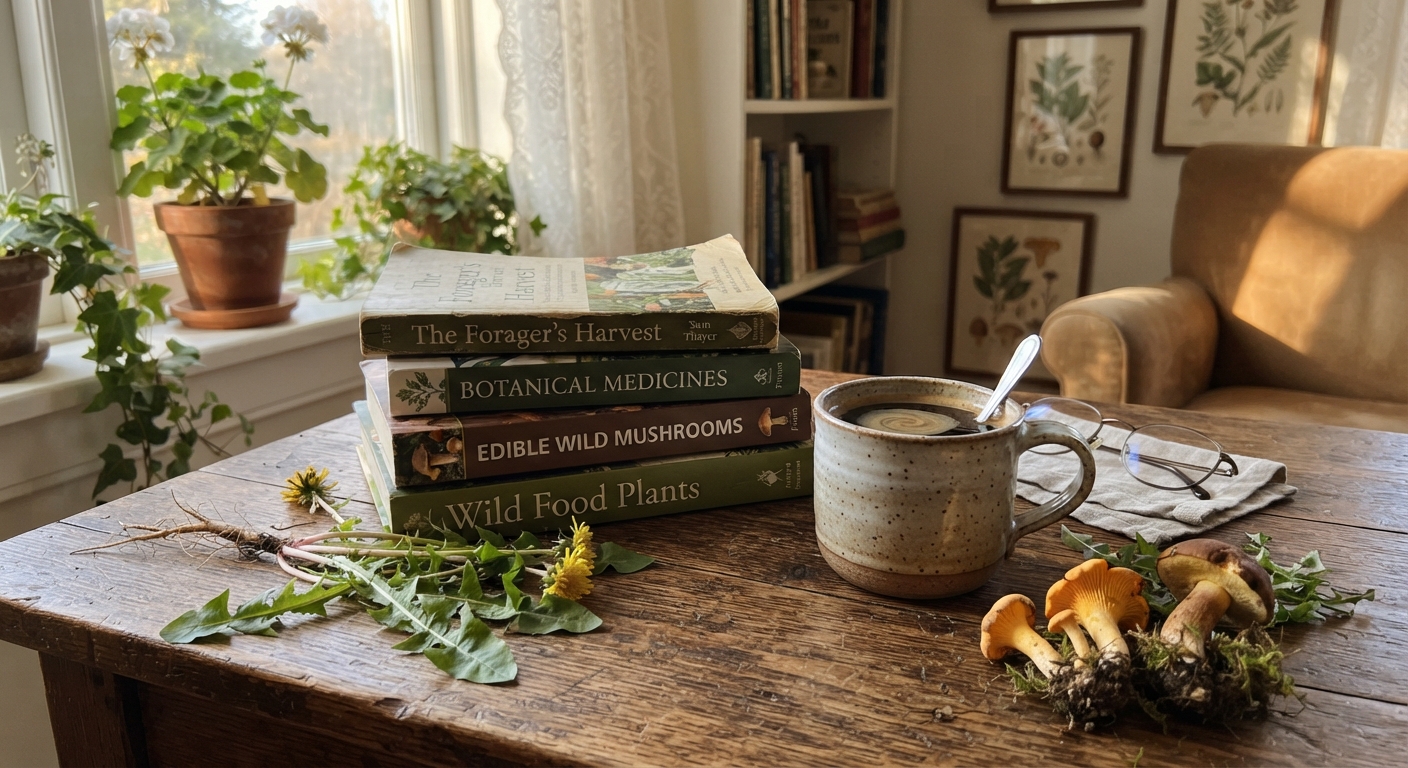
Bushcraft edible plants are the foundation of wilderness self-reliance. You don’t need a foraging basket or a field guide tucked under your arm. You need your eyes, your nose, your fingertips, and the kind of deep plant knowledge that comes from spending hours sitting in the dirt and actually paying attention.
This guide is not a survival manual. It’s a practical, experience-based walk through the edible plants that matter most when you’re living out of a pack, building your own shelter, and cooking over an open fire. Whether you’re a weekend bushcrafter practicing skills in a local woodland or someone preparing for extended wilderness stays, knowing which plants you can eat — and which ones will put you in serious trouble — is non-negotiable.
What Makes a Plant “Bushcraft Edible”?
In the foraging world, people talk about edible plants like they’re ingredients in a salad. Dandelion greens are nutritious. Chickweed is tasty. Sure — that’s all true.
But in a bushcraft context, “edible” means something different entirely.
Calories vs. Curiosity
There’s a massive gap between a plant you can eat and a plant that actually fuels your body. Many wild greens — wood sorrel, violet leaves, lamb’s quarters — are perfectly edible but deliver negligible calories. They’re garnish. They’re vitamins. They’re not going to keep you going after a full day of shelter building and firewood processing.
Bushcraft edible plants need to pull their weight. The ones worth knowing deeply fall into a few key categories:
- Starchy roots and tubers — cattail rhizomes, burdock root, wild carrot (with extreme caution), spring beauty corms
- Protein-rich seeds and nuts — acorns (processed), pine nuts, hazelnuts, black walnuts
- Sustaining greens — nettles, lamb’s quarters, amaranth (plants with real bulk and nutritional density)
- Calorie-dense fruits — persimmons, pawpaws, wild plums, blackberries in season
A handful of wood sorrel won’t get you through the night. But a cattail rhizome — properly harvested, peeled, and roasted — can deliver meaningful starch. That’s the bushcraft mindset.
Availability Across Seasons
Another thing that separates bushcraft plants from novelty foraged foods: you need to know what’s available right now, not just what looks good in a springtime Instagram post.
Cattails, for example, offer something edible in every season. Spring shoots. Summer pollen. Fall and winter rhizomes. That kind of year-round utility is gold in bushcraft.
Pine trees — not glamorous, not trendy — give you inner bark (cambium) in spring, pollen in early summer, and nuts in fall. A single white pine can provide food across three seasons.
The Core Bushcraft Edible Plants You Should Know Cold
I’m not going to give you a field guide with 200 plants. That’s not how real knowledge works. You learn a few plants so deeply that you could identify them blindfolded, with your eyes closed, by touch and smell alone. Then you add more over time.
Here are the ones that matter most.
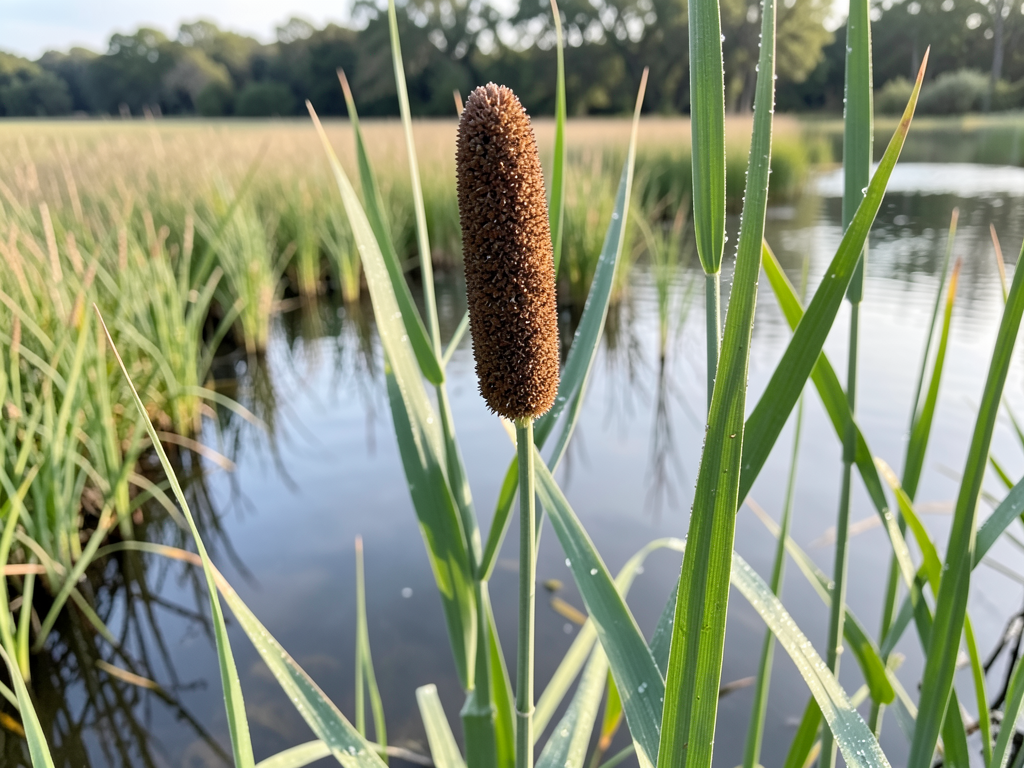
Cattail (Typha species) — The Supermarket of the Swamp
If there’s one plant that every bushcrafter should treat like an old friend, it’s cattail. Few wild plants offer this much food value across every season.
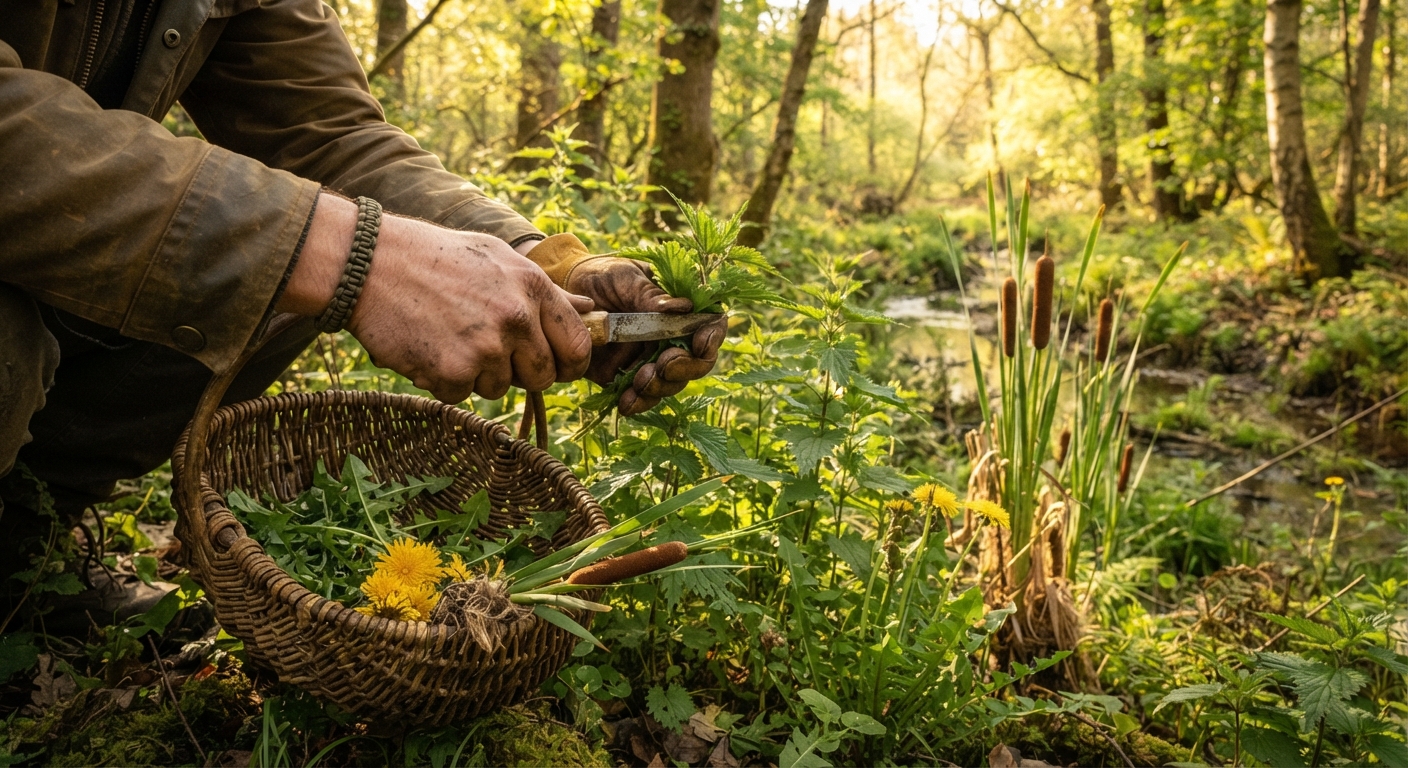
Spring: Peel back the outer leaves and harvest the tender white core of the shoot. It tastes like a mild cucumber meets zucchini. Eat it raw, slice it into stews, or sauté it over a campfire with some salt.
Early summer: The green flower spike, before it turns brown and fluffy, can be boiled and eaten like corn on the cob. It’s starchy and surprisingly satisfying. The yellow pollen that shakes off the mature male spike is pure wild flour — mix it with regular flour for bannock or flatbread.
Fall through winter: Dig down into the mud and pull up the rhizomes. They’re loaded with starch. Peel them, crush them in water, let the starch settle, pour off the water, and you’ve got cattail flour. It’s labor-intensive but it’s real calories.
Safety note: Cattails grow in standing or slow-moving water. If the water is polluted — agricultural runoff, industrial areas, roadside ditches — the plants absorb those contaminants. Harvest from clean water sources only.
Stinging Nettle (Urtica dioica) — Nature’s Multivitamin
I know, I know. It stings. But once you’ve learned to handle nettles with confidence — pinch the leaf firmly from the top, fold it inward — you’ll stop seeing the sting as a problem and start seeing it as a sign that this plant is absolutely packed with bioactive compounds.
Nettles are ridiculously nutritious. More protein than spinach. Loaded with iron, calcium, magnesium, and vitamins A, C, and K. In a bushcraft context, nettles are one of the few wild greens that feel like actual food, not just roughage.
Harvest: Take the top 4-6 inches of young plants in spring. Once nettles flower, they develop gritty particles (cystoliths) that can irritate the kidneys — stick to pre-flowering plants.
Use: Blanch them in boiling water for 30-60 seconds to neutralize the sting, then use them exactly like spinach. Nettle soup. Nettle tea. Nettles stirred into a pot of foraged stew. The cooking water becomes a mineral-rich broth — don’t throw it away.
Bushcraft bonus: Nettle stems contain strong fibers that can be processed into cordage. Food and tool material from the same plant.
Dandelion (Taraxacum officinale) — The Whole-Plant Food
Most people look at a dandelion and see a weed. A bushcrafter looks at a dandelion and sees four different foods on one plant.
Roots: Dig them up, scrub them clean, roast them until dark brown, and grind them. Dandelion root “coffee” has been a backwoods staple for generations. The roasted roots can also be eaten as a starchy vegetable.
Leaves: Best harvested before the plant flowers. After flowering, they turn intensely bitter — still edible, but an acquired taste. Young dandelion greens are excellent raw or lightly cooked.
Flowers: The yellow petals make a bright, slightly sweet addition to salads. They can also be battered and fried, or fermented into a simple wild wine. Separate the petals from the green bracts — the bracts are bitter.
Stems: The hollow flower stems can be peeled and eaten raw. They have a mild, slightly sweet taste when young.
Burdock (Arctium species) — The Underground Prize
Burdock doesn’t look like food. It looks like something that should be left alone — big elephant-ear leaves, burrs that stick to everything, an overall thuggish appearance.
But underground, burdock is hiding a long, deep taproot that’s been a staple food in Japan (where it’s called gobo) for centuries.
Harvest: First-year plants only. Look for the basal rosette — no flower stalk. Second-year plants put energy into flowering and the root turns woody and unpleasant. Dig deep; burdock roots can extend two feet or more into the soil. A digging stick or trowel is essential.
Use: Scrub thoroughly or peel. Slice into thin rounds and boil, roast over coals, or stir-fry. The flavor is earthy, slightly sweet, with a texture somewhat like parsnip crossed with artichoke heart.
Identification caution: Burdock leaves are distinctive, but you’re harvesting the root — and you can’t see the root’s leaves from underground. Always verify that the above-ground plant matches burdock before digging. The basal rosette of large, woolly, heart-shaped leaves with whitish undersides is your key marker.
Acorns (Quercus species) — The Forgotten Staple
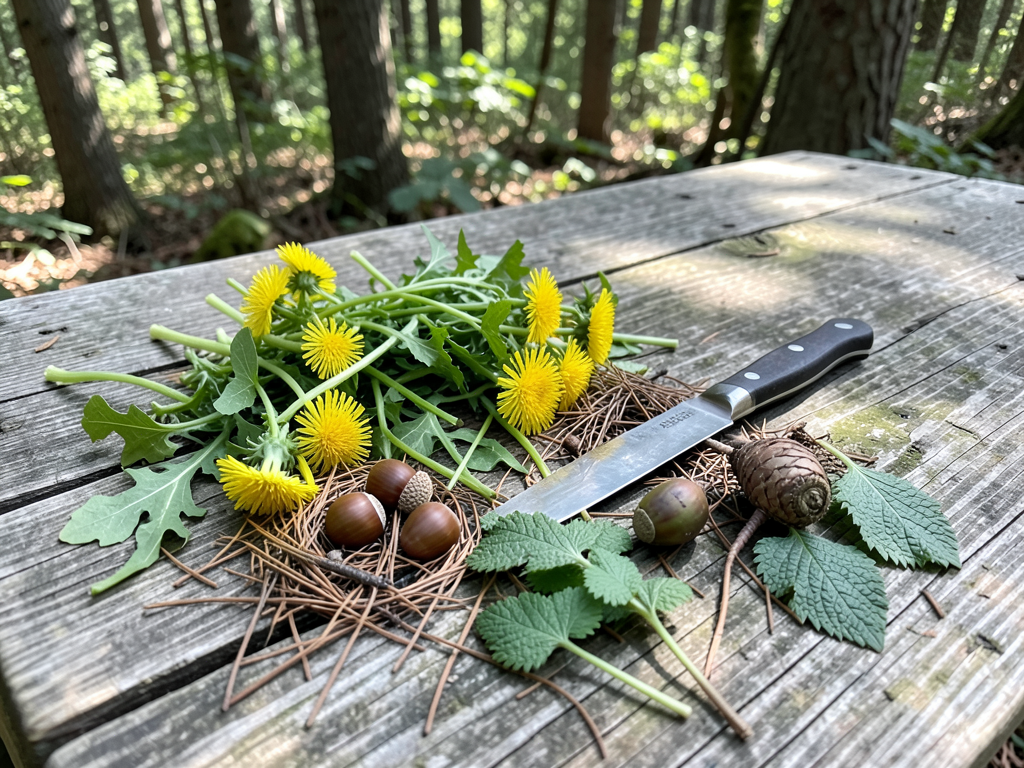
Acorns have fed more humans throughout history than wheat, rice, and corn combined. Let that sink in. Entire civilizations — the indigenous peoples of California, the Jōmon culture of prehistoric Japan, countless European communities — built their diets around processed acorns.
And yet most modern bushcrafters ignore them because acorns require processing. That’s a mistake.
Collection: Gather acorns in fall. Float-test them — discard any that float (they’re weevil-damaged or dried out). White oak acorns are generally less tannic than red oak, but all acorns need leaching.
Cold leaching (traditional method): Shell the acorns, grind them into a coarse meal, place the meal in a cloth bag, and submerge in a cold, running stream for 1-2 days. Or soak in multiple changes of cold water until the bitterness is gone.
Hot leaching (faster): Boil shelled acorns in multiple changes of water, discarding the brown water each time, until the water stays clear and the acorns taste mild.
Use: Acorn flour can replace up to half the flour in bannock, pancakes, or flatbread. It’s nutty, slightly sweet, and rich in complex carbohydrates. Whole leached acorns can be roasted and eaten as a snack.
Pine (Pinus species) — Three Foods from One Tree
Pine trees are everywhere in the northern hemisphere, and they offer multiple edible resources if you know what to harvest and when.
Inner bark (cambium): In spring, when sap is flowing, the inner bark of pine trees can be peeled away from the trunk. It’s chewy, slightly resinous, and contains digestible carbohydrates. Slice it into strips and boil, roast over coals, or dry and grind into a flour extender. Never girdle the tree — only harvest from fallen limbs or take small vertical strips from one side of a live tree.
Pollen: In late spring, male pine cones release clouds of yellow pollen. Collect it by shaking cones into a bag. Pine pollen is nutrient-dense and can be added to flour or eaten as a supplement.
Pine nuts: Not all pine species produce nuts worth harvesting, but if you’re in an area with piñon pines, stone pines, or Korean pines, the seeds inside the cones are calorie bombs — rich in fat, protein, and flavor.
Wild Berries — The Seasonal Jackpot
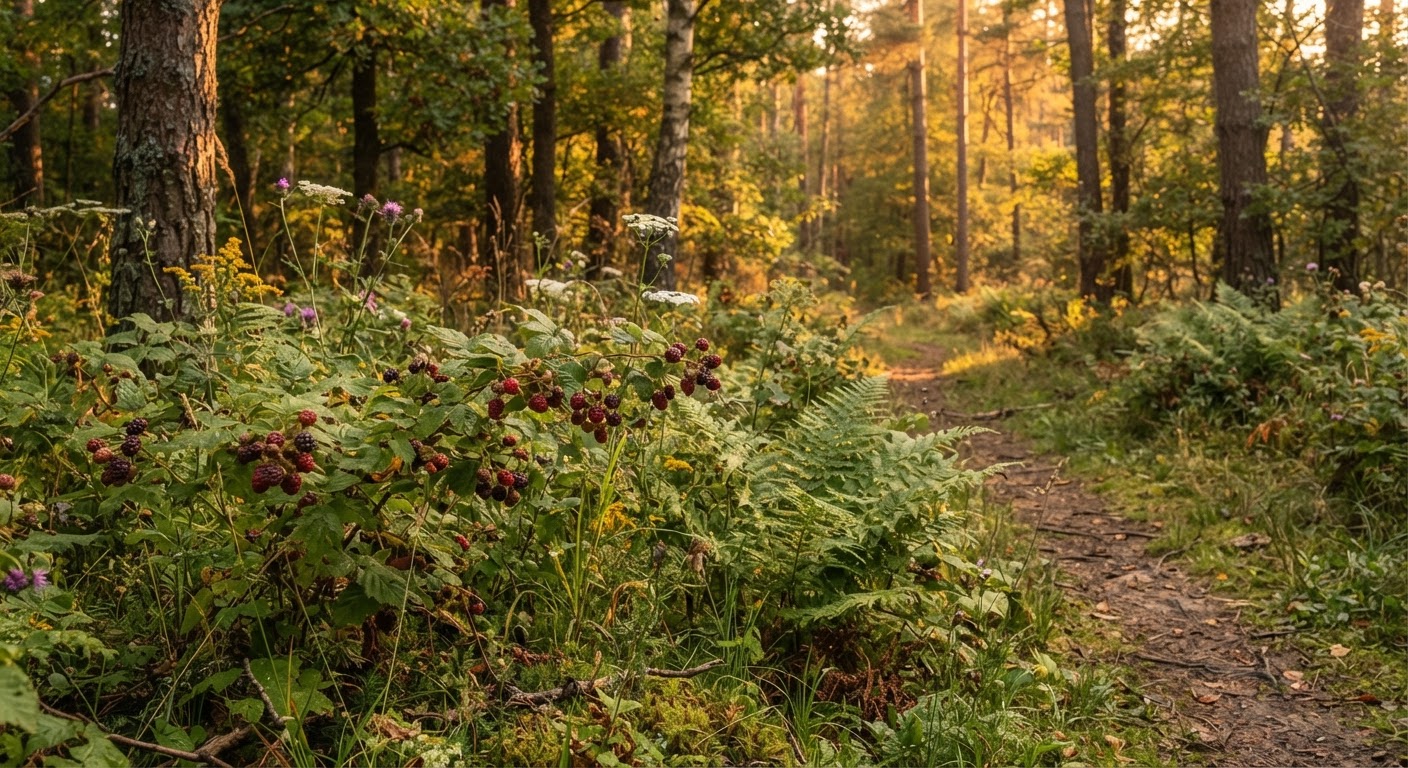
Blackberries, raspberries, blueberries, huckleberries, elderberries, mulberries, wild strawberries. The list of edible wild berries is long and mostly safe — but the “mostly” is important.
The universal berry rule: In North America, aggregate berries (clusters of small drupelets, like raspberries and blackberries) are almost universally safe. Single berries on a stalk can go either way. White and yellow berries are suspicious. Never eat a berry you can’t identify with 100% certainty.
Bushcraft use: Beyond eating fresh, wild berries can be sun-dried or smoke-dried for preservation, mashed into pemmican, or boiled down into a concentrated fruit leather.
The Plants You Absolutely Must Not Confuse
Plant identification in bushcraft isn’t about memorizing edible species. It’s about knowing the dangerous look-alikes cold.
The Hemlock Family — Silent Killers
Water hemlock (Cicuta) and poison hemlock (Conium maculatum) are the most dangerous plants in North America and Europe. Water hemlock kills faster than any other plant on the continent — a single mouthful of the root can cause violent seizures and death within hours.
What they look like: Both have compound umbel flowers — flat clusters of small white flowers — that resemble wild carrot (Queen Anne’s lace), wild parsnip, and other edible Apiaceae family plants. Poison hemlock has purple spots on its smooth, hairless stems. Wild carrot stems are hairy. “The queen has hairy legs” is the mnemonic — if the stem is smooth, step away.
Pokeweed — The Trickster
Pokeweed (Phytolacca americana) shoots are eaten as “poke sallet” in parts of the American South, but only after repeated boiling in multiple changes of water. Eat the raw plant, the mature leaves, or the berries, and you’re in for a world of gastrointestinal misery — vomiting, diarrhea, and in severe cases, respiratory failure.
The bushcraft rule on pokeweed: Unless you were taught how to prepare it by someone who learned from their grandmother, leave it alone.
False Morels — Not a Plant, but Worth Mentioning
Many bushcrafters also hunt mushrooms. True morels (Morchella) are among the safest and most prized wild mushrooms. False morels (Gyromitra) contain monomethylhydrazine — rocket fuel precursor — that can cause severe illness or death. True morels are hollow from tip to stem when sliced lengthwise. False morels are chambered or solid inside. If the cap looks like a brain instead of a honeycomb, walk away.
Bushcraft Harvesting Ethics and Techniques
Good bushcraft isn’t about taking everything you find. It’s about leaving the ecosystem healthier than you found it.
The Quarter-Harvest Rule
Never take more than 25% of any plant population you encounter. If there are four cattail patches in a marsh, harvest from one. If there’s a patch of nettles, take what you need from the outer edge and leave the center intact.
This isn’t just environmentalism — it’s self-interest. The plants that feed you today need to reproduce and spread so they can feed you (and others) next year.
Tools That Make Harvesting Easier
A good bushcraft knife is the obvious starting point, but specific plants call for specific tools:
- A digging stick or hori-hori knife for roots and tubers
- Gloves for nettles and thistles (though learning barehanded nettle technique is a point of pride)
- Cloth bags, not plastic — wild greens need to breathe or they wilt into slime
- A small tarp for collecting acorns, pine nuts, or berries — spread it under the tree and shake the branches
Processing in Camp
Most bushcraft plants need at least some processing before eating. Set up a processing station in camp — a flat rock or a section of clean tarp works. Keep separate containers for:
- Raw unprocessed material
- In-process material
- Finished, ready-to-cook food
Cross-contamination between processed and unprocessed plants is a real concern, especially with acorns (raw acorn meal mixed into finished acorn flour defeats the whole leaching process).
Cooking Bushcraft Plants Over Fire
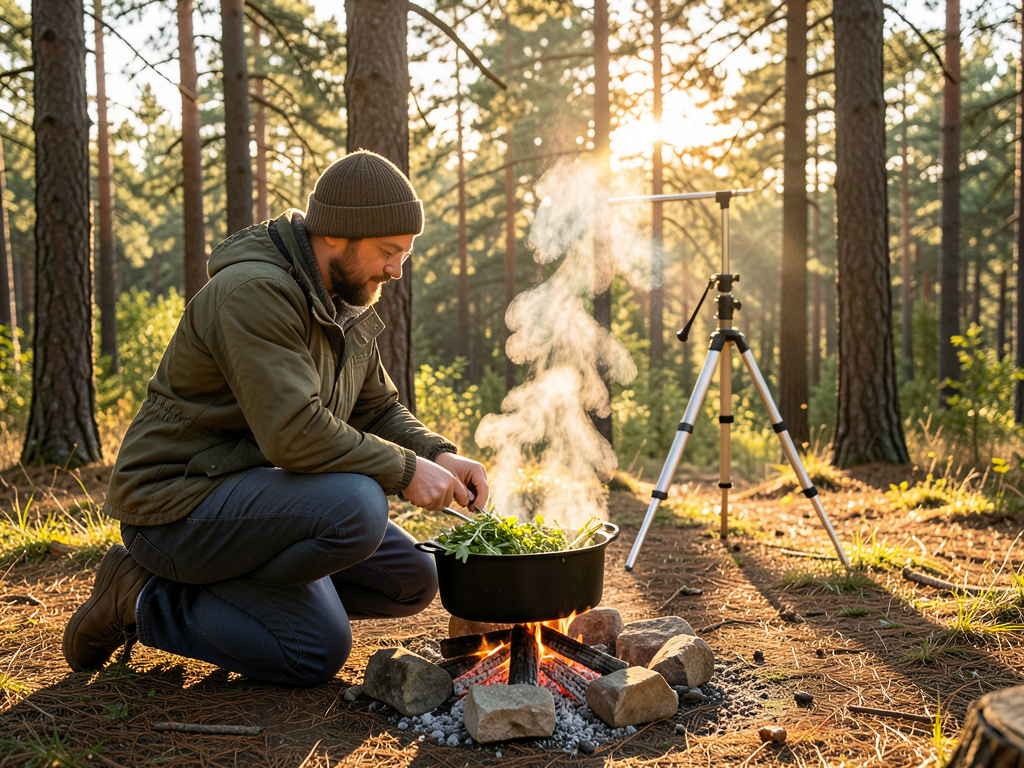
The bushcraft cooking toolkit is simple: fire, a pot, maybe a flat rock or a green stick. You’re not making delicate reductions. You’re extracting maximum nutrition with minimal equipment.
Ash Cooking
One of the oldest cooking methods. Wrap roots, tubers, or dense plant material in wet leaves or clay, bury it in hot coals and ash, and let it steam-roast for 30-60 minutes. Cattail rhizomes and burdock root work beautifully this way.
Rock Boiling
If you don’t have a metal pot, you can heat clean, non-porous rocks in the fire and drop them into a water-filled container — a hollowed log, a bark container, a tightly woven basket. The rocks bring the water to a boil. It’s slow and inefficient compared to a pot over flames, but it works.
Green Stick Roasting
Thread chunks of root or mushroom onto a peeled green stick and prop it over coals. Rotate frequently. This is how you cook cattail flower spikes, burdock root rounds, or puffball mushroom slices.
Bannock with Wild Additions
The classic bushcraft bread — flour, baking powder, salt, water — becomes infinitely more interesting with wild additions. Nettle powder. Ground acorn meal. Dried berries. Pine pollen. Cook it wrapped around a stick over coals, or in a greased pan if you have one.
Wild Teas and Infusions
Sometimes the best thing a plant can give you is a hot drink. Pine needle tea provides vitamin C. Nettle tea is mineral-rich. Mint species grow wild in many areas. Yarrow is bitter but useful. A pot of hot wild tea after a long day of bushcraft is worth more than its nutritional content — it’s morale in a cup.
Building Your Plant Knowledge: A Practical Framework
You can’t learn bushcraft edible plants from a screen. You need to spend time with them. But you can approach your learning deliberately.
The Five-Encounter Rule
For each new plant you want to learn, commit to finding and positively identifying it five separate times — in different locations, in different seasons. Don’t eat it until the fifth encounter. By then, you should know:
- What it looks like at every growth stage
- Its habitat preferences
- Any seasonal changes in appearance
- Its most common look-alikes and how to distinguish them
- The best harvesting window
Start With Three
Pick three plants from this guide — I’d suggest cattail, nettle, and dandelion — and learn them to the bone before expanding your repertoire. Three plants you know deeply will serve you better than twenty you sort-of recognize.
Keep a Bushcraft Plant Journal
Not a pretty nature journal. A practical log. For each outing:
- Date, location, weather, recent rainfall
- What you found, where, at what growth stage
- What you harvested and how much
- How you processed and cooked it
- What worked, what didn’t, what you’d do differently
Six months of journaling this way will teach you more than any book.
Common Mistakes Bushcraft Beginners Make
I’ve made most of these myself. They’re part of the learning process, but knowing about them ahead of time can save you some unpleasant meals — or worse.
Relying on a single identification feature. Never identify a plant by one characteristic. Leaf shape alone is not enough. You need to match: leaf pattern, stem characteristics, flower structure, habitat, season, and smell. If all six check out, you’re in good shape.
Ignoring habitat clues. Water hemlock grows in wet meadows and stream banks. Wild carrot grows in dry, disturbed soils. If you find what looks like wild carrot in a swamp, your identification is probably wrong — even if the flower matches.
Eating too much of a new plant. Your digestive system isn’t adapted to wild foods the way it’s adapted to grocery store vegetables. Even a perfectly safe wild plant can cause stomach upset if you eat a large quantity on your first try. Start with a small portion and wait several hours.
Forgetting to check local regulations. Foraging restrictions vary wildly between national forests, state parks, BLM land, and private property. In some places, harvesting any plant material requires a permit. In others, certain species are protected. Know before you go.
Confusing “edible” with “palatable.” Many wild plants are technically edible but taste awful — bitter, astringent, or just deeply unpleasant. There’s no prize for suffering through a meal of something that makes you miserable. Focus on plants that are both safe and worth eating.
Frequently Asked Questions
Can I survive on wild plants alone?
In most temperate environments, no — not long-term. Wild plants provide critical vitamins, minerals, and some carbohydrates, but they rarely deliver enough calories and almost never provide adequate fat and complete protein without animal food sources. In a short-term bushcraft scenario, wild plants are a vital supplement. For long-term survival, you need a broader food strategy that includes fishing, trapping, or hunting.
What’s the single most important plant to learn first?
Cattail. It’s widespread across North America and Eurasia, it’s easy to identify, it has no dangerous look-alikes (once you’ve confirmed you’re looking at a cattail), and it provides food in every season. There’s a reason survival instructors drill cattail identification endlessly — it’s that valuable.
How do I test if an unknown plant is edible?
The Universal Edibility Test exists, but it’s a last resort for genuine survival emergencies. It’s time-consuming, it doesn’t work on all plant toxins, and it can still make you sick. In a bushcraft context, where you have time to prepare and learn, there is absolutely no reason to eat an unknown plant. Learn your local species before you need them.
Is it safe to eat plants near trails or roads?
Generally no. Plants near roads absorb vehicle exhaust particulates, heavy metals, and road salt runoff. Popular trails often mean dogs — and dog waste. A good rule of thumb: if you can see or hear a road, harvest somewhere else. Go at least 50-100 yards off trail.
What’s the best season for bushcraft foraging?
Late spring through early fall offers the most variety. But every season has something: early spring greens and shoots, summer berries and pollen, fall nuts and roots, and winter — well, winter teaches you to rely on what you’ve preserved and on the few stalwarts (cattail rhizomes, pine cambium, rose hips) that persist through the cold.
The Bigger Picture: Plants as Teachers
Here’s something most foraging guides won’t tell you: the plants themselves will teach you more than any article ever could.
When you sit in the same patch of woods week after week, you notice things. You notice that nettles always grow where the soil has been disturbed — old burn sites, collapsed structures, flood zones. You notice that cattails in one marsh taste sweeter than cattails in another, because the water chemistry is different. You notice that the acorn crop is heavy one year and sparse the next, and you start paying attention to spring weather patterns to predict fall nut harvests.
This is plant literacy. It’s not about memorizing facts. It’s about developing a relationship with a landscape so deep that you can read it like a book — and eat from its pages.
The next time you head into the woods for a bushcraft weekend, don’t just practice fire-starting and shelter-building. Spend an hour sitting with one plant. Really looking at it. Drawing it. Noting where it grows and what grows around it. Tasting a small piece if you’re confident in your identification. Take notes.
Do that ten times with ten different plants, and you’ll have something more valuable than any piece of bushcraft gear in your pack.
Happy foraging — and stay safe out there. 🌿