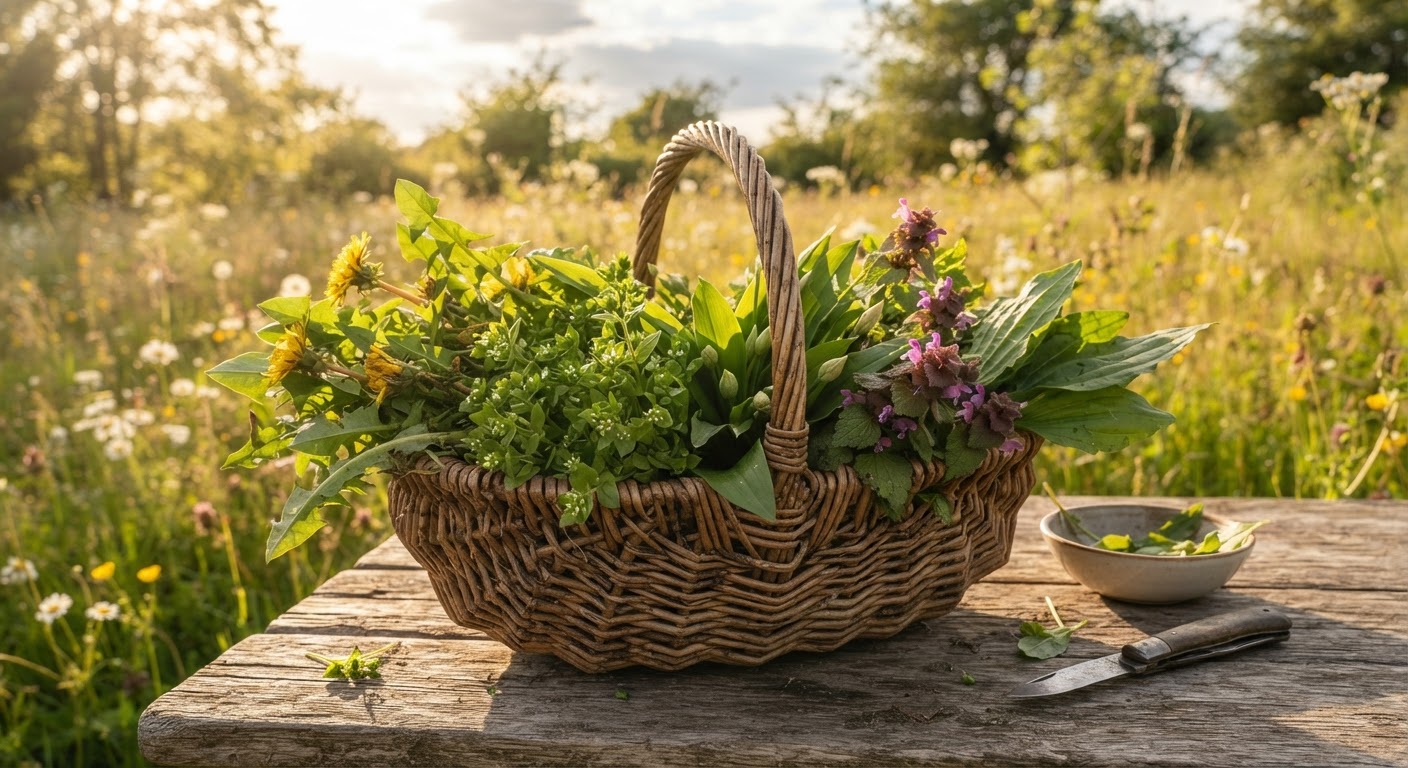
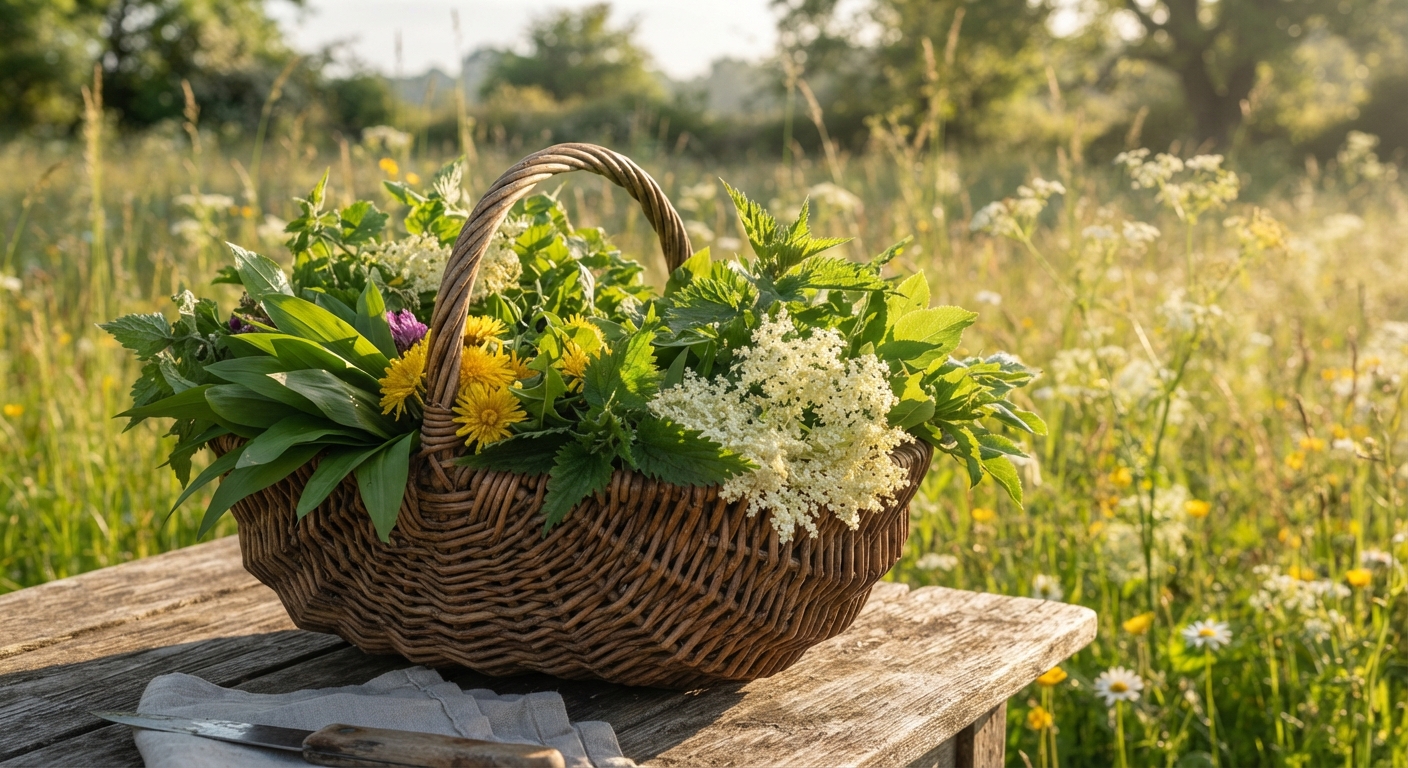
A foraging knife is one of those tools where the difference between a good one and the wrong one becomes painfully obvious the moment you’re kneeling in damp soil, trying to cleanly cut a mushroom stem without mangling the surrounding mycelium.
Most beginners grab whatever pocket knife is lying around. That works — until it doesn’t. A proper foraging knife changes how you harvest, how much you damage the plants, and how long your back holds up after a three-hour forage.
This guide breaks down everything you need to know to pick the best foraging knife for your needs, based on what you actually forage and where you do it.
Why a Dedicated Foraging Knife Actually Matters
You can technically harvest wild plants with scissors, a kitchen knife, or your bare hands. People do it all the time. But here’s what happens when you use the wrong tool:
You damage the plant. Ripping stems by hand or using a dull blade crushes plant tissue instead of cutting it clean. For mushrooms, this matters even more — a jagged cut invites bacteria and can destroy the underground mycelial network.
You slow yourself down. A proper foraging knife lets you harvest in one clean motion. A bad one means sawing, twisting, or going back for multiple cuts. Over a few hours, that adds up to real time and frustration.
You risk your safety. Foraging often involves reaching into thorny brush, cutting through tough stems near your fingers, or working in low light. A knife with good grip and the right blade shape means fewer slips.
You wear out your good knives. Kitchen knives aren’t built for outdoor use. Sap, dirt, and moisture will destroy a chef’s knife faster than you’d expect.
The right foraging knife solves all of this. It’s not a luxury — it’s the one piece of gear that touches every single thing you harvest.
Key Features to Look For in a Foraging Knife
Not all knives work well for foraging. Here’s what separates a real foraging blade from everything else.
Blade Shape: Curved vs. Straight
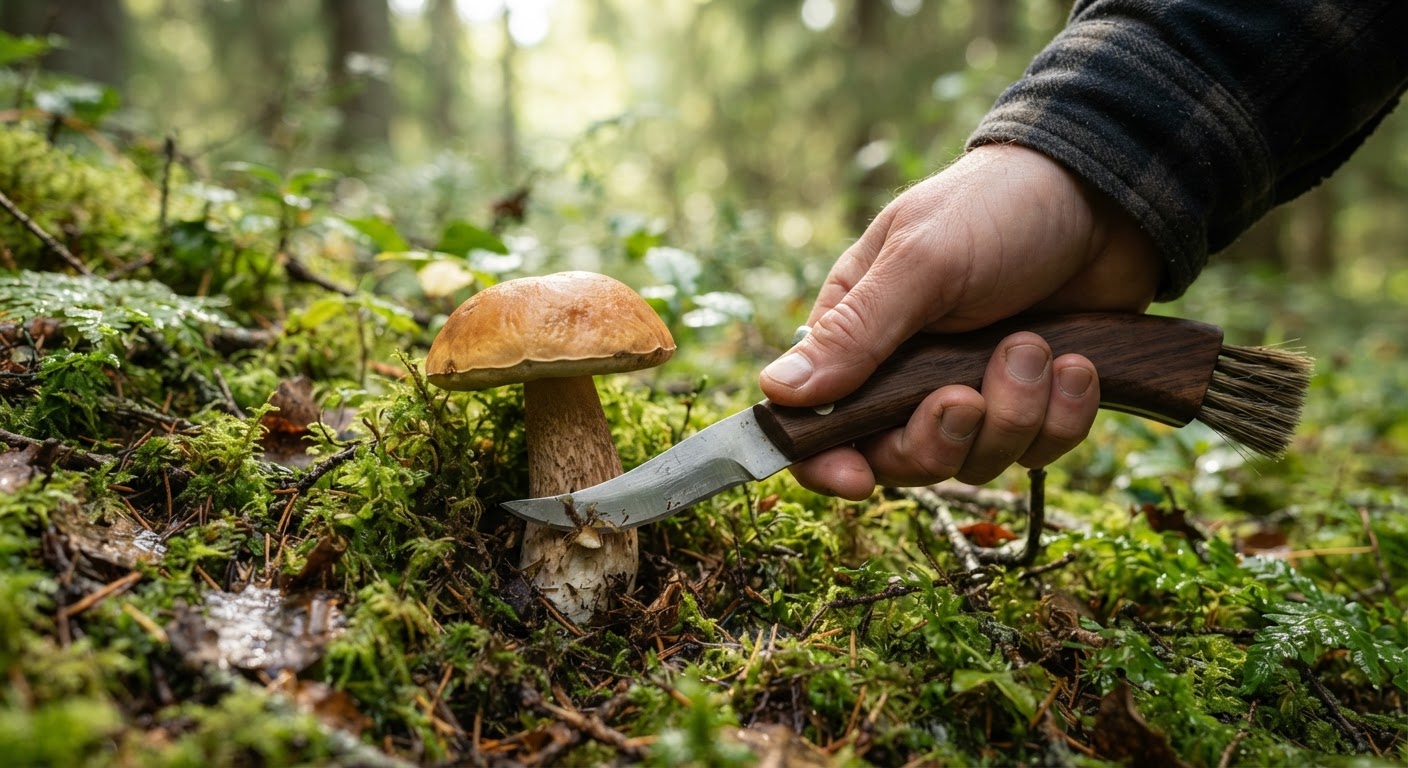
Curved blades are the gold standard for mushroom foraging. The inward curve — sometimes called a hawkbill — lets you reach under mushroom caps and slice through stems clean without disturbing the surrounding soil. A classic example is the Opinel mushroom knife, which has a pronounced curve near the tip.
Straight blades are better if you forage a mix of greens, herbs, and roots. They’re more versatile for slicing through thick nettle stalks, cutting dandelion roots, or trimming woody herb stems. A drop-point or spear-point blade handles this well.
Serrated edges have their place but they’re divisive. The serrations grip and tear — good for fibrous stems like burdock, bad for delicate mushrooms where you want a clean surgical cut.
Blade Length
For foraging, smaller is almost always better. You need precision, not a survival knife.
- 5 to 8 cm (2 to 3 inches): Ideal for mushrooms and delicate greens. Short blades give you maximum control when working close to the ground.
- 8 to 10 cm (3 to 4 inches): Good all-around length if you also cut woody herbs, small branches, or fibrous roots.
- Anything over 10 cm: Overkill for foraging. You’ll have less control and more weight.
Folding vs. Fixed Blade
Folding knives dominate the foraging world because they’re compact, safe to carry, and legal in most places. You can slip one in your pocket or foraging bag without a sheath. The Opinel No. 8 and its mushroom-specific variants are folding knives for a reason.
Fixed blade knives offer more strength but less convenience. They’re better if you forage somewhere remote and also need to process firewood or cut cordage. A small fixed blade with a 3-inch blade (like a Mora Eldris) straddles the line between bushcraft and foraging.
Handle Material and Grip
Foraging happens in wet conditions — morning dew, rain, muddy hands. Your knife handle needs to stay grippy when wet.
- Wood handles (beech, olive, walnut) feel warm and natural but can swell with moisture. Opinel’s beech handles are treated but still benefit from occasional oiling.
- Rubber or thermoplastic handles give the best wet grip. The Morakniv Companion series uses a rubberized handle that’s nearly slip-proof.
- Micarta or G10 handle materials are durable and grippy but tend to show up on more expensive knives.
Additional Features Worth Having
- Integrated brush: Many dedicated mushroom knives include a small bristle brush on the handle end. This is genuinely useful — you can brush dirt and debris off mushrooms in the field instead of at home where it’s dried on.
- Lanyard hole: For attaching a bright-colored cord so you don’t lose your knife in leaf litter. This sounds trivial until you’ve spent 20 minutes searching for a dropped knife in a forest.
- Locking mechanism: A folding knife should lock open. A blade folding onto your fingers mid-cut is not a good time. Look for a reliable lock — Opinel’s Virobloc ring lock is simple and works.
The Main Types of Foraging Knives
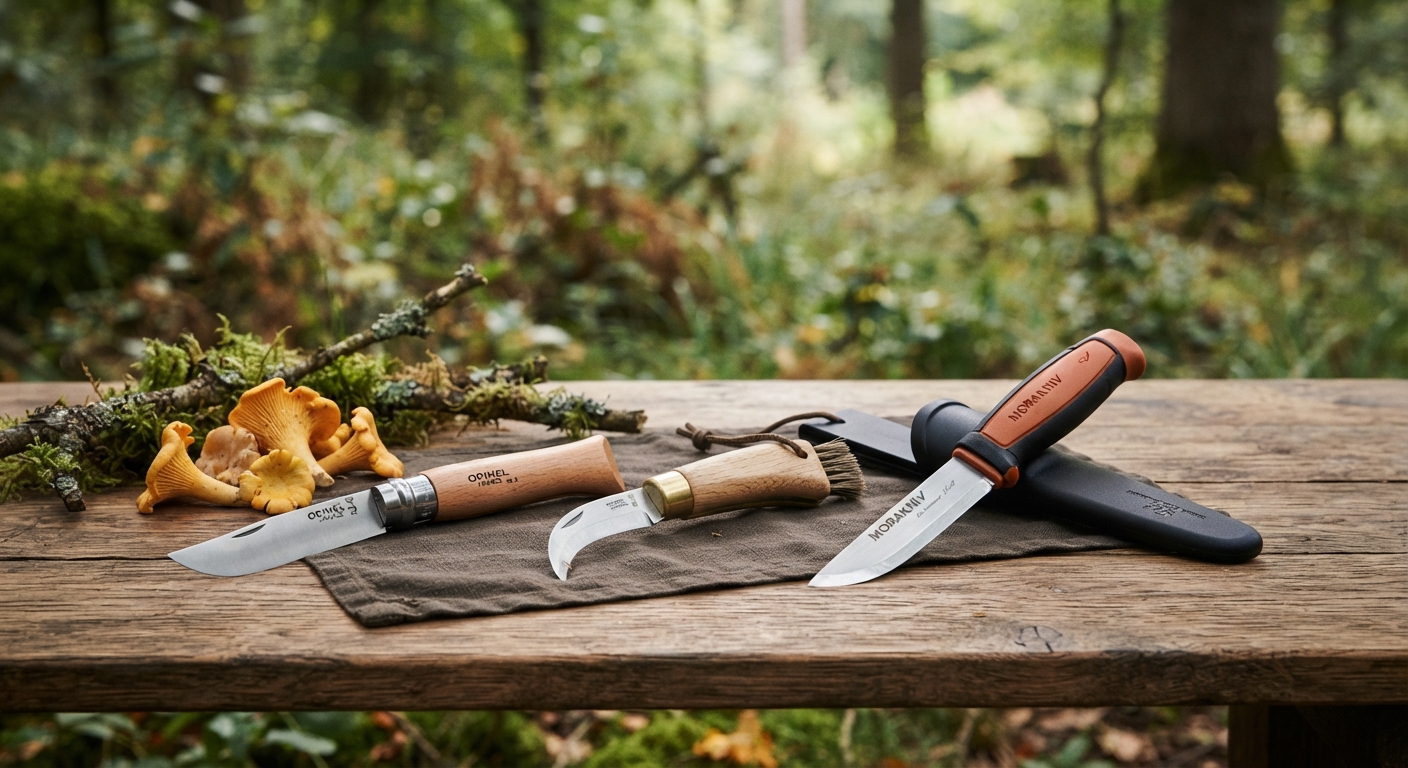
Foraging knives fall into a few distinct categories. Each solves a different problem.
1. The Mushroom Knife (Curved Blade + Brush)
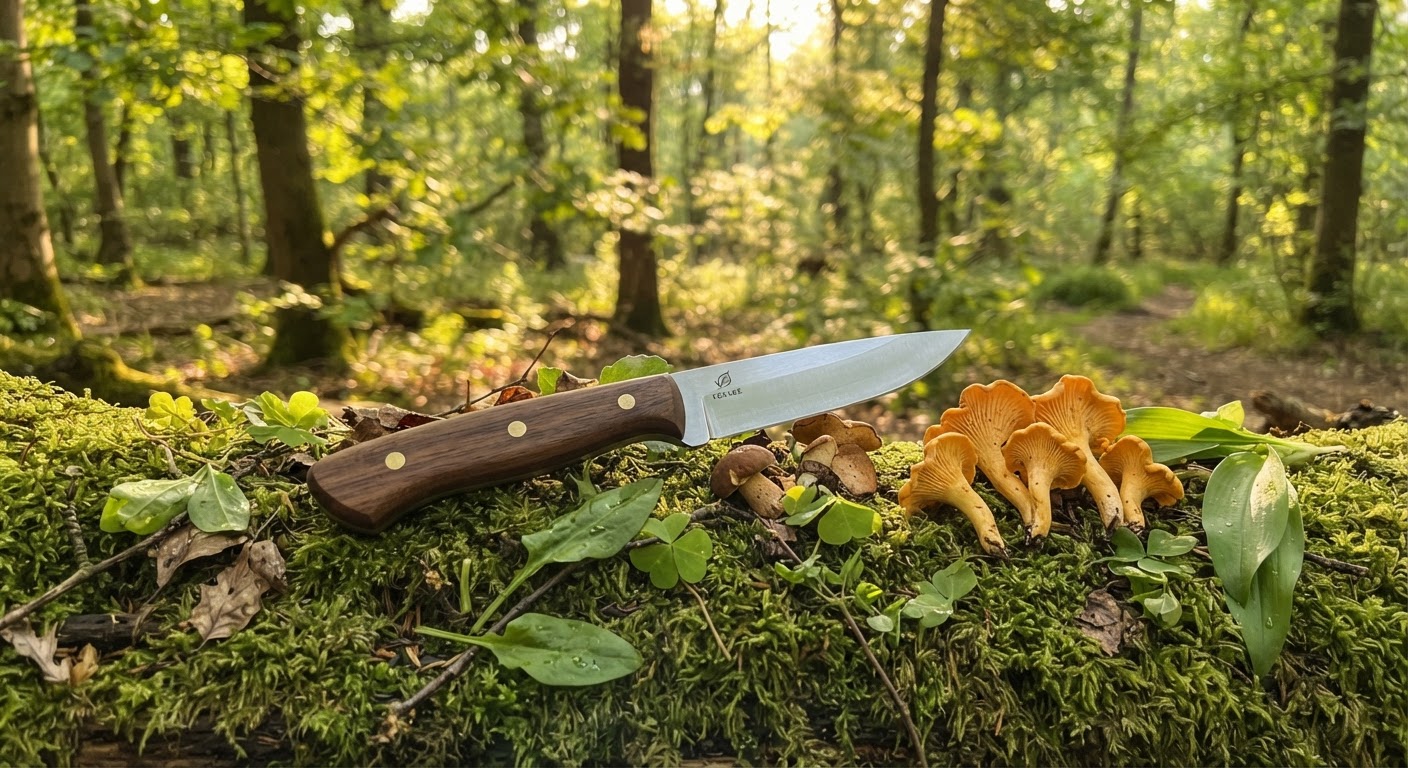
This is the most specialized foraging knife. It has a pronounced curved blade and often includes a brush on the handle. The curve lets you reach under mushroom caps and slice stems at the base without digging up the mycelium — which is both better for the fungus and keeps your harvest cleaner.
Best for: Dedicated mushroom hunters, anyone who forages fungi regularly.
Watch out for: The curve makes it less useful for cutting greens or woody stems. If mushrooms are only 20% of what you forage, this might not be your daily carry.
2. The Classic Folding Knife (Straight Edge)
Think Opinel No. 8 or a Swiss Army Knife. These are generalists — they handle mushrooms, greens, herbs, and light bushcraft equally well. The straight blade isn’t optimized for any single task but works acceptably for most.
Best for: Beginners, mixed foraging (mushrooms + greens + herbs), people who want one do-it-all knife.
Watch out for: The tip isn’t ideal for reaching under mushroom caps. You’ll need to adjust your cutting angle.
3. The Fixed-Blade Bushcraft Knife (Compact)
Small fixed blades like the Mora Eldris or a custom neck knife fall into this category. They’re built tougher than folding knives and can handle tasks beyond foraging — splitting kindling, preparing food, cutting cordage.
Best for: Backcountry foragers who camp out, anyone combining foraging with bushcraft.
Watch out for: You need a sheath, they’re less pocketable, and the blade may be too thick for delicate mushroom work.
4. The Hori Hori (Japanese Soil Knife)
This deserves its own category. A hori hori is a serrated digging knife with a concave blade — designed for both cutting and digging. It’s the tool of choice for harvesting roots (burdock, dandelion, wild carrot) and for cutting through tough soil.
Best for: Root harvesting, tough-stemmed plants, gardeners who also forage.
Watch out for: It’s heavy, requires a sheath, and is overkill if you mainly harvest mushrooms and leaves.
Top Picks: The Best Foraging Knives in 2026
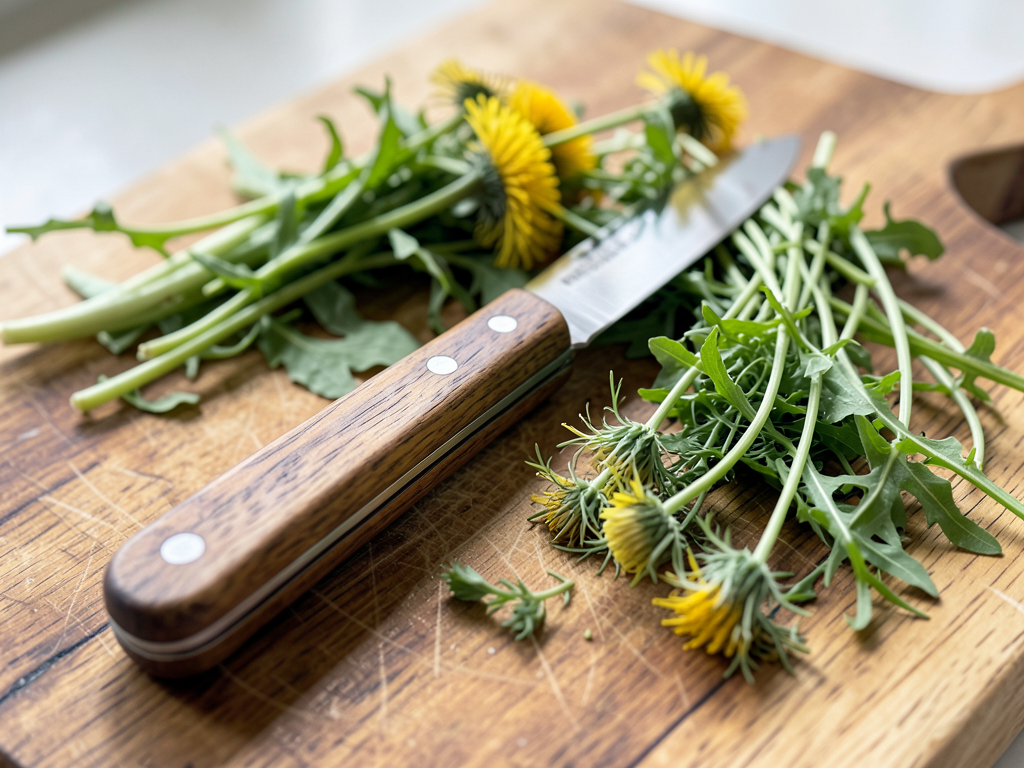
Here’s a curated list based on real-world use, not just spec sheets. These knives have been tested in damp UK woodlands, Pacific Northwest forests, and European meadows.
| Knife | Type | Blade Length | Best For | Approx. Price |
|---|---|---|---|---|
| Opinel No. 8 Mushroom Knife | Folding, curved | 8 cm | Mushrooms | $25–30 |
| Opinel No. 8 Carbon Steel | Folding, straight | 8.5 cm | All-around | $15–20 |
| Morakniv Companion | Fixed, straight | 10.4 cm | Bushcraft + foraging | $18–25 |
| Mora Eldris | Fixed, straight | 5.9 cm | Compact EDC foraging | $30–35 |
| Victorinox Swiss Army Hiker | Folding, straight + saw | 6 cm | Multi-purpose | $35–40 |
| Niwaki Hori Hori | Fixed, serrated | 15 cm | Root harvesting | $40–50 |
| Marttiini Lynx Lumberjack | Fixed, curved | 7 cm | Mushroom specialist | $30–35 |
| Spyderco Salt 2 | Folding, straight | 7.6 cm | Wet/saltwater foraging | $90–100 |
The best all-around foraging knife for most people: The Opinel No. 8 Carbon Steel. It’s affordable, razor-sharp out of the box, lightweight, and the carbon steel holds an edge beautifully. The beechwood handle is comfortable even after hours of use. If you forage mushrooms more than 50% of the time, go with the mushroom-specific variant instead.
Best budget pick: The Morakniv Companion. At under $20, it’s nearly indestructible. The rubber handle stays grippy in any weather and the Scandinavian grind makes it easy to sharpen.
Best for serious mushroom hunters: The Opinel mushroom knife with the integrated brush. That brush sounds gimmicky until you use it — cleaning mushrooms in the field means less mess in your basket and less work at home.
What to Avoid When Buying a Foraging Knife
Some knives get marketed as “outdoor” or “survival” knives and people assume they’ll work for foraging. Here’s what to skip:
Oversized survival knives. A 6-inch blade with a sawback spine looks cool. It’s terrible for cutting delicate chanterelle stems. Big blades reduce precision and add weight you don’t need.
Cheap gas-station folders. If the knife costs $5, the steel is probably unhardened mystery metal and the lock mechanism will fail. Your fingers are worth more than the $20 you’d save.
Serrated-only blades. Full serrations limit what you can do. Unless you only cut fibrous stems, get a plain edge or a partially serrated blade.
Kitchen paring knives used outdoors. This is a common budget hack but it’s risky. Paring knives lack a locking mechanism and the handles aren’t designed for wet outdoor use. One slip and you’re looking at stitches.
Knives you’re afraid to use. This sounds obvious but it’s real. If you buy a $200 custom blade, you’ll hesitate to use it in mud and rain. A foraging knife should be something you’re comfortable beating up.
How to Maintain Your Foraging Knife
A foraging knife sees more abuse than most kitchen knives do. Sap, dirt, moisture, and occasional drops onto rocks are all part of the job. Here’s how to keep it cutting clean.
Clean It After Every Outing
Sap and plant residue contain acids that will pit carbon steel within hours. Rinse the blade under warm water, wipe it dry immediately, and don’t let it air-dry. For sticky sap, a little rubbing alcohol on a cloth works wonders.
With folding knives, pay attention to the pivot area — plant gunk loves to accumulate where the blade meets the handle.
Oil the Blade and Handle
Carbon steel blades need a thin coat of oil after cleaning. Mineral oil works fine and it’s food-safe, which matters when you’re cutting things you’ll eat. For wooden handles, boiled linseed oil or tung oil once every few months keeps the wood from swelling and cracking.
Stainless steel blades don’t rust as easily but still benefit from occasional oiling — especially the pivot mechanism on folders.
Sharpen Regularly
A dull knife is more dangerous than a sharp one because you’ll apply more force, increasing the odds of a slip. For foraging knives, a fine ceramic rod or a leather strop is usually enough for maintenance sharpening between full sessions on a whetstone.
The Opinel carbon steel in particular takes an edge quickly — five minutes on a strop and it’s back to hair-shaving sharp.
Store It Dry
Don’t leave your foraging knife in a damp bag or in a sheath where moisture gets trapped. Store it open or in a dry drawer. If you use a leather sheath, make sure the knife is bone-dry before putting it away — leather holds moisture against the blade.
Building Your Foraging Kit Around the Knife
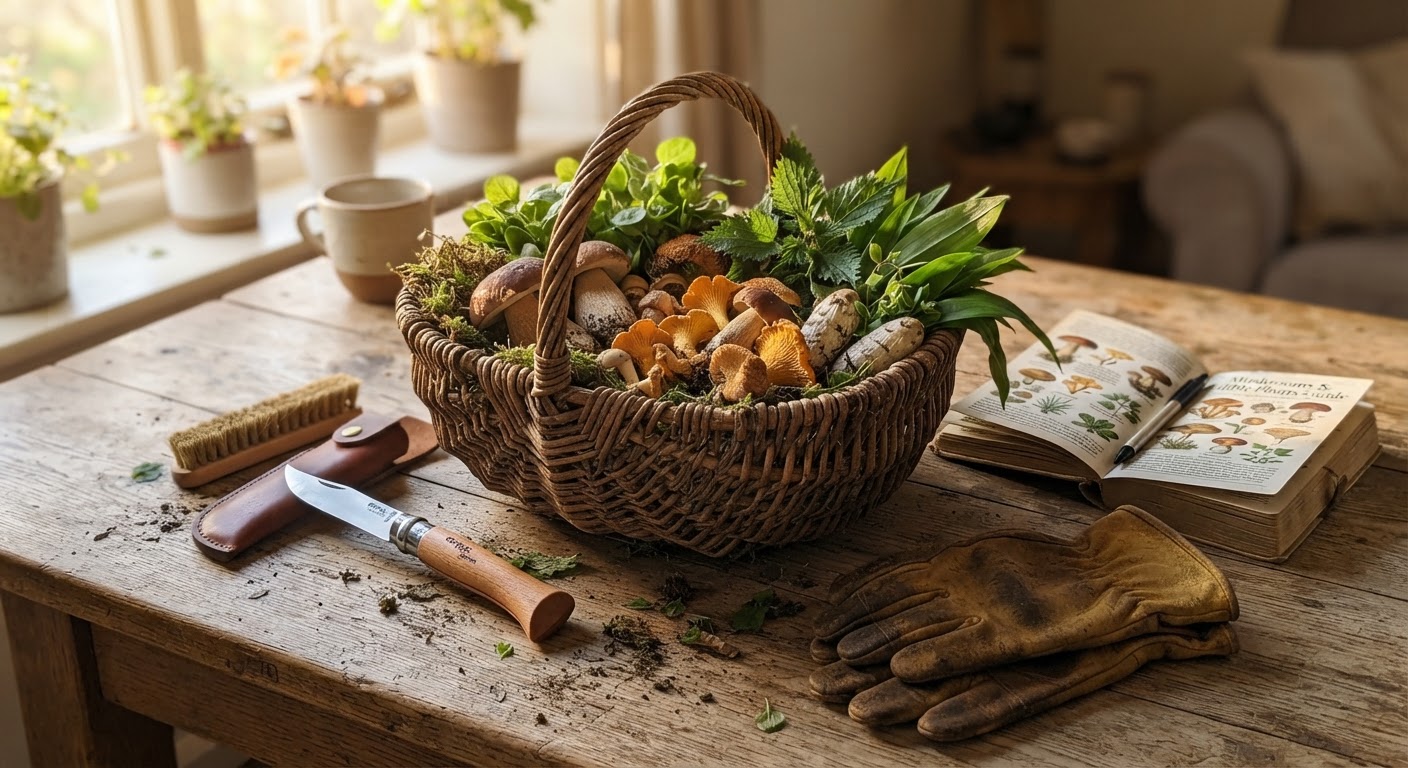
A good knife is the centerpiece, but a complete foraging kit makes the whole experience smoother.
Your foraging kit checklist:
- Foraging knife — the one you just picked
- Basket or mesh bag — wicker baskets let mushrooms breathe; mesh bags work for greens
- Field guide — a pocket guide specific to your region
- Gloves — light leather or gardening gloves for thorny plants like nettles and thistles
- Small brush — if your knife doesn’t have one built in
- Paper bags — for separating different mushroom species so you can verify them at home
- Phone with GPS — mark productive spots for next season
- Water and snacks — foraging burns more energy than you think
Frequently Asked Questions
Can I use a regular pocket knife for foraging?
Yes, for most greens and sturdy mushrooms a regular folding pocket knife works fine. The main limitation is that straight blades make it harder to cleanly cut mushroom stems at the base without disturbing the soil. If you forage mushrooms regularly, a curved blade is worth the upgrade.
Is carbon steel or stainless steel better for a foraging knife?
Carbon steel takes a sharper edge and is easier to sharpen in the field, but it rusts if you don’t dry and oil it after use. Stainless steel resists corrosion but can be harder to get razor-sharp. For damp climates (Pacific Northwest, UK), stainless is more practical. For drier regions or if you’re diligent about maintenance, carbon steel is nicer to use.
Do I need a mushroom knife with a brush?
The brush isn’t essential but it’s genuinely useful. Cleaning mushrooms in the field — before dirt dries and hardens — saves a lot of kitchen prep time. If your knife doesn’t have one, carry a small paintbrush or mushroom brush separately.
What’s the legal blade length for carrying a foraging knife?
This varies enormously by location. In the UK, a non-locking folding blade under 3 inches (7.62 cm) can be carried without needing a “good reason.” Fixed blades and locking folders require a valid reason — foraging qualifies. In the US, laws vary by state. Always check local regulations before carrying a fixed blade in public.
Can I forage with just a hori hori?
Yes, but it’s heavy and overkill for mushrooms. A hori hori shines for root vegetables and tough stems. If you forage a mix of mushrooms, greens, and roots, carrying both a lightweight folder and leaving the hori hori in your pack or car is a practical setup.
How often should I sharpen my foraging knife?
Depends on use. Light weekend foraging: strop every 2–3 outings, sharpen on a stone monthly. Heavy use (mud, sandy soil, cutting against dirt): you’ll notice the edge degrade faster. If the knife struggles to slice a mushroom stem cleanly, it’s time.
The Bottom Line
The best foraging knife is the one you actually carry and use. Don’t overthink it. A $20 Opinel in your pocket beats a $200 custom blade left at home every single time.
Pick a knife that fits what you forage most. Mushroom hunters should get a curved blade with a brush. Generalists should grab a straight-edge folder. Root harvesters need a hori hori. And if you’re foraging somewhere wet — the UK, Ireland, the Pacific Northwest — prioritize a handle that won’t turn into a bar of soap when it rains.
Buy something you’re not afraid to get muddy. Maintain it properly. And focus on what actually matters: getting outside, learning your local plants, and coming home with a basket full of good things to eat.
— Written by a forager who learned the hard way that a dull pocket knife and wet nettles don’t mix.