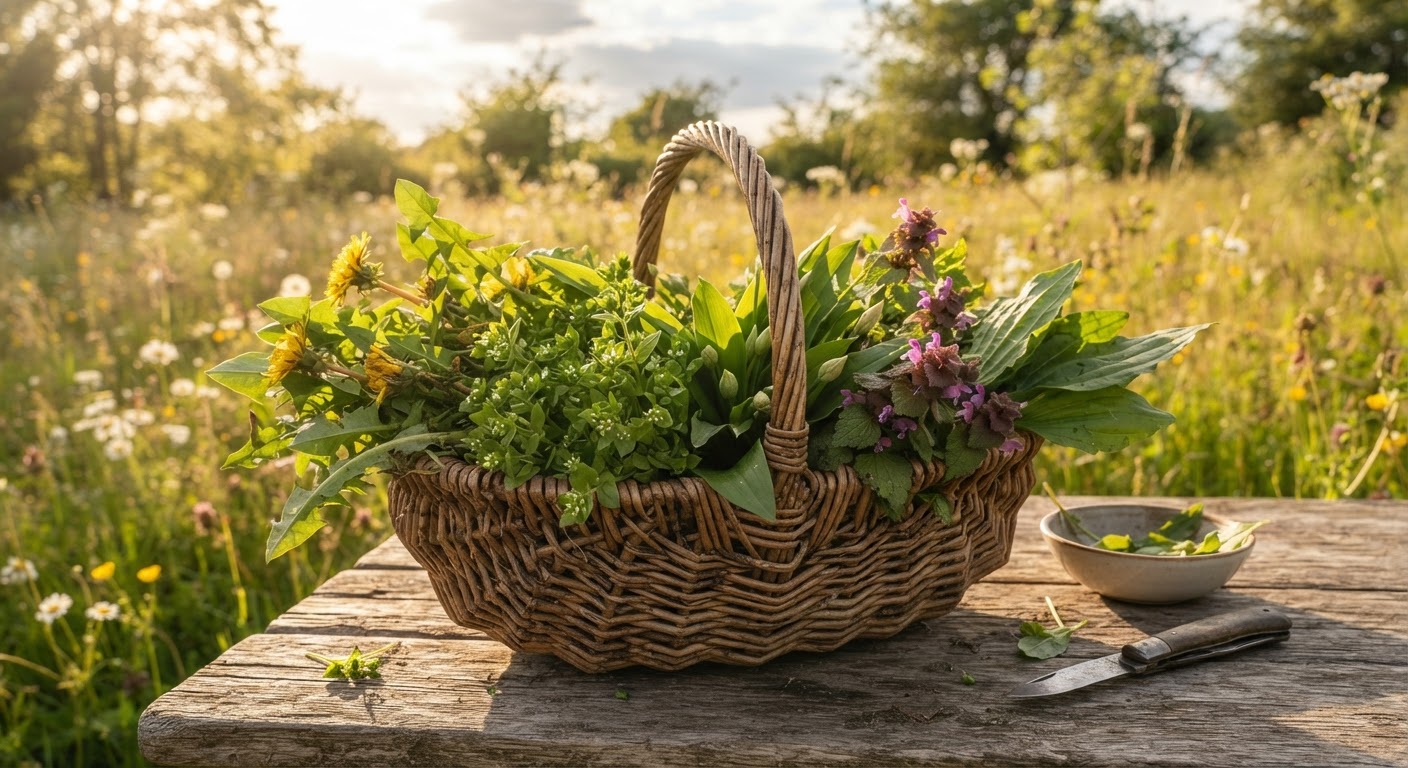
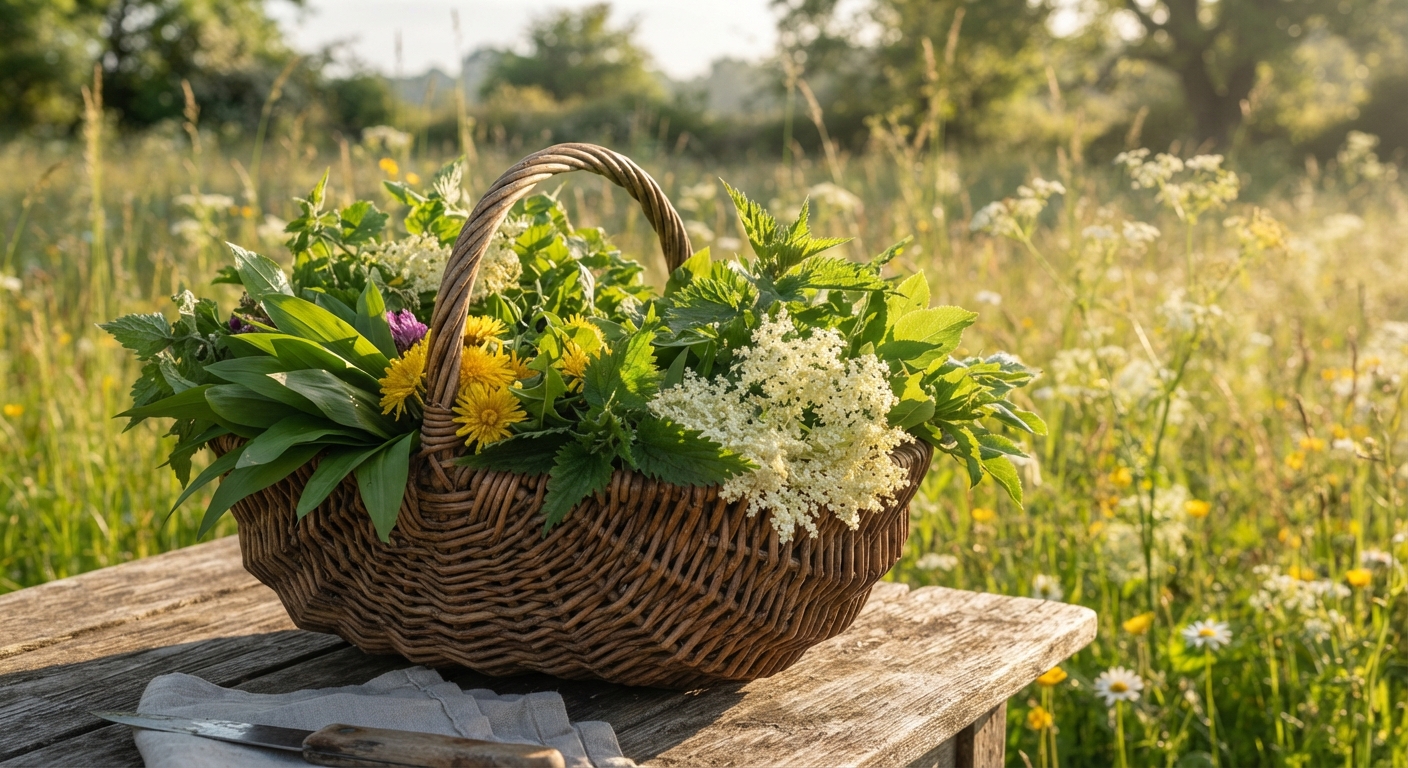
I once watched a guy in a state park confidently pluck a handful of white berries from a bush, pop them in his mouth, and tell his hiking partner they were “totally safe because the birds eat them.”
They were not totally safe. They were Actaea pachypoda — doll’s eyes, or white baneberry. The birds can handle the cardiogenic toxins. Humans cannot.
The guy was fine, barely. A ranger intercepted him, made him spit everything out, and gave him what I can only describe as the most polite chewing-out I’ve ever witnessed. The ranger ended with: “Next time, bring a book.”
That moment stuck with me. Not just because of the near-miss, but because of how preventable it was. A single decent field guide — even a $15 paperback — would have told him exactly what those berries were and why you should never, ever eat them.
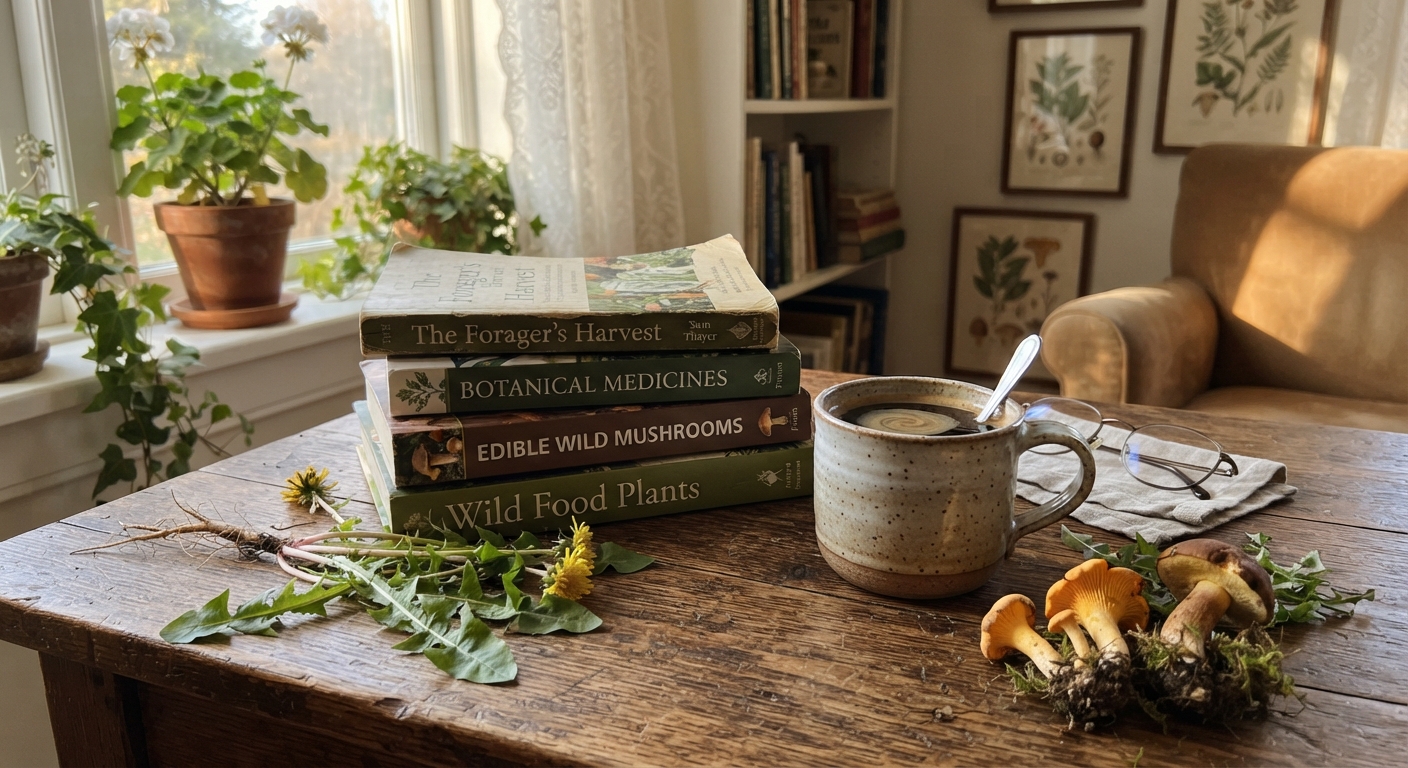
This article isn’t just a list of book titles. It’s a practical guide to building your own foraging library — whether you’re a complete beginner who can barely tell dandelions from dock, or someone who’s been harvesting wild mushrooms for years and just wants to fill a gap in your bookshelf.
Why You Still Need a Real Book (Yes, Even in 2026)
I get this question a lot: “Can’t I just use an app?”
You can. Foraging apps have come a long way — PictureThis, Seek by iNaturalist, and PlantSnap all do impressive things with computer vision. But here’s the uncomfortable truth: apps get it wrong. Not always, but often enough that trusting one with your life is a bad gamble.
A 2024 study from Rutgers University tested five popular plant identification apps against 38 toxic plant species. The apps correctly identified the toxic plants as “toxic” or “do not eat” only 42% to 83% of the time. That means even the best app missed nearly one in five dangerous plants. When the consequence of a bad ID is liver failure or cardiac arrest, those odds are not acceptable.
Physical books also don’t run out of battery. They don’t lose signal in deep woods. They don’t suddenly stop working because the developer went out of business or changed the subscription model. A good field guide works in the rain (with a ziplock bag), in the cold, and three miles from the nearest cell tower.
That said, books and apps aren’t enemies. The smartest foragers I know use both — an app for quick triage, then a book for confirmation before anything goes in the mouth.
How to Choose the Right Foraging Book for You
Not every foraging book fits every forager. Your ideal guide depends on a few things:
Skill level. Beginners need clear photos, simple language, and strong emphasis on lookalike warnings. Intermediate and advanced foragers benefit from botanical keys, range maps, and deeper ethnobotanical context.
Region. A book about Pacific Northwest mushrooms won’t help you much in Georgia. Regional specificity is the single most underrated feature in a foraging guide.
Focus area. Are you into mushrooms? Edible greens? Medicinal plants? Seaweed? Urban foraging? The best book for you depends entirely on what you actually want to find and eat.
Portability. Some books are beautiful coffee-table references. Others are pocket-sized and laminated for field use. Know which you’re buying — a 600-page hardcover won’t fit in your daypack.
With those criteria in mind, here are the books worth your money.
Best Foraging Books by Category
Best Overall: The Forager’s Harvest by Samuel Thayer
If you buy exactly one foraging book, make it this one. Thayer isn’t just knowledgeable — he’s obsessively specific. Each plant entry in The Forager’s Harvest covers identification, harvest timing, processing methods, and storage in far more depth than most guides bother with.
What sets Thayer apart: he only writes about plants he’s personally harvested and eaten hundreds of times. This isn’t someone summarizing other books — this is primary knowledge, built over decades of actual dirt-under-the-fingernails experience.
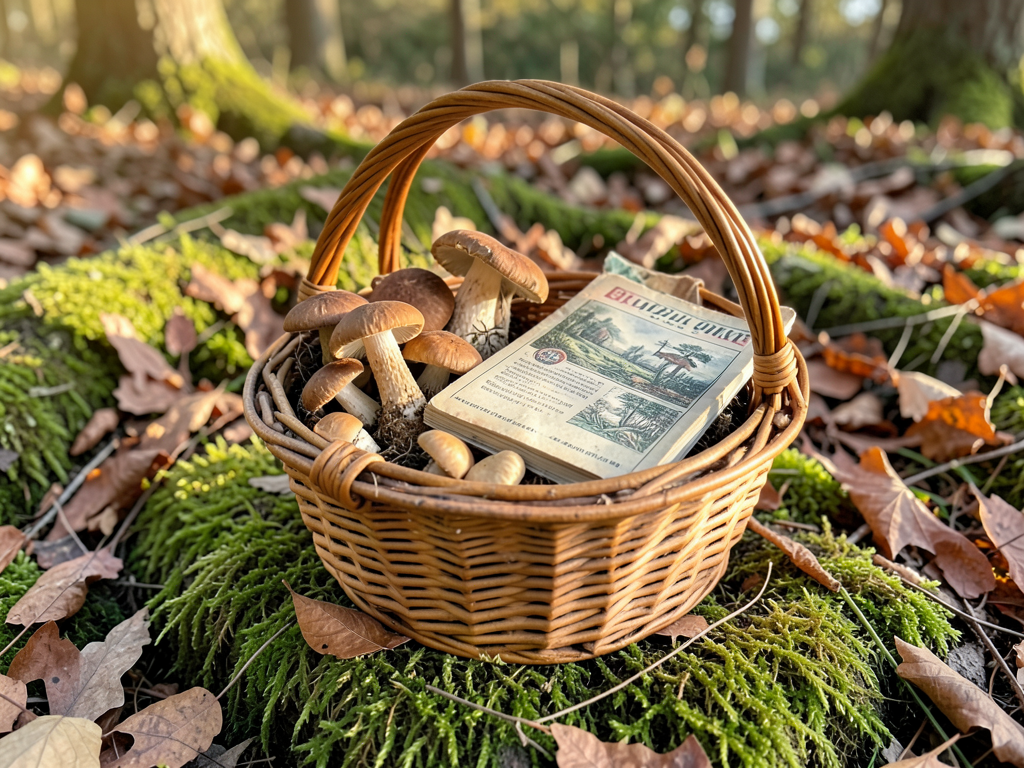
The book covers about 30 plants in total, which sounds small until you realize each one gets 10-15 pages of genuinely useful information. Thayer will tell you exactly which part of the milkweed shoot is tender enough to eat (the top 4-6 inches), how to distinguish young black nightshade berries from deadly nightshade (calyx shape — not berry color), and why you shouldn’t bother boiling acorns whole (the leaching time is absurd; grind them first).
Best for: Serious beginners who want depth over breadth. Not ideal for: People who just want a quick field reference with lots of species.
Best Field Guide: National Audubon Society Field Guide to North American Wildflowers (Eastern Region)
Yes, it says “wildflowers,” not “edible plants.” Don’t let that fool you. The Audubon field guide series uses actual color photographs (not illustrations), organized by flower color and shape rather than taxonomic order. For a beginner staring at an unknown plant in the field, “it has small white flowers with five petals” is infinitely more useful than “it’s in the Apiaceae family.”
The Eastern and Western editions cover different ranges, so buy the one that matches your geography. Each entry includes range maps, bloom periods, habitat notes, and — crucially — toxicity warnings when relevant.
The limitation: this isn’t specifically a foraging book, so it won’t tell you how to cook anything. But for pure identification, it’s the most user-friendly botanical reference I’ve found.
Best for: Plant identification as a standalone skill. Not ideal for: Anyone looking for recipes or harvest instructions.
Best for Mushrooms: Mushrooms Demystified by David Arora
This is the mushroom book. At nearly 1,000 pages, it’s a doorstop, not a field guide — but no other English-language book on North American fungi comes close to its depth, humor, and hard-won wisdom.
Arora’s voice is what makes this book legendary. He’s funny. He’s opinionated. He’ll tell you flat-out when a “choice edible” mushrooms isn’t worth the trouble because it’s “insipid” or “becomes slimy when cooked.” He includes detailed keys, spore print instructions, and the kind of subtle identification tips that only come from someone who’s been doing this for 50 years.
The companion volume, All That the Rain Promises and More, is the pocket-sized field version — easier to carry, full of great photos, and somehow manages to include Arora playing a trumpet on the cover while wearing a tuxedo and holding a giant bolete. It’s delightful.
Best for: Serious mushroom hunters. Not ideal for: People who want a quick, lightweight reference — grab All That the Rain Promises instead.
Best for Wild Edible Plants: Edible Wild Plants: A North American Field Guide by Thomas Elias & Peter Dykeman
This is the book most foragers start with, and for good reason. It covers over 200 species with clear photos, organized by season so you’re looking at the right plants at the right time. Each entry gives you identification tips, habitat, edible parts, harvest season, and preparation methods.
The seasonal organization is genuinely smart design. In spring, you flip to the spring section and see exactly what’s available. No scrolling past 150 mushrooms and autumn berries when you’re looking for early greens.
The weakness: some entries are a bit thin. You’ll get 2-3 paragraphs where Thayer would give you 10 pages. But as a starter guide that gets you from “what is this plant?” to “can I eat it?” — it’s hard to beat.
Best for: Absolute beginners who want broad coverage. Not ideal for: Anyone who already owns and has absorbed The Forager’s Harvest.
Best for Wild Recipes: The Wildcrafted Cocktail by Ellen Zachos
Most foraging books treat recipes as an afterthought — three pages at the back for “dandelion salad” and “nettle soup.” Zachos does the opposite. The Wildcrafted Cocktail is a recipe book first, with 57 cocktail recipes organized by season, each built around a foraged ingredient.
The book covers syrups, infusions, bitters, shrubs, and garnishes — spruce tip syrup, elderflower cordial, sumac-ade concentrate, black walnut bitters. Even if you don’t drink, the infusion techniques transfer directly to non-alcoholic applications.
What I appreciate most: Zachos includes clear foraging instructions with each recipe. She doesn’t assume you already know how to identify spicebush or harvest serviceberries — she teaches you right there, in context.
Best for: Foragers who love to cook (and mix drinks). Not ideal for: Pure identification purposes — this is a companion, not a standalone guide.
Best Regional (Northeast): Northeast Foraging by Leda Meredith
Regional guides are where foraging literature really shines, because a plant that’s abundant in Maine might not exist south of Pennsylvania. Meredith’s Northeast Foraging covers 120 wild plants specific to New England and the Mid-Atlantic, with excellent photographs, clear harvest calendars, and practical processing instructions.
Meredith is a professional forager and cooking instructor based in Brooklyn, and her urban foraging perspective is refreshing. She includes plants you’ll find in city parks and vacant lots — not just pristine wilderness settings.
Best for: Foragers in New England, New York, Pennsylvania, and New Jersey. Not ideal for: Anyone west of the Mississippi or south of Virginia.
Best Regional (Southeast): Southeast Foraging by Chris Bennett
The Southeast has some of the richest wild food diversity in North America, and Bennett’s guide covers it well — from Florida to the Carolinas and west to Texas. The book includes 120 species with solid photos, detailed descriptions, and an emphasis on plants that are genuinely worth the effort of harvesting.
Bennett’s background in herbalism adds depth to entries that other guides skip over entirely.
Best for: Foragers in the Deep South and Gulf states. Not ideal for: Northern climates — different plant communities entirely.
Best for Medicinal Plants: The Herbal Medicine-Maker’s Handbook by James Green
If you want to go beyond eating and into medicine-making, this is the book. Green covers tinctures, salves, syrups, infused oils, poultices, and more — with an infectious enthusiasm that makes you want to start brewing things immediately.
The book isn’t a plant identification guide. Pair it with a regional field guide. What it is: the most practical, accessible introduction to processing wild medicinal plants I’ve encountered.
Best for: Herbalism-curious foragers. Not ideal for: Pure identification — you’ll need a separate field guide.
Best for Survival Context: The SAS Survival Handbook (Foraging Sections) + Botany in a Day
For bushcraft and survival contexts, two books work best together. The SAS Survival Handbook by John “Lofty” Wiseman covers edible plants in a broader wilderness survival framework, while Botany in a Day by Thomas Elpel teaches you plant family patterns so you can recognize edible (and toxic) relatives without memorizing individual species.
Elpel’s approach is the real game-changer here. Instead of memorizing 200 plants, you learn to recognize 8 major plant families and their characteristic features. Once you know the Mustard family has four-petaled flowers in a cross shape and seed pods that look like little cylinders, you can spot a wild mustard anywhere without ever having seen that specific species before.
Best for: Bushcraft enthusiasts and wilderness skills generalists. Not ideal for: Casual weekend foragers — this is overkill for gathering dandelions.
Best for Kids & Families: Backyard Foraging by Ellen Zachos
Zachos makes her second appearance on this list with a book specifically designed for beginners who want to forage close to home — literally in their own yards. Backyard Foraging covers 65 common plants found in lawns, gardens, and urban green spaces.
The tone is friendly and accessible without being condescending. Each plant gets a “lookalikes” warning box, which is the single most important feature for a family foraging book. Kids should learn early that some things look like other things, and one of those things might hurt you.
Best for: Families with kids who want to learn together. Not ideal for: Deep wilderness foraging.
Best Identification Reference: Botany in a Day by Thomas J. Elpel
I mentioned this under survival, but it deserves its own entry. Botany in a Day teaches pattern recognition for plant families — the Mustard family, Mint family, Parsley family, Pea family, and so on. Once you internalize these patterns, your plant identification speed and accuracy both skyrocket.
Elpel’s method works because he focuses on shared structural features: flower symmetry, petal count, stamen arrangement, ovary position, leaf arrangement. These are more reliable than color, size, or leaf shape, which vary dramatically within a family.
Best for: Anyone who wants to go beyond memorization and actually understand plant botany. Not ideal for: People who just want a quick field ID without learning taxonomy.
Book Comparison at a Glance
| Book | Best For | Skill Level | Portable? | Region |
|---|---|---|---|---|
| The Forager’s Harvest (Thayer) | Deep plant knowledge | Beginner–Intermediate | No (coffee table) | Midwest/Northeast US |
| Audubon Wildflowers | Quick field ID | All levels | Yes (pocket-sized) | East or West editions |
| Mushrooms Demystified (Arora) | Mushroom hunting | Intermediate–Expert | No (too heavy) | North America |
| Edible Wild Plants (Elias) | Broad plant coverage | Beginner | Somewhat | North America |
| The Wildcrafted Cocktail (Zachos) | Recipes & infusions | All levels | No | North America |
| Northeast Foraging (Meredith) | Regional Northeast | Beginner–Intermediate | Yes | Northeast US |
| Southeast Foraging (Bennett) | Regional Southeast | Beginner–Intermediate | Yes | Southeast US |
| Botany in a Day (Elpel) | Plant family patterns | All levels | Yes | North America |
| Backyard Foraging (Zachos) | Kids & families | Beginner | Yes | General (temperate) |
| Herbal Medicine-Maker’s (Green) | Medicinal processing | Intermediate | No | General |
Books I’d Avoid (And Why)
Not every foraging book earns a spot on your shelf. Here are a few types to watch out for:
AI-generated books on Amazon. Since 2023, Amazon has been flooded with foraging books written entirely by AI — generic, error-prone, and sometimes dangerously wrong. Red flags: no author photo, no author biography, oddly generic title (“Foraging Book: A Guide to Finding Wild Edible Plants in Nature”), and suspiciously perfect five-star reviews posted within days of publication. If the author has no other published work and no online presence, skip it.
“Universal” foraging books with no region. A book that claims to cover “edible plants of the world” is promising something impossible. Different continents have different species. A guide that covers everything ends up covering nothing usefully.
Outdated identification guides. Botany and mycology move fast. A mushroom guide from 1985 might still list species as “edible” that we now know cause delayed kidney damage. Check the publication date and look for editions updated within the last 10-15 years.
How to Use a Foraging Book Effectively
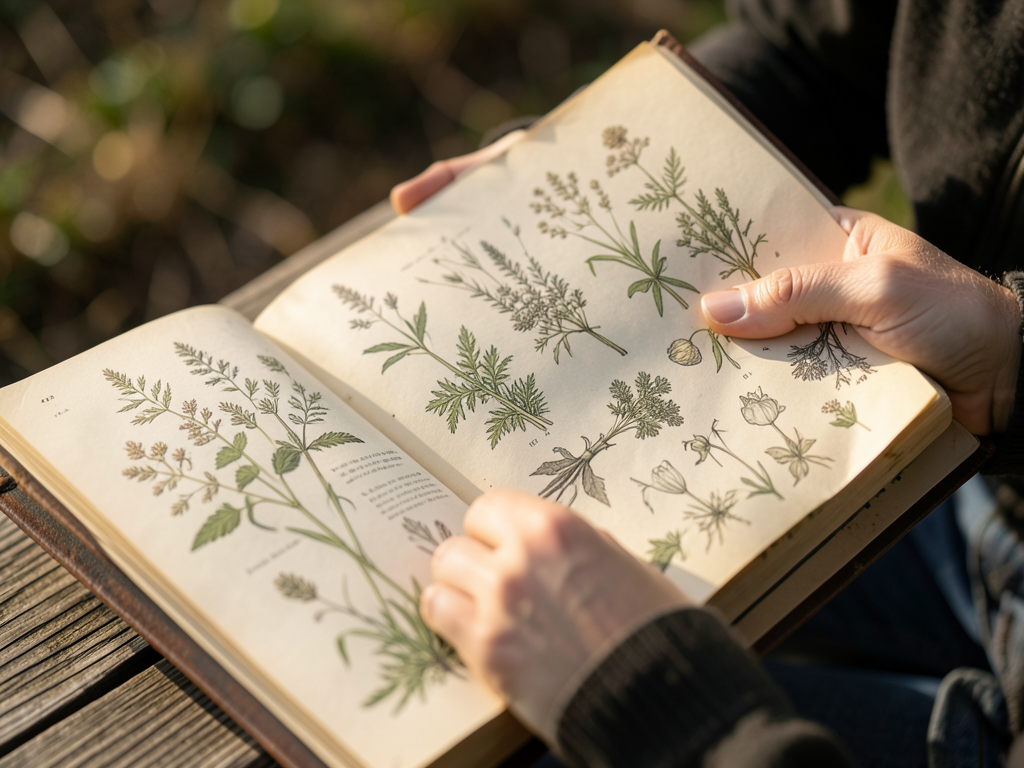
Owning a book and actually using it are two different things. Here’s what I’ve learned after years of doing both:
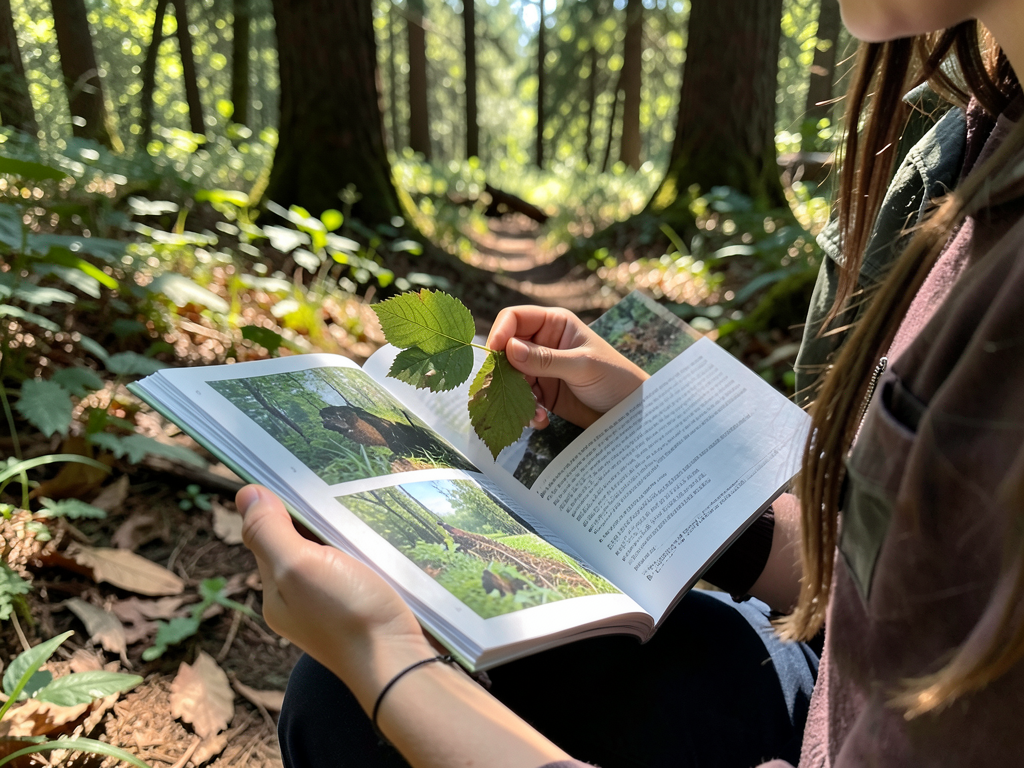
Read it at home first. Don’t wait until you’re standing in front of an unfamiliar plant in the woods. Spend time with your field guide on the couch, getting familiar with the layout, the photos, the terminology. When you’re in the field and your phone’s dead, you don’t want to be figuring out how the index works.
Learn the botanical vocabulary. You don’t need a botany degree, but you do need to know what “opposite leaves,” “entire margins,” and “umbel inflorescence” mean. Botany in a Day covers this with illustrations.
Use multiple sources. Never identify an edible plant from a single book. Cross-reference with at least two sources — ideally one field guide and one online resource like iNaturalist observations from your area. This is especially critical with mushrooms and members of the carrot/parsley family, which contains both edible species (wild carrot) and deadly ones (water hemlock).
Practice the 5-step confirmation rule:
- Does it match ALL photos in your guide (not just “kind of”)?
- Is it in the right habitat? (If the book says “wet meadows” and you’re in a dry pine forest, something’s off.)
- Is it in season? (Plants have predictable flowering and fruiting windows.)
- Have you checked the lookalike warnings?
- Have you confirmed with a second independent source?
If any answer is “no” or “I’m not sure,” don’t eat it. Walk away. The plant will be there next time, and you’ll be better prepared.
Digital vs. Physical: What’s Better in the Field?
I keep a small physical field guide in my daypack and a PDF backup on my phone. Each has its role:
| Format | Pros | Cons |
|---|---|---|
| Physical book | No battery, works in rain (with protection), physical bookmarks, easier to flip between pages | Heavy, limited to one book at a time, can’t search |
| E-book / PDF | Lightweight, searchable, carry dozens of books, zoom in on photos | Battery-dependent, screen glare in sun, fragile |
My recommendation: own one good physical field guide for the region you forage most, and supplement with digital copies for the rest. If you’re hiking in rain or snow, the physical book wins every time.
FAQ
Q: What’s the single best foraging book for a complete beginner?
A: The Forager’s Harvest by Samuel Thayer for depth, or Edible Wild Plants: A North American Field Guide by Elias & Dykeman for breadth. If you can only buy one, Thayer teaches you how to forage, not just what to forage.
Q: Are there good UK/European foraging books?
A: Yes. Food for Free by Richard Mabey is the classic — it’s been in print for over 50 years and covers UK wild foods brilliantly. John Wright’s River Cottage Hedgerow Handbook is another excellent, practical option with great photos.
Q: Do I need a separate mushroom book?
A: If you plan to forage mushrooms, absolutely yes. General plant guides typically don’t cover fungi in enough detail for safe identification. David Arora’s Mushrooms Demystified or All That the Rain Promises and More are the gold standard for North America.
Q: How do I spot an AI-generated foraging book?
A: Check the author. If there’s no author photo, no bio, no social media presence, no other books, and the writing feels generic with weird factual errors (like recommending “boil for 2-3 minutes” for a plant that actually needs 30+ minutes of processing), it’s probably AI-generated. Stick to authors with verifiable credentials and real-world foraging experience.
Q: Should I buy a laminated field guide instead of a regular book?
A: Laminated fold-out guides (often called “quick guides” or “pocket naturalist” guides) are great as supplements — they’re waterproof and ultralight. But they cover far fewer species than a real book. Use them as a quick reference, not your primary identification source.
Q: What’s the difference between a “field guide” and a “reference book”?
A: Field guides are designed to be carried and used outdoors — compact, organized for quick identification, with photos or illustrations. Reference books are designed for home study — larger, more comprehensive, heavier, and often in-depth reads rather than quick-reference tools. The Forager’s Harvest is a reference book. Audubon Field Guide to Wildflowers is a field guide. You want at least one of each.
Building Your Library: A Suggested Order
If you’re starting from zero, here’s the order I’d recommend building your foraging library:
- One regional field guide — get the one specific to where you actually live and forage
- One general foraging reference — The Forager’s Harvest by Thayer
- One mushroom book — All That the Rain Promises and More by Arora (portable) or Mushrooms Demystified (comprehensive)
- One plant ID skills book — Botany in a Day by Elpel
- Specialty books — recipes, herbalism, regional expansions — as your interests grow
You don’t need all of these at once. Start with a regional guide and Thayer. Those two alone will take you further than a shelf full of books you never open.
The ranger in that state park was right. Bring a book. Better yet, bring two — one for the field and one for the couch. Read them. Mark them up. Get them dirty. The pages that survive a season in your pack, stained with berry juice and mud, are the ones that actually taught you something.
Happy foraging — and remember, if you’re not 100% sure, don’t eat it. The plant will still be there tomorrow.