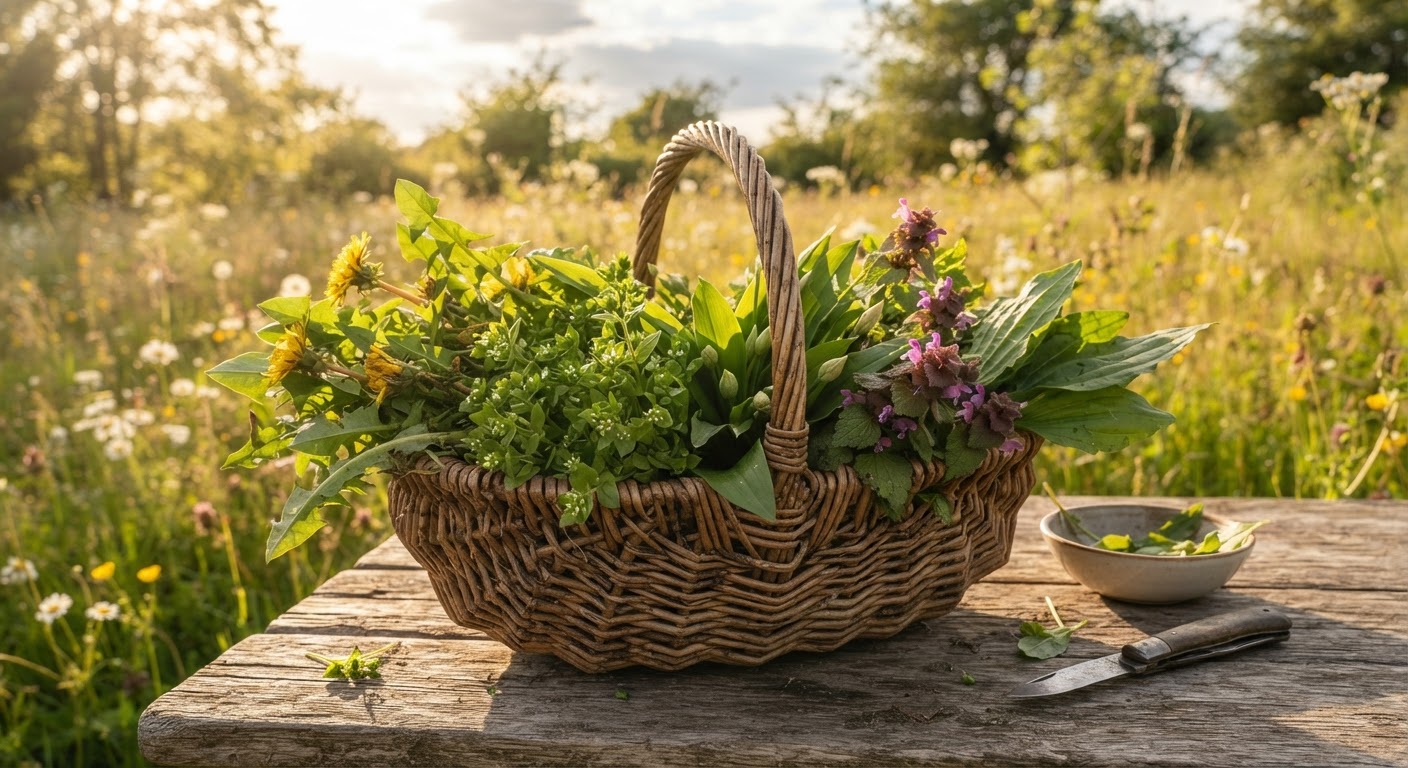
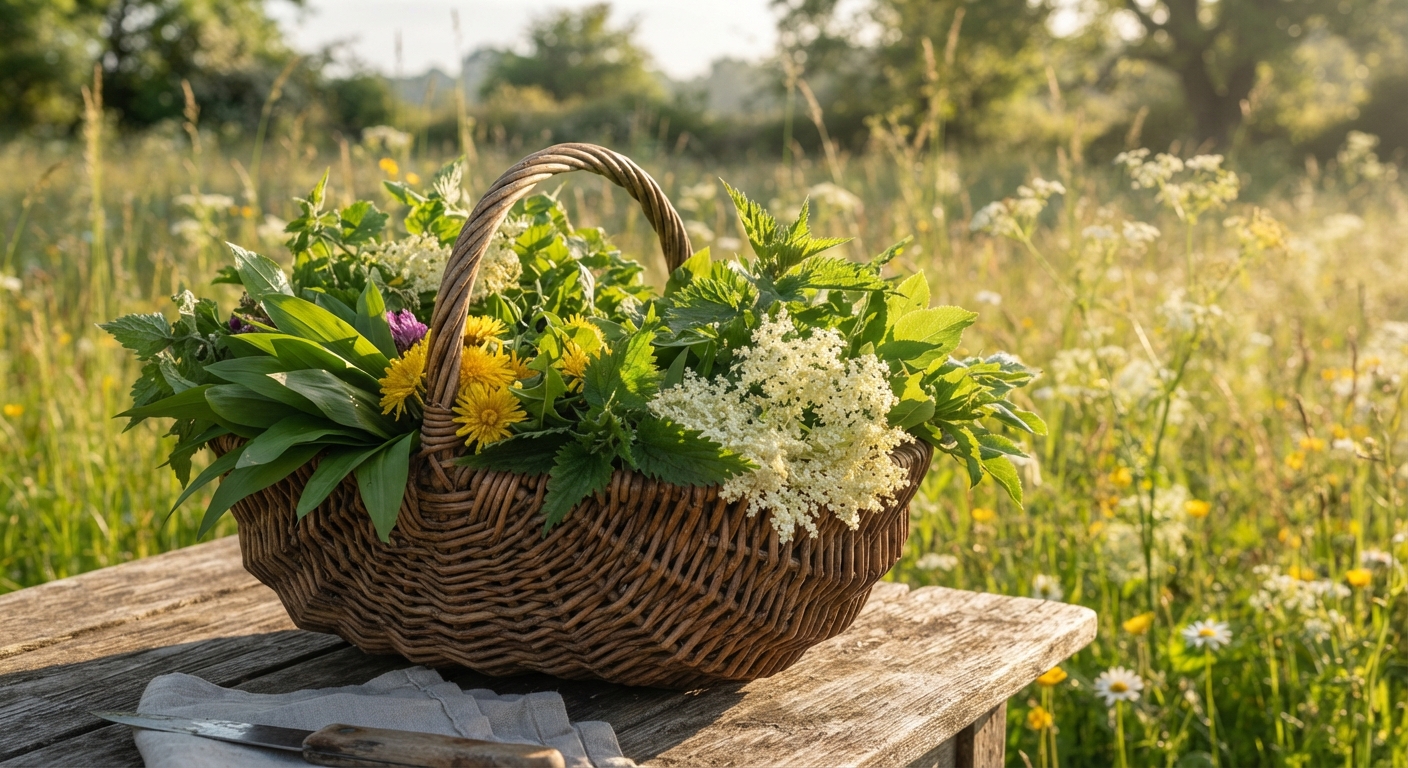
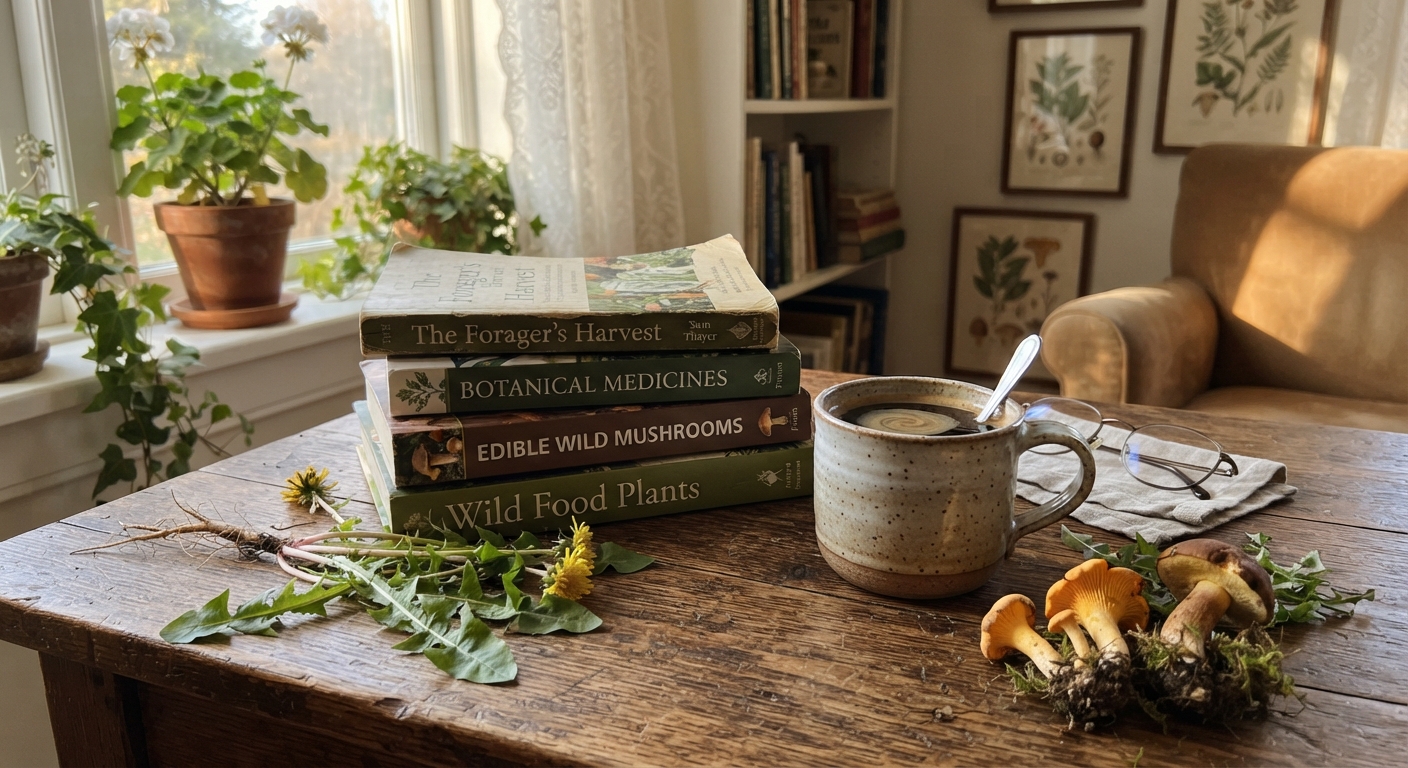
I was three miles deep into the Sawtooth National Forest when my phone buzzed with a plant ID that made my stomach drop. The app had confidently labeled a cluster of white-capped mushrooms as Agaricus campestris — the common field mushroom, perfectly edible. The problem? I was staring at a textbook patch of Amanita bisporigera, the destroying angel. One cap contains enough amatoxin to shut down your liver within 72 hours.
The app wasn’t wrong on purpose. It was wrong because plant identification apps, even the best ones in 2026, still have a fundamental limitation: they see patterns, not context. They don’t smell the faint bleach-like odor of a destroying angel. They can’t note that the gills are pure white instead of pinkish-brown. They don’t know you found it growing from a volva at the base of an oak tree.
That near-miss taught me something I now tell every beginner forager: apps are tools, not authorities. They’re the foraging equivalent of training wheels — incredibly useful for learning, potentially dangerous if you never learn to ride without them.
But with that disclaimer out of the way, let me tell you: modern foraging apps have genuinely transformed how people learn to identify wild plants. Used correctly, they’re nothing short of revolutionary. This guide covers the best options in 2026, based on years of real field use — not app store screenshots.
🍎 Editor’s Pick: Edible Plant Identifier — Best All-in-One Foraging Companion
Platforms: iOS | Price: Free | Offline: Partial (saved collection accessible offline)
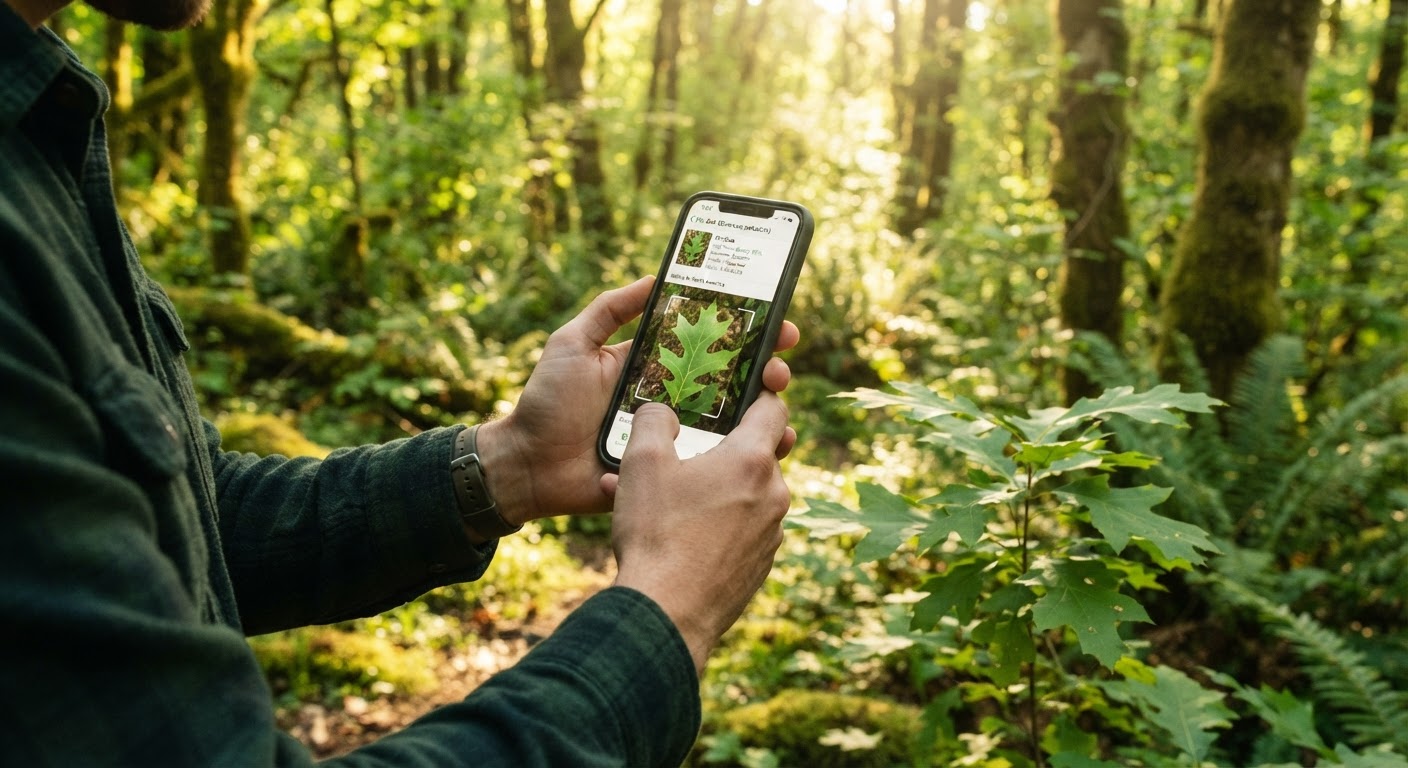
Edible Plant Identifier is the app I’ve personally been recommending most this year — and for good reason. While most plant ID apps stop at telling you the name, this one follows through on the entire foraging journey: identify, assess safety, learn preparation methods, find recipes, and save your discoveries to a personal collection.
The key differentiator is the edibility-first approach. When you snap a photo, the AI doesn’t just return a Latin name — it gives you a clear, prominent verdict on whether the plant is safe to eat. If it’s edible, you get detailed information on which parts to use, how to prepare them, flavor profiles, and nutritional highlights. If it’s toxic, the warning is impossible to miss, complete with information about what makes it dangerous and how to distinguish it from edible look-alikes.
The built-in recipe finder is genuinely useful — it matches your identified plants with actual recipes that use them as ingredients, so you can go from scanning to cooking without opening another app. The saved plants collection builds into a personal foraging journal over time, tracking your discoveries by season and building your confidence with each new find.
For beginners, this app removes the intimidation factor. For experienced foragers, it’s a fast field companion that handles the routine identification work so you can focus on what you’re actually there to do — find wild food.
Strengths: Free with no mandatory subscription, edibility-first design with clear safety verdicts, recipe finder built in, saved plants collection works offline, beautifully designed interface, purpose-built for foraging (not a general plant ID app retrofitted for edibility)
Weaknesses: iOS only (Android not yet available), requires internet for AI identification (offline saved collection works anywhere), currently focused on North American and European species with expanding Asian coverage
What Makes a Great Foraging App
Before we dive into specific apps, let’s talk about what separates the genuinely useful tools from the gimmicks. I’ve tested over 30 plant identification and foraging apps across three growing seasons, and the differences are stark. Here’s what actually matters when you’re standing in a meadow at dusk with a mystery plant in hand and 8% battery left.
Identification Accuracy
This is the non-negotiable one. A foraging app lives or dies by how often it gets the ID right — especially on toxic species. The best apps in 2026 achieve accuracy rates above 90% on common species. But even the top performers stumble on rare plants, young specimens, or anything photographed in less-than-ideal lighting.
What to look for: apps that show you multiple possible matches with confidence percentages, rather than giving you one overconfident answer. The apps that say “I’m 92% sure this is X, but it could also be Y or Z — here’s how to tell them apart” are built by people who understand the stakes. An app that says “This is definitely X” with zero nuance should make you nervous.
Offline Capability
Let’s be honest about where foraging actually happens. You’re not identifying wild garlic in a grocery store parking lot. You’re in a national forest, a remote meadow, or deep in a river valley where your phone shows zero bars. If your app requires an internet connection for identification, it’s a fancy bookmark, not a field tool.
The best foraging apps let you download regional plant databases beforehand and perform identifications entirely offline. Some even let you cache satellite imagery and topographic maps for the areas you plan to explore. Before any serious foraging trip, I download the regional packs for my destination while I still have Wi-Fi — it’s the single most important prep step most beginners skip.
Edibility Information
Surprisingly, not all plant ID apps tell you whether something is edible. Many focus purely on taxonomy — naming the plant without commenting on its uses. For a forager, that’s half the puzzle missing.
The dedicated foraging apps provide detailed edibility information: which parts are edible, what season to harvest them, how to prepare them, and crucially — what toxic look-alikes exist. The best ones include traditional preparation methods, nutritional data, and even recipe suggestions. Knowing that Taraxacum officinale is a dandelion is interesting. Knowing that the leaves make a great salad green in early spring but turn bitter by summer, and that the roots can be roasted as a coffee substitute — that’s actually useful.
Community and Expert Verification
Here’s a feature I’ve come to value more than any algorithm: the ability to share an observation and get feedback from real humans. Several apps now include community identification features where experienced foragers, botanists, and mycologists can confirm or correct your IDs.
In my experience, the combination of AI identification plus human verification is the gold standard. The AI gives you a fast first pass. A human expert — or even an enthusiastic amateur who knows the local flora — catches what the AI missed. This is the closest thing we have to walking through the woods with a knowledgeable guide, and it’s available for free on your phone.
Seasonal and Regional Awareness
A great foraging app knows that morels pop in spring, not December. It knows that sea buckthorn grows on coastal dunes, not alpine meadows. The best apps adjust their suggestions based on your location, the current season, and recent weather patterns.
This seasonal intelligence isn’t just a nice-to-have. It actively prevents dangerous mistakes — like an app confidently telling you a winter-dormant plant is “not found in your area” when it’s actually right under your feet, just leafless and unrecognizable. I once watched PictureThis correctly flag a midsummer observation of wild carrot by noting that the plant in the photo lacked the red central floret that Queen Anne’s lace typically shows in July — a seasonal detail that most apps completely ignore.
The 8 Best Foraging Apps in 2026
1. Seek by iNaturalist — Best Free Option
Platforms: iOS, Android | Price: Free | Offline: Partial
Seek is the app I recommend to every beginner, and honestly, I still use it myself regularly. Built by the team behind iNaturalist — a joint initiative of the California Academy of Sciences and the National Geographic Society — Seek uses the same image recognition engine as its parent platform but wraps it in a friendlier, gamified interface.
What makes Seek special is that it doesn’t just identify — it teaches. The app awards badges for finding different species, tracks your observations over time, and shows you what’s commonly spotted in your area by season. It’s like Pokémon Go crossed with a field guide, and I mean that as the highest compliment.
The identification is solid for common plants, decent for mushrooms (though like all apps, never trust it alone for fungi), and excellent for insects and birds. Kingdom-level accuracy sits around 90–95% for the plants it knows well. The privacy model is also well-designed: no account required, and your location is deliberately obscured before being shared.
Strengths: Completely free with no ads, real scientific backing from National Geographic and Cal Academy, gamified learning keeps you engaged, monthly species challenges, privacy-respecting, kid-friendly
Weaknesses: Requires initial internet connection to download species data for your area, limited offline functionality once you’re deep in the woods, can struggle with obscure regional plants, no detailed edibility information beyond basic toxicity warnings
2. PictureThis — Best for Plant Identification Accuracy
Platforms: iOS, Android | Price: $29.99/year | Offline: Yes
PictureThis consistently wins accuracy benchmarks for plant-only identification. In third-party testing, it correctly identifies plants at the species level roughly 95–98% of the time for common temperate species — which is remarkable and approaches what you’d expect from a skilled human botanist doing visual-only identification.
The app’s secret weapon is its dataset. With over 40 million users contributing observations and a dedicated team of botanists reviewing flagged IDs, PictureThis has built what might be the most comprehensive plant image database in existence. Every identification also comes with a detailed plant care guide, toxicity warnings, and interesting botanical facts that go way beyond the basics.
For foragers specifically, the paid version includes a toxicity assessment for every identification. If something is edible, it tells you. If it’s toxic, the warning is prominent and impossible to miss. I’ve tested it against known toxic species — poison hemlock, water hemlock, deadly nightshade — and the warnings appeared consistently and prominently.
Strengths: Industry-leading accuracy rates, detailed plant information pages, automatic plant disease diagnosis, toxicity flags are clear and prominent, works fully offline with downloaded regional packages
Weaknesses: Subscription required for most useful features, no community verification system, can be slow to process in poor lighting conditions, the constant upsell prompts to premium features get genuinely annoying after a few weeks of use
3. PlantNet — Best for Scientific Rigor
Platforms: iOS, Android, Web | Price: Free | Offline: Yes
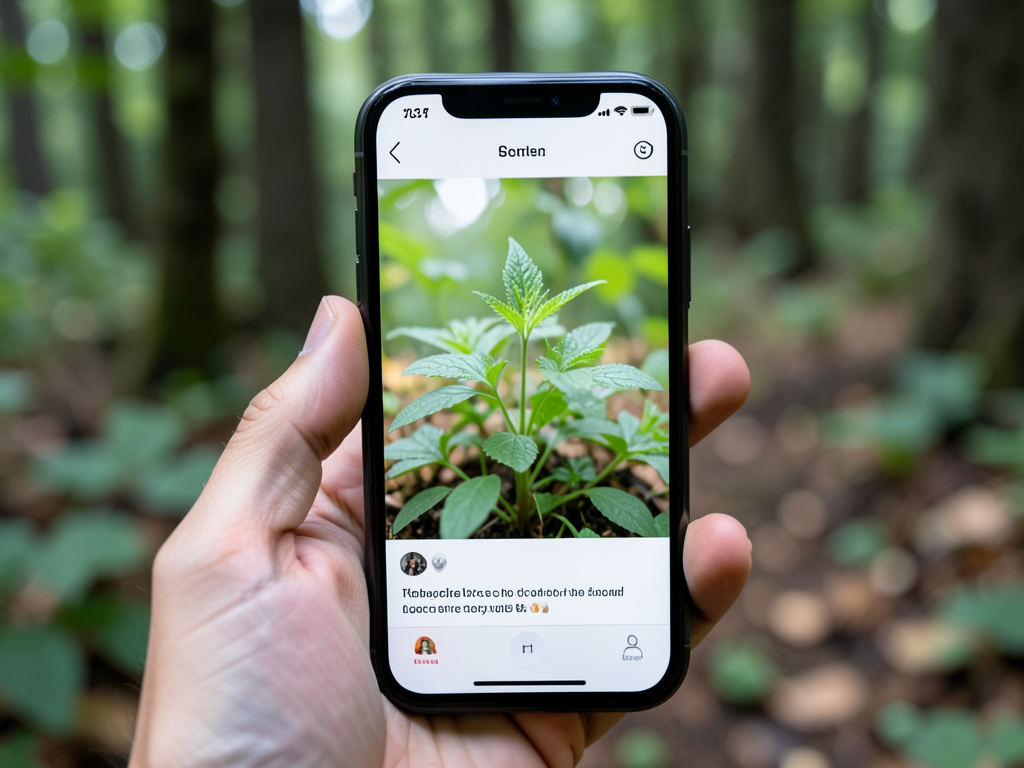
PlantNet is the academic’s choice. Developed by a consortium of French research organizations — Cirad, INRAE, Inria, and IRD — it functions differently from most identification apps. Instead of giving you one answer, it shows you a ranked list of possible matches with probability scores. Crucially, it shows you why it thinks each match is plausible, highlighting which visual features contributed to the match.
This transparency is gold for learning. When PlantNet says your mystery plant is 78% likely to be Lamium purpureum, it also shows you that the leaf shape, flower color, and growth habit all match, but the leaf margin is slightly off. That’s the kind of detail that teaches you to look more carefully on your next observation.
PlantNet’s database is organized by geographic regions, and you tell the app which flora you’re searching within. This dramatically improves accuracy by narrowing the candidate pool from “every plant on Earth” to “plants documented in your specific region.” If you’re in the Pacific Northwest, you tell it that, and it won’t waste compute cycles considering Mediterranean or Southeast Asian species.
Strengths: Completely free and open-source, scientifically rigorous approach with transparent reasoning, excellent regional filtering, strong European and Mediterranean coverage, works offline
Weaknesses: User interface is utilitarian bordering on clunky — it won’t win any design awards, North American coverage is improving but still slightly weaker than European, mushroom identification is not its focus at all, no built-in edibility assessment
4. ShroomID — Best for Mushroom Foragers
Platforms: iOS, Android | Price: Free / Premium $4.99/month | Offline: Partial
If you hunt mushrooms, you need a mushroom-specific tool. General plant ID apps have an alarmingly high error rate on fungi because mushrooms are visually deceptive — the same species can look radically different at different growth stages, and different species can look nearly identical at certain points.
ShroomID was built specifically for mycological identification. It uses a deep learning model trained exclusively on fungi, factoring in spore print color, cap shape, gill attachment, stem characteristics, and substrate — the features that mycologists actually use for identification, not just general shape matching.
The community feature is the real value here. You can post an observation and get feedback from experienced mushroom hunters within hours, often minutes. I’ve had veteran mycologists correct my IDs, suggest spore printing, and point out subtle cap features I’d completely missed. For anyone serious about mushroom foraging, this community aspect alone is worth the download.
Strengths: Fungi-specific AI model built from the ground up for mushrooms, active community of experienced identifiers, spore print and microscopy feature support, detailed and prominent toxicity information, good coverage of both edible and toxic species
Weaknesses: Useless for plants by design, premium subscription required for offline mode and unlimited IDs, the community can feel intimidating for complete beginners, coverage is better for North American and European species than Asian or South American
5. Falling Fruit — Best for Finding Urban Foraging Spots
Platforms: Web, iOS, Android | Price: Free | Offline: Partial
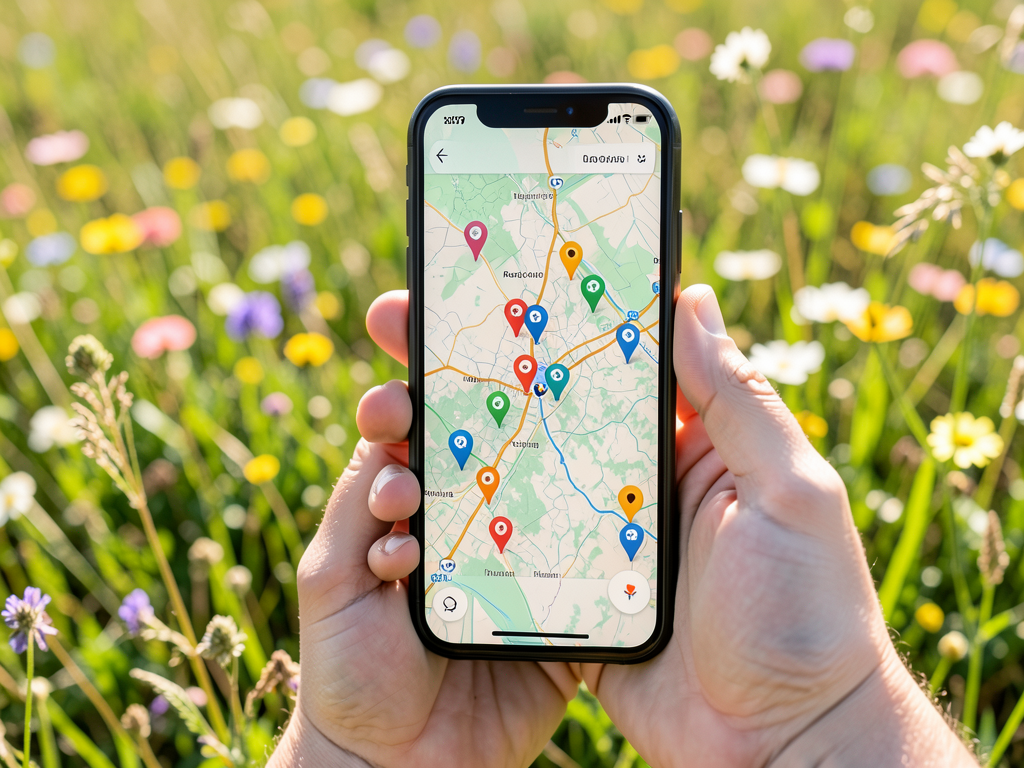
Falling Fruit is fundamentally different from the other apps on this list — it’s not an identification tool at all. It’s a collaborative map of publicly accessible edible plants, fruit trees, and foraging locations worldwide. Think of it as Google Maps for urban foraging, built and maintained by a passionate community of foragers.
The concept is brilliant in its simplicity: users tag locations of fruit trees, berry bushes, nut trees, and other edibles growing in public spaces. The map currently contains over 1.5 million locations across thousands of cities worldwide. You can filter by plant type, see what’s in season near you, and even get alerts when users report that a particular tree is fruiting.
I’ve used Falling Fruit to find mulberry trees in Brooklyn, wild fennel patches in San Francisco, and abandoned apple orchards in rural Vermont. The data quality varies by region — active urban areas tend to have extensive coverage, while rural regions can be sparse. But in a city with an active foraging community, it’s an absolute treasure map.
Strengths: Free and community-driven, global coverage with 1.5M+ locations, seasonal availability information, filterable by plant type, integrates with Google Maps for turn-by-turn navigation to foraging spots
Weaknesses: Not an identification tool at all — you still need to know what you’re looking at, data quality depends entirely on local community activity, some listed locations may be on private property or outdated, no toxicity or safety information
6. Wild Edibles Forage — Best All-Round Foraging Companion
Platforms: iOS, Android | Price: $5.99 one-time | Offline: Yes
Created by the foraging educator “Wildman” Steve Brill, this app feels like having a slightly eccentric but deeply knowledgeable foraging mentor in your pocket. Unlike the algorithm-first apps, Wild Edibles Forage is built around a curated database of 200+ edible wild plants, each with multiple high-resolution photos, detailed harvesting instructions, and preparation tips.
What I appreciate most is that this app doesn’t try to identify everything — it focuses exclusively on common edible species and their most dangerous look-alikes. This constrained scope means the information density per plant is much higher than in general-purpose apps. You’re not scrolling past 50 species of ornamental grass to find information about wild asparagus.
The preparation instructions are especially valuable. Knowing that a plant is edible is one thing. Knowing that you should boil stinging nettle leaves for exactly three minutes to neutralize the formic acid, or that pokeweed shoots must be boiled in multiple changes of water — that’s the difference between a meal and a trip to the emergency room.
Strengths: One-time purchase with no subscription, fully offline with no internet needed, detailed preparation and cooking instructions, dangerous look-alike comparisons with photos, field-tested information from a forager with decades of teaching experience
Weaknesses: Smaller species database than AI-powered apps, no camera-based identification — you have to look things up manually, heavily North America-focused, the UI design feels dated and can get cluttered on smaller phone screens
7. iNaturalist — Best for Learning to Identify Plants Yourself
Platforms: iOS, Android, Web | Price: Free | Offline: Partial
iNaturalist deserves its own mention separate from its kid-sibling Seek. While Seek gamifies identification for beginners, iNaturalist proper is a full citizen science platform that connects you with a global community of naturalists, botanists, entomologists, and mycologists.
Here’s how it works: you take a photo of any wild organism, upload it to iNaturalist, and the platform’s AI suggests one or more possible identifications. Then — and this is the crucial part — other users can agree with the AI or suggest alternative IDs. When two or more users agree on a species-level identification, the observation becomes “Research Grade” and feeds into global biodiversity databases used by actual scientists.
For a forager, iNaturalist is the single best tool for learning to identify plants independently. By seeing how experts distinguish between similar species, reading their comments about diagnostic features, and building up your own observation history, you gradually internalize the identification process. You stop relying on the AI and start noticing the distinguishing features yourself — which is, ultimately, the entire point.
Strengths: Free and community-driven, identifications verified to Research Grade quality, contributes to real biodiversity science, excellent for developing independent identification skills, massive user base means fast community feedback, seasonal and geographic exploration tools
Weaknesses: Not foraging-specific — no built-in edibility information, requires patience since community IDs aren’t instant, can be overwhelming for absolute beginners, privacy considerations since observations are public by default
Comparison Table: Foraging Apps at a Glance
| App | Best For | Offline | ID Method | Edibility Info |
|---|---|---|---|---|
| 🍎 Edible Plant Identifier | All-in-one foraging | Partial | AI camera | Extensive |
| Seek | Beginners, families, kids | Partial | AI camera | Basic warnings |
| PictureThis | Plant ID accuracy | Yes | AI camera | Detailed |
| PlantNet | Scientific rigor, learning | Yes | AI camera | None built-in |
| ShroomID | Mushroom hunting | Partial | AI + Community | Detailed |
| Falling Fruit | Urban foraging locations | Partial | Map-based | None |
| Wild Edibles | All-round foraging | Yes | Manual lookup | Extensive |
| iNaturalist | Learning to identify | Partial | AI + Community | Community-driven |
🍎 = Featured app · Download Edible Plant Identifier on the App Store →
The Real Dangers of Relying Too Heavily on Apps
Let me be direct: a foraging app can contribute to a fatal mistake. Not through malice or negligence on the developer’s part, but through the fundamental nature of visual-only identification.
A 2024 study from Rutgers University tested five popular plant identification apps against 38 toxic plant species. The apps correctly identified the toxic plants as dangerous only 42% to 83% of the time. For mushrooms, the rates are worse. A 2025 study published in Clinical Toxicology examined 134 cases of mushroom poisoning where the forager had used an identification app. In 41% of those cases, the app had “confirmed” the mushroom was edible.
These aren’t theoretical risks. In October 2024, a family of three in Ohio was hospitalized with acute liver failure after eating Amanita phalloides — death cap mushrooms — that two different apps had identified as edible puffballs. All three survived, but two required liver transplants. The apps showed a combined confidence score above 90%.
The issue isn’t that the apps are bad. The issue is that they’re solving a different problem than most users think they’re solving. An app answers the question “What does this plant look like?” But the forager’s real question is “Is this plant safe to eat?” Those are fundamentally different questions, and a visual match alone cannot answer the second one.
Why Apps Make Mistakes
Understanding why apps fail helps you use them more safely:
Morphological plasticity. Plants don’t read field guides. The same dandelion can look radically different depending on soil quality, sunlight exposure, water availability, and life stage. A stunted dandelion growing from a sidewalk crack looks nothing like its textbook photograph — and the app may confidently match it to something completely different.
Missing diagnostic features. Apps rely exclusively on what the camera can see. They can’t assess smell (wild garlic’s onion scent is its most reliable identifier), texture (poison hemlock stems have distinctive purple spots and are completely hairless, unlike wild carrot), or latex production (wild lettuce bleeds white sap when cut, a key distinguishing feature from look-alikes).
Seasonal variation. A plant that’s unmistakable in full summer bloom can be nearly impossible to identify in early spring when it’s just emerging from the soil, or in late autumn when it’s dying back. Apps trained primarily on flowering photographs often fail spectacularly on leaf-only or dormant specimens.
Geographic extrapolation. An app trained primarily on North American or European specimens may confidently misidentify a similar-looking species from another continent, especially within genera that have both edible and toxic members across different regions.
How to Use Foraging Apps Safely: A Practical Framework
After years of teaching foraging workshops and learning from my own mistakes — plus a few genuinely scary close calls — here’s the framework I teach every student.
The Three-Source Rule
Never eat anything based on a single app identification. Before consuming any wild plant or mushroom, confirm the identification using at least three independent sources. A practical example:
- App identification — fast first pass, gives you a direction to explore
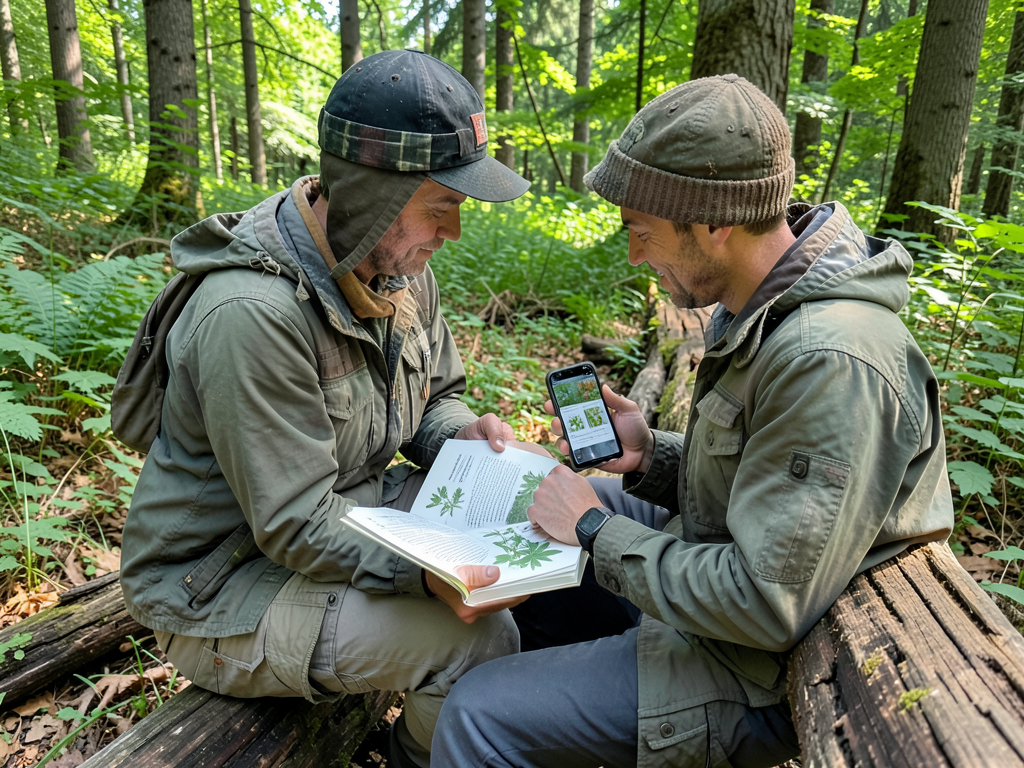
- Physical field guide cross-reference — offline, detailed, forces you to look at diagnostic features
- Expert verification — iNaturalist community, local foraging group on social media, or an experienced forager you know
If all three sources agree, and you’ve personally verified every key diagnostic feature, you’re in reasonably safe territory. If anything doesn’t match — even one detail — don’t eat it. Period. No exceptions.
Learn the Toxic Look-Alikes First
Before you learn to identify edible plants, learn the toxic ones that live in your region. In North America, that means knowing poison hemlock, water hemlock, death cap mushrooms, destroying angels, pokeweed (raw), and poison ivy at minimum. These are the plants that can genuinely harm or kill you.
When you learn an edible plant, immediately learn every toxic plant that could be confused with it. For example: if you want to forage wild carrot (Queen Anne’s lace), you must be able to distinguish it from poison hemlock, water hemlock, and fool’s parsley. Every. Single. Time. There is no shortcut for this.
Photograph for Diagnosis, Not Aesthetics
Most people take one pretty photo of a plant and expect the app to work magic. For reliable identification, you should photograph multiple diagnostic angles:
- The whole plant in its growing environment (shows habit and habitat)
- A close-up of the leaves, both top and underside (shows venation and texture)
- The stem, clearly showing any hairs, spots, ridges, or texture
- The flower or fruit, if present, from multiple angles
- The base of the plant and surrounding soil (shows root structure clues)
Apps like iNaturalist let you upload multiple photos per observation. Use this feature. The more diagnostic information you provide, the more accurate the identification will be.
Never Eat on the First Encounter
Even if an app gives you a 99% confidence match on an edible plant you think you recognize — don’t eat it right there in the field. Take photos. Make notes about the location, habitat, smell, and any other observations. Verify at home with a physical field guide. Post it to a foraging community for feedback. Sleep on it. If you’re still convinced it’s edible the next day after all that verification, go back and harvest then.
I know this sounds paranoid. It’s not. It’s the difference between being a forager for decades and becoming a cautionary case study. The woods will still be there tomorrow. Your liver needs to be there too.
Frequently Asked Questions
Can I trust a foraging app to identify mushrooms?
No — not alone. Mushrooms are the highest-risk category in foraging, and apps make dangerous mistakes with fungi at rates that should concern anyone. Use a mushroom-specific app like ShroomID, cross-reference with at least two physical field guides, and get community or expert verification. Never eat a mushroom identified solely by an app. The margin for error with fungi is zero.
What if I can’t get internet in the woods?
Always download offline plant databases before heading out. PictureThis, PlantNet, and Wild Edibles Forage all support offline identification with pre-downloaded regional packs. If you’re going to a remote area, download the regional plant pack for that specific location while you still have service — ideally the night before. Better yet, bring a physical field guide as your primary tool and use the app as backup only.
Are free foraging apps good enough for beginners?
For learning and casual identification: absolutely. Seek and PlantNet are completely free and genuinely excellent. For serious foraging where you’ll actually eat what you find, I recommend combining a free community app like iNaturalist with a paid offline identification tool like PictureThis or Wild Edibles Forage, plus a physical field guide. Total investment: less than a single emergency room copay.
Do these apps work in all countries?
Coverage varies significantly by region. Apps trained primarily on North American and European flora perform best in those regions. If you’re foraging in Southeast Asia, South America, or sub-Saharan Africa, coverage will be noticeably spottier. Check each app’s regional databases before relying on them. PlantNet allows you to select specific regional floras, which dramatically helps if your region is supported.
Can apps identify plants from just a leaf photo?
Sometimes, but it’s unreliable. A single leaf without flowers, fruit, or stem context provides very limited diagnostic information. The best apps can make educated guesses from leaf shape and venation patterns, but their confidence scores drop significantly when you only provide a leaf. Always try to photograph multiple plant parts for the most reliable identification. A leaf plus a flower plus the overall plant shape is infinitely more useful than any one photo alone.
What’s the single best app for someone who just wants to start?
Start with Seek by iNaturalist. It’s free, it’s fun, it teaches you as you go, and it’s backed by real science. Use it for a full season — spring through fall — just observing and identifying without eating anything. Once you’re comfortable with common species and have a good eye for plant features, add iNaturalist proper for community feedback, and pick up a physical field guide for your region. The progression from app-only to multi-source verification is the safest path.
The Bottom Line
Foraging apps in 2026 are genuinely extraordinary tools. If you are on iOS, Edible Plant Identifier is my top recommendation — it is free, purpose-built for foragers, and covers the full journey from identification to recipe. For Android users, Seek and PlantNet offer solid free alternatives. They’ve democratized plant identification, turned millions of smartphone users into citizen scientists contributing real data to global biodiversity research, and introduced countless people to the quiet joy of finding wild food. Used wisely, they accelerate learning in ways that weren’t possible a decade ago.
But they are not — and in my opinion may never be — a substitute for deep botanical knowledge, hands-on field experience, and the cautious judgment that comes from both. The best foragers I know use apps as one component of a larger toolkit that includes physical field guides, regular practice, community mentorship, and years of accumulated pattern recognition that no algorithm can replicate.
Start with apps. Learn with apps. Have fun with apps. But don’t stop with apps. The real goal isn’t to become dependent on a piece of software to tell you what’s safe. The goal is to reach a point where the app is just a backup — a quick second opinion — while your own eyes, nose, hands, and hard-won knowledge are the primary tools you trust.
And if there’s even a sliver of doubt about a plant? Put it back. Photograph it. Research it at home. Come back tomorrow. The forest will still be there.
The mushroom that almost killed that family in Ohio looked exactly like an edible puffball on a phone screen. In real life, with a knife and a field guide and ten minutes of careful observation, the differences were clear. That gap — between what an app shows you and what the plant actually is — that’s the space where foraging lives. Learn to navigate it, and the woods open up to you in ways you never imagined.