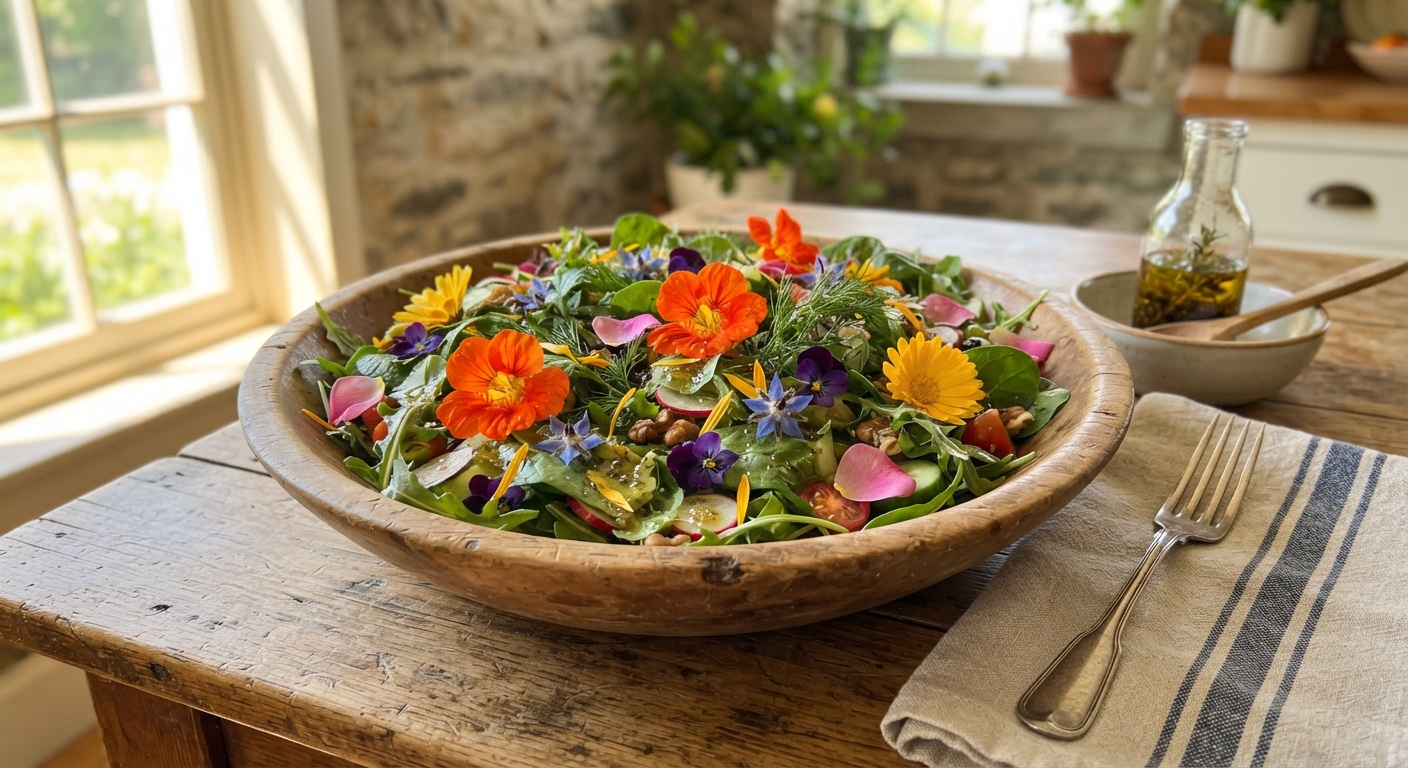
I still remember the first time I served a salad topped with flowers at a dinner party. My mother-in-law stared at her plate like I’d lost my mind. “You want me to eat… flowers?” she asked, fork frozen midair. Ten minutes later she was asking if she could take home a bag of nasturtiums from my garden.
That’s the thing about edible flowers. People think they’re fancy restaurant theatrics — something chefs do to justify a $22 salad. But once you’ve tasted a peppery nasturtium or a cool, cucumbery borage blossom straight from the garden, the lightbulb goes off. Flowers aren’t garnish. They’re ingredients.
And the best part? Most of them grow like weeds.
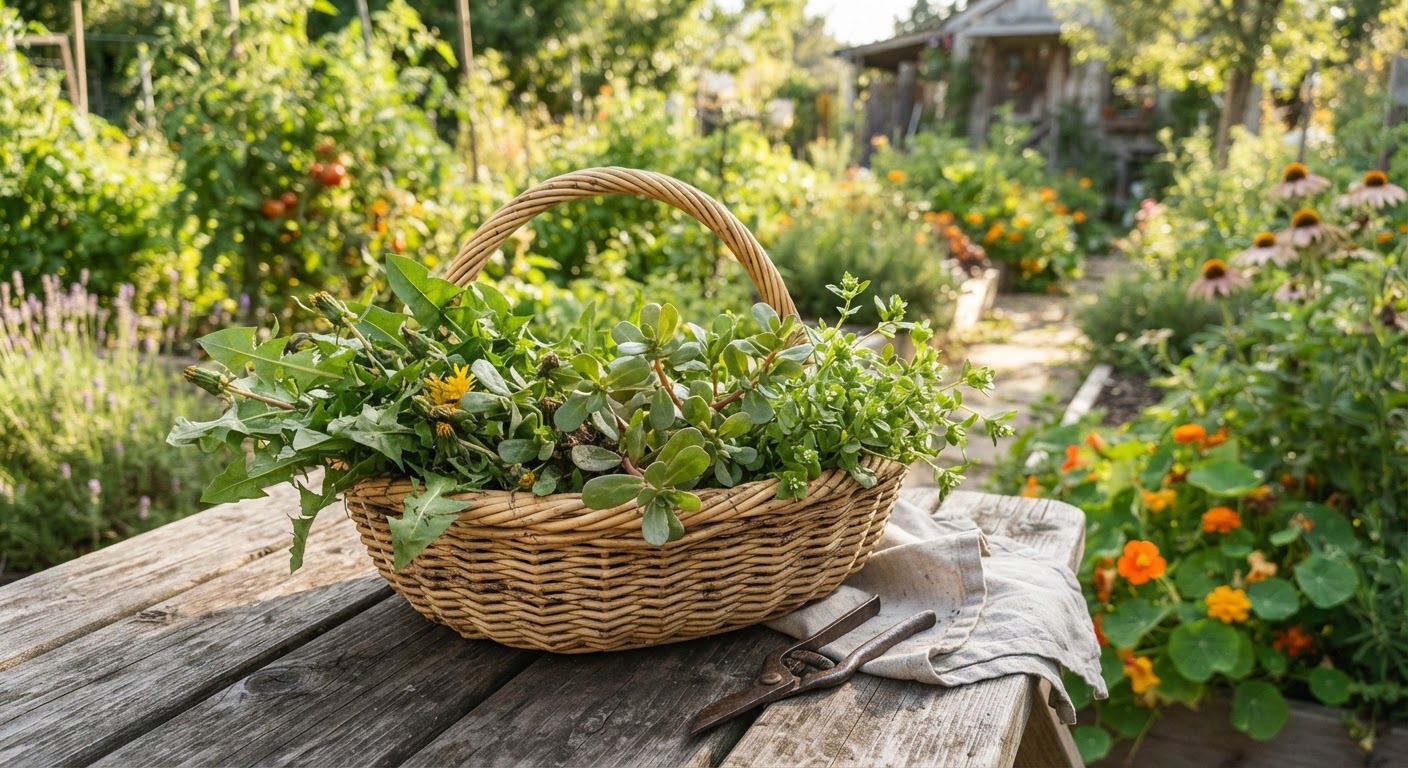
Why Put Flowers in Your Salad? (It’s Not Just Instagram)
Let’s get the obvious out of the way: edible flowers make salads stunning. A bowl of mixed greens becomes a piece of art when you scatter orange calendula petals and deep purple violas across it. But looks are maybe 20% of the story.
Flowers bring flavor you can’t get from leaves. Nasturtiums hit with horseradish heat. Borage tastes eerily like cucumber. Rose petals carry a perfume that lingers after every bite. These aren’t subtle notes — they’re distinct, punchy flavors that can completely change a salad’s personality.
They add texture contrast. Some flowers are crisp (daylily petals), some are velvety (rose), some dissolve on your tongue almost instantly (borage). Mixing these textures against crunchy lettuces and creamy dressings keeps every forkful interesting.
Nutritionally, flowers pull their weight too. Nasturtiums are loaded with vitamin C and have natural antibiotic properties. Calendula petals contain lutein and zeaxanthin — the same eye-protecting compounds found in kale. Borage is rich in gamma-linolenic acid, an anti-inflammatory omega-6. You’re not just decorating your plate; you’re adding real nutritional value.
And practically speaking, many edible flowers are absurdly easy to grow. Nasturtiums, calendula, borage, and violas will happily reseed themselves year after year with almost zero intervention. Plant them once, eat them forever — that’s my kind of kitchen garden.
9 Edible Flowers That Belong in Every Salad Bowl
Nasturtium — The Peppery Powerhouse
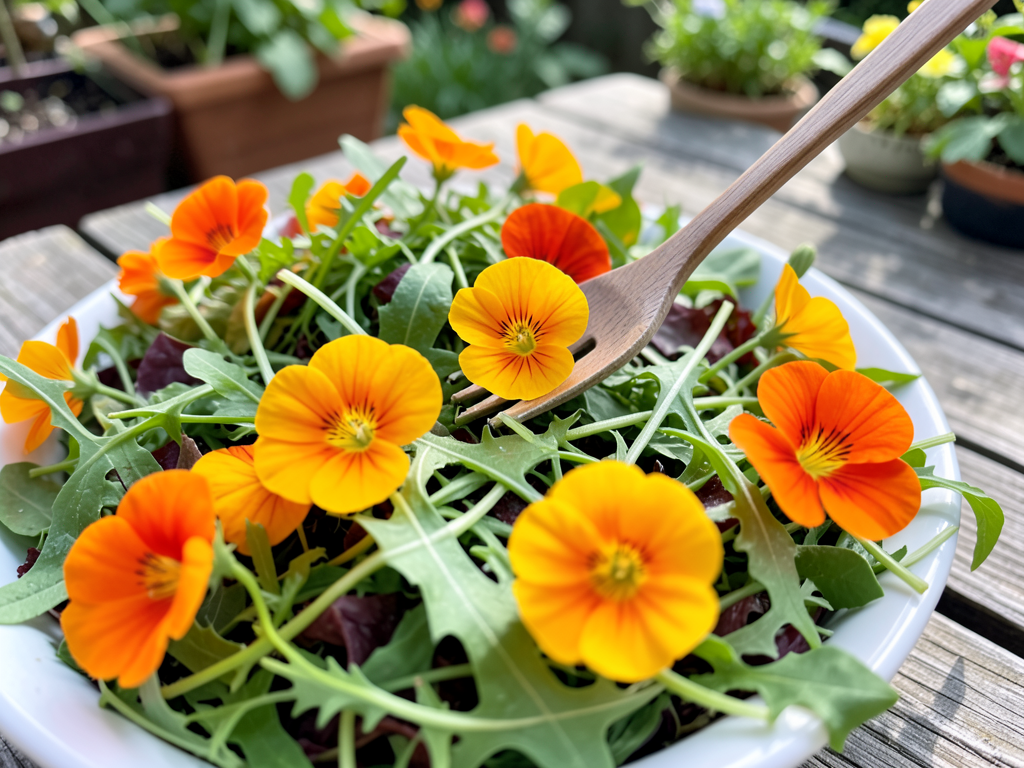
If you only learn one edible flower, make it nasturtium. This is the gateway drug of edible blooms — impossible to misidentify, easy to grow, and so delicious that you’ll wonder why grocery stores don’t sell them.
Flavor: Sharp, peppery, with a heat reminiscent of arugula crossed with radish. Some varieties are milder, but most deliver a noticeable wasabi-like punch that fades quickly. The intensity varies by growing conditions — nasturtiums grown in poor soil (which they actually prefer) tend to be spicier, while well-fertilized plants produce milder blooms.
What to eat: Everything above ground. The flowers, the lily-pad-shaped leaves, and even the seed pods (which you can pickle into “poor man’s capers”). For salads, stick to the whole flowers and young leaves. Tear larger leaves into strips.
Salad pairing: Nasturtiums shine brightest against creamy, cooling elements. I love them in a salad with fresh mozzarella or burrata, where the pepperiness cuts through the richness. They also work beautifully with citrus segments — grapefruit and nasturtium is a combination I stumbled onto by accident and now make deliberately every summer.
Growing tip: Direct sow after your last frost. These plants actively dislike rich soil — too much nitrogen and you’ll get massive leaves but few flowers. Neglect them. Seriously. The more you ignore nasturtiums, the happier they are.
Calendula — The Poor Man’s Saffron
Calendula (Calendula officinalis) goes by “pot marigold,” but don’t confuse it with garden marigolds (Tagetes), which are not edible in the same way. More on that dangerous mix-up later.
Flavor: Mildly tangy, slightly peppery, with an earthy undertone. The petals have a subtle saffron-like quality — hence the nickname — though they won’t fool anyone in a paella. The color is the real draw here: those vivid orange and gold petals scattered across a salad look like edible sunshine.
What to eat: Only the petals. The flower center (the disc) is technically edible but unpleasantly bitter and has a resinous texture. Pluck the petals and discard the rest. I do this over a bowl while watching TV — it’s meditative work, and you’ll get faster at it.
Salad pairing: Calendula petals are the ultimate team player — they don’t dominate, they elevate. Scatter them over grain-based salads (quinoa, farro, bulgur wheat), toss them into coleslaw, or use them to add color to potato salad. The mild flavor means they won’t fight anything, making calendula the easiest flower to add to literally any salad you’re already making.
One warning: If you’re allergic to ragweed, chrysanthemums, or daisies, approach calendula cautiously. It’s in the Asteraceae family, and cross-reactions are possible. Start with one petal, not a handful.
Borage — The Cucumber Flower
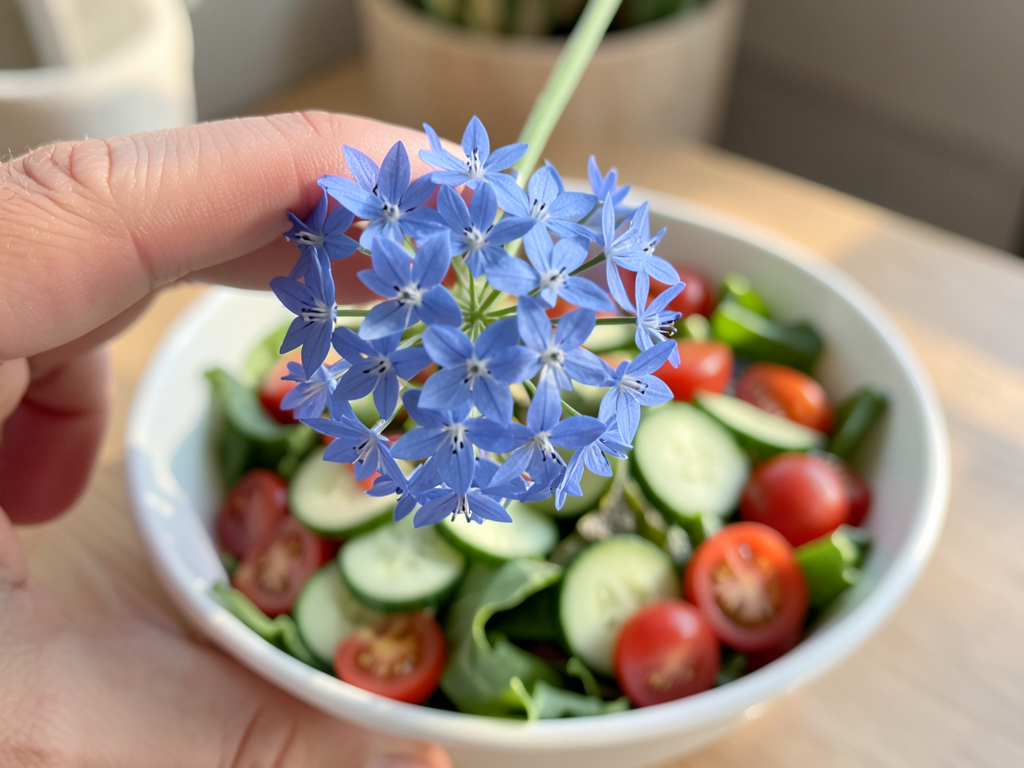
Borage (Borago officinalis) produces the most beautiful flowers in the edible garden — five-petaled stars in an electric blue so vivid it almost doesn’t look real. The plant itself, admittedly, looks like a weed crossed with a cactus. Hairy, sprawling, oddly prickly. But the flowers? Worth every square inch of garden space.
Flavor: Pure cucumber. Not “cucumber-adjacent” or “reminiscent of cucumber” — straight-up cool, watery, refreshing cucumber flavor concentrated into a single tiny bloom. It’s genuinely uncanny the first time you try one.
What to eat: The flowers only. Borage leaves are technically edible when very young, but the prickly hairs make them unpleasant raw, and older leaves contain low levels of pyrrolizidine alkaloids that make them inadvisable for regular consumption. Stick to the blossoms.
Salad pairing: Borage flowers are delicate — they wilt fast once picked — so add them last, right before serving. They’re natural partners for cucumber salads (double the cucumber flavor), but I actually prefer them as a surprise element in fruit salads. A few blue borage stars scattered over watermelon and feta is one of those combinations that makes guests ask, “What IS that?”
Harvesting note: The prickly plant can irritate skin, so wear gloves when harvesting flowers if you’re sensitive. And always check inside the flower — bees adore borage, and you don’t want to accidentally bring one to the table.
Viola & Pansy — Tiny Technicolor Petals
Violas (Viola odorata, Viola tricolor) and pansies (Viola × wittrockiana) are the same genus, and from a culinary standpoint, you can treat them interchangeably. These are the edible flowers you’ve probably already seen on restaurant plates — they’re the go-to for pastry chefs decorating cakes, but they’re just as brilliant in salads.
Flavor: Mildly sweet, slightly grassy, with a faint wintergreen note in some varieties. Pansies have almost no detectable flavor beyond a whisper of sweetness, while wild violas (especially Viola odorata) carry a subtle perfume. Neither will overwhelm — these are the flowers you add for visual impact more than flavor contribution.
What to eat: The entire flower, stem removed. The petals are thin and delicate; the whole bloom is edible.
Salad pairing: Violas and pansies are your color accent flowers. A handful of purple, yellow, and white blooms turns a plain green salad into something worthy of a dinner party. I use them most often in spring salads with tender lettuces, peas, and a light lemon vinaigrette — the delicate petals don’t hold up well against heavy dressings or aggressive tossing.
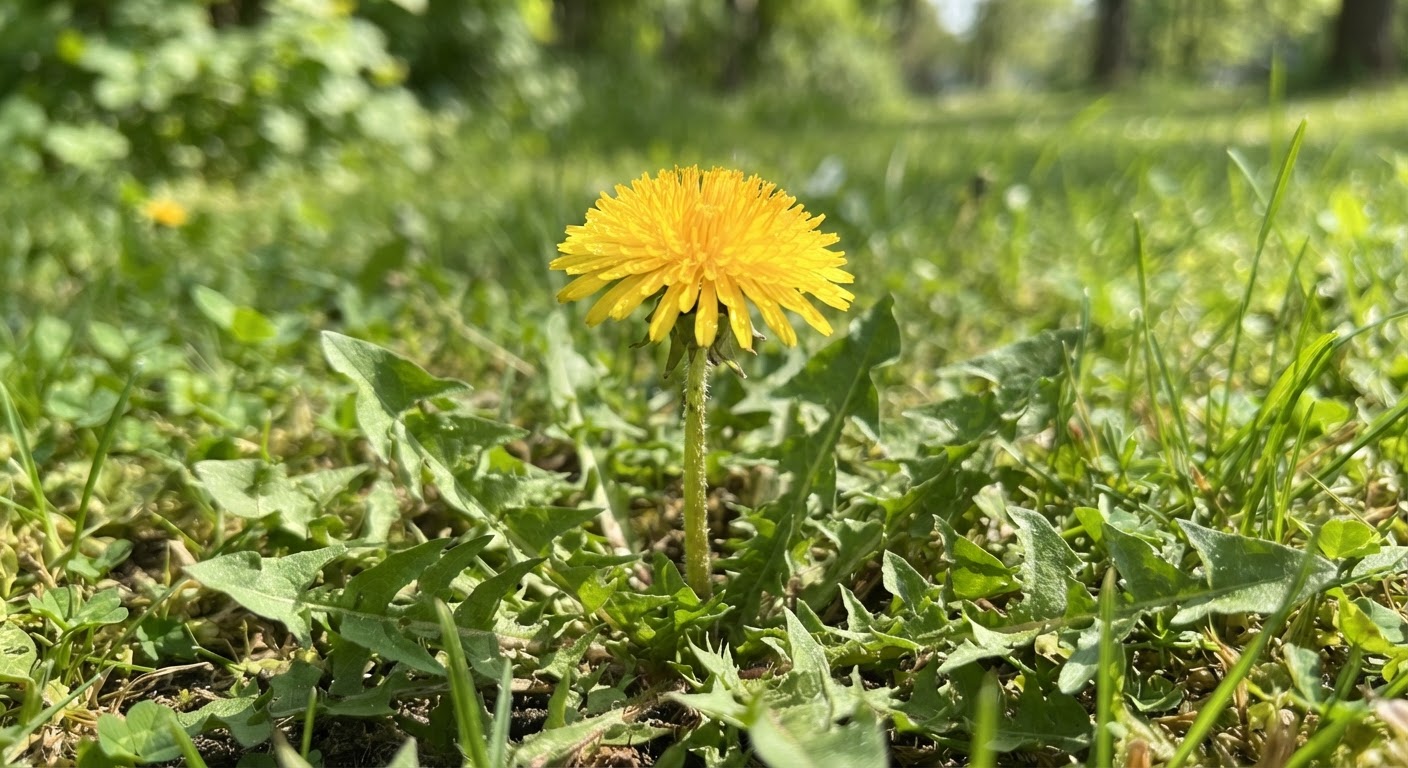
Foraging note: Wild violas grow in lawns and woodland edges throughout North America and Europe. If you forage them, make absolutely sure the area hasn’t been sprayed with herbicides or pesticides. Lawn chemicals and edible flowers don’t mix, and violas growing in treated grass can absorb those compounds.
Rose — Fragrant Elegance, One Petal at a Time
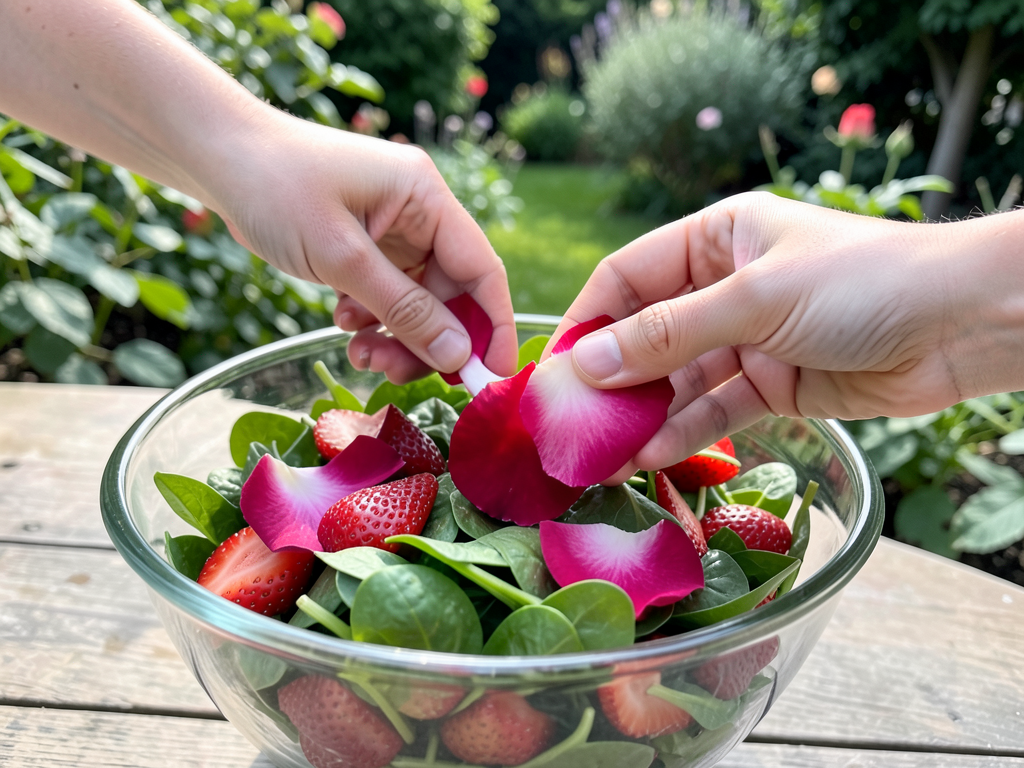
Not all roses are created equal in the kitchen. The deeply fragrant, old-fashioned varieties (Damask, Gallica, Alba, Rugosa) carry intense aroma, while modern hybrid teas bred for vase life often have the scent profile of cardboard. Smell before you harvest — if the rose doesn’t smell like a rose, it won’t taste like one either.
Flavor: Floral, perfumed, with fruity undertones that vary by variety. Darker red and pink roses tend to carry more robust flavor. Rugosa roses, with their crinkled leaves and massive hips, produce petals that taste remarkably like their scent — rich and complex, with hints of clove and apple.
What to eat: The petals only. Remove the white base of each petal (the “heel” where it attaches to the flower) — it’s bitter and has an unpleasant texture. Also remove stamens and the central structure. You’re after the colored petal portion exclusively.
Salad pairing: Rose petals love fruit. Strawberry and rose salad with a splash of balsamic is a classic for a reason. They also pair beautifully with stone fruits — try peach, rose petal, and prosciutto over arugula for a salad that tastes like a summer garden party. And if you’re making a Middle Eastern-inspired salad with pistachios, dates, and goat cheese, a handful of rose petals is practically mandatory.
Safety note: Never use roses from a florist or grocery store bouquet. Those are absolutely loaded with systemic pesticides and fungicides that are not food-safe. Grow your own or source from a certified organic farm.
Lavender — Less Is More
Lavender in salad is a move that separates the confident cook from the hesitant one. Use too much and your salad tastes like a sachet drawer. Use just enough — we’re talking a pinch of individual florets, not whole spikes — and it adds an aromatic complexity that makes people pause mid-bite and say, “What is that?”
Flavor: Floral, slightly minty, with rosemary and citrus undertones. English lavender (Lavandula angustifolia) is sweeter and more culinary-friendly than French or Spanish varieties, which lean camphoraceous and soapy.
What to eat: The individual florets (tiny purple flowers) pulled from the spike. The green calyx underneath is edible too but can be gritty. I use only the petals for salads and reserve the whole buds for infusions and baking.
Salad pairing: Lavender needs fat to temper its assertiveness. Goat cheese, feta, creamy burrata — all excellent anchors. It also loves honey in dressings and toasted nuts for crunch. My go-to: mixed bitter greens, crumbled goat cheese, toasted walnuts, a pinch of lavender florets, and a honey-lemon vinaigrette. Proportion matters: for a salad serving four, you want maybe a quarter-teaspoon of lavender florets, not a tablespoon.
Chamomile — The Sweet Daisy Cousin
German chamomile (Matricaria chamomilla) and Roman chamomile (Chamaemelum nobile) both produce edible flowers, but German chamomile is sweeter and more apple-forward. The little daisy-like blooms don’t just belong in tea — they’re a genuinely lovely salad addition that nobody expects.
Flavor: Sweet, apple-like, with a honeyed floral note. It’s subtle but distinctive — once you’ve tasted fresh chamomile flowers, the dried tea version feels like a pale imitation.
What to eat: The whole flower head, stem removed. Both the white ray petals and the yellow center disc are edible. Fresh flowers are best; dried chamomile works in a pinch but loses most of its sweetness.
Salad pairing: Chamomile is a natural match for fall salads — think roasted squash, apple slices, dried cranberries, and a maple vinaigrette. The apple notes in chamomile echo the fruit, creating a cohesive flavor profile that feels intentional rather than gimmicky. Summer salads with fresh berries also love chamomile.
Allergy note: Chamomile is in the Asteraceae family alongside ragweed, calendula, and daisies. If you have ragweed allergies, proceed with caution — reactions can range from mild oral tingling to more serious symptoms.
Chive Blossoms — The Savory Surprise
Most people grow chives for the green stalks and never think twice about the flowers. That’s a mistake. Chive blossoms are one of the most underappreciated edible flowers out there — and if you already grow chives, you’re sitting on a free supply.
Flavor: Mild onion-garlic, far gentler than the chive stalks themselves. The individual florets (the tiny purple bells that make up the pom-pom flower head) have a delicate allium flavor that adds a savory dimension to salads without overwhelming like raw onion would.
What to eat: The individual florets separated from the central stem. The whole flower head can be eaten too, but breaking it apart distributes the oniony flavor more evenly through a salad.
Salad pairing: Chive blossoms bridge the gap between salad and savory dish. They’re phenomenal in potato salad, egg salad, or any salad with a creamy dressing where a subtle onion note enhances without dominating. They’re also one of the few edible flowers that works well in heartier, savory salads — think grilled chicken, bacon, hard-boiled eggs, and a ranch-style dressing.
Availability: Chives bloom once per season in late spring to early summer. Harvest the flowers when they’re fully open and vibrantly purple — once they start fading to pale lavender, the flavor diminishes. Deadheading encourages more blooms on some varieties, so don’t be shy about picking them.
Daylily — Crunchy, Sweet, and Surprisingly Filling
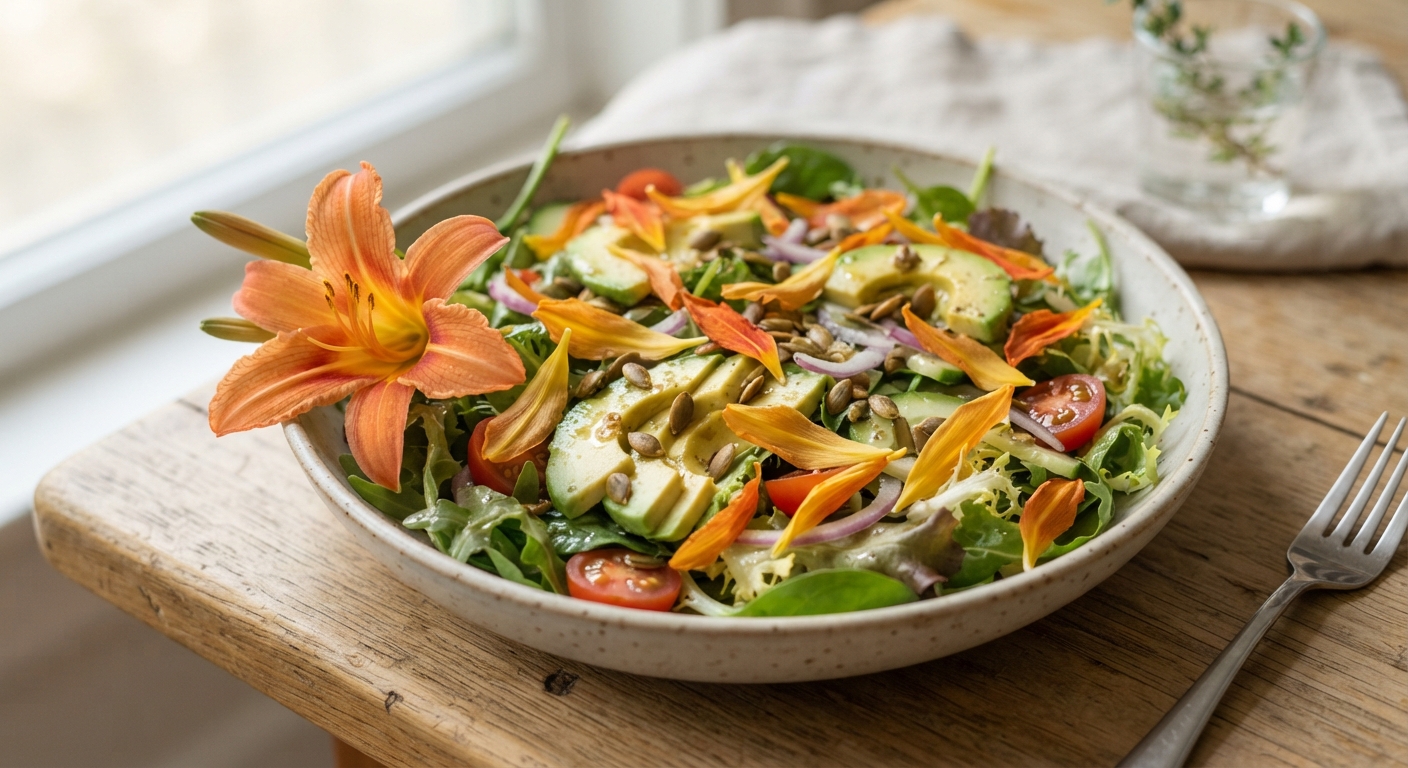
Daylilies (Hemerocallis species) are criminally underused in Western kitchens, though they’ve been a staple in Chinese cuisine for centuries — you’ll find dried daylily buds (“golden needles”) in hot and sour soup. The fresh petals bring a satisfying crunch to salads that most other edible flowers can’t match.
Flavor: Mildly sweet, vegetal, with a texture similar to crisp lettuce or raw green beans. The flavor is subtle — slightly reminiscent of sweet corn or asparagus — which makes daylilies more of a texture ingredient than a flavor one.
What to eat: The petals of the flower, fresh or lightly cooked. The unopened buds can be sautéed or pickled. Note: only Hemerocallis species (daylilies) are edible. True lilies (Lilium species) are toxic. Never confuse the two.
Salad pairing: Daylily petals’ crunch makes them fantastic in slaws and chopped salads. I tear them into strips and toss them into Asian-inspired salads with shredded cabbage, carrots, sesame dressing, and toasted almonds. Their natural sweetness also pairs well with citrus-forward dressings and avocado.
Critical warning: This is the one flower on this list where misidentification could be dangerous. Daylilies are Hemerocallis. True lilies (Lilium, including Easter lilies, tiger lilies, and Asiatic lilies) are toxic — to humans and especially to cats. If you didn’t plant it yourself and can’t confidently identify it, do not eat it. The Foraging for Beginners guide on this site has more identification tips if you’re new to wild harvesting.
Flavor Profiles at a Glance
Here’s a quick reference for when you’re standing in the garden deciding what to pick:
| Flower | Dominant Flavor | Flavor Intensity | Best Salad Match |
|---|---|---|---|
| Nasturtium | Peppery, radish-like | Strong | Caprese, creamy dressings |
| Calendula | Tangy, earthy, saffron-like | Mild | Grain salads, coleslaw |
| Borage | Cool cucumber | Medium | Cucumber salad, fruit salad |
| Viola / Pansy | Sweet, grassy, wintergreen | Very mild | Light spring greens |
| Rose | Floral, fruity, perfumed | Medium-strong | Fruit salads, Middle Eastern |
| Lavender | Floral, minty, rosemary | Strong | Goat cheese & nut salads |
| Chamomile | Apple, honey, sweet floral | Mild | Fall salads with squash |
| Chive Blossom | Onion-garlic, savory | Medium | Potato salad, hearty savory |
| Daylily | Sweet corn, vegetal, crunchy | Mild | Asian slaws, chopped salad |
How to Harvest, Clean, and Prep Edible Flowers
The difference between a beautiful salad and a gritty, buggy mess comes down to how you handle the flowers between garden and plate.
Harvest in the morning. Flowers are at their most turgid and flavorful right after the dew dries, before the midday sun starts pulling moisture from the petals. I do a loop of the garden around 9 AM with a shallow basket, picking whatever’s in bloom.
Check for passengers. Turn every flower upside down and give it a gentle tap. Earwigs, ants, and tiny beetles love hiding between petals, especially in nasturtiums and roses. Better to evict them outside than discover them at the table.
Rinse gently, then dry immediately. Submerge flowers briefly in cool water to dislodge dirt and pollen, then spread them on a kitchen towel or paper towel. Pat them dry very gently — some petals (borage, viola) tear if you look at them wrong. Let them air dry for another 10 minutes before using.
Remove bitter parts. For roses, cut off the white “heel” at the base of each petal. For calendula, pluck only the colored ray petals. For daylilies, remove the stamen and pistil — they can be bitter and, in some people, cause mild stomach upset.
Add to salads at the last possible moment. Dressing wilts delicate petals within minutes. Toss your salad with dressing first, then scatter flowers across the top after plating. Whole flowers (nasturtium, viola, pansy) hold up better than individual petals.
Never wash flowers hours ahead. Most edible flowers wilt into sad, translucent ghosts of themselves within an hour or two of washing. Wash right before serving, period.
Growing Your Own Salad Flowers
Here’s the dirty secret of edible flowers: buying them at farmers’ markets or specialty grocers is expensive — $5–8 for a tiny clamshell of maybe 15 blooms. Growing them costs almost nothing.
The foolproof starter kit. If you have a single square foot of soil or a medium container on a balcony, you can grow nasturtiums, calendula, and violas. All three are essentially bulletproof:
- Nasturtiums: Sow seeds directly in the ground after frost. Water occasionally. That’s it. They thrive on neglect and will self-seed so aggressively you’ll be giving them away next year.
- Calendula: Direct sow early spring or fall. Deadhead spent blooms to keep flowers coming through the entire growing season. They’ll flower from spring until hard frost if you keep up with harvesting.
- Violas: These prefer partial shade and cooler weather. In hot climates, they’ll fade by midsummer, but in temperate zones they’ll bloom from early spring through autumn. They self-seed politely but willingly.
- Borage: Sow once, have borage forever. The seeds drop and germinate the following spring with near-100% reliability. One plant becomes twenty the next year.
- Chives: A perennial that returns year after year. Plant a clump and you’ll have chive flowers every May–June for the rest of your gardening life. They also repel aphids, so they earn their keep as companion plants.
One non-negotiable rule: If you’re growing flowers to eat, do not use systemic pesticides, herbicides, or chemical fertilizers. Organic growing methods only. Edible flowers absorb whatever’s in the soil and on their petals — and you’re eating that entire bloom raw, unwashed by cooking heat.
Seasonal Availability Calendar
What’s blooming when matters. Here’s a rough guide for temperate Northern Hemisphere gardens — adjust by 4–6 weeks earlier or later depending on your local climate.
| Season | Flowers Available |
|---|---|
| Early Spring (Mar–Apr) | Viola, pansy, wild violet, chive blossoms (late spring) |
| Late Spring (May–Jun) | Chive blossoms, calendula (starts), borage (starts), rose (early varieties), chamomile (starts) |
| Summer (Jul–Aug) | Nasturtium, calendula, borage, rose, lavender, chamomile, daylily |
| Early Fall (Sep–Oct) | Nasturtium, calendula, rose (late flush), viola (returns in cool weather) |
| Late Fall/Winter | Very limited — calendula in mild climates, greenhouse-grown violas |
In practice, summer is peak flower season. July and August will give you the most variety. But violas in spring and calendula in fall mean you’re rarely without at least one edible bloom from March through October.
If you’re foraging rather than growing, timing shifts slightly. Wild violets peak in April–May in most regions. Wild roses bloom in June. Daylilies are a midsummer event, typically July. The guide to Foraging Tips on this site covers seasonal patterns and gear recommendations for wild harvesting — worth a read before you head out with a basket.
Flowers You Should NEVER Eat
This section matters more than any other on this page. Please read it.
Some flowers will make you sick. A few can kill you. The difference between an edible flower and a toxic one isn’t always obvious to the untrained eye, and assuming “pretty = edible” is how people end up in emergency rooms.
Do not eat these common garden flowers:
- Foxglove (Digitalis): Contains cardiac glycosides. Every part is toxic. Ingesting even small amounts can cause irregular heartbeat, nausea, and death. The bell-shaped flowers are beautiful — and deadly.
- Lily of the Valley (Convallaria majalis): Contains cardiac glycosides similar to foxglove. The small white bell flowers are especially dangerous because they look innocent and delicate. They’re not.
- Oleander (Nerium oleander): One of the most poisonous plants commonly grown in gardens. A single leaf can kill an adult. The flowers — pink, white, or red — are also toxic. Don’t even use them as garnish on a plate you plan to eat from.
- Monkshood (Aconitum): Contains aconitine, a potent neurotoxin and cardiotoxin. The hooded purple-blue flowers are stunning, and touching the plant can cause numbness through skin absorption. Eating any part is fatal.
- True Lilies (Lilium species): Not to be confused with daylilies (Hemerocallis). True lilies — Easter lilies, tiger lilies, Asiatic lilies — are toxic to humans and extremely toxic to cats. Pollen alone can cause kidney failure in felines.
- Sweet Pea (Lathyrus odoratus): Despite the appetizing name, these flowering vines are toxic. The flowers and seeds contain aminopropionitrile, which can cause paralysis if consumed in quantity over time. Not to be confused with edible garden peas (Pisum sativum), whose flowers are safe.
- Hydrangea: Contains cyanogenic glycosides that release cyanide when digested. Unlikely to be fatal from a petal or two, but gastrointestinal distress is almost guaranteed.
- Azalea/Rhododendron: Contains grayanotoxins. Even honey made from rhododendron nectar (“mad honey”) can cause severe illness. The flowers themselves will cause burning mouth, vomiting, and cardiac effects.
The golden rule: If you cannot identify a flower with 100% confidence — scientific name, not just “that looks like the thing I saw on a blog” — do not eat it. Our Poisonous Lookalikes Guide covers specific identification differences between safe and dangerous species. Bookmark it. Read it. The consequences of getting this wrong are not hypothetical.
Also, never eat flowers from:
- Florists or flower shops (pesticides)
- Garden centers or nurseries (likely treated with non-food-grade chemicals)
- Roadsides (exhaust residue, runoff from treated surfaces)
- Parks or public spaces (almost certainly sprayed)
- Anywhere you don’t know the growing history
Frequently Asked Questions
Are all rose petals edible?
All roses (Rosa species) are technically edible, but not all taste good. Fragrant heirloom varieties deliver flavor; modern hybrid teas often taste like faintly floral paper. Regardless, only eat roses you’ve grown yourself or sourced from a certified organic farm. Never use florist roses — they’re among the most heavily sprayed flowers in commercial agriculture.
Can I eat the stems and leaves too?
It depends on the plant. Nasturtium leaves and stems? Yes, and they’re delicious. Rose leaves and stems? Technically non-toxic but woody and unpleasant. Borage leaves? Inadvisable due to pyrrolizidine alkaloids. Calendula stems? Too fibrous. The rule of thumb: if you’re not sure about a specific plant part, look it up plant by plant. Don’t assume that if the flower is safe, the rest of the plant is too.
Do edible flowers need to be organic?
If you’re eating them raw — which you will be, in salad — then yes. Strongly yes. Flowers are delicate and absorbent. Pesticides, fungicides, and synthetic fertilizers applied to ornamental plants are not formulated with human consumption in mind. Grow your own or buy from a trusted source labeled for culinary use.
Will cooking edible flowers change their flavor?
Most edible flowers lose their nuance when cooked. Nasturtium’s pepperiness fades to almost nothing. Borage loses its cucumber flavor entirely. Calendula holds up reasonably well in soups and rice dishes (which is how “poor man’s saffron” earned its name), and daylily buds are traditionally cooked in Asian cuisine. But for salads, raw is the point.
How long do edible flowers last after picking?
Not long. Most are at their peak for 4–6 hours after harvest. If you must store them, place them between damp paper towels in a sealed container in the refrigerator — they might last 24 hours this way. But honestly? Pick what you need just before you make the salad. Freshness is everything.
Can I eat the flowers from my herb garden?
Often, yes — and they’re usually delicious. Basil flowers taste like milder basil. Cilantro flowers taste like cilantro. Dill flowers carry concentrated dill flavor. Mint flowers are cooling and sweet. Thyme and oregano flowers bring their herb’s flavor in a more delicate form. The rule is the same as herbs: the flower typically tastes like a gentler version of the leaf, making herb flowers some of the safest and most underrated edible blooms.
A Final Word from the Garden
Here’s what I’ve learned after years of throwing flowers into salads: people will think you’re fancy. They’ll comment on how it looks like a restaurant dish. They’ll ask if you took a class. And you’ll know the truth — that you basically scattered weeds on some lettuce and it took thirty extra seconds.
Edible flowers are one of the lowest-effort, highest-impact things you can do in the kitchen. Most of them grow like weeds (nasturtium literally reseeds from cracks in my driveway). They cost pennies to grow. They turn a Tuesday-night side salad into something worth photographing. And unlike so many food trends that demand special equipment or expensive ingredients, this one rewards the laziest gardener just as much as the most dedicated one.
Start with nasturtiums and calendula. They’re forgiving, delicious, and nearly impossible to kill. Graduate to roses and lavender once you’ve built confidence. And whatever you do, learn your toxic lookalikes before you venture into foraging territory — the Common Edible Weeds Guide and Poisonous Lookalikes Guide on this site are excellent starting references.
Now go scatter some flowers on your lunch. Just don’t be surprised when everyone at the table starts asking for seconds.
Have questions about edible flowers or want to share your own favorites? Drop a comment below — I read every single one and I’m always looking for new blooms to try.