I still remember the first time I bit into a sun-warmed blackberry straight off a trailside bramble. July heat, dusty boots, and a tangle of thorny canes heavy with fruit. That handful of wild berries tasted better than anything I’d ever bought in a plastic clamshell from a supermarket — and cost exactly nothing. I’ve been foraging ever since.
But here’s the thing nobody tells you when you start: the line between a delicious wild berry and one that’ll ruin your afternoon (or worse) is thinner than you think. I learned that lesson the hard way when I almost popped a handful of shiny red baneberries into my mouth thinking they were wild currants. A seasoned forager friend yanked my arm back just in time.
That moment stuck with me. If I could make that mistake, any beginner could. So this guide is for you — the curious hiker, the weekend wanderer, the person who’s walked past a bush full of dark berries and wondered, “Can I eat that?”
I’m going to walk you through seven wild edible berries you can confidently forage, two that need special handling (yes, elderberries — you can’t skip this step), and three toxic ones you absolutely need to recognize so you never make the near-mistake I did. No botany degree required. Just common sense, careful observation, and a healthy dose of caution.
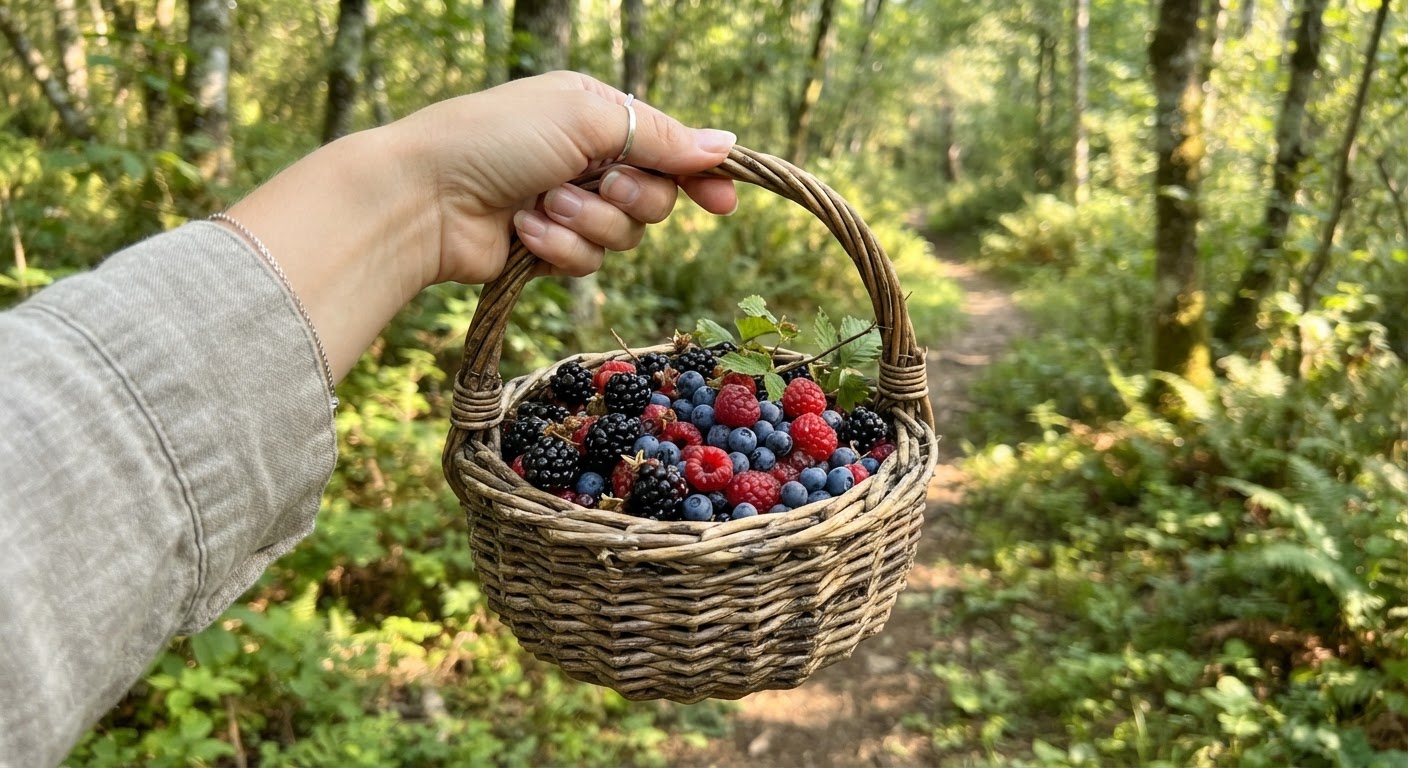
The Golden Rule of Foraging (Read This First)
Before we dive into individual berries, let’s get one thing straight: never eat anything you can’t identify with 100% certainty. Not 90%. Not “it looks pretty close to the picture.” One hundred percent.
I use a three-step system every single time:
- Cross-reference at least two reliable field guides. Not a single Google image search. An actual field guide (I keep Newcomb’s Wildflower Guide and Peterson’s Field Guide to Edible Wild Plants in my pack) plus a trusted online source like a university extension database.
- Check every identifying feature. Leaves, stems, growth habit, berry color, berry arrangement, time of year, and habitat. Plants don’t grow in isolation — where it’s growing matters as much as what it looks like.
- When in doubt, spit it out. Literally. If you’re not sure, walk away. No berry is worth an emergency room visit.
One more thing: start with the unmistakable ones. The berries with no dangerous lookalikes. That’s where real confidence begins.
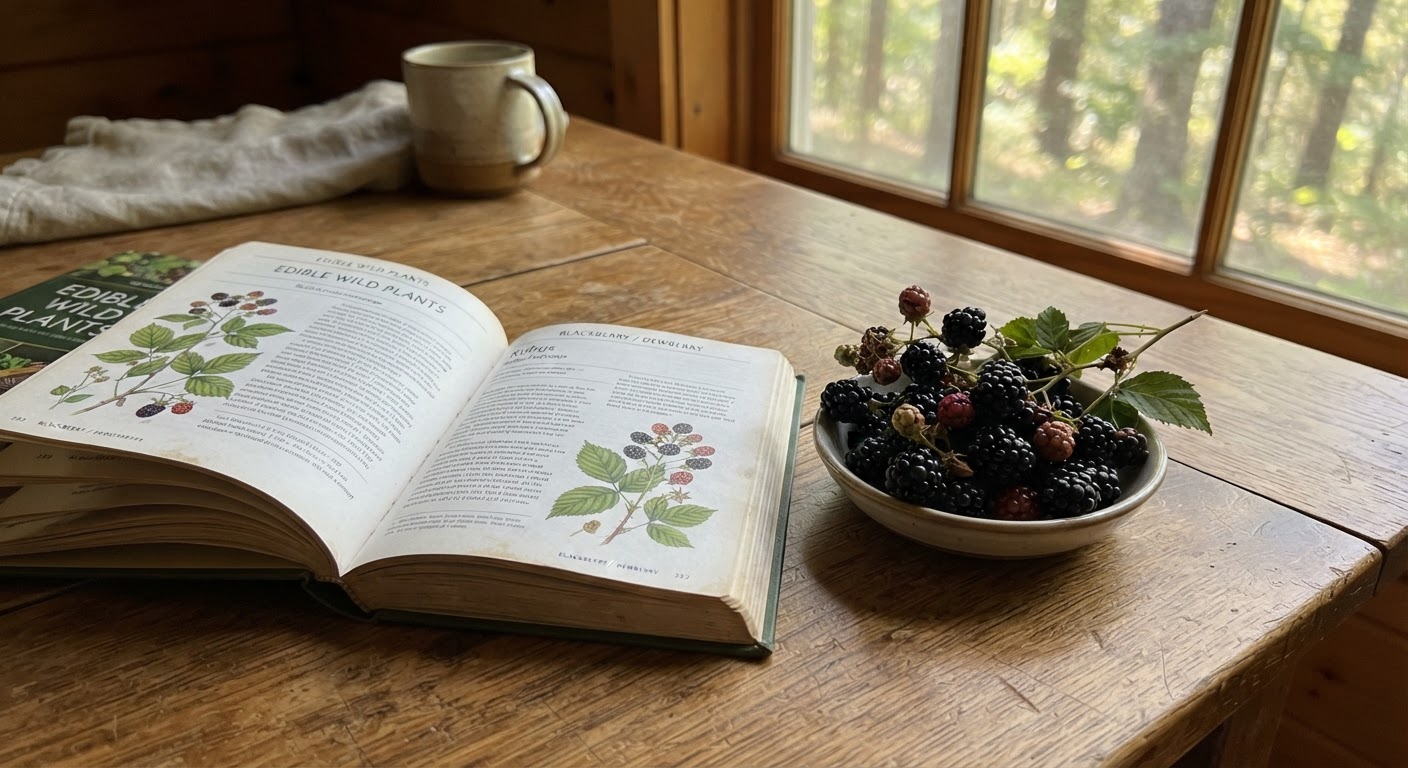
Wild Edible Berries You Can Eat With Confidence
1. Wild Blackberries (Rubus species)
If you learn only one wild berry, make it the blackberry. They’re everywhere — hedgerows, forest edges, abandoned lots, hiking trails — and there is literally nothing dangerous that looks like them. The compound drupelets (those little juice-filled bubbles) clustered on a central core are unmistakable.
Blackberries grow on thorny, arching canes that can reach head height. Leaves are compound, usually with five oval leaflets with serrated edges. Flowers in late spring are white to pale pink with five petals. By mid-to-late summer, those flowers become green berries that blush red before turning deep purple-black.
How to eat them: Straight off the cane, warm from the sun. They’re also fantastic in crumbles, jams, and infused into vodka or gin. I freeze gallon bags of them every July for winter smoothies.
Watch out for: The thorns. Wear long sleeves. You’ll still get scratched. It’s part of the experience.
2. Wild Raspberries (Rubus idaeus and relatives)
Wild raspberries are blackberries’ sweeter, gentler cousin. They grow on similar thorny canes but you’ll know them apart in two seconds: when you pull a raspberry off the plant, it leaves behind a hollow cone-shaped core. Blackberries keep the core. Raspberries leave it on the stem. That’s your foolproof test.
Colours vary. The classic red raspberry is most common, but you’ll also find black raspberries (often called blackcaps) and golden varieties. Black raspberries are my personal favorite — more intense, almost wine-like in flavor, and they make the best jam you’ll ever taste.
Where to find them: Forest edges, old logging roads, sunny clearings. They love disturbed soil and partial shade. In North America, peak season runs June through August depending on latitude and elevation.
3. Mulberries (Morus species)
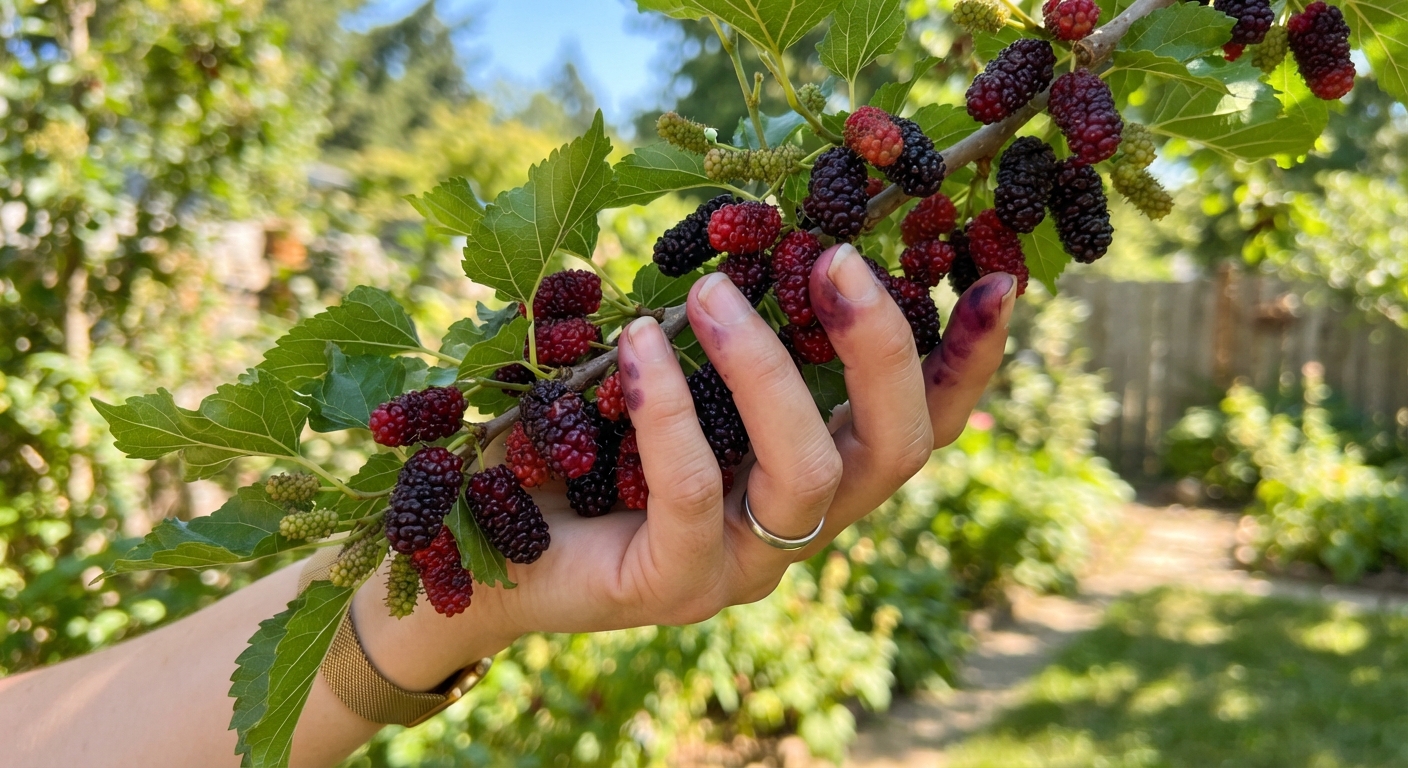
Mulberries are the mess-makers of the forager’s world. These trees absolutely pour fruit in late spring and early summer — so much fruit that the ground underneath turns purple. You’ll know you’ve found one before you even look up because your shoes will be stained.
There are three common species: red mulberry (native to eastern North America), white mulberry (introduced from Asia), and black mulberry. All three produce edible fruit. Mulberries look like elongated blackberries but grow on trees, not thorny canes. The leaves are the real giveaway — they’re heart-shaped with serrated edges and often have irregular lobes on the same tree, sometimes even on the same branch.
How to eat them: Raw, by the handful. Dried as a trail snack (they’re surprisingly sweet and chewy). Baked into pies. I’ve also mulched them into a country wine that turned out dangerously drinkable.
One caution: Unripe mulberries (green-white stage) contain a milky sap that can cause stomach upset and, in very large quantities, mild hallucinations. Pick the dark, fully ripe ones that fall into your hand with a light touch.
4. Wild Blueberries (Vaccinium species)
Wild blueberries are nothing like their bloated supermarket cousins. They’re smaller, denser, and pack about twice the antioxidant punch. More importantly in the field: nothing else looks quite like them.
You’ll find two main types in North America. Lowbush blueberries carpet open rocky barrens and acidic soil in the northern states and Canada — these are the tiny ones, maybe pea-sized, intensely flavored. Highbush blueberries prefer swampy edges and moist woods, reaching 6 to 12 feet tall with larger fruit.
The key identifier is the star-shaped crown on each berry — a little five-pointed calyx at the end opposite the stem. No toxic berry has this feature in North America. The leaves are small, oval, glossy dark green in summer, turning brilliant red in fall. Twigs are green and zigzagged with small pointed buds.
Season: Mid-July through August in most regions. Earlier in the South, later at higher elevations.
5. Wild Strawberries (Fragaria vesca and Fragaria virginiana)
These are not the giant red monsters from California fields. Wild strawberries are tiny — think fingernail-sized — and they’ll ruin grocery-store strawberries for you forever. The flavor is so concentrated it almost tastes like strawberry candy, except it’s not candy. It’s what strawberries are supposed to be.
Look for low-growing plants with three-part leaves (trifoliate), each leaflet oval with serrated edges. They spread by runners, forming loose carpets in sunny spots — lawn edges, trail margins, open meadows. White five-petaled flowers appear in spring, followed by tiny red berries with seeds embedded on the surface.
The lookalike that won’t hurt you: Mock strawberry (Duchesnea indica) has yellow flowers (not white) and tasteless, mealy fruit that’s perfectly safe but entirely disappointing. If you find a red berry on a three-leaf plant and the flower was yellow, you’ve got the bland imposter.
6. Elderberries — Cook Them or Regret It (Sambucus species)
Here’s where foraging gets serious. Elderberries are one of the most medicinally valuable wild foods you can harvest — rich in vitamin C and antioxidants, traditional in syrups and cordials for centuries — but you absolutely cannot eat them raw. I cannot stress this enough.
Raw elderberries contain cyanogenic glycosides, compounds that can cause severe nausea, vomiting, and diarrhea. Some people eat a few raw berries with no issue; others get violently ill. Don’t roll those dice.
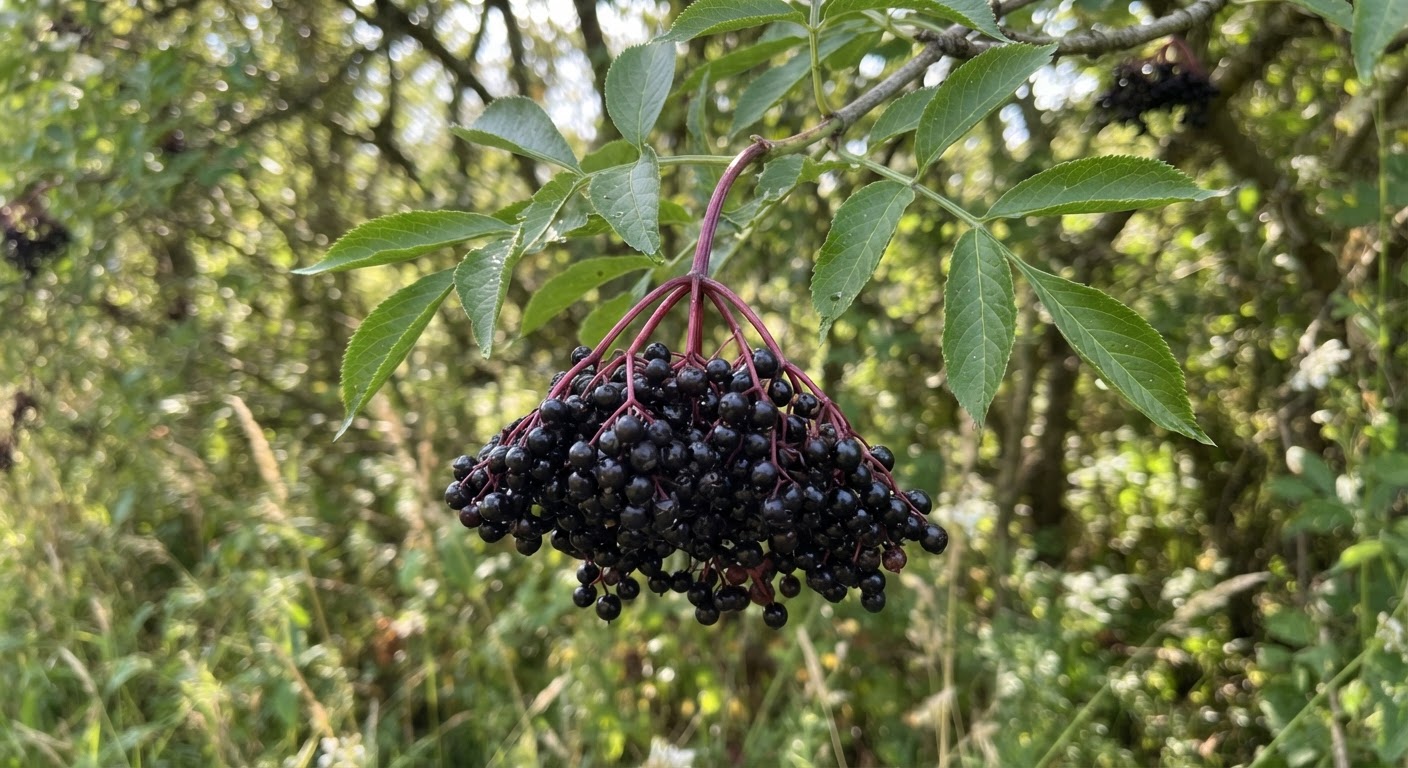
The tree itself: elder is more of a large shrub than a true tree, growing 10 to 15 feet tall with compound leaves made up of 5 to 11 leaflets with serrated edges. The bark is rough and dotted with prominent lenticels. In early summer, the plant explodes with flat-topped clusters of tiny white flowers (which are themselves edible and make incredible elderflower cordial). By late summer, those flowers become heavy umbels of dark purple-black berries.
The safe way: Heat to at least 180°F (simmering, not just warm) for 15-20 minutes. This neutralizes the compounds. Use them for syrup, jelly, wine, or pie filling. Never eat them raw. Never feed raw berries to children.
Deadly lookalikes alert: Water hemlock (Cicuta maculata) can look similar to elder when not in flower or fruit. But water hemlock has hollow stems with purple-streaked internodes and grows in wet areas rather than the drier edges elder prefers. If you’re not 100% certain, move on.
7. Serviceberry / Juneberry (Amelanchier species)
I’ll add this bonus because serviceberries are criminally underrated. Also called saskatoon, juneberry, or shadbush, these trees produce blueberry-sized purplish-red fruit that tastes like a cross between a blueberry and an almond. They’re one of the earliest wild fruits — ripening in June, hence the name — and they have zero dangerous lookalikes in North America.
The tree itself is small, often multi-stemmed, with smooth gray bark streaked with darker vertical lines. Leaves are oval with fine teeth on the edges. White five-petaled flowers emerge in early spring before the leaves fully unfurl. The berries have a little crown on the blossom end, similar to blueberries but more subtle.
Eat them fresh, bake them into muffins, or dry them like raisins. Indigenous peoples across North America pounded them into pemmican — dried meat mixed with dried berries and fat — a high-energy trail food that sustained people through brutal winters.
Wild Berries Seasonal Calendar
Timing is everything in foraging. Here’s when to find what across a typical temperate North American season:
| Berry | Early Season (May–Jun) | Peak Season (Jul–Aug) | Late Season (Sep–Oct) |
|---|---|---|---|
| Mulberries | ✅ Peak | Late varieties | — |
| Serviceberries | ✅ Peak | Early July | — |
| Wild Strawberries | Late May start | ✅ Peak (Jun–Jul) | Occasional |
| Wild Raspberries | Red varieties start | ✅ Peak (all types) | Black varieties |
| Wild Blueberries | — | ✅ Peak | Lowbush continues |
| Blackberries | — | ✅ Peak | Early Sep finish |
| Elderberries | Flowers only | Late Aug start | ✅ Peak |
Regional notes: In the Southeast US, shift everything 2-3 weeks earlier. In northern Canada and high elevations, shift 2-3 weeks later. At 4,000+ feet in the Appalachians or Rockies, berries that ripen in July at sea level may not peak until August.
Three Toxic Berries You Must Recognize
Knowing what’s safe is half the battle. Knowing what’s dangerous is the other half. Learn these three cold.
1. Pokeweed (Phytolacca americana)
Pokeberry is probably the most common toxic berry that beginners mistake for something edible. The plant grows everywhere in eastern North America — roadsides, field edges, disturbed soil — reaching 6 to 10 feet tall with thick reddish-purple stems. In late summer, drooping clusters of glossy dark purple berries form on bright pink-purple stems.
They look almost cartoonishly juicy. Some old-timers will tell you they’ve eaten poke “salad” (young spring shoots, triple-boiled). That’s a separate, highly specific preparation with three water changes. The berries are straight-up poisonous and can cause severe gastrointestinal distress, respiratory difficulty, and in large doses, death. Don’t mess with pokeweed.
How to tell it apart from edible dark berries: Pokeweed berries grow in elongated drooping racemes on pink-purple stalks. The plant has a thick, fleshy taproot and magenta-stained stems. No edible berry plant looks like this when you examine the whole plant.
2. Bittersweet Nightshade (Solanum dulcamara)
This one’s sneaky because the berries are beautiful — small, shiny, bright red ovals that hang in clusters from a woody vine. Bittersweet nightshade climbs on fences and tangles through shrubs in moist areas. The flowers are distinctive: purple star-shaped petals swept back like a little rocket ship, with a bright yellow cone of stamens in the center.
The berries contain solanine, the same toxic alkaloid found in green potatoes. Symptoms include nausea, vomiting, slowed heart rate, and in severe cases, respiratory paralysis. Children are especially vulnerable because the berries genuinely look like tiny tomatoes or candy. If you forage with kids, make sure they can identify this plant.
3. Virginia Creeper (Parthenoclavis quinquefolia)
Virginia creeper produces clusters of dark blue-purple berries on bright red stems in late summer. At a glance, someone might mistake them for wild grapes. Don’t.
The berries contain oxalic acid crystals, which cause burning pain in the mouth and throat, nausea, and kidney stress. Birds eat them with no problem (birds also eat poison ivy berries, so don’t use birds as your foraging consultant).
The giveaway: Virginia creeper has five leaflets per leaf (think “creepy creeper — five fingers”). Wild grapes have simple heart-shaped or lobed leaves, never compound. That one difference saves you every time.
Quick Identification Checklist for Beginners
Print this out or screenshot it on your phone:
- I’ve checked the berry color, arrangement, and shape against my guide.
- I’ve examined the leaves — shape, edges, arrangement on the stem.
- I’ve noted the plant’s growth habit (vine? shrub? tree? ground cover?).
- I’ve checked for thorns, hairs, or other stem features.
- I’ve verified the habitat matches what my guide says (sun/shade, wet/dry).
- I’ve ruled out the toxic lookalikes listed for this berry.
- If I’m not 100% certain, I’m walking away.
I’ve been foraging for over a decade and I still run through this checklist mentally before I eat anything new. Complacency is the enemy.
Frequently Asked Questions about Wild Edible Berries
Can I eat wild berries straight off the plant?
Yes — for the ones covered in the safe list above. Rinse them if you’re near a trail with heavy dog traffic or roadside exhaust. And remember: elderberries must be cooked. No exceptions.
What if I eat a berry and I’m not sure what it was?
Call Poison Control immediately. Don’t wait for symptoms. Don’t try to induce vomiting unless they tell you to. Take a picture of the plant and a sample of the berry if you can safely do so. In North America, the national Poison Help line is 1-800-222-1222.
Are there any poisonous berries that look exactly like blackberries?
No. The compound drupelet structure of blackberries and raspberries — those clusters of tiny juice-filled bubbles — has no toxic mimics in North America. This is why I recommend starting with Rubus species. They’re the safest entry point into foraging.
Can I forage in city parks?
Check local regulations. Many city and state parks prohibit plant collecting or have permit requirements. National forests and BLM land generally allow personal-use foraging (not commercial), but always confirm with the local ranger station before harvesting in quantity.
How many wild berries is “too many” on a first try?
Eat one. Wait 15 minutes. If you feel fine, eat a few more. Some people have individual sensitivities even to safe berries. Your digestive system may need time to adjust to wild foods if your diet has been all supermarket produce.
The Joy of Finding Your Own Food
There’s something primal about foraging that smartphones and grocery delivery can’t replicate. You’re doing something humans have done for hundreds of thousands of years — reading the landscape, recognizing food, gathering it with your own hands. Every berry you pick is a tiny act of reconnection.
But here’s my real advice, after years of doing this: start slow. Learn two or three berries this season. Not ten. Not “everything in this guide.” Pick blackberries and mulberries. Know them inside out. Next season, add raspberries and blueberries. Build real competence, not rushed confidence.
The forest will still be there next year. So will the berries. There’s no hurry.
Stay safe, forage responsibly, and may your baskets be heavy and your fingers purple. 🫐
Internal Linking Suggestions
- “How to Make Wild Elderberry Syrup That Actually Works” — link when discussing elderberry preparation
- “Identifying Poisonous Plants: A Visual Guide for Hikers” — link from the toxic berries section
- “10 Wild Edible Greens to Pair with Your Foraged Berries” — contextual link from the seasonal calendar
- “Edible Wild Plants of the Eastern United States (Regional Guide)” — link from the introductory section
- “Foraging Tools Every Beginner Should Own” — link from the identification checklist