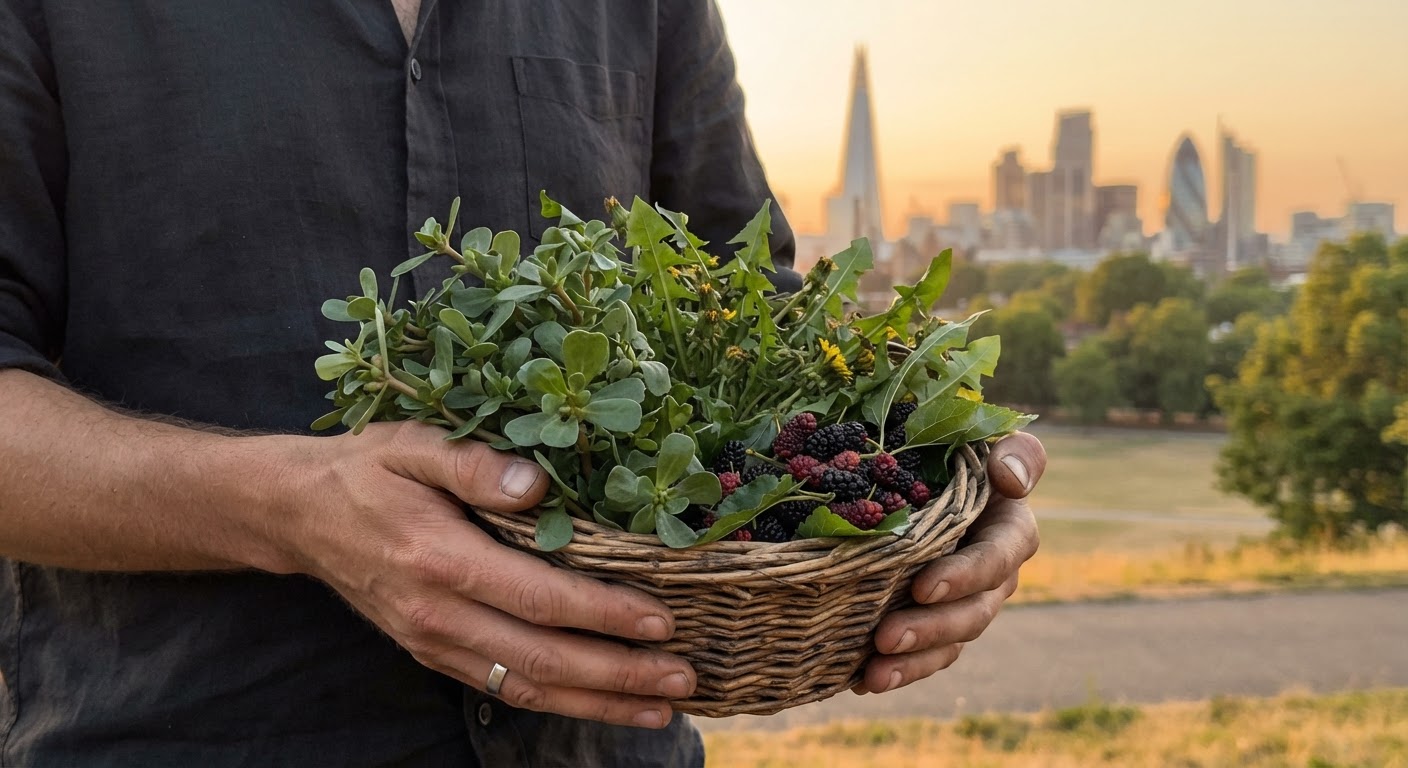
I remember the first time I realized cities are secretly orchards. I was walking to a meeting in downtown Portland, running late, when I nearly slipped on a sidewalk slick with fallen purple fruit. I looked up — an enormous Italian plum tree, absolutely loaded, dropping ripe plums onto the concrete. Cars drove past. Pedestrians swerved around the mess. Nobody stopped. Nobody picked a single one. I stood there with my empty coffee cup and filled it with free plums in under two minutes.
That moment rewired something in my brain. Once you start seeing, the city transforms. Every park becomes a salad bar. Every neglected lot becomes a pantry. Every sidewalk crack sprouts something edible if you know what to look for. Urban foraging isn’t some fringe hobby for survivalists — it’s happening in every city, right now, and the food is literally falling off the trees.
What Is Urban Foraging?
Urban foraging is the practice of identifying, harvesting, and eating wild plants, fruits, nuts, and fungi within city and suburban environments. It’s the same skillset as wilderness foraging, transplanted into a habitat where pavement meets purslane and high-rises shade wild raspberries.
The term covers everything from picking mulberries in a public park to harvesting lamb’s quarters from a vacant lot, from tapping street-side maple trees to gathering fallen walnuts on a college campus. It’s foraging, just with better cell reception and more dog-walkers watching you with curiosity.
The numbers behind this are genuinely staggering. A 2019 study published in Urban Forestry & Urban Greening mapped publicly accessible fruit trees in just one medium-sized city and found over 70 species producing thousands of pounds of unused food annually. Multiply that across every city in the world, and urban foraging goes from quirky hobby to legitimate food source.
Where to Forage in the City
Finding legal, safe foraging spots in urban areas requires strategy. Here’s where to look — and what you need to know about each location type.
Public Parks and Green Spaces
Public parks are the most accessible foraging grounds in any city. Many parks contain mature fruit trees planted decades ago — mulberries, crabapples, serviceberries, walnuts, and sometimes even apple or pear trees from old orchards that predate the park itself.
The key rule: check local ordinances. Some cities explicitly prohibit harvesting from public parks (New York technically bans it, though enforcement is inconsistent). Others are silent on the issue or actively encourage it. Portland, Seattle, and many European cities take a more welcoming approach, with some parks even hosting community harvest events.
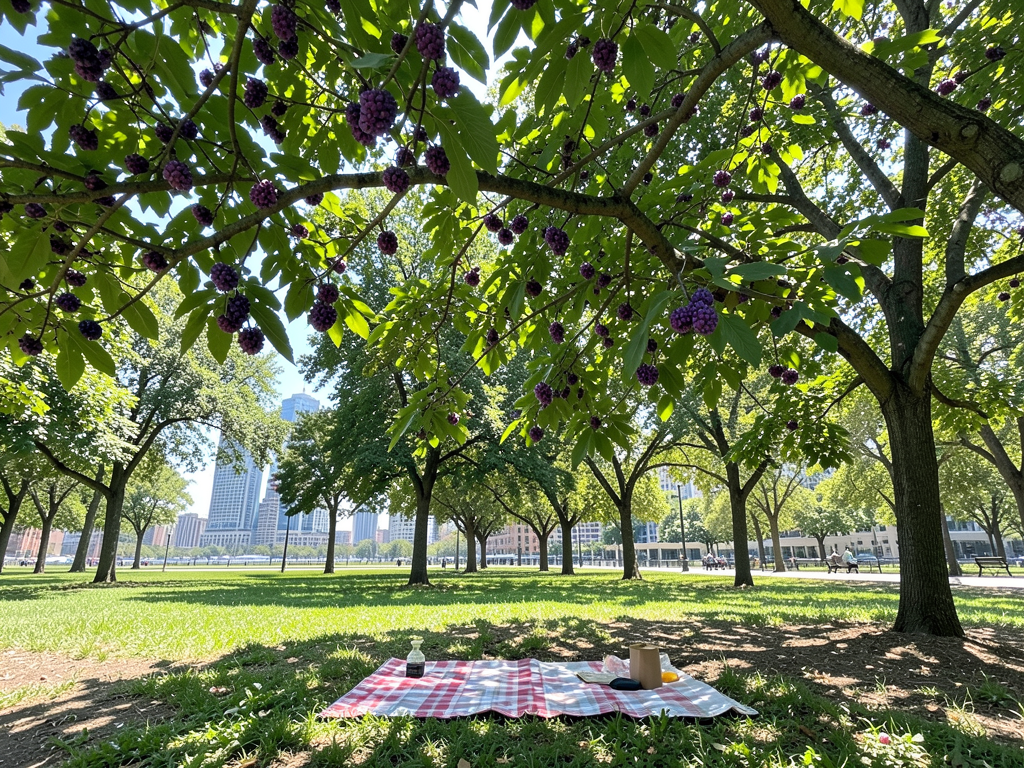
Pro tip: Parks along rivers and creeks tend to have the best diversity. The riparian zone — the green corridor along waterways — creates a mini-ecosystem that nurtures more wild edibles than manicured lawn parks. River paths are goldmines for wild grapes, blackberries, nettles, and edible greens.
Sidewalk Cracks and Hell Strips
The “hell strip” — that narrow patch of land between the sidewalk and the street — produces some of the most nutritious food you’ll find in a city. Purslane thrives here. So do dandelions, plantain, and mallow. These plants evolved to handle compacted soil, reflected heat, and the general hostility of urban margins.
Sidewalk cracks are micro-habitats. Water pools there. Seeds collect there. And plants that would get mowed down in a lawn survive by hugging the concrete. I’ve harvested more purslane from sidewalk cracks than I ever have from “proper” foraging spots.
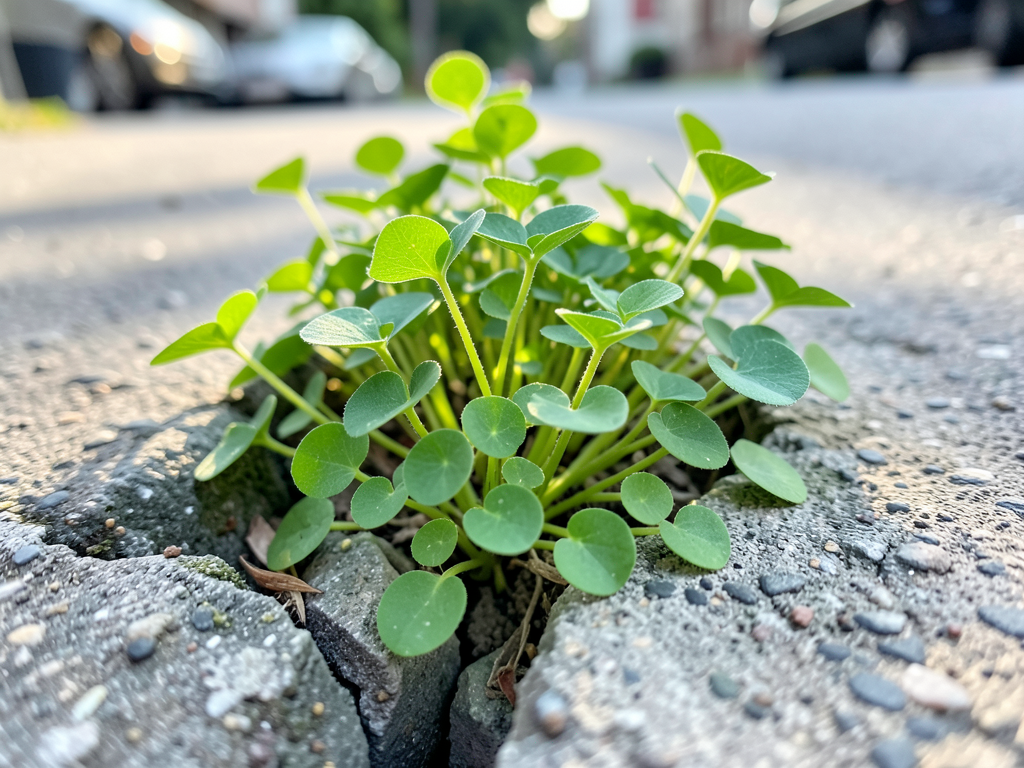
The caveat here is contamination — we’ll get deep into safety later — but for now, just note that these plants are abundant and surprisingly resilient.
Abandoned Lots and Urban Wilds
Every city has them: the empty lot where a building once stood, the fenced-off parcel nobody’s developed yet, the forgotten corner behind the strip mall. These spaces are urban foraging gold. Without regular mowing or herbicide application, these lots rewild quickly. Within two seasons, you’ll find lamb’s quarters, amaranth, curly dock, chicory, and often fruit from whatever trees or shrubs were planted before the building came down.
Critical rule for abandoned lots: never forage on brownfield sites — former industrial land or gas stations. Heavy metals and petroleum residues concentrate in plants and will concentrate in you. If you don’t know the history of a lot, move on.
Community Gardens and Urban Farms
Community gardens occupy a gray area in urban foraging. They’re not “wild” — someone planted those vegetables — but many community gardens have perennial edible landscaping (fruit trees, berry bushes, herb spirals) in shared spaces where harvesting is welcome.
The ethical approach is simple: ask. Chat with gardeners. Offer to help weed in exchange for some berries. Many community gardens are desperate for volunteers and happy to share surplus. I’ve built relationships with garden coordinators who now text me when their figs ripen because they know I’ll harvest what would otherwise rot.
College and Corporate Campuses
Here’s a secret few people talk about: university and corporate campuses are some of the best-maintained, most diverse foraging grounds in any city. These institutions invest heavily in landscaping and often plant ornamental edibles without realizing it. Serviceberries (Amelanchier) are a favorite campus landscaping plant — those bushes with the little red-to-purple berries that nobody touches? They taste like blueberries crossed with almonds.
Corporate campuses in suburban office parks are especially fruitful. Gingko trees (harvest the nuts, not the fruit), walnut trees, persimmons, and ornamental cherries all produce on corporate grounds while employees walk past staring at their phones.
Residential Edges and Alleys
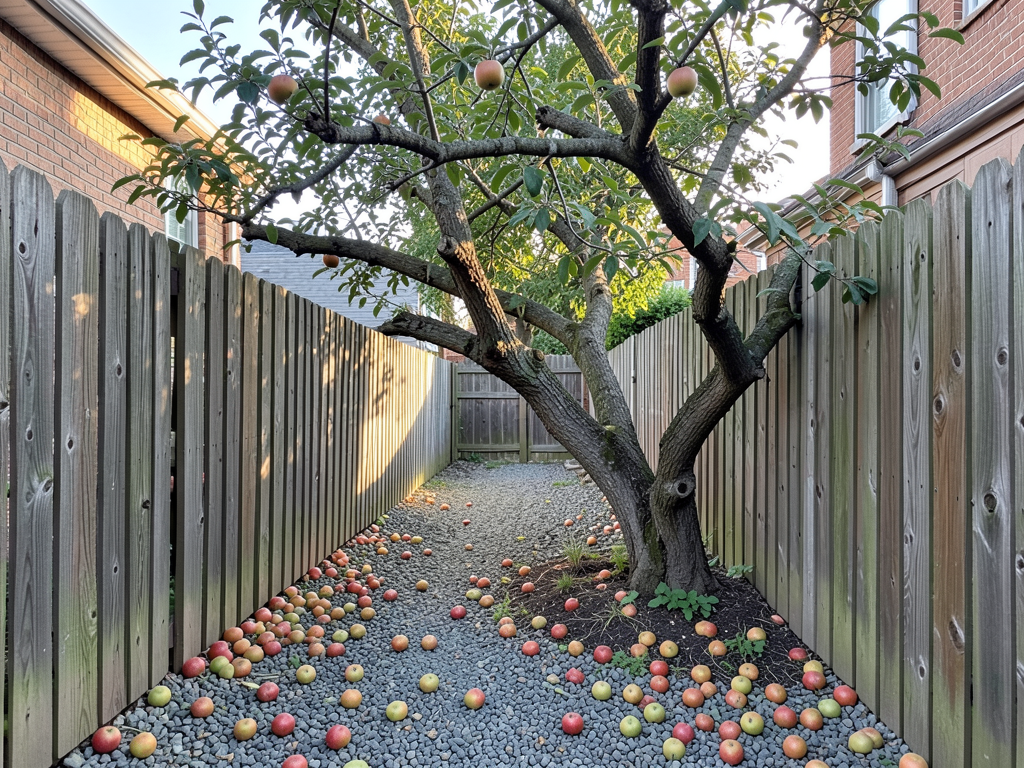
That mulberry branch hanging over the fence into the public alley? Fair game in most interpretations. The apple tree on the corner whose fruit all falls on the sidewalk? It’s not on private property anymore once it drops. Alleys, particularly in older neighborhoods, are corridors of forgotten fruit trees and self-seeded edibles.
The Urban Edible All-Stars
You don’t need to memorize a field guide to start urban foraging. The following plants are abundant, easy to identify with 100% confidence, and delicious. These aren’t “survival foods” you tolerate — they’re genuinely good eating that happens to grow for free.
Purslane (Portulaca oleracea)
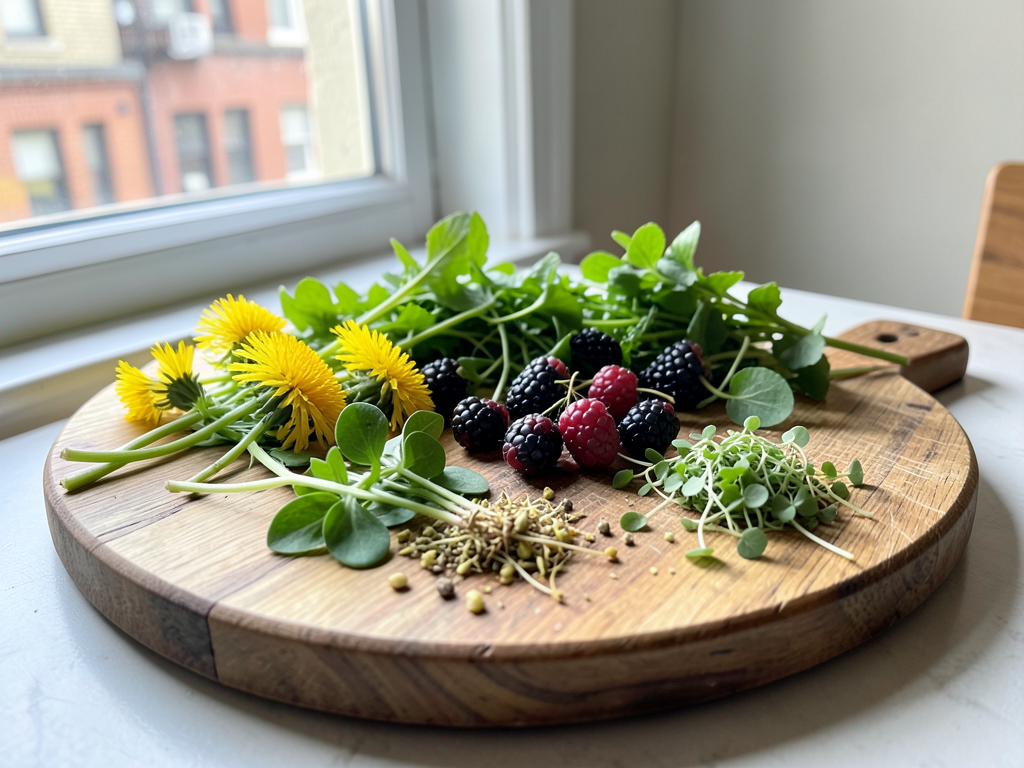
The undisputed king of urban foraging. Purslane loves hot concrete, grows flat in a rosette pattern with thick, succulent reddish stems and paddle-shaped green leaves, and contains more omega-3 fatty acids than any other leafy plant. It’s lemony, slightly salty, and incredible raw in salads or quickly sautéed. Look for it in sidewalk cracks, hell strips, and garden beds everywhere from June through September.
Dandelion (Taraxacum officinale)
Everyone knows dandelions. Everyone has a lawn full of them. Yet somehow, people still buy expensive bitter greens at the grocery store while mowing down free ones at home. Young dandelion leaves — harvested before the flower appears — are tender and only mildly bitter. Older leaves need blanching. The flowers make wine and fritters. The roots can be roasted for a coffee substitute. All parts edible, zero cost, infinite supply.
Mulberries (Morus species)
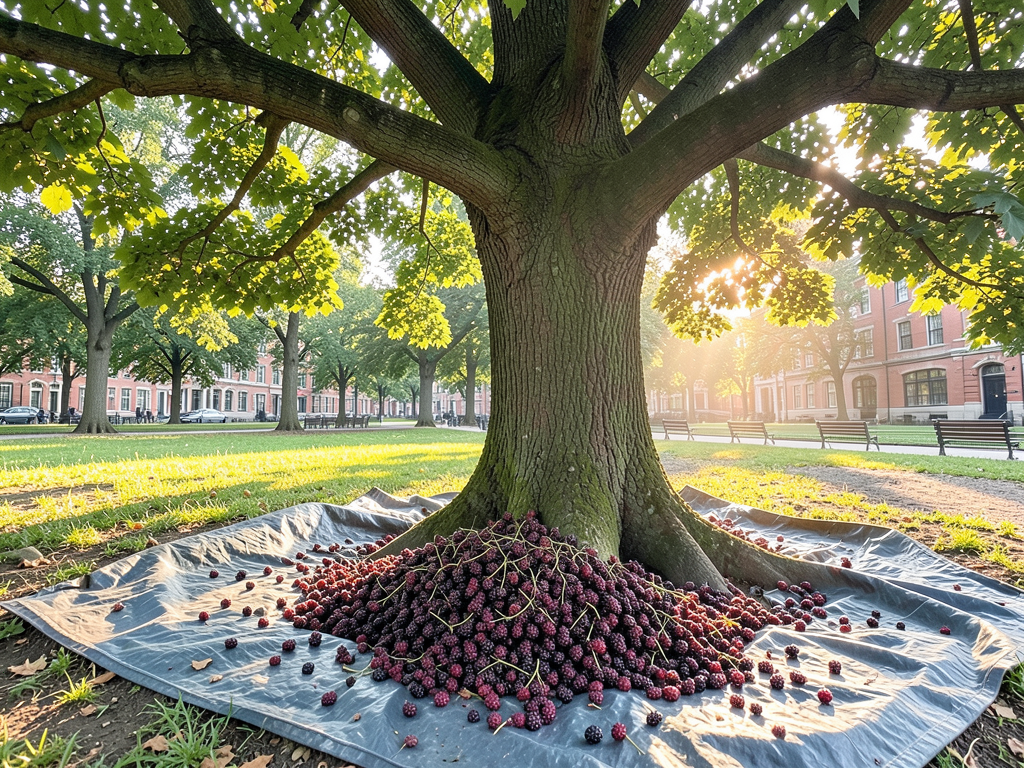
Mulberry trees are everywhere in older cities. They were planted extensively in the 19th and early 20th centuries and now tower over parks, parking lots, and backyards. The fruit looks like elongated blackberries, ripens in June and July, and drops by the thousands. Bring a tarp — lay it under the tree, shake a branch, and collect pounds in minutes. Mulberries are sweet, juicy, and make exceptional jam, pies, and wine.
Serviceberries (Amelanchier species)
Also called saskatoons, juneberries, or shadbush, serviceberries are the best-kept secret of urban landscaping. Cities plant them everywhere — outside libraries, along boulevards, in corporate courtyards — because they’re attractive ornamental shrubs. The fruit, when deep purple-red, tastes like a blueberry with almond notes. They ripen in June and most people walk right past them.
Wild Grapes (Vitis species)
River paths, park edges, and fence lines throughout North American cities are draped in wild grape vines. The grapes are smaller and tarter than commercial varieties, with larger seeds, but make outstanding juice, jelly, and — if you’re ambitious — wine. Look for the distinctive grape leaf shape climbing over trees and shrubs along waterways. Harvest in late summer to early fall.
Lamb’s Quarters (Chenopodium album)
Also called wild spinach, lamb’s quarters is the most nutritious green you’ll find in a city. The leaves are diamond-shaped with a whitish, powdery coating on the undersides (completely harmless). They taste like spinach but sweeter and more mineral-rich. Lamb’s quarters contains more calcium, protein, vitamin A, and B vitamins than cultivated spinach. It grows vigorously in disturbed soil — construction sites, garden edges, neglected flower beds.
Plantain (Plantago major)
Broadleaf plantain is the plant your grandmother called “white man’s footprint” because it followed European settlers everywhere they went. It’s the broad-leaved weed in every lawn, every sidewalk crack, every trampled pathway. Young leaves are edible raw or cooked — slightly mushroomy in flavor, with a texture similar to spinach when sautéed. More importantly, plantain is a survival ally: chewing the leaves into a poultice and applying to stings, bites, or scrapes provides genuine relief.
Chickweed (Stellaria media)
Chickweed is a cool-season annual that forms dense mats in moist, shaded areas. It has tiny, star-shaped white flowers and a single line of hairs running along the stem. The flavor is mild and grassy, perfect for salads, pesto, or as a sandwich green. Chickweed appears in early spring and again in fall — your winter salad when everything else is dormant.
Urban Foraging Safety: What You Actually Need to Worry About
Safety in urban foraging isn’t about plant identification — that’s a separate skill and there are existing guides for that. Urban-specific safety is about contamination, and there’s a lot of bad information out there. Let’s sort through what’s real and what’s overblown.
Pesticides and Herbicides
This is the number one concern for urban foragers, and it’s legitimate. Public parks, residential lawns, and landscaped areas are routinely sprayed. The good news: you can read the signs. Look for:
- Uniformly perfect, weed-free lawns — almost certainly sprayed
- Dead zones or brown patches that indicate herbicide application
- “Pesticide application” warning signs (legally required in most cities)
- The distinct chemical smell of recently applied treatments
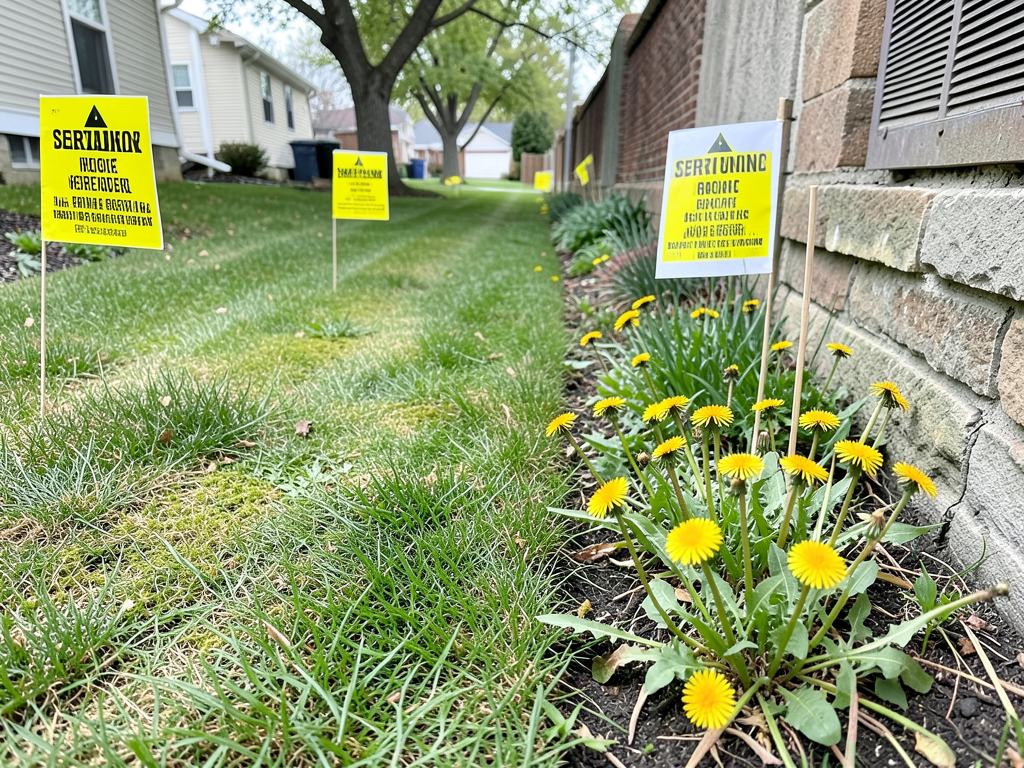
The 30-foot rule: if you’re foraging near a manicured lawn, give it at least 30 feet of distance from the maintained edge. Ditches, hedgerows, and unmaintained margins beyond this buffer zone are typically unsprayed. Neglected lots, river paths, and deep park interiors are safer bets than street-side planting beds.
Heavy Metals in Urban Soil
Lead, cadmium, arsenic, and other heavy metals accumulate in urban soils, particularly near old buildings (lead paint), busy roads (leaded gasoline exhaust persists for decades), and former industrial sites. This is the contamination concern that actually matters long-term.
Leafy greens and root vegetables are the highest risk — they grow in direct contact with soil. Fruits, berries, and nuts from trees and tall shrubs are dramatically lower risk because the plant’s vascular system filters out most heavy metals before they reach the fruit. Mulberries from a tree growing in contaminated soil are much safer than dandelion greens from the same soil.
When to soil test: If you’re consistently foraging greens from one location, invest in a soil test. University extension offices offer them for $15-30. You’re looking for lead levels below 100 ppm and cadmium below 1 ppm for safe consumption. Avoid foraging greens from soils near busy roads (within 50 feet) or older buildings where lead paint may have leached.
Dog Urine and Animal Waste
Let’s address this honestly: if you forage in any city, dogs have peed on those plants. This is gross but largely manageable. Thoroughly wash everything you harvest — this isn’t optional. Cooking eliminates most pathogens of concern. The actual risk from properly washed, cooked foraged greens is negligible compared to the health risks of not eating greens at all.
Air Pollution
Plants near highways and heavily trafficked roads accumulate particulate matter on their surfaces. Washing removes most of it. Avoid foraging within 50 feet of major roadways when possible. The deeper you go into parks and green spaces, the less this matters.
The Reality Check
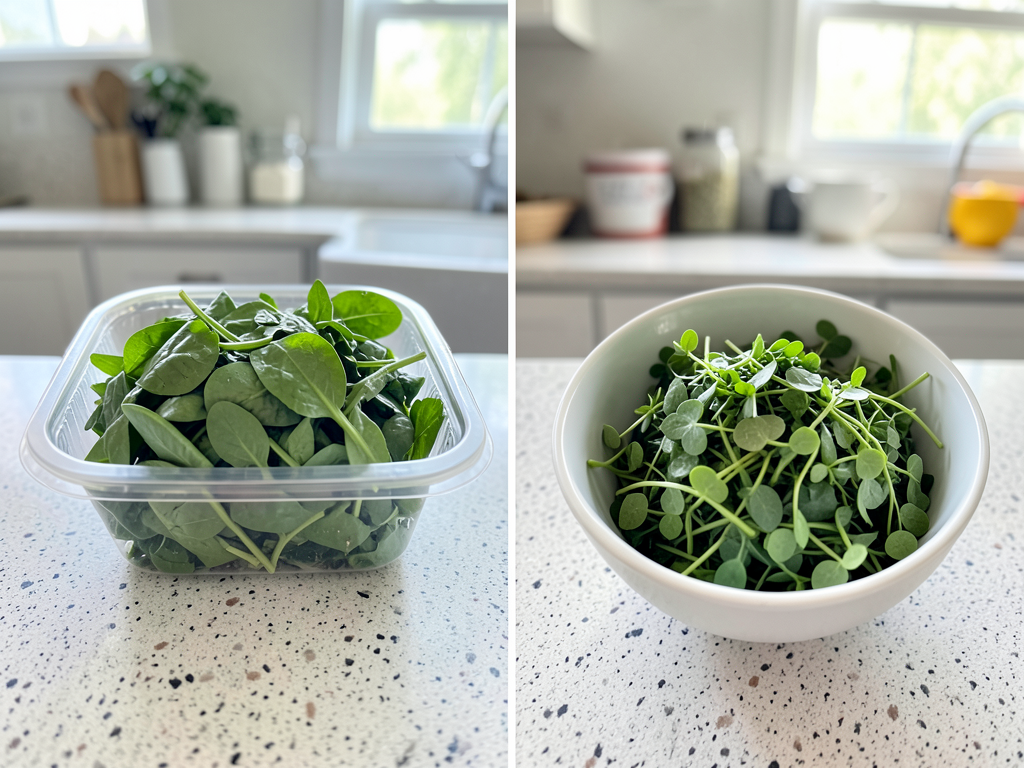
People get anxious about urban foraging safety, but here’s the perspective check: the conventionally grown spinach you buy at the grocery store is sprayed with pesticides approved for commercial agriculture, grown in soil of unknown quality, shipped thousands of miles, and handled by dozens of people before reaching you. Urban-foraged greens — from a clean location, properly washed — are often the cleaner option.
The Ethics of Urban Foraging
Foraging in a city isn’t like foraging in a national forest. You’re sharing limited resources with a dense population. Ethical urban foraging requires thoughtfulness that wilderness foraging doesn’t always demand.
Permission and Legality
Here’s the uncomfortable truth: foraging on public land in many cities exists in a legal gray area. Municipal codes rarely address it directly. When they do, they often prohibit it — not because anyone thought about foraging specifically, but because broad “do not remove vegetation” ordinances exist to prevent vandalism.
Practical advice: know your local rules but use judgment. Picking a gallon of mulberries from a public park tree that will otherwise rot on the ground is different from digging up plants or stripping a bush bare. If you’re unsure, call your parks department and ask. You might be surprised — some cities are actively working to legalize and encourage urban foraging.
Private vs. Public
Private property is straightforward: ask permission. Full stop. Knocking on a door and saying “I noticed you have a loaded plum tree — would you mind if I picked some?” works more often than you’d expect. Offer to share what you harvest. Many homeowners are thrilled to have someone use fruit they can’t keep up with.
Trees that overhang public sidewalks or alleys from private property? This varies by jurisdiction. In most places, anything overhanging public right-of-way is fair game. But the ethical approach — the one that doesn’t generate complaints that lead to anti-foraging ordinances — is still to knock and ask if practical.
Take Only What You Need
The forager’s golden rule applies doubly in cities. Never take more than 10-20% of any plant population. Never strip a tree bare. Always leave plenty for wildlife (urban birds rely on these food sources), for other foragers, and for the plant to reproduce. If you find a patch of lamb’s quarters, harvest a few leaves from each plant rather than uprooting the whole thing.
Spread the Knowledge
One of the most ethical things an urban forager can do is teach others. The more people who understand that their city is full of food, the more advocates exist for protecting green spaces, reducing pesticide use, and planting edible landscaping. Organized urban foraging groups and “fruit tree mapping” projects are transforming how cities think about their green infrastructure.
The Surprising Abundance
Let me share another story. Two summers ago, a friend and I decided to see how much food we could forage in one day without leaving our city of 200,000 people. No driving — just walking and biking. The goal wasn’t to harvest maximum volume but to see what was there.
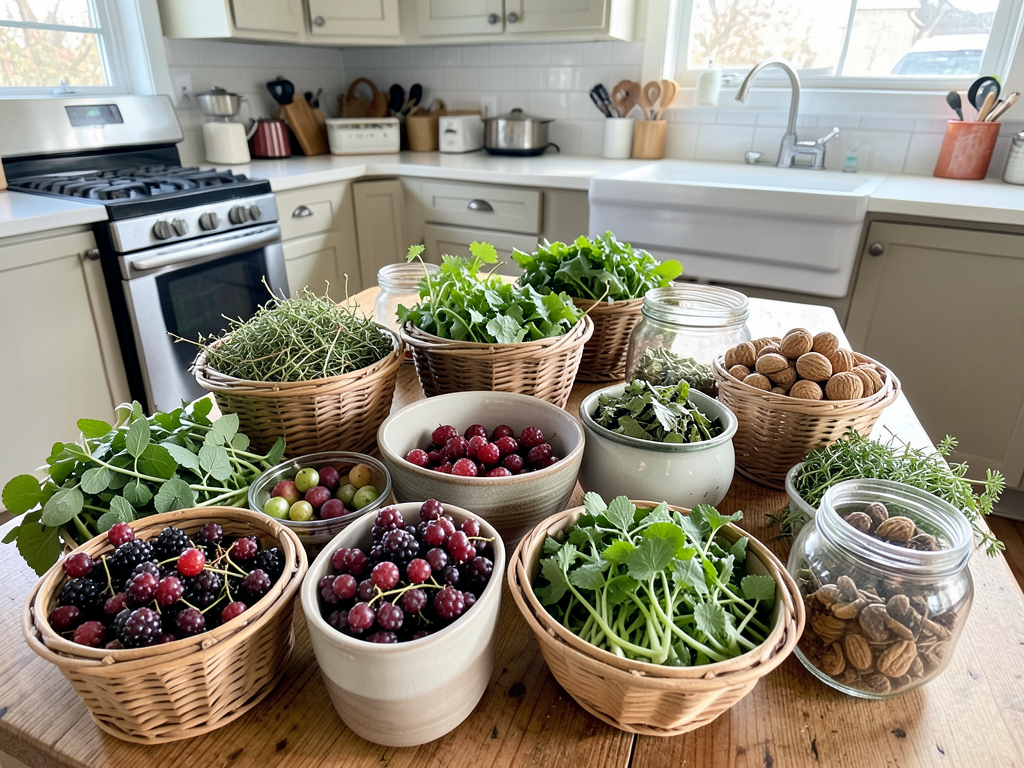
In six hours, we gathered:
- 8 pounds of mulberries from three park trees
- 3 pounds of purslane from sidewalk cracks
- 2 pounds of lamb’s quarters from a vacant lot
- 1 pound of serviceberries from a library landscaping bed
- A gallon of wild grapes (still tart, perfect for jelly)
- Enough chickweed and dandelion greens for a week of salads
We weren’t being aggressive harvesters. We weren’t stripping anything bare. We were just two people paying attention in an average American city on an average summer day.
This abundance is replicated in every city. A 2018 study in Nature Sustainability documented foragers in Baltimore harvesting over 140 different species from urban environments. In Seattle, the Beacon Food Forest — a 7-acre public food forest in the middle of the city — demonstrates what’s possible when urban land is intentionally planted with edible perennials.
Cities aren’t food deserts. They’re food forests that we’ve forgotten how to read.
Getting Started: Your First Urban Forage
If this all sounds overwhelming, start small. Tomorrow, walk your neighborhood with fresh eyes. Look for one plant — mulberries, dandelions, or purslane — whichever is in season. Identify it with 100% confidence. Harvest a small amount. Bring it home, wash it thoroughly, and eat it.

The first handful of food you pick from your own neighborhood — not a farm, not a grocery store, not a garden — changes your relationship with where you live. The city stops being a concrete grid and becomes a living landscape. You notice the seasons differently. You learn the secret geography of fruit trees and berry patches that your neighbors walk past every day without seeing.
That plum tree in downtown Portland is still there. Every July, it drops hundreds of plums onto the sidewalk. Most of them rot. But if you walk past at the right moment and look up, you’ll see them — purple-black, sun-warmed, free.
And if you happen to have an empty coffee cup in your hand, well. You know what to do.
Resources
- Falling Fruit (fallingfruit.org) — Interactive global map of urban fruit trees and foraging locations
- Your local university extension office — Soil testing, plant identification workshops, and local foraging regulations
- iNaturalist — Free app for plant identification and contributing to urban biodiversity science
- Local foraging groups — Search Facebook or Meetup for “[Your City] foraging” — these communities share harvest spots, tips, and organize group forages