The Salad Trap: Why Most “Survival Food” Advice Fails
Picture this: your day hike turns into an unplanned overnight. Five miles off-trail with nothing but a water bottle and a pocket knife. You spot dandelion greens, purslane, maybe some wood sorrel. You stuff your mouth full of wild salad — and two hours later you’re shaky, lightheaded, and colder than before.
Here’s the brutal math most foraging guides won’t tell you: a cup of raw dandelion greens contains roughly 25 calories. You burned more energy bending down to pick them. That’s not survival food. That’s a garnish.
Real survival foraging is a calorie math problem. Your body burns ~2,000 calories a day just existing. Add exposure, walking, firewood gathering, and anxiety — that number climbs fast. You need energy-dense plants that give back more than they take. This guide isn’t about identifying every edible leaf. It’s about the wild plants that can actually sustain life when there’s no grocery store and nobody coming.
The Calorie Hierarchy: What’s Worth the Energy
In genuine survival, energy spent harvesting must be less than energy gained from eating — the calories-per-effort ratio.
Here’s how wild plant foods stack up:
| Tier | Type | Calories per 100g (approx.) | Effort Level |
|---|---|---|---|
| S-Tier | Underground storage organs (tubers, rhizomes, corms) | 80–120 | High dig effort, high reward |
| A-Tier | Nuts and seeds (acorns, pine nuts, hazelnuts) | 350–650 | Moderate processing, very high reward |
| B-Tier | Starchy shoots/pith (cattail hearts, palm hearts) | 30–50 | Low effort, moderate reward |
| C-Tier | Fruits and berries (when in season) | 40–70 | Low effort, seasonal only |
| D-Tier | Leafy greens, stems, mushrooms | 15–35 | Very low calorie return |
The takeaway: if you’re truly in survival mode, skip the greens. Every calorie you burn picking individual leaves of lamb’s quarters is a calorie you can’t afford to lose. Dig for roots. Gather nuts. Target the underground organs — that’s where plants store their energy, and that’s where your survival lies.
Cattail (Typha spp.) — The Grocery Store of the Swamp
If I could pack only one plant into a survival kit, it would be cattail. No plant in North America offers more to a person in need.
What You Get
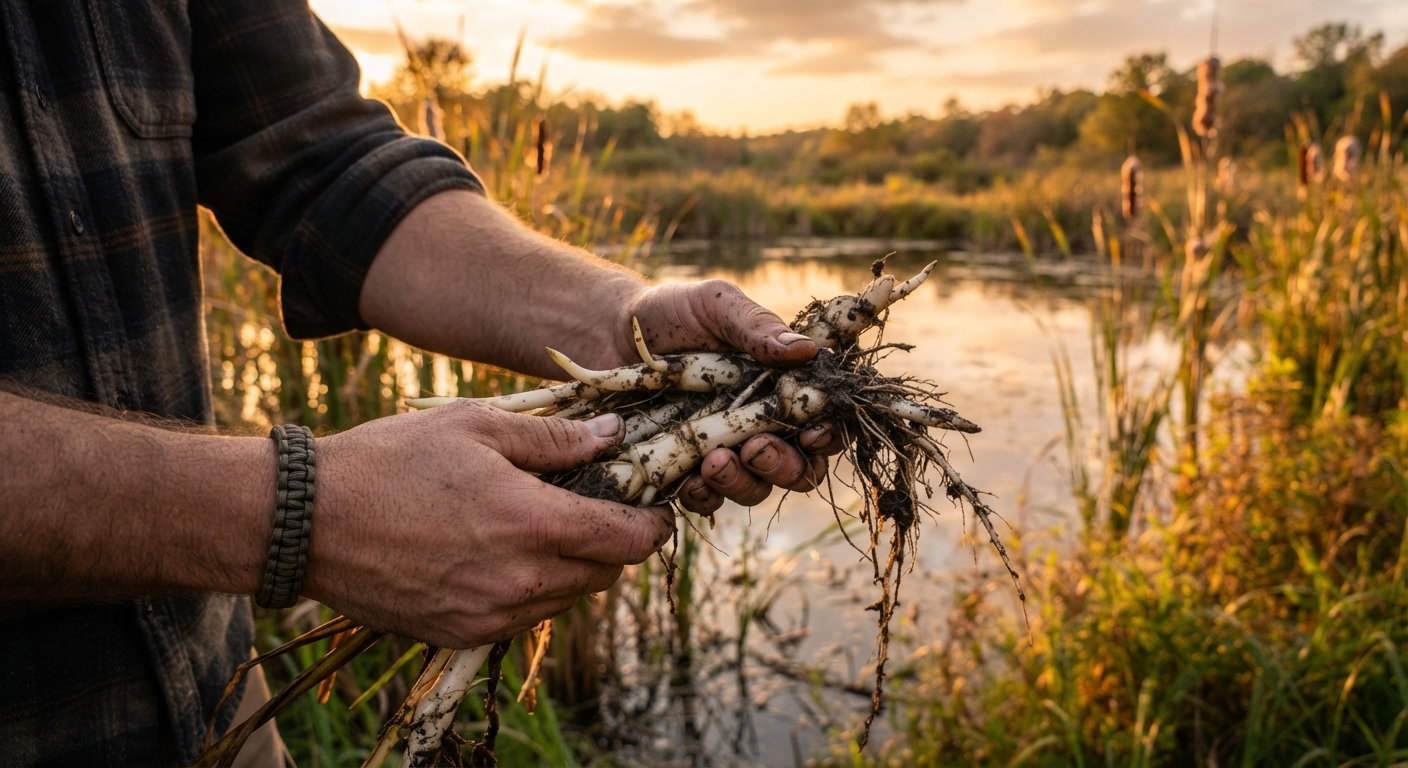
Rhizomes (roots): The crown jewel. Cattail rhizomes are a tangled network of starch-packed roots running horizontally through the mud — roughly 30–46% starch and 10% protein, comparable to potatoes. A single mature stand yields several pounds per square yard. Grab the plant at the base, pull while stepping into the mud, and the entire mat comes up. Cold, miserable work — enormous caloric payoff.
Hearts (shoots): Young shoots pulled in spring taste like cucumber or mild asparagus — lower calorie but hydrating.
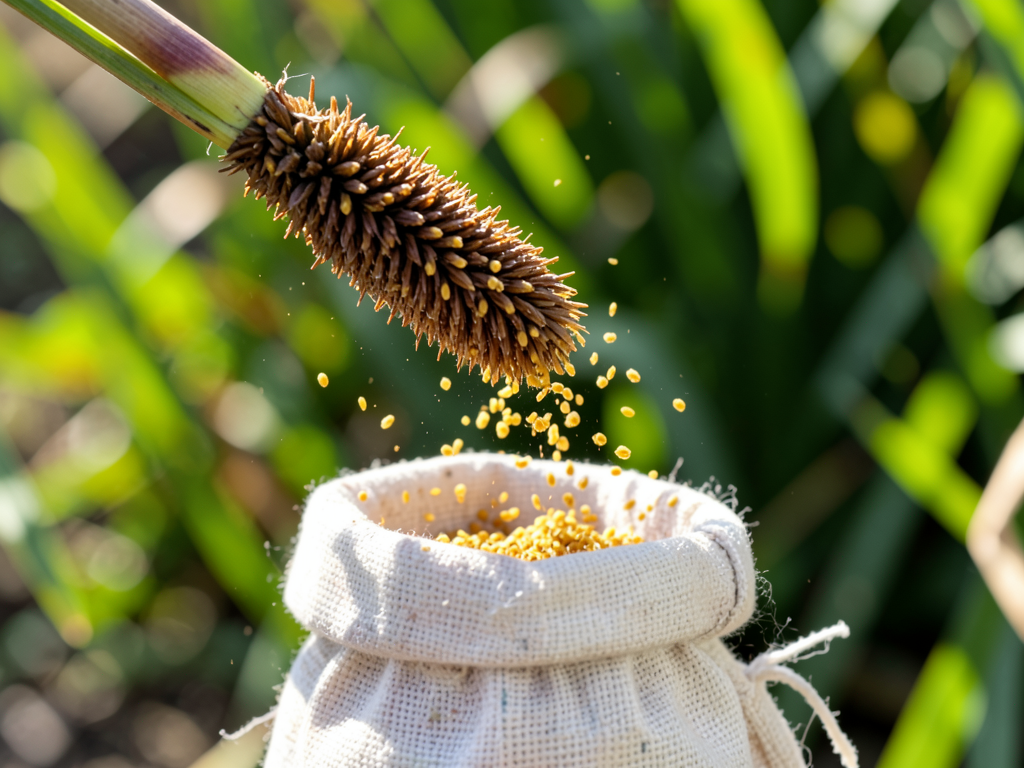
Pollen: In early summer, shake the male flower spikes into a container. Golden cattail pollen is high-protein and can be used as flour extender — one of the few wild foods you can harvest in bulk with minimal effort.
Green flower spikes: Boil the immature female spikes like corn on the cob. Ten minutes of steaming and you nibble the outer portion off a fibrous core.
Survival Uses Beyond Food
This is where cattail earns its “grocery store” nickname:
- Tinder: The mature brown head breaks down into fluffy, combustible material that catches a spark better than almost anything else in the wild. Pack it into a tinder bundle and it ignites from a ferro rod with zero effort.
- Cordage: Strip mature leaves and twist them into a surprisingly strong cord. I’ve used cattail cordage to lash shelter poles, make fishing line, and weave emergency sandals. The leaves contain long, strong fibers that rival jute.
- Insulation: Fluff from seed heads stuffed between layers of clothing creates dead air space — nature’s primaloft.
- First aid: The dried fluff is sterile and absorbent. It works as wound dressing in an emergency.
- Torch: Dip a dried seed head in rendered animal fat or pine pitch, light it, and you’ve got a torch that burns for 15–20 minutes.
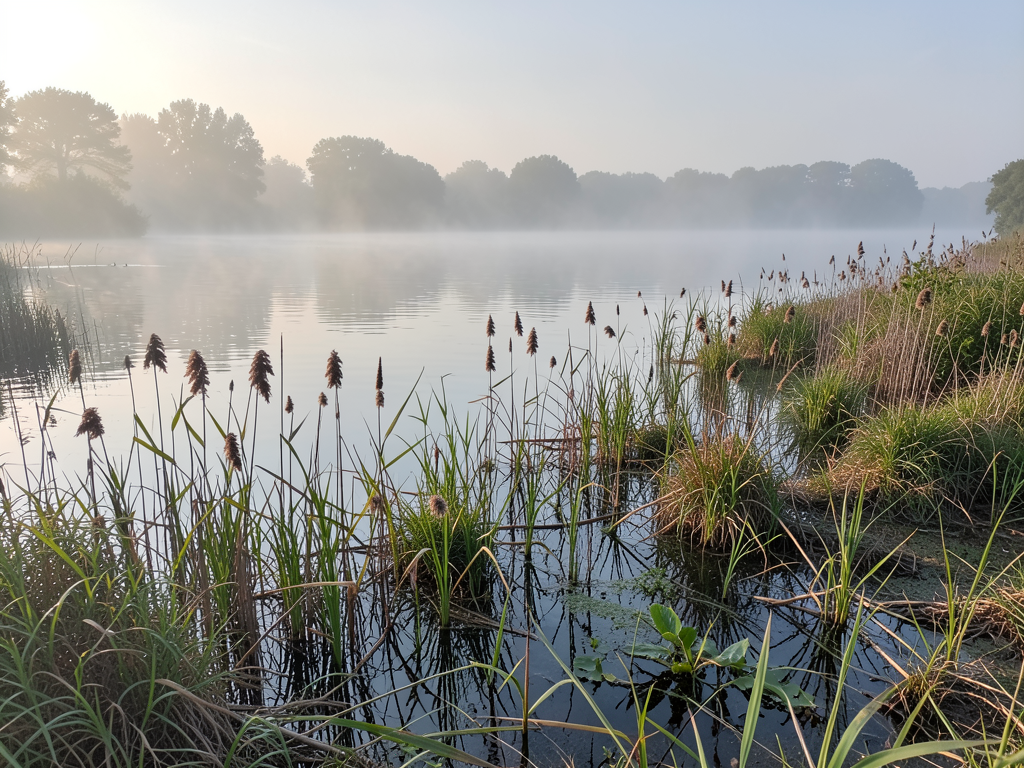
One warning: cattails bioaccumulate pollutants — avoid drainage ditches, roadsides, and industrial areas. The toxic lookalike, wild iris (blue flag), has flat fan-shaped leaves and showy blue-purple flowers. Cattails have round-based leaves tapering to a point, and the brown spike is unmistakable.
Acorns (Quercus spp.) — The Grain That Grows on Trees
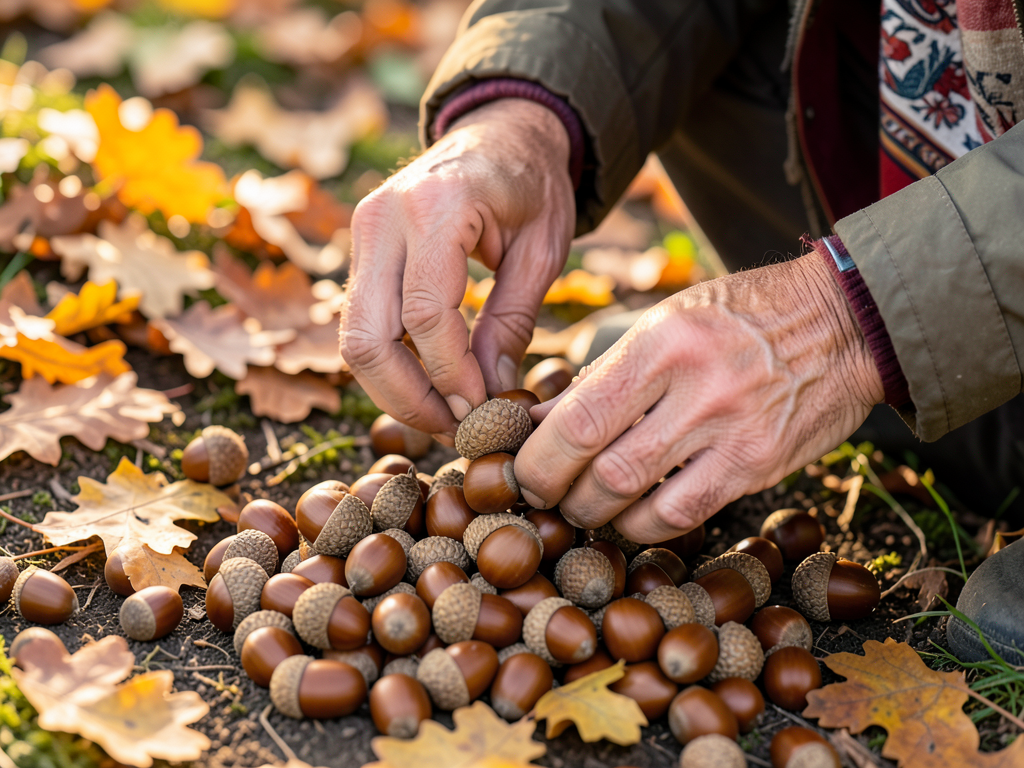
Before wheat and rice, there were acorns. Indigenous peoples across the northern hemisphere relied on them as a staple for thousands of years. A single oak in a good mast year can drop 500 pounds. That’s not foraging — that’s harvesting.
The Acorn Challenge
Raw acorns are packed with bitter tannic acid that causes nausea and digestive misery. But humans have been leaching them for millennia with nothing but water and time.
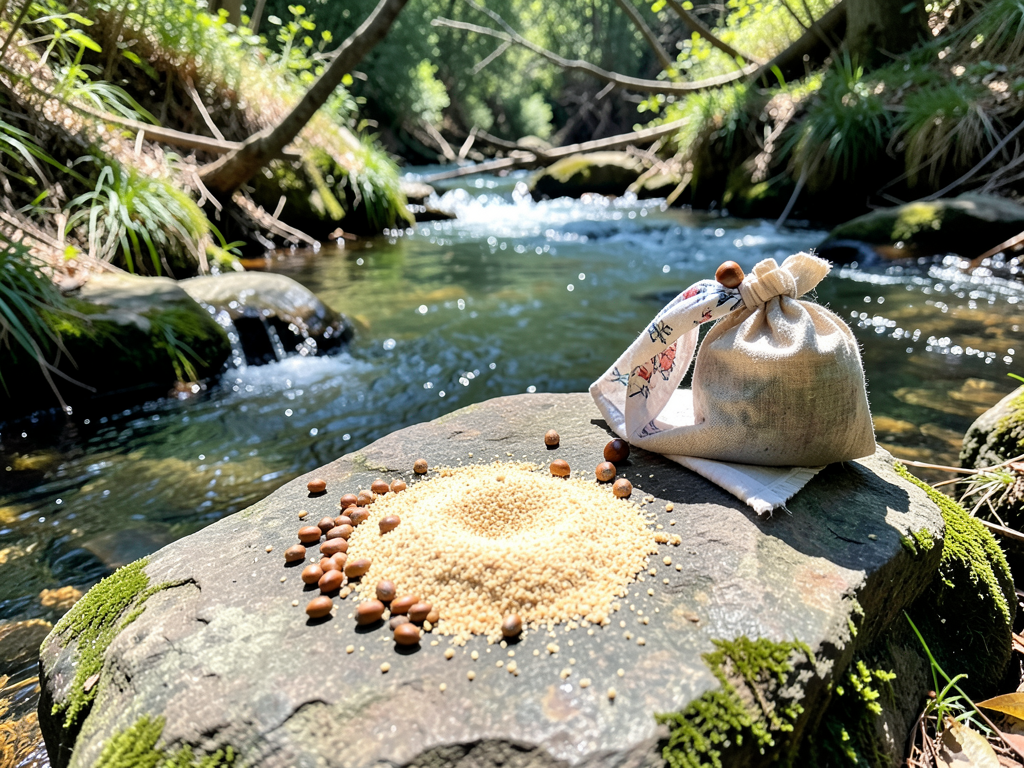
Cold leaching (best flavor, more work):
- Shell the acorns
- Grind or crush the nutmeat into a coarse meal
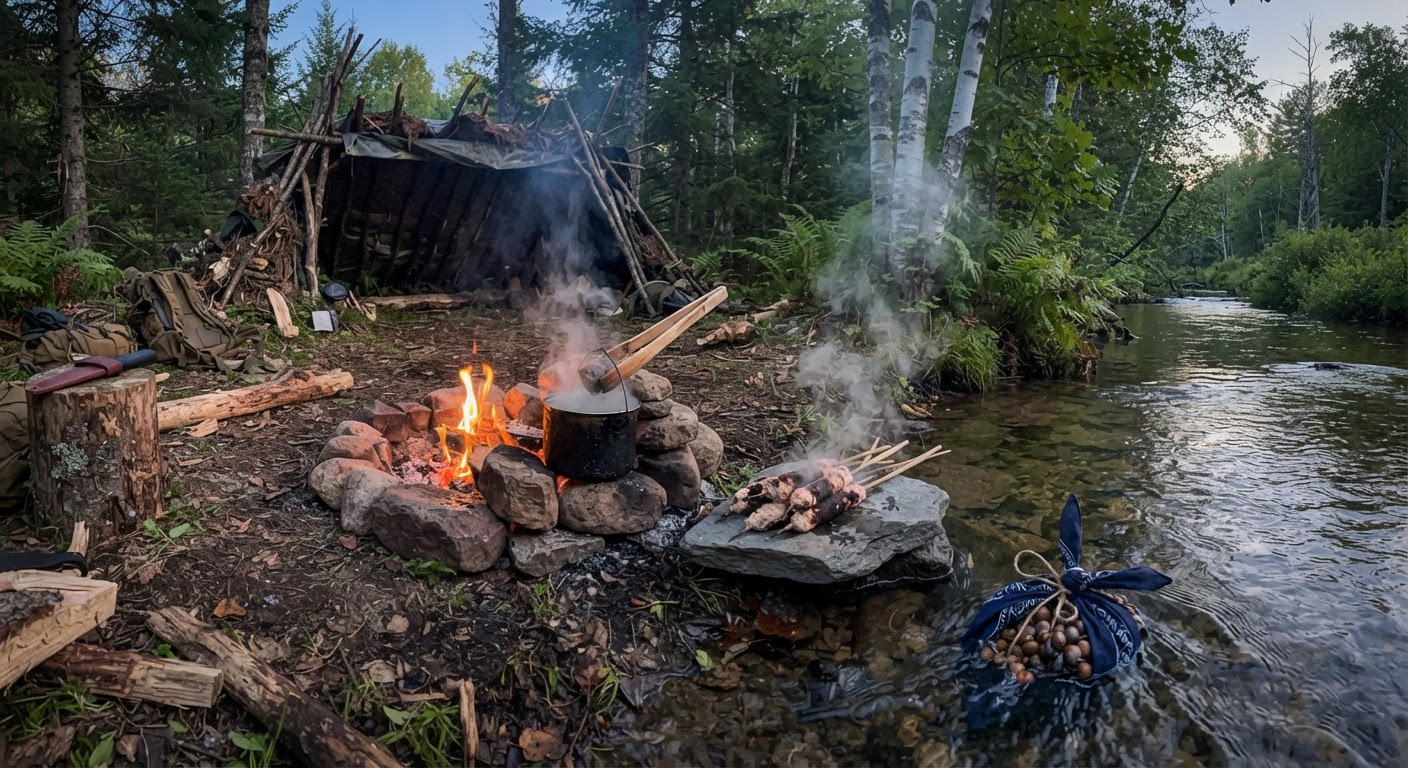
- Tie the meal inside a cloth (t-shirt, bandana, anything porous)
- Submerge in a stream, or repeatedly soak and drain in cold water
- When the meal no longer tastes bitter, it’s ready — usually 12–48 hours depending on species
Hot leaching (faster, changes texture):
- Shell and roughly crush the acorns
- Boil in multiple changes of water, discarding the brown water each time
- Repeat until the water stays relatively clear and the bitterness is gone
- Spread the meal to dry in the sun or near a fire
Species Matters
White oak acorns (rounded leaf lobes) are generally lower in tannins and sweeter than red oak acorns (pointed leaf lobes). In a perfect world, you’re targeting white oaks. In a survival scenario, any acorn is better than no acorn — just leach them longer.
Once processed, acorn meal can be mixed with water into a porridge, formed into flat cakes and cooked on hot rocks, or added to soups as a thickener. It has a mild, nutty-sweet flavor unlike anything you’d buy in a store.
Calorie math: 100 grams of leached acorn flour provides roughly 350–400 calories, mostly from complex carbohydrates and healthy fats. Compare that to the paltry 25 calories from a cup of wild greens. A single productive foraging session under a good oak can yield thousands of calories — days of food from one tree.
Burdock Root (Arctium lappa & minus) — The Underground Powerhouse
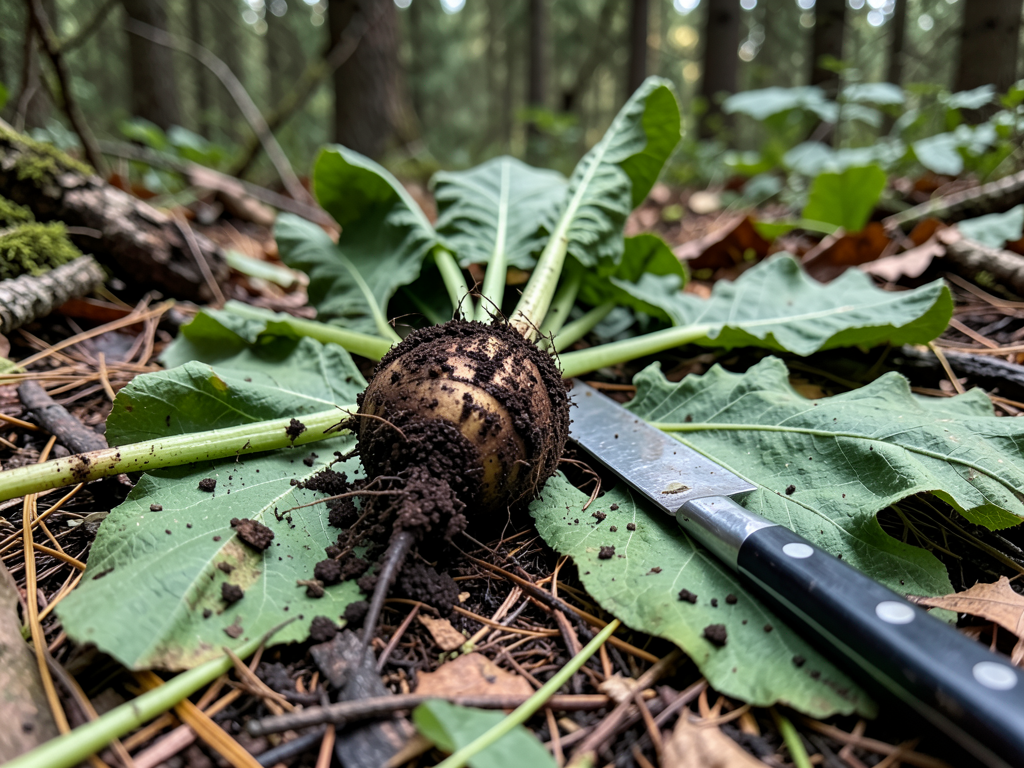
Most people know burdock as the plant that sticks annoying burrs all over their socks and dog fur. Few realize that beneath those giant rhubarb-like leaves lies one of the best survival roots on the continent.
Burdock is a biennial — first-year plants produce a deep, carrot-like taproot packed with inulin (a slow-digesting carbohydrate), fiber, and minerals including potassium, magnesium, and manganese. The root can grow 2–3 feet deep, which makes digging a workout, but a single mature root provides a substantial meal.
Harvest and Preparation
Target first-year plants. How to tell? First-year burdock has a rosette of large basal leaves but no flower stalk. Second-year plants send up a tall stalk with purple thistle-like flowers, and their roots become woody and inedible by the time flowers appear.
Dig with whatever tool you have — a sturdy stick works, a flat rock as a digging implement, or (ideally) a knife. The soil around burdock is often compacted, so dig wider than you think you need, then work the root loose rather than pulling.
Cooking: Scrub off the dirt (peeling is optional — most nutrients are near the skin), slice into rounds, and boil for 15–20 minutes. The taste is earthy, slightly sweet, with a texture somewhere between parsnip and artichoke heart. In Japan, burdock root (called gobo) is a common vegetable — kinpira gobo, sautéed burdock with soy and sesame, is proof that survival food doesn’t have to taste like punishment.
If you don’t have a pot, wrap sliced root in large leaves (burdock’s own leaves work well), place near the coals of a fire, and let the steam cook them through. The leaves protect the food from ash and help retain moisture.
Secondary Use: The Leaves
While not calorie-dense, large burdock leaves double as emergency cookware — use them to wrap food for pit cooking, as a makeshift plate, or as a sun hat. The leaves are also mildly antiseptic and were traditionally used as field poultices for minor burns and skin irritations.
Jerusalem Artichoke / Sunchoke (Helianthus tuberosus) — The Anti-Famine Food
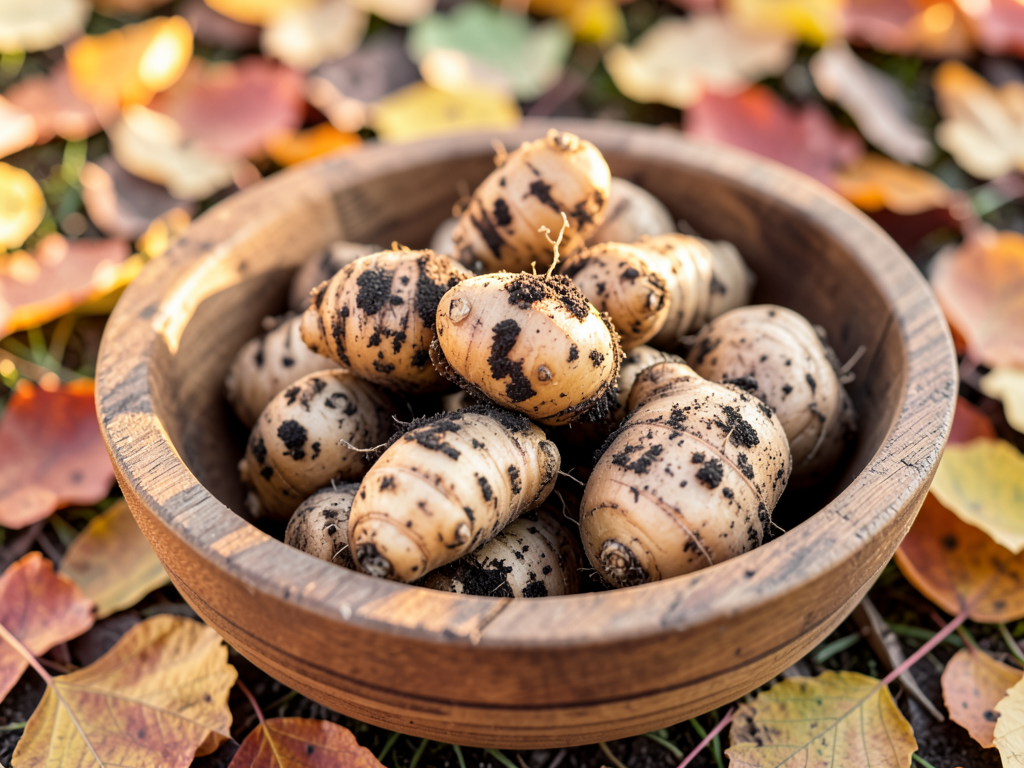
Sunchokes are the cheat code of survival foraging. This native sunflower produces knobby tubers packing ~73 calories per 100g — nutty, ranging from water chestnut (raw) to creamy potato (cooked).
What makes sunchokes exceptional survival food:
- They grow in massive colonies. Once established, a patch of sunchokes spreads aggressively through rhizome networks. Find one plant, and you’ve found hundreds of tubers.
- They’re harvestable year-round. The tubers survive frozen ground. As long as you can dig, you can harvest — even in winter.
- They’re unmistakable. Tall sunflower-like stalks (6–10 feet) with yellow flowers in late summer. Once you’ve identified a patch, you own it. No deadly lookalikes.
- Winter actually improves them. Cold converts some of the inulin to fructose, making winter-harvested sunchokes noticeably sweeter.
The Sunchoke Warning
Here’s the thing nobody mentions: sunchokes contain inulin, a carbohydrate humans can’t fully digest. Gut bacteria feast on it, producing gas. Foragers affectionately call them “fartichokes.”
Mitigation: Start with small portions. Boil them in changes of water. Fermenting or pickling the tubers also breaks down inulin. In a true survival scenario, you’ll take the gas over starvation — but if you’re practicing your survival skills, go easy your first time.
Preparation
Boil, roast in coals, or slice thin and fry. If you have a container with water, boiling is fastest and most efficient. No pot? Wrap tubers in wet leaves or mud, place directly in the coals, and rotate after 15–20 minutes. Split one open to check for doneness — it should be soft all the way through.
Wild Rice (Zizania spp.) — True Survival Grain
Wild rice isn’t actually rice — it’s an aquatic grass native to the Great Lakes region, packing roughly 14% protein and 350 calories per 100g of dried grain.
Harvesting requires wading or a canoe. Bend seed heads over your vessel, tap with a stick, and ripe grains drop in. A few hours of work can yield 20–30 pounds. Processing involves parching (drying near fire), threshing, and winnowing — time-consuming but the grain stores for years.
Survival shortcut: boil the green, unripe grains whole. Chewy and grassy, but it’ll keep you alive.
Pine — More Than Just a Tree
Every pine tree is a survival resource. The inner bark (cambium layer) is edible and actually nutritious — dried and ground, it produces a flour that contains roughly 80–100 calories per 100 grams with meaningful amounts of vitamin C.
Pine Cambium Harvesting
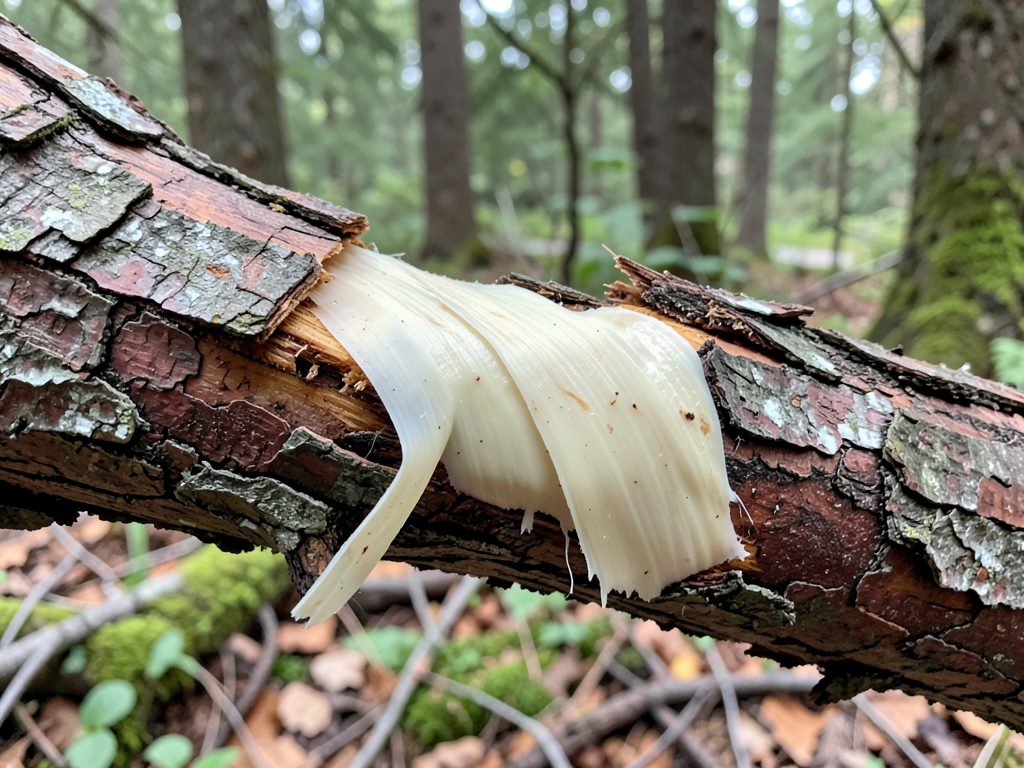
Scrape off the rough outer bark with a knife or sharp rock. Beneath it, you’ll find a thin, cream-colored layer — the cambium. This is the tree’s living tissue, and you’re essentially doing surgery. Harvest from a fallen limb or a tree you’ve cut for other purposes; stripping cambium from a living tree will kill it, and a dead tree feeds nobody next season.
Once harvested, the cambium strips can be chewed raw (nutty, resinous, surprisingly pleasant), dried and ground into flour, or fried in fat until crispy — what survivalists call “bacon bark,” though that’s generous marketing.
Pine Needle Tea
Boil fresh pine needles for 10–15 minutes. One cup has roughly 4–5 times the vitamin C of fresh orange juice — this is how European explorers prevented scurvy.
Warning: avoid yew (flat needles, red berries) and ponderosa pine. True pines have needles in bundles of 2, 3, or 5. White pine (5 needles per bundle) is safest.
Pine Nuts
Pine seeds from piñon and other nut-bearing pines pack roughly 670 calories per 100g. Collect cones, place near a fire to open, shake out the seeds. Time-consuming to harvest but passive work — a calorie bonanza.
Curly Dock (Rumex crispus) — The Overlooked Grain
Most foragers know curly dock as “that plant with the edible leaves.” They’re missing the real prize.
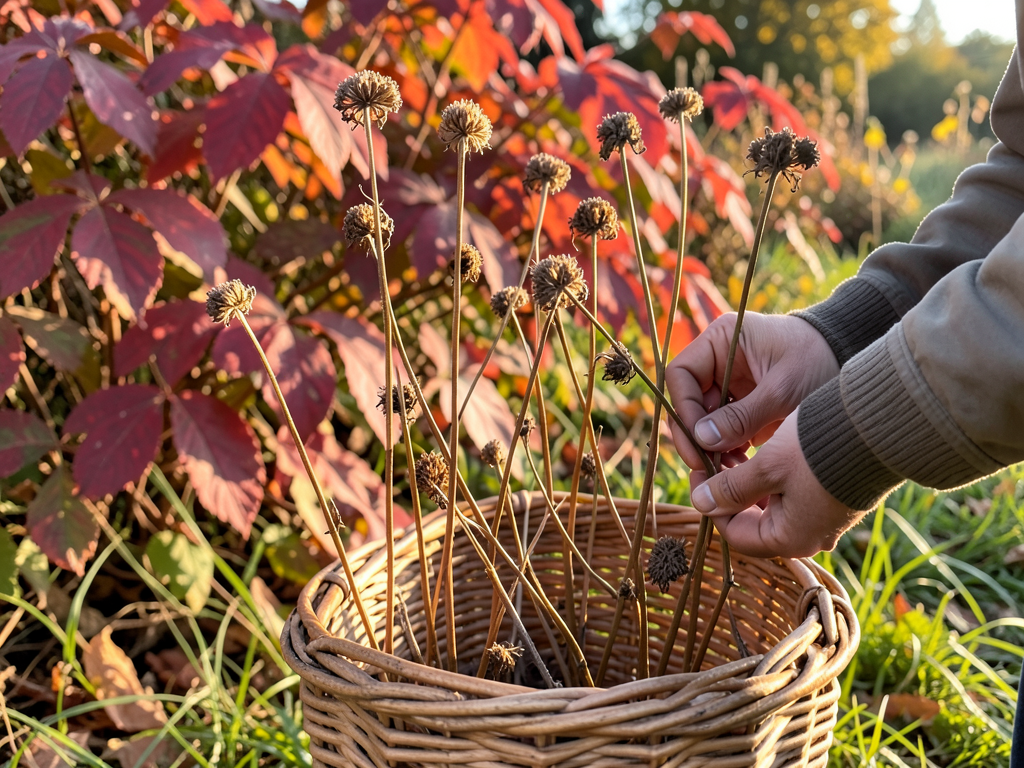
In late summer and fall, curly dock sends up tall seed stalks covered in papery brown seed husks. Inside each husk is a small, dark seed that can be processed into flour. One mature dock plant can produce 40,000 seeds — and unlike many wild grains, dock seeds don’t shatter and fall to the ground immediately. They hang on the stalk, sometimes all winter, accessible whenever you need them.
Processing:
- Strip seeds from stalks into a container
- Rub between your palms to separate the papery husk from the seed
- Winnow in a breeze or by tossing in a basket
- Grind the cleaned seeds into flour
Dock seed flour is gluten-free with a nutty, buckwheat-like flavor. Mix it 50/50 with acorn flour and you’ve got a nutritionally complete wild pancake batter. A single large dock patch can provide enough flour for several meals with minimal harvesting effort.
Calorie perspective: Roughly 200–250 calories per 100g of dock seed flour. That’s ten times the caloric density of the plant’s edible leaves. Same plant, completely different survival value depending on which part you eat.
The Survival Multipliers: Plants That Do More Than Feed You
Some plants earn their place in a survival situation not just for calories but because they solve multiple problems at once. These are the “high-leverage” plants — the ones you should learn first.
Stinging Nettle (Urtica dioica) — Fiber, Food, and Medicine
Beyond food (covered elsewhere on this site), nettle stalks contain extremely strong bast fibers for fishing line, snare cord, and even bowstrings. A single patch is food, cordage, and medicine all at once.
Yucca (Yucca spp.) — Nature’s Sewing Kit
Yucca leaves end in a needle-sharp point with fibers already attached — strip a leaf and you’re holding thread and needle. Roots contain saponins for emergency soap. Flowers and fruit are edible in some species.
Thistle (Cirsium spp.) — Tinder and Food
Peeled stalks taste like celery; first-year roots are edible. But the survival play: thistle down is exceptional tinder, and mature seeds are a protein-rich emergency food when separated from fluff.
Amaranth (Amaranthus spp.) — Leaf and Grain
Amaranth produces both spinach-like greens and massive seed heads (14% protein, 370 calories per 100g). This is what fed the Aztec empire — and it grows as a “weed” everywhere.
The Survival Forager’s Toolkit: Skills Over Gear
You don’t need a $300 foraging knife and titanium cookware. Humans survived on wild plants for hundreds of thousands of years with these techniques:
Rock-Boiling: The Original Pot
No metal container? Dig a depression, line with waterproof material (large leaves, clay soil), fill with water. Heat hard, dry rocks from high ground in a fire, drop into the water with green-stick tongs. Repeat as needed.
Critical: avoid river rocks and porous stone — trapped water turns to steam and the rock explodes. Use dense rocks from dry, high ground only.
Pit Cooking
Dig a pit, build a fire, let it burn to coals. Layer green vegetation over your wrapped tubers, cover with earth. Return in 4–6 hours to perfectly steamed food — and you’ve been building shelter or gathering wood the whole time.
The Bandana Mill
Tie nuts or seeds in a sturdy cloth, smash with a rock against a flat stone, then sift. Slow but effective. Two rocks and a t-shirt is a functional grain mill.
What NOT to Eat: The Rules That Keep You Alive
Survival foraging demands stricter safety protocols than casual weekend foraging. When you’re hungry, tired, and cold, your judgment degrades. These are non-negotiable rules:
1. The Universal Edibility Test is a last resort. The military’s “rub on skin, wait” protocol exists when starving is the alternative. It takes 24+ hours to test one plant. Find food you can positively identify.
2. Avoid: milky white sap (many toxic), contaminated soil, any plant you can’t identify 100%.
3. Cook what you can. Heat breaks down defensive plant compounds. Raw cattail rhizomes carry waterborne pathogens. Raw acorns are inedible unless leached.
4. Water hemlock kills. Avoid anything in the carrot family (Apiaceae) unless you’re absolutely certain. This family includes wild carrot (edible) and water hemlock (a small piece kills an adult). Not the family to learn under pressure.
5. One new food at a time. Eat a small portion and wait. Wild foods cause digestive upset simply because your body isn’t accustomed to them. A stomach emergency compounds every other problem.
Your 24-Hour Survival Foraging Plan
If I were stranded right now, assuming a temperate North American environment in late summer or fall, here’s what I’d actually do:
Hour 1–2: Find water source. This isn’t optional, and water draws both plants and animals. Creeks, ponds, and marshy edges are where the highest-calorie wild plants grow. Water first, then food.
Hour 2–4: Scan for cattails. Harvest rhizomes from a clean water source. Boil with the rock-boiling method. One good cattail harvest provides 2–3 days of calories. While rhizomes are cooking, collect cattail fluff for tinder — you’ll want it before dark.
Hour 4–6: Locate oak trees. Gather as many acorns as practical. Begin cold-leaching in a nearby stream or container. If no stream, start the hot-leaching boil. Acorn meal is your emergency food reserve.
Hour 6–8: Search for sunchokes or burdock in open areas, field edges, and disturbed ground. These tubers store for days once dug.
Ongoing: Collect pine needles for vitamin C tea. Gather any ripe berries as energy supplements. Process seeds from dock or amaranth if encountered.
Before dark: Have at least one reliable meal consumed, tinder secured (cattail fluff or thistle down), and tomorrow’s food located. The psychological boost of knowing you won’t go hungry is worth more than any specific plant.
Practice Now, Survive Later
Here’s the uncomfortable truth about survival foraging: you can’t learn it in an emergency. These skills need to be muscle memory before you need them. Go find cattails in a clean local marsh. Dig a burdock root and cook it at home. Identify three oak species in your area. Process a small batch of acorns into flour and make something — pancakes, crackers, whatever.
The plants in this article have fed humans through ice ages, famines, wars, and long winters. They’re still out there, growing in the same places, producing the same nutritious roots, nuts, and seeds they always have. The only thing that’s changed is that most of us forgot how to see them for what they are.
Know these plants. They might know you someday.
Disclaimer: For informational and educational purposes only. Never consume any wild plant without 100% positive identification. The author assumes no liability. When in doubt, don’t eat it.